Farhan hamdan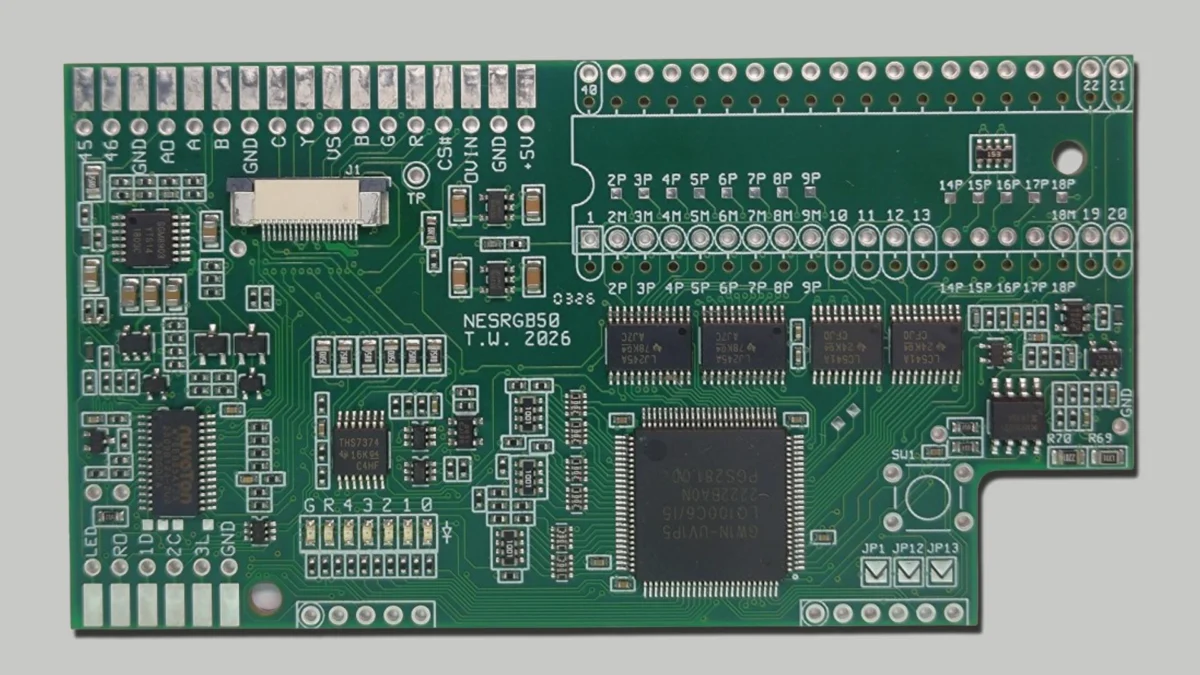
The retro gaming community is abuzz with the release of Tim Worthington’s latest iteration of the highly acclaimed NESRGB kit, version 5, for Nintendo Entertainment System (NES) and Famicom consoles. This significant update introduces a suite of enhancements designed to elevate video output quality, streamline installation, and improve overall user experience, reinforcing its position as a cornerstone modification for classic Nintendo enthusiasts. Available now for approximately $100, the NESRGB V5 represents a culmination of years of development, addressing both long-standing community requests and evolving technological standards in retro hardware.
A Legacy of Visual Enhancement: The NESRGB Project’s Evolution
The original Nintendo Entertainment System, a console that defined a generation of gaming, was released in an era when composite video was the standard for home entertainment. Its Picture Processing Unit (PPU) generated a composite signal, which, while functional, suffered from inherent limitations such as color bleeding, dot crawl, and general softness. These artifacts, while characteristic of the period, often detract from the vibrant pixel art when viewed on modern displays or even well-preserved CRTs. The demand for superior video output, particularly RGB, grew steadily within the retro gaming community as enthusiasts sought to experience their cherished classics with unprecedented clarity.
This demand spurred the development of various modifications, but it was Tim Worthington’s NESRGB project that emerged as a leading solution. Launched years ago, the NESRGB quickly gained a reputation for its robust design, high-quality RGB output, and comprehensive feature set. Previous versions, including the widely adopted V4 from 2022, have consistently provided enthusiasts with the means to extract pristine RGB video from their NES and Famicom consoles, enabling compatibility with professional monitors, high-quality consumer CRTs, and modern upscalers. The journey from its initial conception to the sophisticated V5 has been marked by continuous innovation, driven by a deep understanding of video electronics and the specific needs of the retro gaming demographic. Each revision has progressively refined the hardware, making it more efficient, user-friendly, and compatible with a wider range of setups.
Key Innovations in Version 5: A Paradigm Shift in Features and Usability
The NESRGB V5 introduces several pivotal changes, signaling a new chapter in the kit’s development. Foremost among these is the implementation of an on-screen menu (OSD), a feature long desired by the community. This OSD provides intuitive access to all kit functionalities, eliminating the need for cumbersome physical switches or complex button combinations for common adjustments. This user interface enhancement significantly lowers the barrier to entry for those new to modding and offers unparalleled convenience for seasoned enthusiasts.
Another significant addition is the built-in YPbPr component video output. While RGB has traditionally been the gold standard for retro gaming fidelity, component video offers a high-quality alternative, particularly appealing to users with modern displays that may lack RGB SCART inputs but readily accept YPbPr. This broadens the compatibility of the NESRGB V5, allowing more users to enjoy superior video quality without the need for external transcoders. The board’s ability to detect the connected cable type and automatically select the appropriate video output, coupled with manual override options via a controller button combination, exemplifies the focus on user-centric design.
The video system itself has undergone a comprehensive overhaul. A critical change involves the removal of the external video encoder IC, a component that presented challenges in terms of power consumption and sourcing difficulties due to its diminishing availability. In its place, S-Video generation has been integrated directly into the FPGA logic. This new S-Video method is distinct: it processes the same composite video output from the NES PPU but keeps the luma and chroma signals separated. This approach aims for an authentic "composite-like" color decoding experience on CRTs, but with dramatically improved sharpness, a benefit for enthusiasts who appreciate the specific color characteristics of the original composite output but desire greater clarity. However, this method precludes the ability to set a custom S-Video color palette, a trade-off that prioritizes accuracy to the PPU’s native color generation over customizability. For those prioritizing color customization, the RGB and Component outputs continue to offer ten distinct palettes, including "Generated NTSC," "Nestopia YUV," "Smooth V2," and "Sony CXA," among others, all selectable via the OSD.
The "De-jitter" feature has also been renamed to "Sync Fix" and completely rewritten for enhanced compatibility. Now togglable via the OSD, it offers precise horizontal and vertical video output adjustment of up to +/- 15 pixels, addressing potential display alignment issues that can arise with various monitors and capture setups. This granular control over sync timing ensures optimal image stability and positioning, crucial for competitive play and video capture alike.
Streamlined Installation and Enhanced Troubleshooting
Recognizing that installation complexity can be a significant deterrent for many, Tim Worthington has significantly simplified the modding process for V5. The number of solder jumpers has been drastically reduced from eleven in V4 to just three, with most settings now automatically detected or controlled via the new OSD. This reduction minimizes potential points of error and accelerates installation time.

Physical design improvements further aid the installation. The board shape features a larger cutout in the lower right-hand corner to accommodate tall capacitors found on some NES motherboard revisions. The PPU location now utilizes non-plated through solder pads, which can only be soldered from the bottom. This innovative design prevents accidental mixing of PPU and motherboard pin rows, a common mistake for less experienced modders. An FFC connector, designed to match the pin configuration of popular QSB (Quick Solder Board) solutions like Voultar’s, facilitates easy connection to a Nintendo-like multi-out AV socket, further simplifying the wiring for a complete console solution.
Power efficiency has also seen notable improvements. The reduced power consumption of the NESRGB V5 board means that an external voltage regulator is no longer necessary, eliminating a common point of failure and simplifying the overall installation by reducing the number of components.
For situations where installations encounter issues, V5 introduces robust troubleshooting features. A new user test mode allows modders to test every part of the NESRGB board in isolation, powered by a simple +5V supply, without needing to be connected to the console. This diagnostic capability helps ascertain whether a problem lies with the mod board or the console itself, saving valuable time and effort. Additionally, the non-plated through holes for the PPU make desoldering easier, allowing for simpler PPU removal if necessary. A monitor mode, utilizing LEDs, provides basic system function checks while the console is running, offering immediate visual feedback on the mod’s operational status.
Improved Audio Fidelity and Cartridge Compatibility
Audio has also received a significant upgrade in V5. The improved audio circuit now offers proper support for cartridge audio mixing on both NES and Famicom consoles. This is crucial for games that utilize expansion audio chips within their cartridges, such as Castlevania III: Dracula’s Curse on the Famicom. The kit provides selectable gain settings (high, low, and mute) via the OSD to accommodate various cartridge types, including older Everdrive N8 flash cartridges (requiring high gain) and newer Everdrive N8 Pro or original Famicom cartridges (requiring low gain). A welcome quality-of-life improvement is the elimination of the "pop" sound previously heard during power on/off when using original cartridges, contributing to a more polished audio experience.
Ensuring Backwards Compatibility and Future-Proofing
Despite the extensive changes, Tim Worthington has ensured a degree of backwards compatibility for existing modding guides and techniques. Solder jumper reference numbers are not re-used, preventing confusion with older documentation. Mechanical switch palette selection, a staple of previous versions, remains functional. Furthermore, the audio mixing point is still present, allowing modders to implement cartridge audio mixing using older methods if they prefer. This approach ensures that the wealth of community-created resources remains largely relevant, easing the transition to the new version while providing all the benefits of the latest hardware. Worthington is currently developing a comprehensive set of new installation guides specifically for V5, promising detailed instructions for optimal results.
Broader Impact and Implications for the Retro Gaming Community
The release of NESRGB V5 carries significant implications for the retro gaming community. By enhancing video quality, simplifying installation, and improving troubleshooting, the kit makes high-fidelity NES gaming more accessible to a broader audience. This accessibility is crucial for the ongoing preservation and enjoyment of classic titles. As original hardware ages, modifications like the NESRGB ensure that these consoles can continue to deliver exceptional experiences on modern display technologies, or indeed, on high-end CRTs that can truly showcase their pixel-perfect output.
The technical advancements, particularly the built-in YPbPr and the refined S-Video, reflect a responsive development philosophy that adapts to the diverse needs and equipment setups of enthusiasts. The focus on reducing power consumption and simplifying component sourcing also speaks to the long-term viability and sustainability of the project, ensuring that the NESRGB remains a relevant and obtainable solution for years to come.
Tim Worthington’s ongoing dedication to refining the NESRGB project underscores the vibrant and innovative spirit within the retro hardware community. His work not only preserves the legacy of classic gaming but actively enhances it, allowing new generations of players and seasoned veterans alike to experience the NES and Famicom in their most visually stunning form. The NESRGB V5 is more than just a modding kit; it is a testament to the passion and engineering prowess dedicated to honoring gaming history with modern precision.