Edi Durjana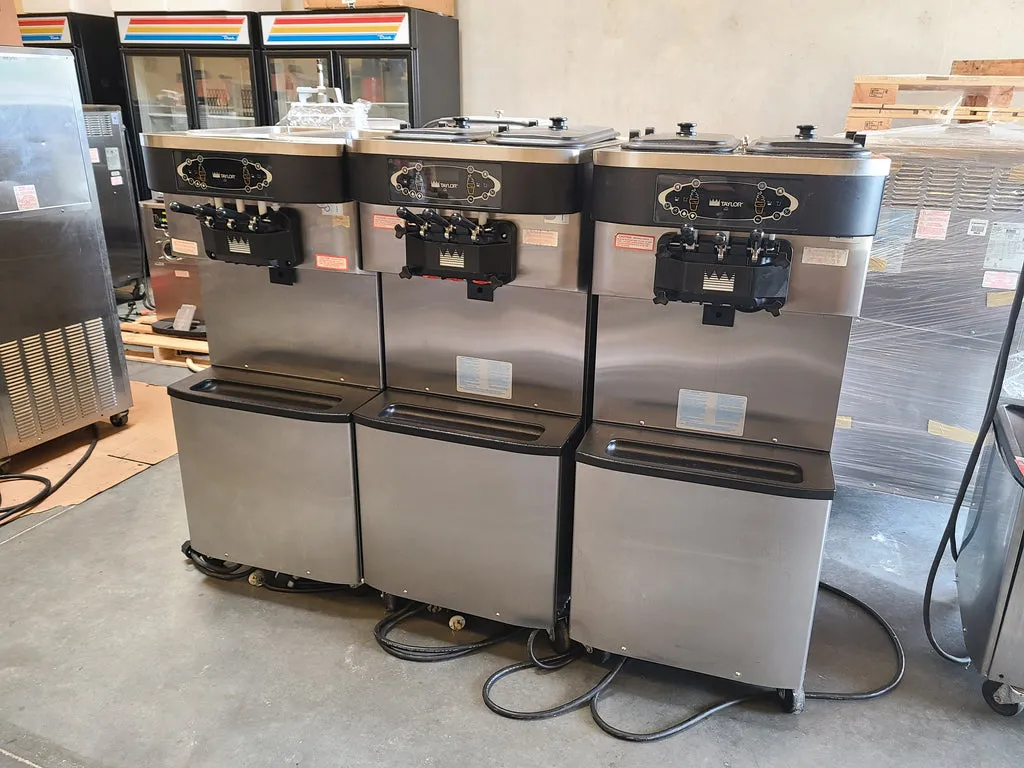
In an unexpected yet technically significant development within the emulation community, Libretro contributor Jesse Talavera has officially announced the release of McSoftServe, an innovative new emulator designed to replicate the operational intricacies of the Taylor C713 soft-serve ice cream machine. This unique project, available immediately within the RetroArch platform, marks a notable departure from traditional video game console or computer emulation, venturing into the realm of industrial equipment simulation and digital preservation. The C713 model, widely recognized for its prevalence in a prominent global fast-food chain, has garnered a reputation for both its efficiency and its frequently discussed maintenance demands, making it a culturally resonant subject for such a technical endeavor.
The Genesis of an Unconventional Emulator
Jesse Talavera, a name familiar to many within the Libretro ecosystem, has previously distinguished himself through his contributions, most notably as the author of the melonDS DS core for RetroArch. His prior work on Nintendo DS emulation showcased his proficiency in reverse engineering and faithfully replicating complex hardware architectures. The pivot from handheld gaming consoles to industrial food service machinery represents a considerable shift in focus, highlighting Talavera’s diverse technical interests and the expansive capabilities of the Libretro framework. Talavera indicated that McSoftServe has been "in the oven" for a considerable period, suggesting a meticulous development process dedicated to accurately capturing the nuances of the C713 machine.
The Libretro project itself serves as the foundational platform for McSoftServe. Libretro is a free, open-source API (Application Programming Interface) that standardizes the development of emulators, game engines, and media players, allowing them to be easily integrated into a unified frontend called RetroArch. This architecture enables a vast array of "cores"—individual emulators or applications—to run seamlessly within a single interface, offering users a consistent experience across diverse systems. The integration of McSoftServe into RetroArch underscores the platform’s flexibility and its community’s willingness to embrace projects that push the boundaries of what constitutes "emulation." Historically, RetroArch has been celebrated for its comprehensive support for classic gaming systems, but its open-ended design inherently allows for applications far beyond entertainment, as demonstrated by Talavera’s latest creation.
Understanding the Taylor C713: An Industrial Icon
The Taylor C713 soft-serve machine is far from an obscure piece of equipment. It is part of a series of industrial-grade ice cream and milkshake machines manufactured by Taylor Company, a leading global supplier of food service equipment. These machines are characterized by their robust construction, capacity for high-volume production, and sophisticated internal diagnostics. The C713, in particular, gained widespread recognition due to its adoption by a well-known American fast-food franchise, making it a ubiquitous sight in thousands of establishments worldwide.
While lauded for its ability to consistently produce soft-serve products and its general reliability under heavy use, the C713, like any complex industrial apparatus, requires diligent maintenance. This maintenance burden, encompassing daily cleaning cycles, periodic calibration, and occasional repairs, has inadvertently elevated the machine to a cultural phenomenon. The frequent unavailability of soft-serve products at certain fast-food locations, often attributed to the machines being "broken" or undergoing lengthy cleaning cycles, has spawned countless memes and public discussions. This cultural backdrop adds an intriguing layer to the development of McSoftServe, suggesting that the emulator might not only serve a technical purpose but also engage with a widely recognized public frustration and curiosity.
Technically, the C713 operates through a complex interplay of refrigeration, mixing, and dispensing mechanisms, controlled by an internal microcomputer system. This system manages various operational modes, including "serve," "standby," "wash," and "heat treat" cycles. The "heat treat" cycle, for instance, pasteurizes the ice cream mix daily to maintain hygiene, a process that can take several hours, during which the machine is unavailable for dispensing. The machine’s control panel provides feedback on its status, error codes, and allows operators to initiate different modes. Emulating such a system requires a deep understanding of its firmware, control logic, and the timing of its various processes—a challenge akin to emulating a complex embedded system rather than a general-purpose computer.
The Technical Architecture of McSoftServe
Developing an emulator for an industrial machine like the Taylor C713 presents a unique set of technical hurdles compared to emulating a game console. Game consoles often have well-documented hardware specifications, and their software (games) is designed for public interaction. Industrial machines, conversely, operate on proprietary firmware, often with minimal public documentation, and their interfaces are designed for trained operators.
McSoftServe likely functions by simulating the core microcontroller and associated peripheral chips that govern the C713’s operations. This involves:
- CPU Emulation: Replicating the instruction set and behavior of the machine’s embedded processor.
- Memory Management Unit (MMU) Simulation: Handling how the CPU accesses its internal ROM (firmware) and RAM (volatile data).
- Peripheral Emulation: Simulating crucial components such as:
- Input/Output (I/O) Controllers: For the control panel buttons, display, and various sensors (temperature, viscosity, liquid levels).
- Timers and Interrupt Controllers: Essential for managing real-time operations, cleaning cycles, and diagnostic routines.
- Specialized Hardware: Potentially including motor controllers for the agitator and pump, and refrigeration unit controls.
- Firmware Reverse Engineering: The most challenging aspect would be obtaining and reverse-engineering the C713’s proprietary firmware to understand its operational logic, error codes, and control sequences. This process often involves disassembling the firmware, analyzing its code, and mapping out its functions without official schematics or documentation.
Within RetroArch, McSoftServe would function as a "core," loading the C713’s emulated firmware. Users would interact with a virtual representation of the machine’s control panel, complete with simulated buttons and a display screen. This would allow them to navigate the machine’s menus, initiate cleaning cycles, trigger diagnostic tests, and observe its simulated operational states and error messages. The "surprises" Talavera hinted at could range from faithfully reproduced error codes to specific, quirky behaviors of the real machine, adding to the authenticity of the simulation.
A Timeline of Digital Preservation’s Expanding Scope
The concept of emulation has evolved significantly since its early days. Initially, it focused primarily on preserving and replaying video games and software from obsolete computer systems. Early emulators for systems like the Apple II, Commodore 64, and various arcade machines emerged in the 1980s and 1990s, driven by enthusiasts. The turn of the millennium saw a boom in console emulation, leading to sophisticated projects like MAME (Multiple Arcade Machine Emulator), which aimed to preserve every arcade game ever made.
Libretro and RetroArch, which gained prominence in the 2010s, further refined this approach by providing a universal frontend and API, democratizing emulator development and access. While the vast majority of cores have been dedicated to gaming, the platform’s open nature has always harbored potential for broader applications. Projects like ScummVM, which preserves classic adventure games, and even emulators for calculators, hinted at this expanded scope. McSoftServe, however, represents a more dramatic leap into industrial hardware.
This development can be seen as a continuation of a broader trend in digital preservation, where the focus extends beyond software to the underlying hardware and the cultural context surrounding it. Preserving the operational logic of an industrial machine like the C713 ensures that future generations can study its engineering, understand its societal impact, and even experience its notorious "maintenance burden" firsthand, albeit virtually. This contributes to a more holistic form of digital heritage.
Broader Implications: Beyond Gaming and Nostalgia
The introduction of McSoftServe carries several significant implications, extending far beyond the immediate novelty of emulating an ice cream machine.
-
Redefining Emulation and Digital Preservation: McSoftServe challenges the conventional definition of emulation, pushing it past entertainment devices into functional, real-world industrial machinery. This could inspire further projects aimed at preserving the operational logic of other unique or culturally significant pieces of hardware, from vintage medical equipment to antique vending machines. Such efforts contribute to a more comprehensive digital archive of technological history.
-
Educational and Training Potential: An accurate emulator of an industrial machine could have practical applications. For instance, new employees in fast-food franchises could potentially use McSoftServe for training purposes, learning the various operational modes, cleaning procedures, and diagnostic steps of the Taylor C713 without needing access to a physical machine. This could reduce training costs, improve efficiency, and potentially even mitigate some of the "maintenance burden" issues by better preparing staff. The ability to simulate error conditions without damaging real hardware is invaluable for educational settings.
-
Diagnostic and Troubleshooting Aid: While not a substitute for hands-on diagnostics, an emulator could serve as a valuable reference tool for technicians. By simulating specific error codes or operational anomalies, technicians could test hypotheses or familiarize themselves with less common issues before approaching a physical machine. This could streamline troubleshooting processes and reduce downtime.
-
Cultural Commentary and Engagement: The "broken ice cream machine" meme is a potent symbol of modern consumer frustration and the complexities of industrial automation. McSoftServe, by directly engaging with this phenomenon, offers a unique form of cultural commentary. It allows users to "experience" the machine’s quirks and maintenance demands in a simulated environment, fostering a deeper, albeit virtual, understanding of the challenges faced by operators and the engineering behind such ubiquitous devices. It turns a source of public amusement and occasional irritation into a subject of technical exploration.
-
Future of Libretro/RetroArch: This project demonstrates the incredible versatility of the Libretro API and RetroArch frontend. It signals to developers that the platform is open to truly innovative and unconventional "cores," potentially attracting a new wave of contributors interested in digital preservation and simulation beyond the traditional gaming sphere. This diversification could broaden the community’s scope and attract wider attention from various technical and historical preservation communities.
Reactions and Community Outlook (Inferred)
While no official statements from Taylor Company or the fast-food franchise are expected regarding this emulator, the reaction within the Libretro community and broader tech sphere is likely to be a mix of amusement, curiosity, and technical admiration. Jesse Talavera’s motivations likely stem from a combination of intellectual curiosity, a passion for reverse engineering, and perhaps a playful nod to the machine’s cultural notoriety.
A spokesperson for the Libretro development team, if queried, might emphasize the platform’s open-source ethos and its commitment to digital preservation in all its forms. They would likely commend Talavera for his ingenuity and for showcasing the extensibility of the Libretro framework. The project reinforces the idea that emulation is not merely about playing old games, but about understanding, preserving, and interacting with technology, regardless of its original purpose.
The immediate impact will be on the Libretro user base, who now have access to a truly novel core. Its inclusion within RetroArch makes it easily discoverable and accessible to a wide audience, ensuring that this unique piece of industrial simulation will reach those who appreciate both its technical achievement and its cultural resonance. The long-term implications could see a shift in how digital preservation is perceived, encouraging more projects that focus on the hidden complexities of everyday technology.
In conclusion, Jesse Talavera’s McSoftServe is more than just an emulator; it is a statement on the evolving nature of digital preservation, a technical triumph in industrial simulation, and a witty commentary on a pervasive cultural touchstone. Its availability within RetroArch today invites users to explore the inner workings of a machine that has shaped countless dessert experiences and sparked innumerable online discussions, further solidifying Libretro’s role as a vanguard in the digital archiving and emulation landscape.