 Retno Hari Mulyono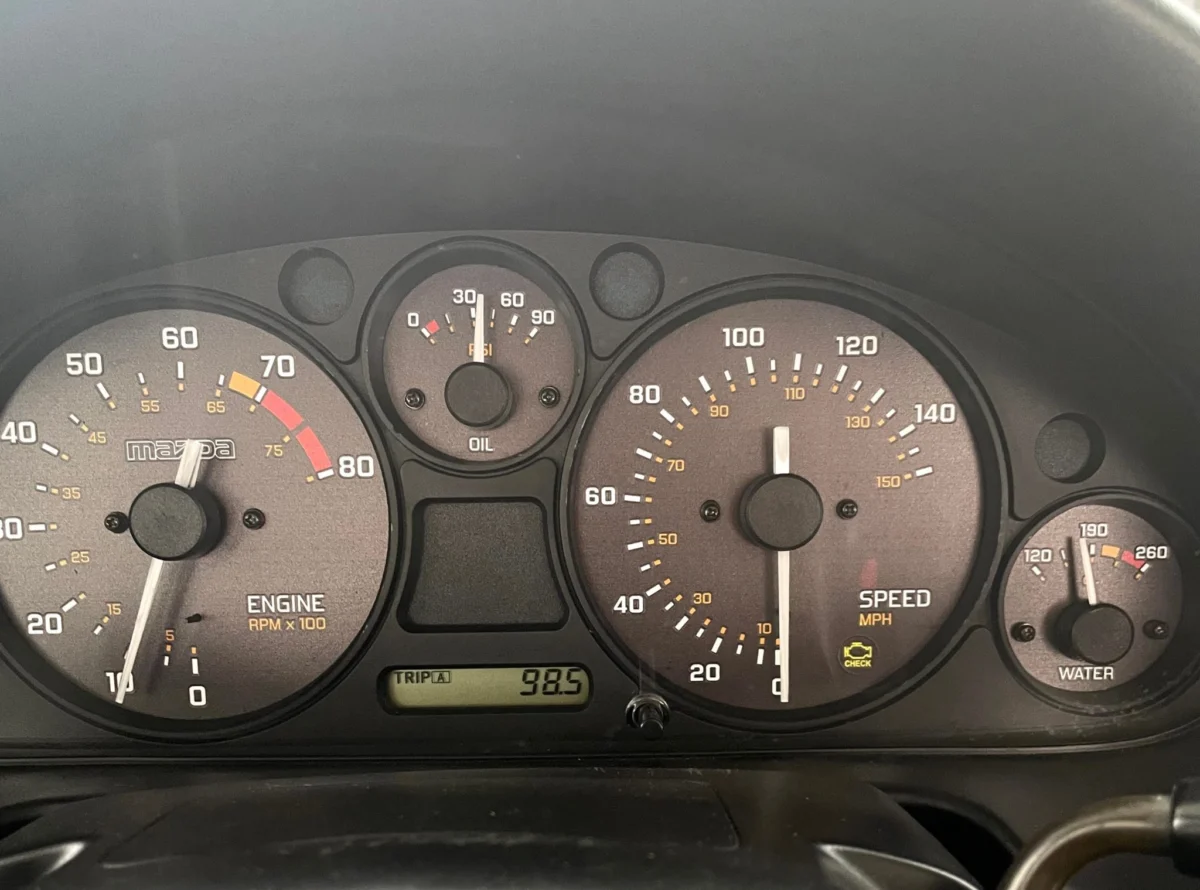
The pursuit of vehicular telemetry and aesthetic refinement remains a cornerstone of automotive enthusiast culture, particularly within the dedicated global community surrounding the Mazda MX-5 Miata. For decades, owners of the second-generation (NB) platform have grappled with the inherent limitations of factory instrumentation—specifically, the obfuscation of critical engine parameters behind heavily damped, non-linear OEM gauges. Recently, a notable aftermarket solution has emerged to address these shortcomings, combining advanced digital data integration with bespoke analog styling. By integrating the CANchecked MFA 2.0 multifunction LCD display directly into the factory instrument cluster alongside RevLimiter custom gauge faces, vehicle owners are discovering a comprehensive pathway to modernize both the functionality and interior ambiance of their sports cars.
Background Context and Factory Instrumentation Shortcomings
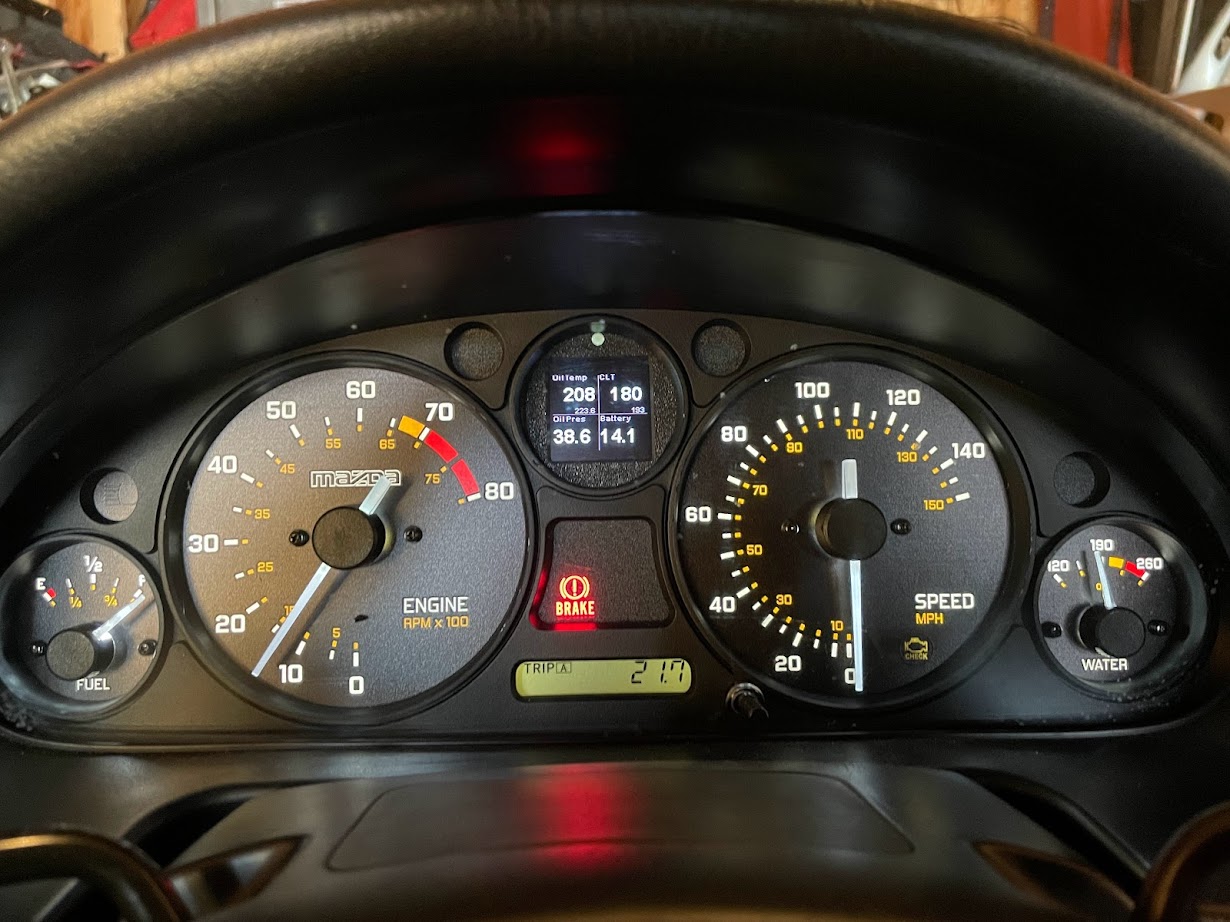
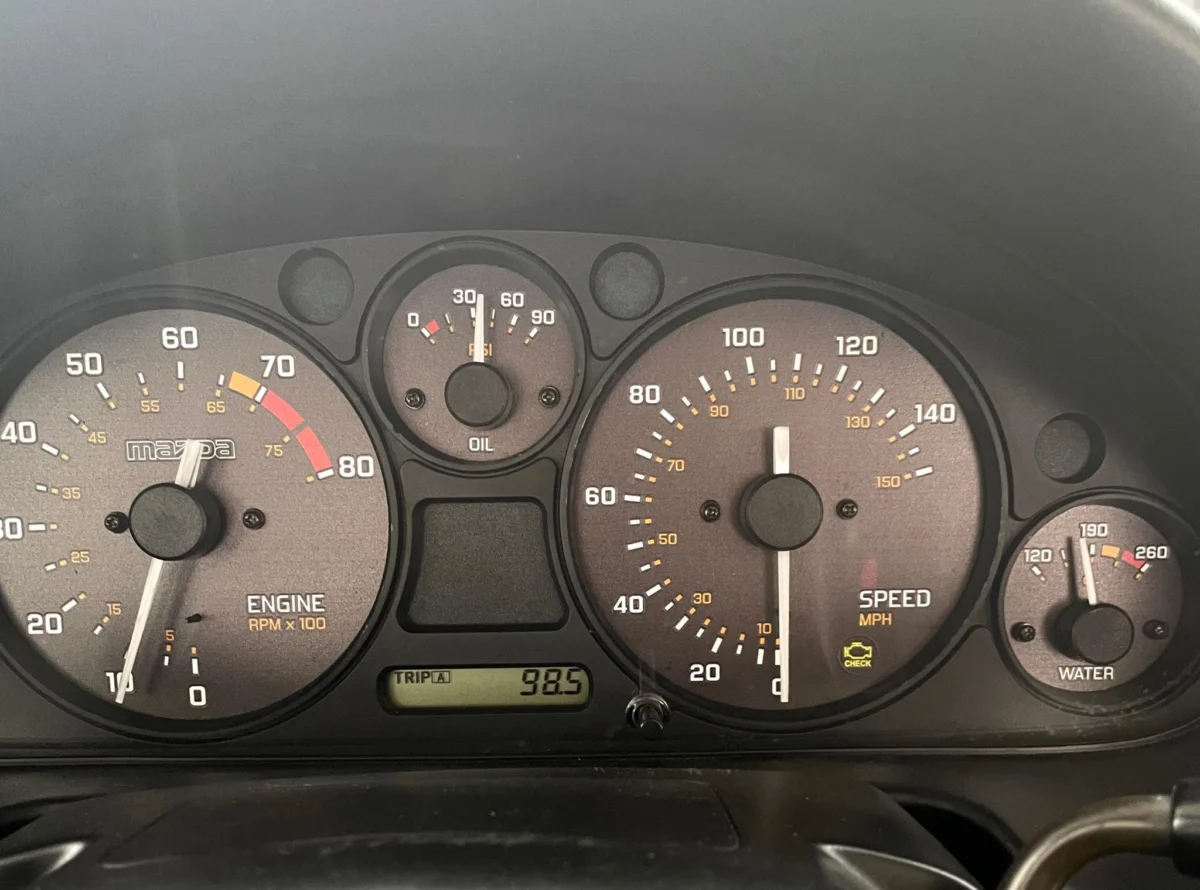
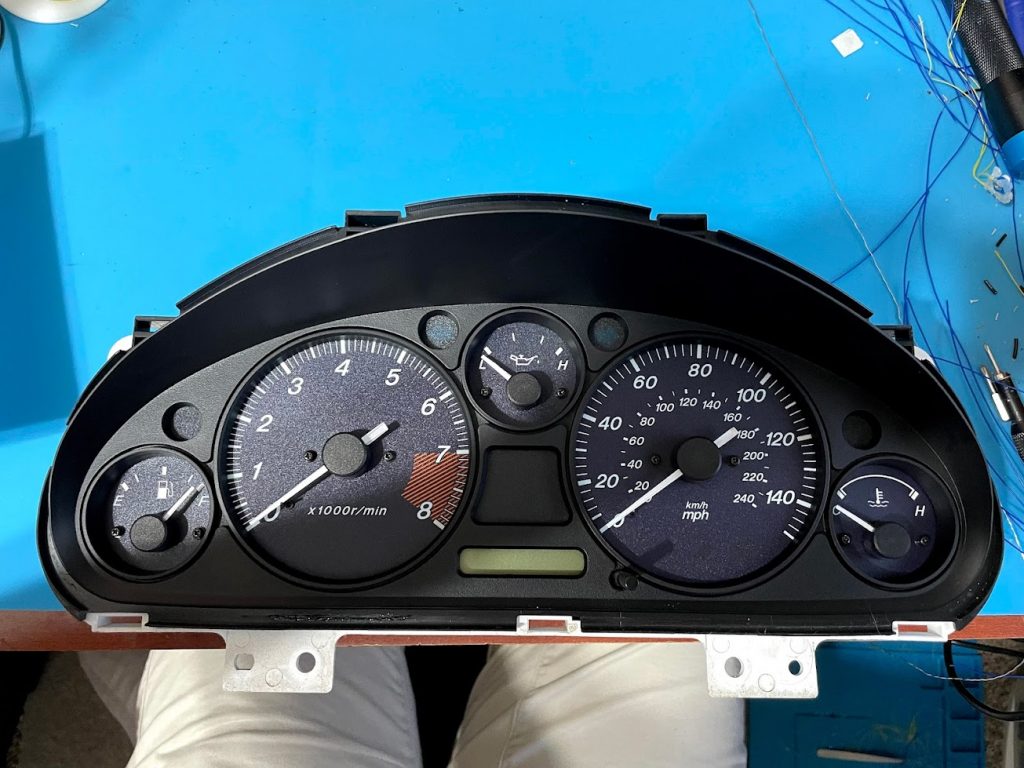
To understand the necessity of these aftermarket interventions, one must examine the engineering philosophy behind the stock NB Miata instrument cluster. Produced from 1998 through 2005, the NB platform features a symmetrical layout comprising a central speedometer, a tachometer, and three auxiliary gauges: a fuel level indicator, a coolant temperature gauge, and an oil pressure indicator. While adequate for standard daily commuting during the vehicle’s original production era, these auxiliary instruments present significant informational deficits for enthusiasts engaging in performance driving, autocross, or track days.
Foremost among these issues is the factory oil pressure gauge. Unlike the genuine, pressure-sensitive mechanical or electrical units found in early NA-generation Miatas (specifically 1990 to 1994 models), the NB oil pressure gauge functions essentially as a binary binary switch governed by a pressure switch rather than a true sending unit. Once the engine surpasses a minimal threshold of oil pressure upon startup, the gauge needle moves to a predetermined center position and remains stationary regardless of actual oil pressure fluctuations. It only drops to zero when pressure is completely lost or the engine is shut off. Consequently, drivers receive no advance warning of progressive oil pressure degradation, rendering the factory gauge a reactive liability rather than a proactive monitoring tool.
Similarly, the factory coolant temperature gauge utilizes a wide thermal buffer zone. The needle climbs to a standard operating position and remains fixed across a broad spectrum of actual engine temperatures. It refuses to ascend further until the coolant reaches dangerously high overheating thresholds. This design choice prevents uninformed panic among general consumers during minor thermal fluctuations, but it fails to provide the precise data required by drivers monitoring engine health under sustained high-load conditions.
The Evolution of Telemetry Integration: From A-Pillar Pods to Digital Clusters
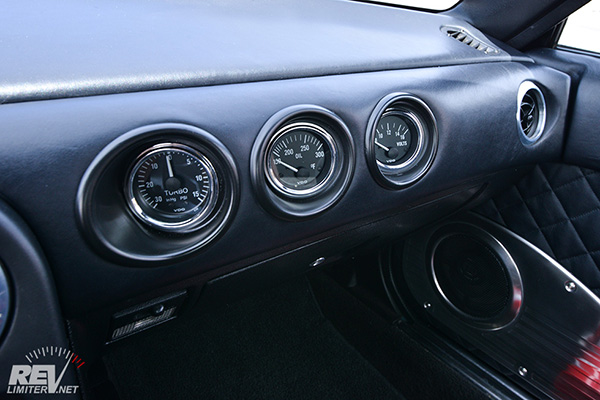
Historically, enthusiasts seeking accurate real-time data turned to auxiliary gauge pods mounted on the driver-side A-pillar or dashboard console. These aftermarket setups typically accommodated mechanical or electronic stepper-motor gauges—such as those produced by Innovative Motorsports or AEM—displaying metrics like boost pressure, oil temperature, oil pressure, exhaust gas temperature, and air-fuel ratios.
While effective at delivering precise sensor readings, the A-pillar configuration introduced notable ergonomic and structural compromises. Drivers frequently reported obstructed forward visibility, creating a hazardous blind spot during tight technical maneuvers on autocross courses. Furthermore, packaging multiple 52mm gauges into confined interior spaces necessitated complex wiring harnesses that often resulted in clutter, increased electrical resistance points, and difficult panel fitment. The physical constraints of the Miata cabin—characterized by a compact dashboard and limited mounting real estate—prompted engineers and fabricators to seek consolidated, low-profile alternatives.
Chronology of Modernized Integration and Technical Implementation
The recent deployment of the CANchecked MFA 2.0 multifunction display represents a paradigm shift in how secondary vehicle data is presented to the driver. Designed specifically to occupy the physical space previously held by the factory oil pressure gauge within the primary instrument cluster, this compact high-resolution LCD screen eliminates the need for external pods or invasive dashboard modifications.
The installation chronology typically involves several technical phases:
- Removal of the factory instrument cluster bezel and extraction of the OEM gauge assembly.
- Disconnection and replacement of factory sensor sub-systems with high-precision electronic senders connected directly to the engine block.
- Integration of a programmable standalone Engine Control Unit (ECU)—such as a Megasquirt system—capable of outputting real-time sensor telemetry via Controller Area Network (CAN bus) protocols.
- Physical mounting of the CANchecked display unit into the cluster housing, paired with direct analog wiring for dedicated parameters like oil and coolant temperatures.
- Configuration of multi-page user interfaces allowing the driver to cycle through customized screen layouts displaying up to six distinct sensor parameters simultaneously.
Despite the sophisticated engineering involved, early adopters have noted specific operational constraints. Most notably, standard LCD panel readability under direct, high-angle sunlight can occasionally be compromised, requiring careful positioning or anti-glare film applications to maintain optimal contrast during daytime open-top driving.
Aesthetic Refinement via RevLimiter Gauge Faces
Complementing the integration of advanced digital telemetry, many builders concurrently upgrade the visual presentation of the analog instrumentation using products from specialized designers such as RevLimiter. While the factory Mazda gauge faces are clean and functional, aftermarket alternatives allow for extensive personalization inspired by classic Japanese automotive styling.
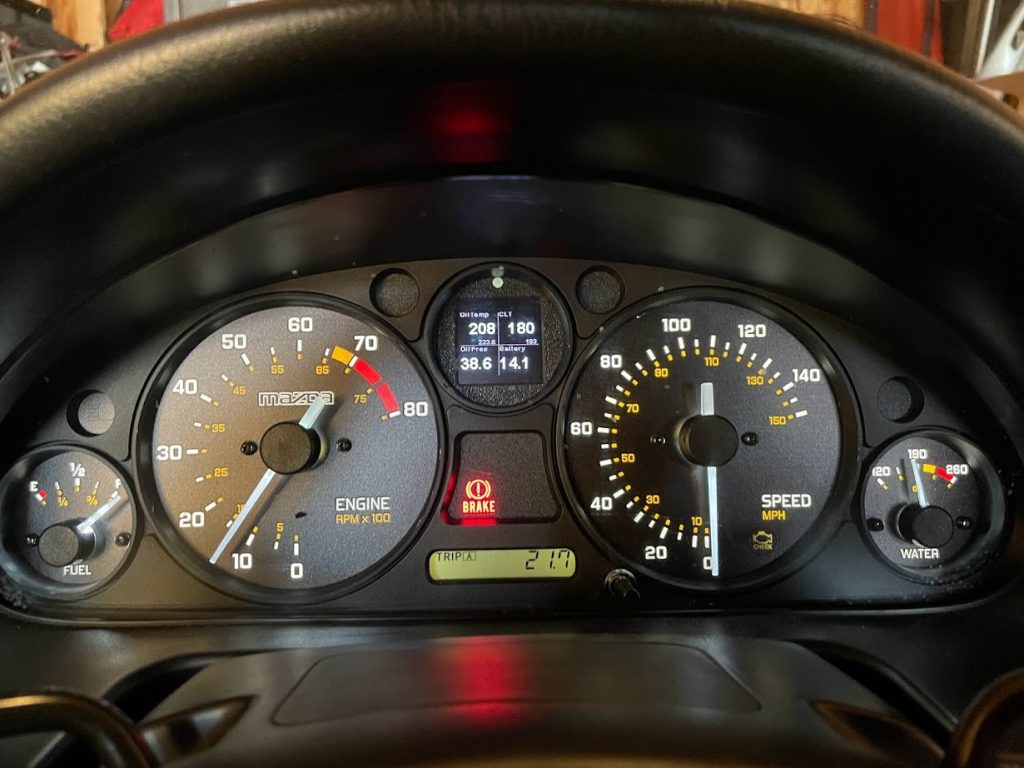
The selection of specific design motifs—such as the popular JNC faceplates—brings period-correct typography, modified scaling, and enhanced night-illumination characteristics to the vehicle interior. Modern installations frequently pair these faceplates with precision-engineered LED backlighting solutions (such as high-output white or warm-amber LEDs) to replace the aging, uneven incandescent illumination bulbs characteristic of 1990s Japanese instrument clusters. Industry feedback indicates that the manufacturing tolerances of these custom gauge faces meet or exceed original equipment manufacturer (OEM) standards, ensuring long-term durability against UV degradation and thermal warping within the dashboard environment.
Broader Impact, Industry Implications, and Future Data Acquisition Trends
The intersection of legacy sports car platforms with modern digital data systems highlights a broader trend within the automotive aftermarket: the retrofitting of motorsport-grade telemetry into vintage and modern classic vehicles. As platforms like the Mazda MX-5 Miata transition from affordable daily drivers to revered enthusiast collectibles, the demand for non-destructive, highly integrated modifications continues to rise.
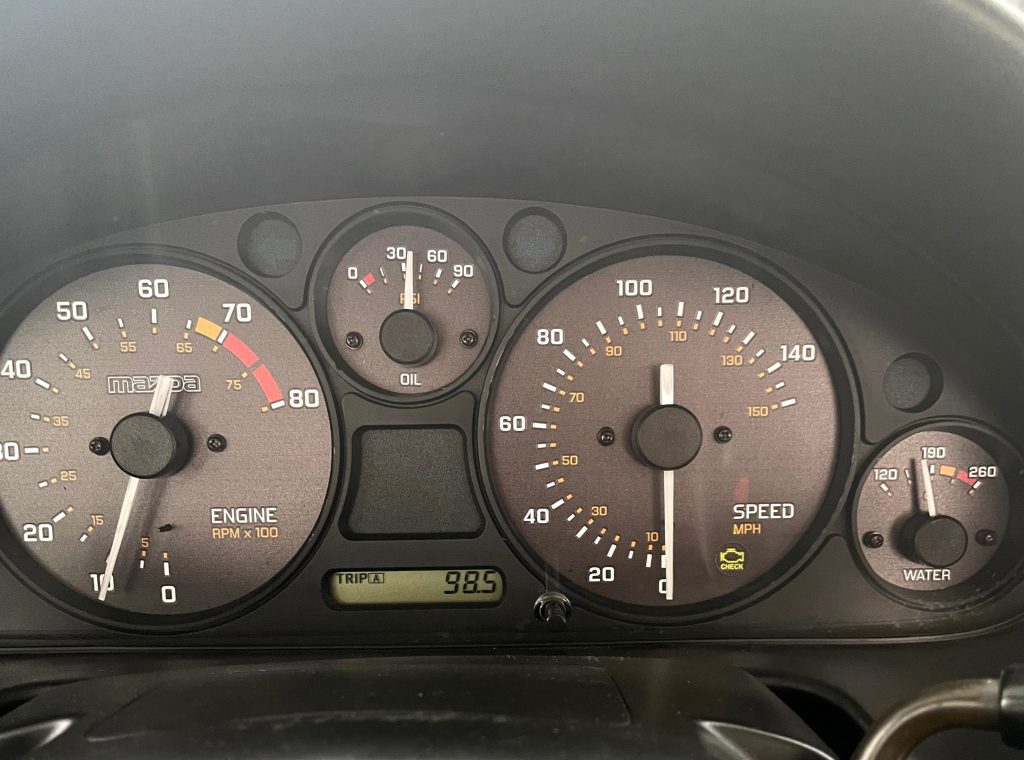
Industry analysts and professional builders note that the ability to monitor vital engine statistics without altering the classic aesthetic of an analog cockpit provides significant value to vehicle owners. By centralizing data streams onto a single high-definition screen while preserving the primary analog sweep of the speedometer and tachometer, manufacturers like CANchecked have established a new benchmark for interior ergonomics.
Looking forward, the evolution of vehicle instrumentation in enthusiast platforms is unlikely to stop at engine monitoring. Industry leaders and track-day participants are already evaluating the integration of comprehensive data-logging ecosystems—such as RaceCapture Pro units—capable of synchronizing ECU telemetry over CAN bus with high-frequency GPS tracking, multi-axis accelerometers, chassis ride-height sensors, and brake pressure transducers.
For the everyday enthusiast and weekend track driver, these technological advancements signify a fundamental shift from passive vehicle operation to active, data-driven performance analysis. By replacing obsolete factory warnings with precise, real-time diagnostic intelligence, drivers can enhance mechanical longevity, optimize on-track driver development, and preserve the driving dynamics that have defined the Mazda MX-5 Miata lineage for over three decades.