 Retno Hari Mulyono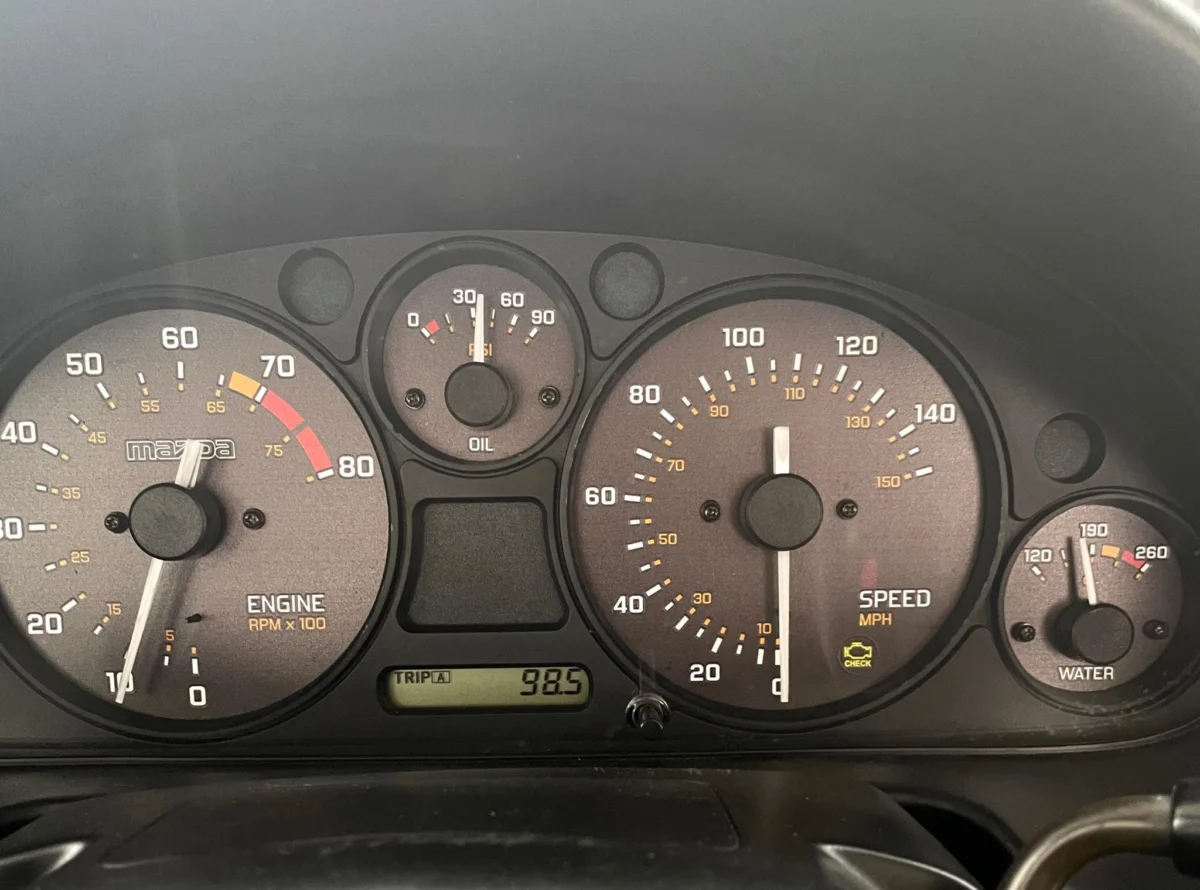
The Mazda MX-5 Miata, affectionately known across generations by its chassis codes NA, NB, NC, and ND, remains one of the most prolific platforms in grassroots motorsports and automotive enthusiast culture. Since its introduction in 1989, the lightweight, rear-wheel-drive roadster has championed the philosophy of Jinba Ittai—rider and horse as one. However, as modern tuning methodologies advance, the limitations of vintage instrumentation become increasingly apparent, particularly for enthusiasts who subject their vehicles to high-stress track environments and autocross competition. A prominent modification chronicle within the enthusiast community recently highlighted a comprehensive overhaul of an NB-generation Miata’s interior instrumentation, replacing archaic factory warning lights and obstructive aftermarket pillar pods with a cohesive, high-tech solution centered around the CANchecked MFA 2.0 multifunction LCD gauge and RevLimiter custom gauge faces.
The Limitations of Factory Instrumentation in the NB Miata
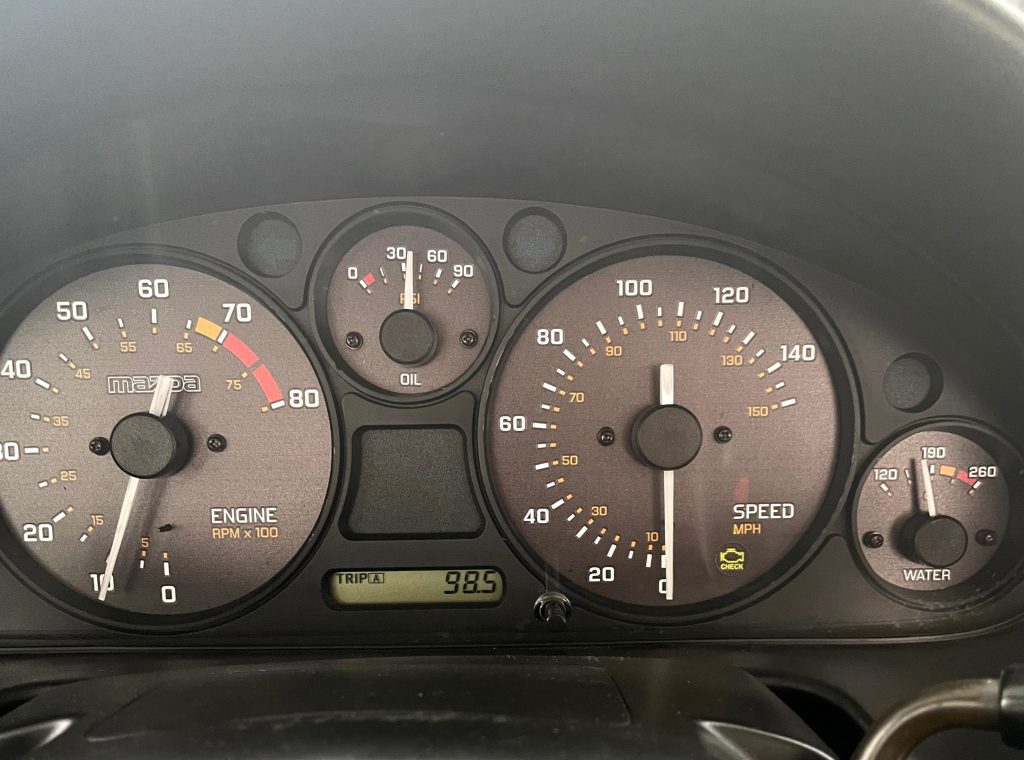
To understand the necessity of modern instrumentation upgrades, one must examine the stock gauge cluster supplied in the second-generation (NB) Miata, produced from model years 1999 through 2005. The factory dashboard arrangement features a traditional analog layout: a prominent tachometer flanked by a speedometer, accompanied by auxiliary gauges for fuel level, coolant temperature, and oil pressure. While sufficient for daily commuting, these secondary gauges have long been criticized by automotive technicians and track day drivers for their lack of genuine utility.
The factory oil pressure gauge, for instance, operates essentially as a glorified binary switch. Driven by a dummy pressure sender, the gauge needle rises to a predetermined nominal position the moment oil pressure exceeds approximately 7 psi and remains completely static throughout normal engine operation. It only drops to zero when the engine is deactivated or when catastrophic pressure loss occurs. Consequently, the driver receives no advance warning of oil pressure degradation, oil starvation during high-lateral-G cornering, or thermal breakdown—scenarios that frequently lead to premature engine failure in modified track cars.
Similarly, the factory coolant temperature gauge utilizes a heavily damped circuit designed to maintain a centered needle position across a remarkably broad spectrum of operating temperatures. The needle will sit comfortably in the middle whether the coolant is at a safe 85°C or an overheating 105°C. It only sweeps upward toward the red zone once severe overheating is already underway, rendering it inadequate for proactive thermal management. While early NA-generation Miatas (1989–1993) featured genuine, functioning oil pressure transmitters, Mazda shifted away from linear telemetry in subsequent iterations to reduce warranty claims stemming from customer panic over normal pressure fluctuations. Remedying these shortcomings typically requires extensive custom wiring, aftermarket sensors, and physical modifications to the dashboard assembly, prompting many enthusiasts to seek more sophisticated aftermarket alternatives.
Evolution of Aftermarket Monitoring: From Pillar Pods to Integrated LCDs
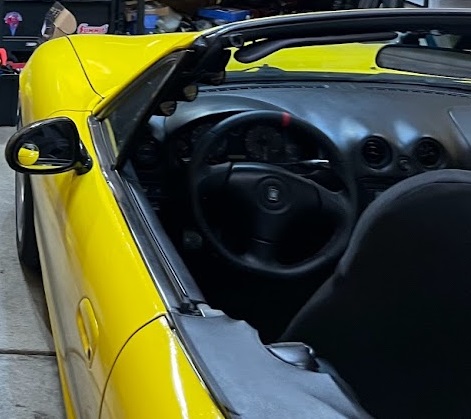
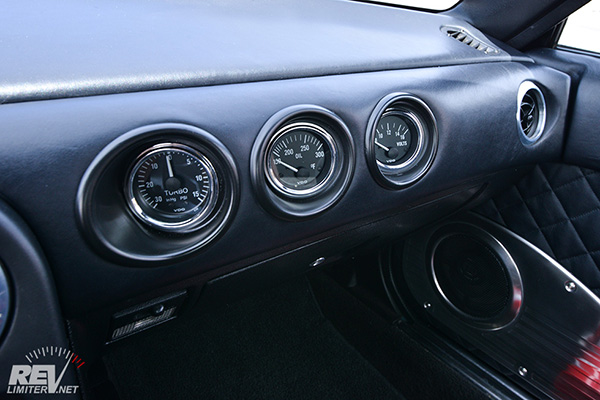
Historically, enthusiasts requiring accurate, real-time data acquisition turned to external gauge mounting solutions. The most prevalent method involved installing multi-pod pillar mounts along the driver-side A-pillar, housing individual 52mm or 60mm mechanical or electronic gauges. In previous modifications, the vehicle in question utilized a triple-gauge A-pillar pod populated with Innovative Motorsports dual-function digital gauges, alongside an AEM air-fuel ratio (AFR) gauge integrated into a modified driver-side climate control vent.
This setup successfully monitored critical parameters including manifold absolute pressure (MAP) or boost, oil temperature, oil pressure, coolant temperature, and electrical system voltage. However, prolonged utilization revealed significant ergonomic and safety drawbacks. The A-pillar pod introduced a substantial forward-visibility blind spot, a critical handicap during tight autocross slaloms and apex-hunting on road courses. Furthermore, the physical fitment of universal or semi-custom pillar covers necessitated awkward plastic fabrication, and the sheer volume of wiring required to route multiple discrete sensors into the A-pillar created an intricate, difficult-to-troubleshoot harness behind the dashboard.
Driven by the need for a cleaner aesthetic, reduced clutter, and unhindered sightlines, the project transitioned toward a more integrated, centralized digital interface. The central challenge of cabin modification within the Mazda Miata platform is spatial constraints; the dashboard real estate is exceptionally limited, leaving few viable locations for additional readouts without permanently altering the interior trim or sacrificing creature comforts.
The CANchecked MFA 2.0 Multifunction Display Solution
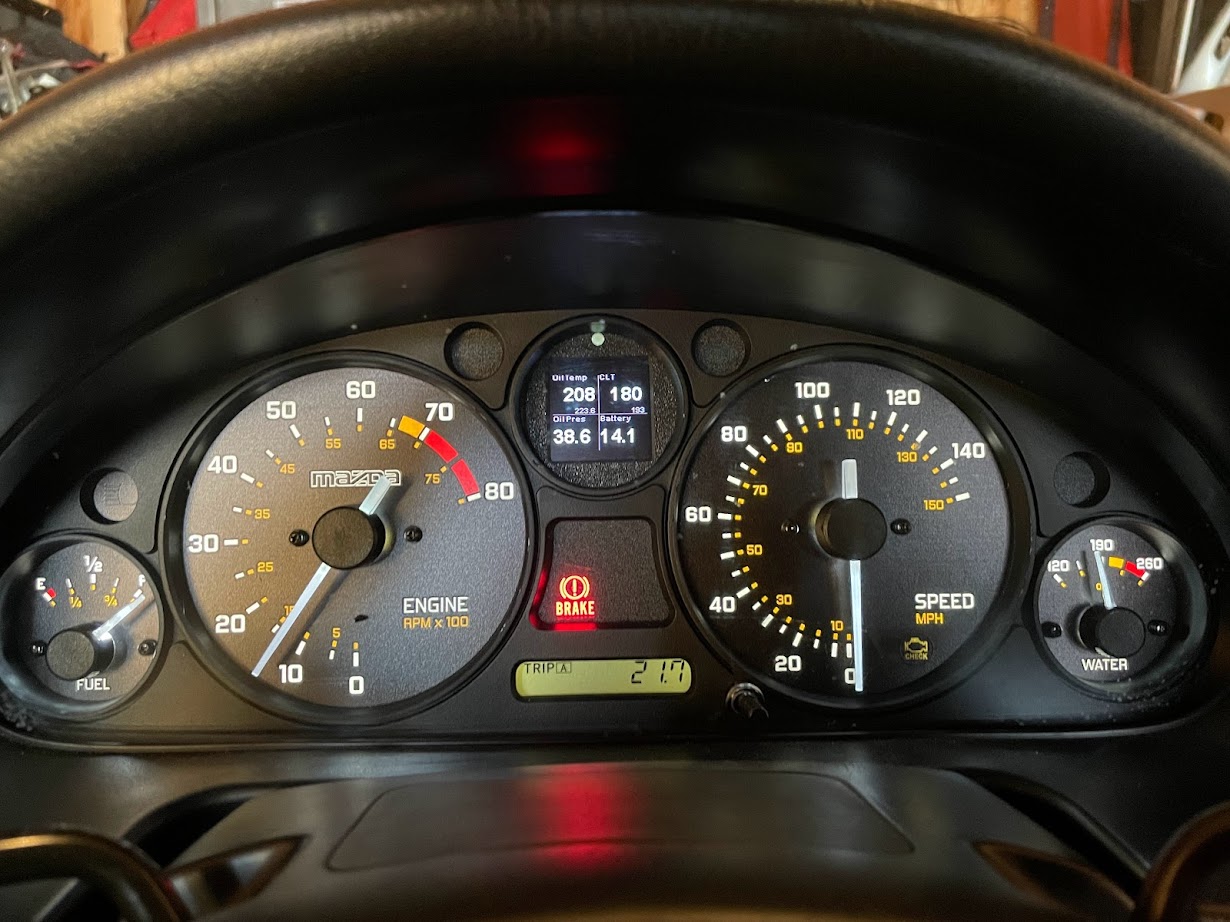
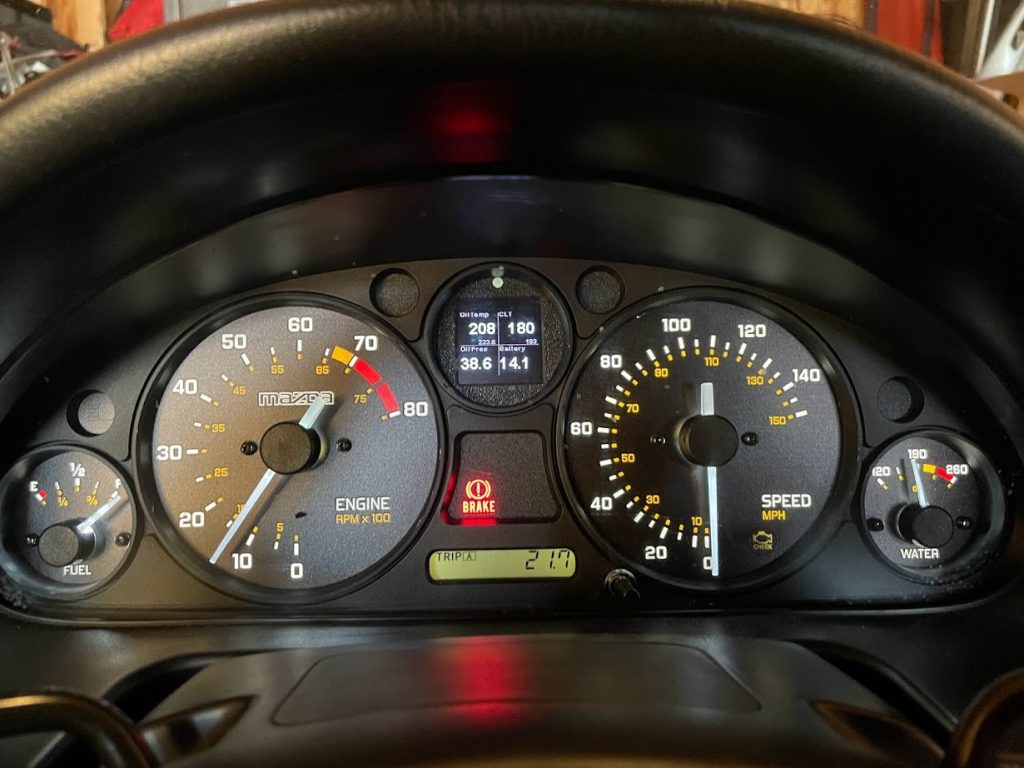
The turning point in modernizing the vehicle’s telemetry arrived with the adoption of the CANchecked MFA 2.0 multifunction display, a specialized piece of hardware engineered specifically for the Mazda MX-5 NA and NB chassis. Distributed by performance specialists such as Bofi Racing, the unit is engineered to physically replace the factory oil pressure gauge module within the stock instrument cluster housing, utilizing existing mounting points to maintain an OEM-plus appearance.
The CANchecked display is a high-resolution color LCD screen capable of cycling through multiple user-configurable dashboards. It can render up to six distinct sensor parameters simultaneously, allowing drivers to customize their data viewing profiles based on specific operational contexts, such as street driving, drag racing, or endurance track sessions.
Data ingestion for the MFA 2.0 occurs through two primary pathways. The first and most robust method relies on the Controller Area Network (CAN) bus protocol broadcast by an aftermarket programmable engine control unit (ECU). Because factory NA and NB Miatas lack native CAN bus architecture, upgrading to a standalone ECU—such as a Megasquirt system—is a prerequisite for accessing comprehensive engine telemetry, including engine RPM, coolant temperature, intake air temperature, injector duty cycle, and ignition timing directly from the engine management system. For enthusiasts retaining factory engine management, auxiliary protocol converters or microcontrollers like Arduino can theoretically bridge legacy sensor outputs to CAN data streams, though standalone ECUs remain the industry standard.
The second data ingestion method utilizes the gauge’s built-in analog inputs. In this particular installation, the analog channels were leveraged to directly monitor physical sensors for oil pressure, oil temperature, and coolant temperature. While this setup offers high fidelity, hardware integration requires careful calibration to ensure compatibility with non-linear sensor resistance curves.
Despite its extensive capabilities and seamless physical integration, user feedback highlights minor operational limitations, most notably screen luminance. In direct, high-angle sunlight, the LCD panel can occasionally suffer from reduced contrast, making quick glances during bright daytime driving slightly more challenging than traditional backlit analog needles. Nevertheless, its capacity to consolidate dozens of variables into a single, factory-appearing location represents a monumental leap forward in interior packaging.
Aesthetic Refinement with RevLimiter Gauge Faces
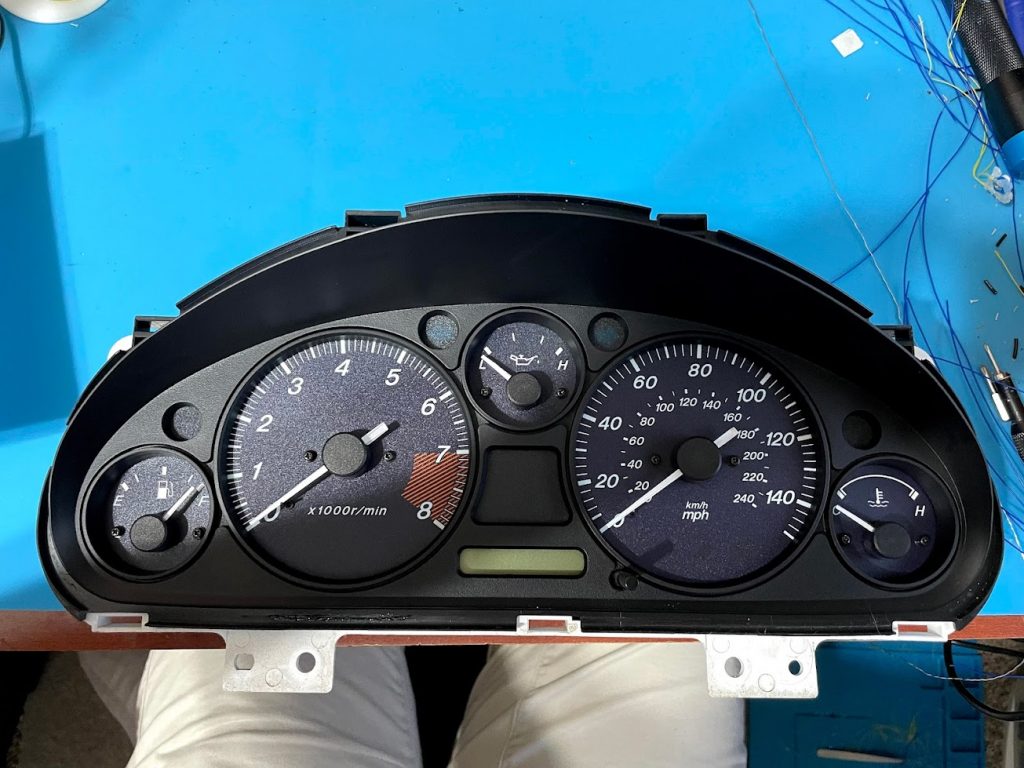
Complementing the digital telemetry upgrade, the vehicle’s visual presentation underwent a comprehensive aesthetic overhaul through the installation of custom gauge faces produced by RevLimiter, a renowned boutique manufacturer specializing in bespoke Mazda Miata interior components.
While the factory white-on-black or silver gauge faces are functionally adequate, they offer little in the way of distinct styling. RevLimiter provides an extensive catalog of pre-designed templates alongside fully bespoke customization services. For this project, the owner selected the "JNC" design series, which draws explicit visual and typographical inspiration from classic Japanese automotive design heritage. The package was installed alongside a conversion kit replacing the aging, dim green incandescent cluster illumination bulbs with modern, crisp white LED lighting.
Quality assessments from automotive restoration specialists place RevLimiter products on par with, or frequently exceeding, original equipment manufacturer (OEM) manufacturing standards. The installation process demands meticulous attention to detail—particularly regarding needle removal, calibration, and alignment to prevent speedometer and tachometer inaccuracies—but yields a timeless, high-end cockpit ambiance that bridges the gap between classic analog roadster aesthetics and modern electronic capability.
Broader Implications and Future Data Acquisition Roadmap
The integration of the CANchecked MFA 2.0 and RevLimiter gauge faces illustrates a broader paradigm shift in vintage vehicle modification. Rather than relying on tacked-on auxiliary gauges that compromise structural ergonomics and cabin aesthetics, modern enthusiasts increasingly favor OEM-integrated digital solutions that preserve the driver-centric focus of lightweight sports cars.
Looking forward, the evolution of this specific NB Miata build points toward a deeper commitment to telemetry and data-driven driver development. Plans are already underway to incorporate a dedicated data logger, such as the RaceCapture Pro system. Unlike simple dashboard displays, professional-grade data loggers capture high-frequency GPS positioning, multi-axis accelerometer data, and critical vehicle dynamics parameters—including individual wheel speeds, steering angle, brake line pressure, and throttle position.
By analyzing objective telemetry rather than subjective driving impressions, drivers can systematically identify areas for improvement, refine braking zones, optimize cornering lines, and monitor mechanical wear in real-time. As accessible motorsport technology continues to mature, the boundary between amateur track day builds and professional race preparation grows increasingly narrow, proving that even a platform designed over three decades ago can fully embrace the demands of modern automotive engineering.