
 Ganda Hendra Perkasa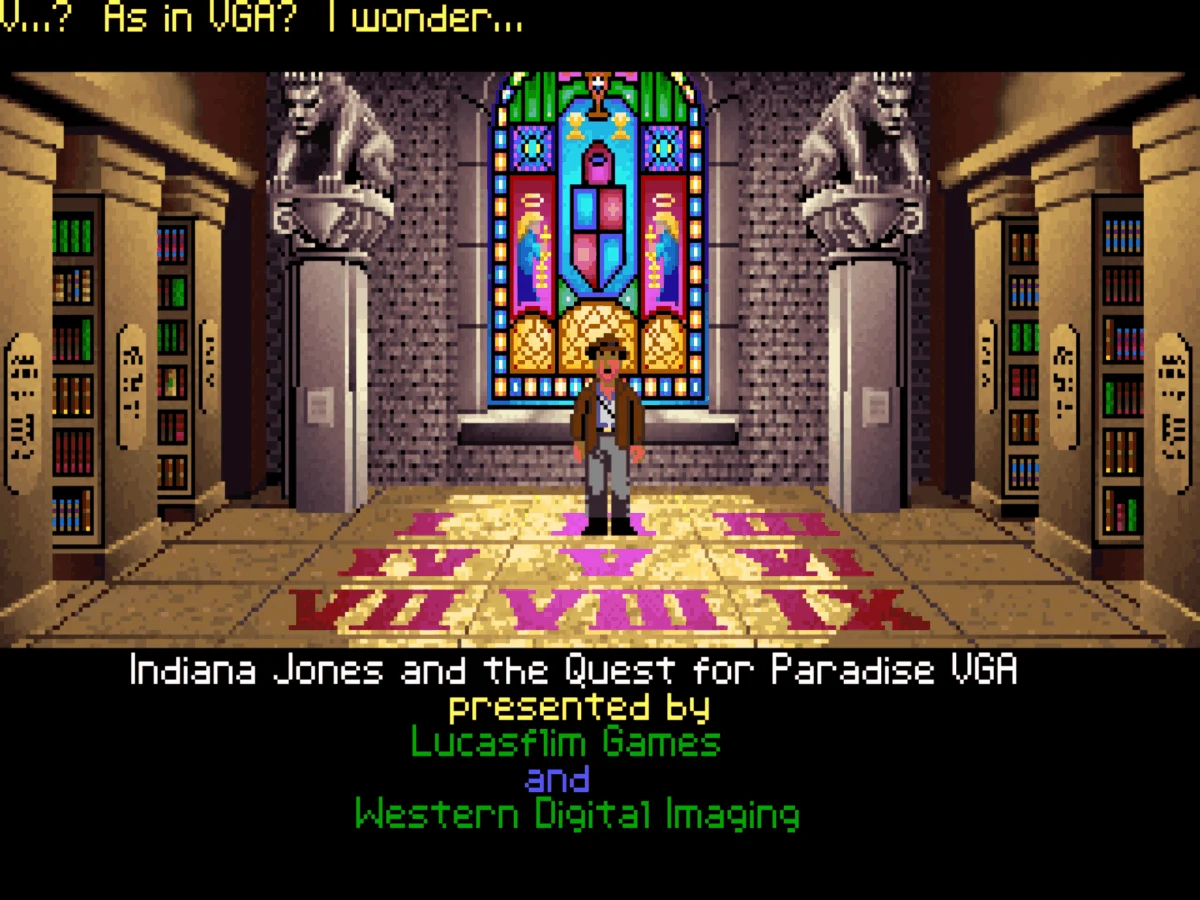
The digital preservation community has uncovered a previously unknown artifact from the golden age of adventure gaming: a short, non-interactive demo titled Indiana Jones and the Quest for Paradise VGA. Unearthed from the personal archives of Aric Wilmunder, a principal architect and long-time custodian of the legendary SCUMM adventure game engine at Lucasfilm Games, the discovery sheds new light on the technological and commercial strategies employed by software developers and hardware manufacturers during the early 1990s PC graphics transition.
While the title suggests a brand-new entry in the celebrated multimedia franchise, the software is not a playable video game. Instead, it operates as a scripted, non-interactive cinematic sequence utilizing the SCUMM (Script Creation Utility for Maniac Mansion) engine. The demo repurposes pixel art and audio assets originally created for the 1989 hit Indiana Jones and the Last Crusade: The Graphic Adventure, adapted to take advantage of the nascent VGA (Video Graphics Array) display standard.
The artifact has since been made available to the public. Researchers have uploaded the demonstration files to the Internet Archive, alongside archival video footage allowing gaming historians and enthusiasts to examine the piece in motion.
Technological Crossroads: The Rise of VGA and the 1990 PC Landscape
To understand the significance of Indiana Jones and the Quest for Paradise VGA, one must examine the state of personal computing in 1990. The transition from older graphics standards, such as EGA (Enhanced Graphics Adapter) which supported a palette of 16 colors, to the newly introduced VGA standard, capable of displaying 256 colors simultaneously, represented a massive leap in visual fidelity. However, in 1990, VGA display cards remained a costly luxury item for the average IBM-compatible personal computer user. High costs restricted widespread adoption, leaving software developers in a bind: invest resources into developing high-end graphics for a hardware base that barely existed, or stick to the safer, ubiquitous EGA and CGA standards.
To accelerate market adoption, hardware manufacturers frequently partnered with software developers to create bundled promotional incentives. Western Digital, a prominent manufacturer of storage solutions and graphics hardware—including the Paradise VGA display card line—entered into a strategic marketing agreement with Lucasfilm Games. Under this arrangement, Western Digital bundled a newly minted 256-color VGA version of Indiana Jones and the Last Crusade with its Paradise VGA hardware products, offering consumers an immediate, high-profile software justification for purchasing the expensive upgrade.
Behind the scenes, Lucasfilm Games had already laid the technical groundwork for high-color graphics through an entirely separate commercial venture. Japanese electronics firm Fujitsu had previously commissioned Lucasfilm to develop specialized, 256-color editions of its prominent adventure titles for the FM Towns personal computer system. Having already absorbed the development costs required to upgrade their artistic assets and engine capabilities to support 256 colors for the Japanese market, Lucasfilm found itself uniquely positioned. The studio possessed a ready-made library of high-color assets that could be leveraged domestically to support Western Digital’s hardware rollout. In effect, the studio received double financial backing for a single technological upgrade, funding the transition of its internal toolset through foreign commissions and domestic hardware partnerships.

Mystery of the Artifact: Exhibition, Distribution, and Production Anomalies
Despite the clear commercial motivations tying the software to Western Digital’s marketing campaign, historians face a significant historical void regarding the intended deployment of Indiana Jones and the Quest for Paradise VGA. Documentation concerning the demo’s creation, distribution, and public exhibition is entirely absent from corporate records and personal recollections.
Aric Wilmunder and other veteran developers contacted regarding the discovery have expressed no recollection of working on the project, pointing to the decentralized and fast-paced nature of game development during that era. Small promotional snippets, internal tech demos, and proof-of-concept files were frequently assembled by junior staff members or marketing departments, utilized briefly for trade show booths or retail displays, and subsequently archived or discarded.
Compounding the mystery are distinct anomalies within the software itself. Throughout the duration of the cinematic sequence, an on-screen title card identifies the developer as "Lucasflim Games," a prominent spelling error that persisted unchecked for the entirety of the demo. The presence of this glaring typographical error in official promotional materials—coupled with the complete lack of paper trails, design documents, or retail distribution records—strongly suggests that the demo may never have been finalized, reviewed by quality assurance, or publicly deployed. Whether it was discarded before reaching retail channels, shelved after a canceled trade show presentation, or simply circulated internally among engineers remains an open question for media historians.
Broader Implications for Digital Preservation and Gaming History
The recovery of Indiana Jones and the Quest for Paradise VGA highlights the fragility of early digital media and the critical importance of archival recovery efforts. As pioneers of the interactive entertainment industry age, the rescue of personal collections from industry veterans provides invaluable primary source material that corporate balance sheets and formal institutional repositories frequently fail to capture.
Software engines like SCUMM revolutionized the computer role-playing and adventure genres throughout the late 1980s and 1990s, powering iconic titles such as The Secret of Monkey Island, Day of the Tentacle, and Sam & Max Hit the Road. Understanding how Lucasfilm managed engine iterations, cross-platform asset conversion, and hardware-manufacturer partnerships offers vital insights into the commercial realities of the MS-DOS software market.
Industry analysts note that while the find is modest in scale—consisting of a brief, non-interactive script rather than a lost playable masterpiece—it serves as a microcosm of early 1990s PC gaming economics. Hardware-software bundling played a pivotal role in consumer technology adoption long before the era of internet broadband and digital storefronts. By preserving code samples, promotional tie-ins, and unfinished technological experiments, archival groups ensure that the iterative history of computer graphics and digital storytelling remains accessible for future academic study and public education.