Indra Gunadi
The Evolution of the Game Boy Homebrew Scene
The release of The Year I Wrote You arrives during a period of sustained interest in the Nintendo Game Boy (DMG-01) and its successor, the Game Boy Color (GBC). Since the early 2010s, the homebrew scene has transitioned from simple hardware mods and minor code patches to the creation of full-scale, commercially viable software packages. The proliferation of accessible development tools, such as the Game Boy Development Kit (GBDK) and various visual scripting engines designed for 8-bit architecture, has democratized the process of creating software for hardware that was officially discontinued in 2003.
Market analysts following the retro-gaming sector have noted that the 2020s have represented a "golden age" for legacy hardware development. This trend is driven by a combination of nostalgia, the accessibility of affordable flash cartridges, and the rise of digital storefronts that facilitate the distribution of ROM files and physical cartridge reproductions. The Year I Wrote You fits into a growing category of "literary games" that prioritize thematic weight and emotional resonance over the traditional high-score-driven arcade mechanics that defined the original Game Boy library in the 1990s.
Narrative Structure and Technical Implementation
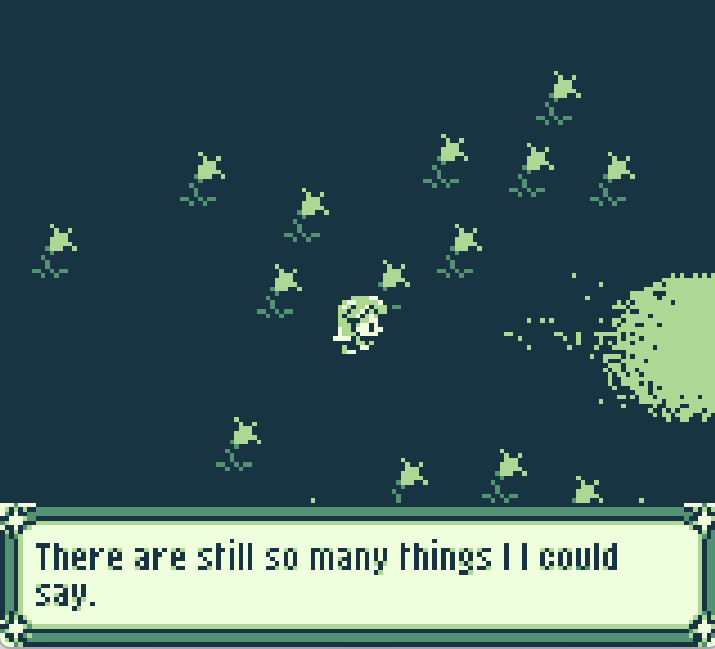
The Year I Wrote You is categorized as a narrative-focused experience, a departure from the platformers and puzzle games that historically populated the Game Boy’s library. The game utilizes "dream levels"—metaphorical environments constructed from the protagonist’s memories—to guide the player through a sequence of love letters that trace a trajectory from affection to mourning.
Technically, the game adheres to the strict limitations of the original Game Boy hardware. This includes the classic four-shade palette, 8×8 tile-based graphics, and the iconic four-channel audio output. By working within these parameters, Sad Sapphic Games has demonstrated a high level of technical competency. Developing for the Game Boy requires a deep understanding of memory banking controllers (MBC), scanline management, and the limitations of the Sharp LR35902 processor. Unlike modern game engines that offer abstraction layers, development for this platform requires a fundamental engagement with assembly language or highly optimized C, ensuring that the game remains compatible with both original 1989 hardware and modern emulators.
Chronology of Development and Release
The development cycle for independent titles like The Year I Wrote You often operates outside the traditional public relations cycles of major gaming corporations. The following timeline outlines the current state of such projects in the modern homebrew ecosystem:
- Q1 2026: Initial conceptualization of the narrative, focusing on the intersection of epistolary literature and 8-bit exploration.
- Q2 2026: Technical prototyping phase, focusing on memory management to ensure the game could accommodate text-heavy narrative segments, which are notoriously memory-intensive on 8-bit systems.
- August 2026: Finalization of sprite work and audio assets.
- September 15, 2026: Official release of the title via digital distribution channels, marking the transition from development to public consumption.
This timeline reflects the agile nature of small-scale studios. By focusing on a singular, refined vision, developers are able to bypass the protracted development cycles that often plague larger studios, allowing for a more immediate connection between the developer’s intent and the player’s experience.
The Impact of Digital Distribution on Retro Development
One of the primary catalysts for the success of titles like The Year I Wrote You is the shift in how these games reach their audience. Historically, independent developers were limited by the logistical hurdles of physical cartridge manufacturing. Today, platforms such as itch.io and various community-run repositories act as centralized hubs for discovery.
This infrastructure has enabled developers to engage in direct-to-consumer models, bypassing traditional publishing gatekeepers. Data indicates that the community for these games is highly engaged; a single successful homebrew release can reach thousands of players globally within days of its announcement, a feat that would have been impossible prior to the widespread adoption of digital distribution for legacy platforms. The ease with which players can now load ROMs onto hardware—using devices like the EverDrive or custom flash cartridges—has effectively removed the barrier to entry for the general public, broadening the audience for niche titles.
Sociological and Artistic Implications
The emergence of games like The Year I Wrote You suggests a broader shift in the perception of retro-gaming. While the medium was once viewed primarily as a means of digital preservation or a pursuit for collectors, it is increasingly being treated as a legitimate artistic medium for contemporary storytelling. The juxtaposition of sophisticated emotional themes—such as the processing of grief—with the limited aesthetic range of 8-bit hardware creates a unique cognitive dissonance. This contrast often heightens the player’s emotional engagement, as the simplicity of the visuals forces the player to project their own experiences onto the narrative.
In academic circles, this is often discussed as the "aesthetic of restraint." By denying the player the hyper-realistic visual fidelity found in modern titles, the developer invites a different kind of participation. The player becomes a collaborator in the construction of the narrative, using their imagination to fill the gaps left by the low-resolution graphics and sparse soundscapes.
Broader Industry Reactions and Future Outlook
While major industry players continue to push toward 4K rendering and cloud-based processing, the homebrew scene—exemplified by Sad Sapphic Games—serves as a necessary counterweight. Industry analysts suggest that this trend is not merely a temporary fad but a permanent fixture of the gaming landscape. As modern games become increasingly bloated with data and complex, high-latency systems, the "retro" experience offers a clean, reliable, and intimate alternative.
The implications for the broader industry are significant. As hardware continues to evolve, the ability to create software for older platforms provides a training ground for developers to master optimization. Furthermore, the success of these titles indicates that there is a robust, untapped market for games that prioritize narrative depth over technical spectacle.
Looking ahead, the longevity of the Game Boy platform appears secure. With a steady influx of new software, the platform has transcended its original commercial life cycle to become a "living" platform. The release of The Year I Wrote You contributes to this momentum, proving that even thirty-five years after its introduction, the Game Boy remains a viable and compelling canvas for creators to express complex human emotions.
Conclusion
The release of The Year I Wrote You is more than just an addition to the Game Boy library; it is a testament to the creative potential that exists when developers choose to work within defined constraints. By stripping away the excesses of modern game design, Sad Sapphic Games has delivered an experience that is both technically proficient and emotionally resonant. As the homebrew community continues to expand, it is likely that we will see more titles that challenge our expectations of what legacy hardware can achieve, cementing the status of the Game Boy not just as a relic of the past, but as a vibrant, enduring medium for contemporary artistic expression.