 Hartono Sudibyo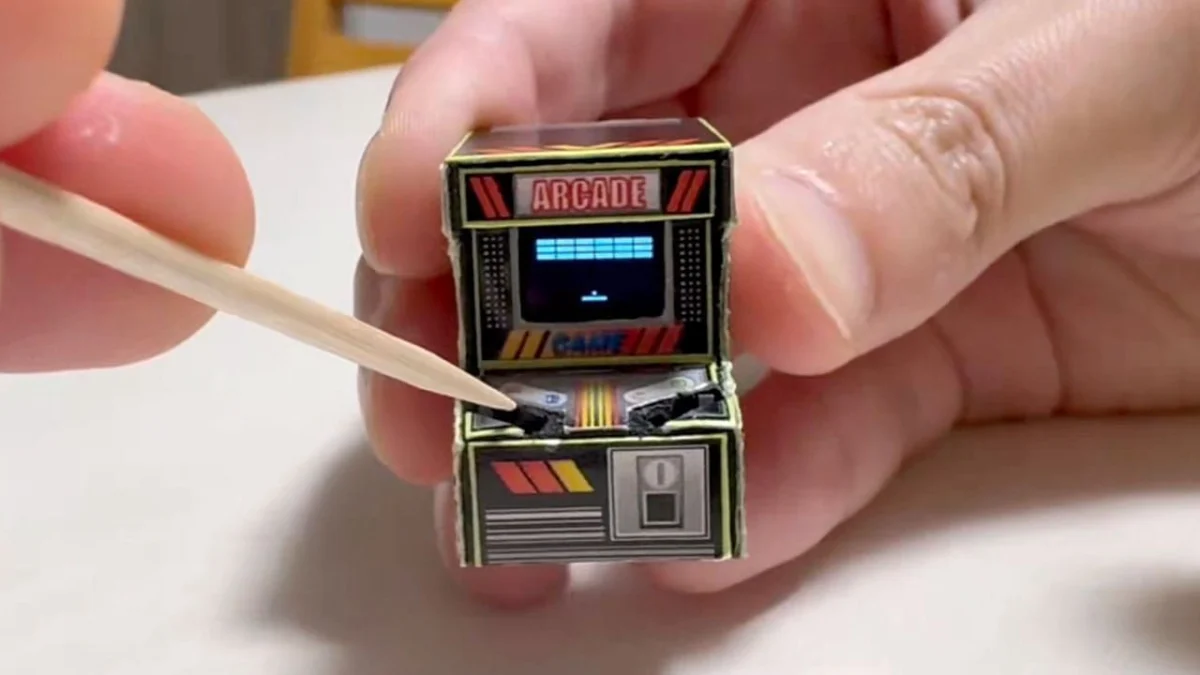
Handmade novelty electronics continue to capture the public imagination as creators push the boundaries of miniaturization to extreme lengths. In an impressive display of micro-engineering and meticulous craftsmanship, X user and maker BitBlt_Korry has unveiled what is arguably one of the smallest functional arcade cabinets ever constructed. Built primarily from paper with an integrated working display, the device requires the use of a wooden toothpick to operate its minuscule controls. While the creator freely admits that the ergonomics are profoundly impractical, the project has reignited online discussions regarding the intersection of retro gaming nostalgia, physical computing limits, and hardware miniaturization.
Main Facts and Technical Overview
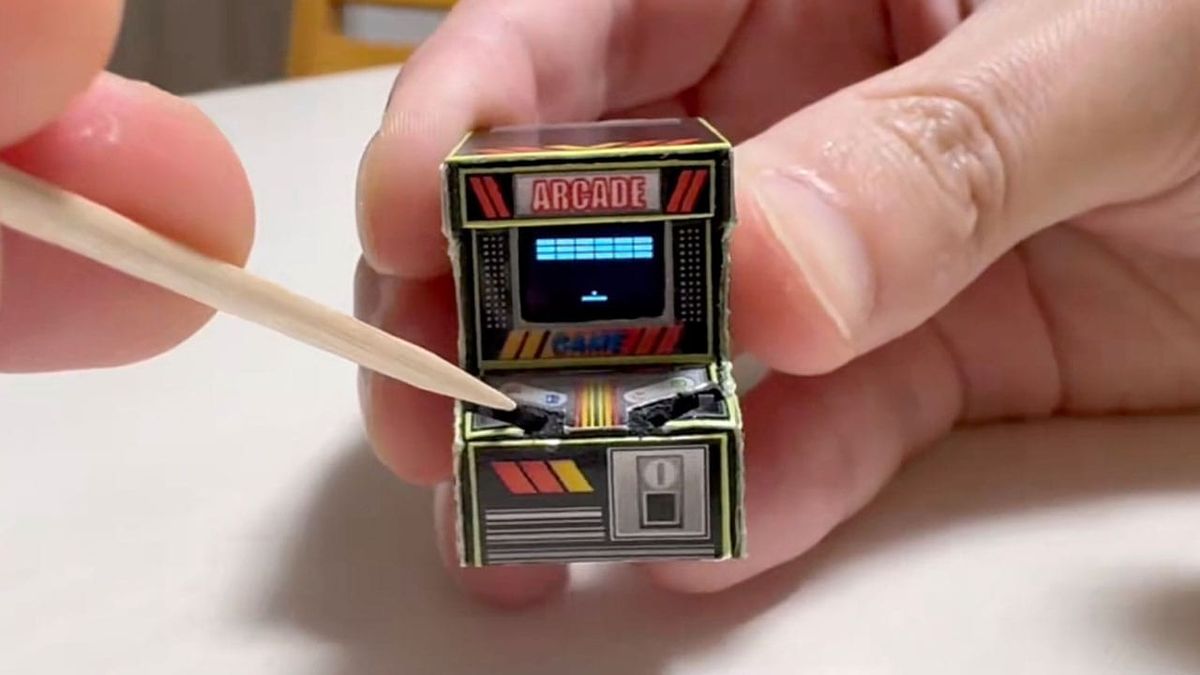
The newly showcased micro-arcade cabinet represents a masterclass in scale reduction. Measuring fractions of a cubic inch, the device features an outer shell constructed entirely of paper, folded and assembled with extreme precision. Embedded within this paper enclosure is a functional electronic display capable of rendering recognizable retro video game graphics.
Because the physical footprint of the console is too small to accommodate human fingers, standard tactile inputs are impossible. Instead, the operator must utilize a thin wooden toothpick—or a similar implement—to manipulate the directional controls and action buttons. Demonstration footage shared by BitBlt_Korry on social media highlights gameplay sessions of classic titles. In the primary showcase video, the creator successfully plays a version of the brick-breaking genre, relying on the steady application of the toothpick to guide the paddle. A subsequent demonstration features a retro space shooter title bearing strong similarities to foundational arcade classics like Space Invaders.
Despite the novelty, the physical limitations of the device are severe. The developer has publicly described the control scheme as the "absolute worst," noting that sustained play is physically demanding and prone to accidental input errors. The fragile paper construction means the console offers virtually no structural resilience against accidental drops, excessive pressure, or general wear and tear, positioning it strictly as a piece of functional kinetic art rather than a practical daily gaming device.
Chronology of the Micro-Gaming Trend
The unveiling of BitBlt_Korry’s paper arcade machine on October 6, 2026, is part of a broader, long-standing subculture of hobbyist hardware miniaturization within the retro gaming community. Understanding this latest creation requires looking back at the evolution of pocket-sized and novelty gaming hardware over the past decade.
In the mid-2010s, the rise of low-cost microcontrollers—such as the Arduino and Raspberry Pi Zero platforms—enabled makers to scale down classic systems significantly. Portable DIY consoles steadily shrank from pocket-sized Game Boy emulators to keychain-attached devices.
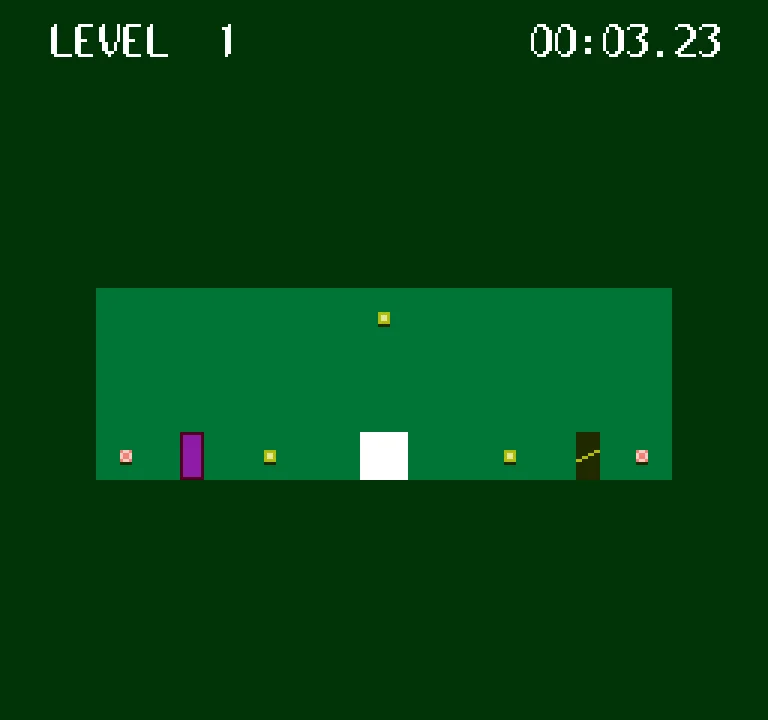
By the early 2020s, commercial and open-source projects began pushing the envelope further. Devices like the Thumby, a tiny, open-source handheld game console designed to fit on a keyring, proved that fully operational games could be rendered on OLED screens measuring less than an inch across. Concurrently, online creators and hardware modders began experimenting with alternative materials, moving beyond traditional 3D-printed plastics to explore cardboard, paper, and resin.
BitBlt_Korry’s October 2026 announcement represents an escalation of this trend, transitioning away from durable plastics and circuit board housings toward delicate organic materials like paper, while drastically reducing the overall physical scale to require external tools for input.
Data and Context in Hardware Miniaturization
To contextualize the scale of BitBlt_Korry’s paper arcade cabinet, it is helpful to examine the standard dimensions of historical and modern micro-consoles.
Standard arcade cabinets from the golden age of gaming in the late 1970s and 1980s typically stood over six feet tall, weighed hundreds of pounds, and utilized heavy cathode-ray tube (CRT) monitors. In contrast, modern micro-replicas and novelty keychains often scale these dimensions down by a factor of ten or twenty. BitBlt_Korry’s creation pushes reduction ratios even further, shrinking the total volumetric footprint to a scale where the interface must be manipulated by an object with a tip diameter of roughly one millimeter.
The technical hurdles of such projects are immense. Constructing a working display at this size requires sourcing micro-OLED or miniature TFT panels originally manufactured for medical equipment, military optics, or wearable electronics. Furthermore, routing power through a paper chassis necessitates ultra-thin, flexible printed circuits or microscopic wiring that can withstand the folding process without snapping.
Industry Reactions and Maker Community Response
While mainstream hardware manufacturers focus on ergonomic optimization, high refresh rates, and extended battery life, the independent maker community frequently moves in the opposite direction. Projects that prioritize aesthetic absurdity and engineering challenges over practical usability consistently generate viral engagement across platforms like X, Reddit, and specialized retro gaming forums.
Community responses to BitBlt_Korry’s showcase have been overwhelmingly positive, celebrating the whimsical nature of the build. Fellow hardware modders and electronic enthusiasts have praised the patience required to assemble the paper chassis without damaging the delicate internal electronics.

At the same time, commentators have humorously acknowledged the sheer impracticality of the device. The consensus among viewers is that while the engineering achievement is remarkable, prolonged use would induce severe hand cramps. The necessity of using a toothpick has drawn comparisons to precision mechanical repair work or surgical procedures, contrasting sharply with the casual, relaxing nature usually associated with retro gaming.
Broader Impact and Implications for Hardware Culture
The viral reception of the paper arcade cabinet highlights a distinct cultural phenomenon within modern technology: the celebration of anti-efficiency. In an era dominated by seamless touchscreens, haptic feedback, and powerful computing hardware packed into sleek smartphones, devices that purposefully introduce friction, fragility, and difficulty provide a novel tactile experience.
This trend of "techplicas"—replicas of classic technology built at either gargantuan or microscopic scales—serves a psychological role in preservation and nostalgia. By taking iconic cultural artifacts, such as arcade cabinets or classic handhelds, and rendering them absurdly small or impossibly large, creators subvert the familiar utility of the object. The hardware transforms from a tool for entertainment into a conversation piece and a display of human ingenuity.
Furthermore, the proliferation of open-source design tools, accessible microcontrollers, and global maker networks ensures that extreme DIY projects will continue to evolve. As component manufacturers produce increasingly smaller screens and processors, independent creators will likely find new ways to integrate functional computing into even more unlikely everyday materials.
Conclusion
BitBlt_Korry’s paper arcade machine stands as a fascinating intersection of papercraft, micro-electronics, and retro gaming culture. While it may not replace traditional handhelds or provide a comfortable gaming session lasting more than a few minutes, the project demonstrates the boundless creativity of the independent maker community. By successfully engineering a working, display-equipped arcade cabinet out of paper and demanding the use of a toothpick for controls, the creator has delivered a striking reminder of how far hardware enthusiasts will go in the pursuit of nostalgic art.