Cecilia Chamidah Nur
Sega’s journey in the Italian console market was a remarkable narrative of initial setbacks, strategic innovation, and eventual triumph, spearheaded by an audacious marketing campaign that saw the company’s iconic mascot, Sonic the Hedgehog, animated for television commercials years before his widespread cartoon debut. This unique chapter in Sega’s history, marked by an unlikely partnership with Italian toy giant Giochi Preziosi and the controversial endorsement of actor Jerry Calà, propelled Sega to a dominant position in the early 1990s, offering a fascinating case study in localized marketing ingenuity.
From Humble Beginnings to Market Challenger: Sega’s Italian Odyssey
Sega’s entry into the Italian market with the Master System console was initially met with lukewarm reception. Handled by a smaller distributor with limited experience in the nascent video game sector, the console struggled to gain traction against the established presence of competitors. Recognizing the immense potential of the Italian market, Sega made a pivotal decision: to entrust its console distribution to Giochi Preziosi, a burgeoning powerhouse in the toy industry.
Founded in the mid-1970s by Enrico Preziosi, a visionary entrepreneur who departed Philips to pursue his own venture, Giochi Preziosi rapidly ascended to become Italy’s foremost importer and retailer of toys. By the mid-1980s, the company had transformed from a modest garage operation into a colossal distributor, handling globally recognized brands such as Nintendo’s Game & Watch and the wildly popular Teenage Mutant Ninja Turtles. This robust distribution network and deep understanding of the Italian consumer landscape made Giochi Preziosi an ideal partner for Sega, signaling a serious intent to challenge the status quo.
Enrico Preziosi’s ambition for Sega was clear from the outset: to not just compete, but to decisively dominate Nintendo in the Italian market. To achieve this, he knew a conventional approach wouldn’t suffice. His first strategic move was to establish Winter Video, an in-house marketing agency, appointing Francesco Malaspina as its director. Malaspina vividly recalls Preziosi’s commitment: "The marketing budget for Sega’s consoles was unlike any other we had seen before, especially in the marketing for toys which was never very big in Italy. He was really adamant that they had to dominate over Nintendo… and I think we succeeded!" This unprecedented investment in advertising set the stage for a series of groundbreaking campaigns.
Preziosi’s initial stroke of genius involved featuring popular Italian soccer players in Sega commercials—a tactic previously unheard of for selling toys or video games. This move instantly elevated Sega’s products beyond mere playthings, linking them to national heroes and a sport deeply embedded in Italian culture, thereby broadening their appeal to a wider, more mature audience alongside children.
The Birth of an Icon: Italy’s First Animated Sonic
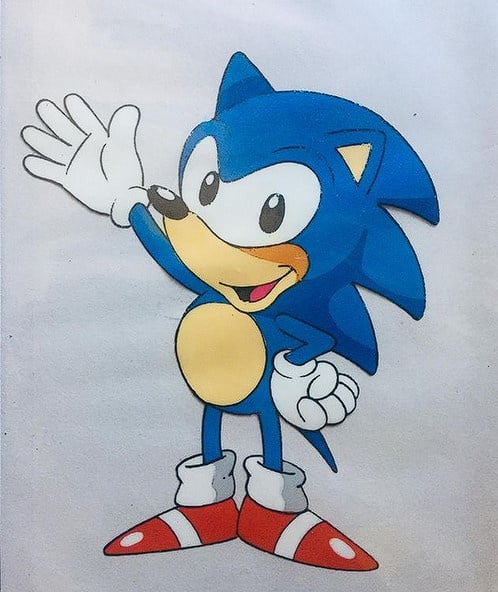
The global phenomenon of Sonic the Hedgehog in 1991 provided Giochi Preziosi with an opportunity to push creative boundaries even further. Preziosi envisioned something entirely novel for the Italian market: an animated version of Sonic interacting with real-life actors in commercials. This ambitious concept led Winter Video to produce what would become the first animated rendition of Sonic released outside of Japan, predating the well-known Adventures of Sonic the Hedgehog and Sonic the Hedgehog (SatAM) cartoons by several years.
The responsibility for animating the iconic blue hedgehog fell to Riccardo Mazzoli, then a budding artist fresh from Bruno Bozzetto’s renowned animation studio, and now a celebrated comic book artist. Mazzoli, admittedly not a hardcore video game enthusiast at the time, recounted the unexpected assignment: "I wasn’t really a fan of video games, but Preziosi decided he wanted a cartoon of Sonic so, as I had already worked in animation for Bruno Bozzetto’s studio, they told me to make one." This directive underscored Preziosi’s conviction in the power of animated visuals to capture the imagination of Italian audiences.
Mazzoli faced a unique challenge: a scarcity of source material. Unlike today, where comprehensive style guides and character sheets are standard, Mazzoli had to rely on limited resources. "I used what we had, because there really wasn’t much else," he explained. His creative process involved poring over the game’s box art, meticulously studying the instruction manual, and even playing the game himself to accurately capture Sonic’s dynamic movements, particularly his signature spin attack. When questioned about any support materials from Sega itself, Mazzoli confirmed: "Not that I know of, they probably wanted to make the commercial as quickly as possible so they decided not to wait." This anecdote highlights the rapid, almost improvisational nature of the marketing efforts, driven by a desire for speed and market penetration.
The Unlikely Face of Sega: Jerry Calà
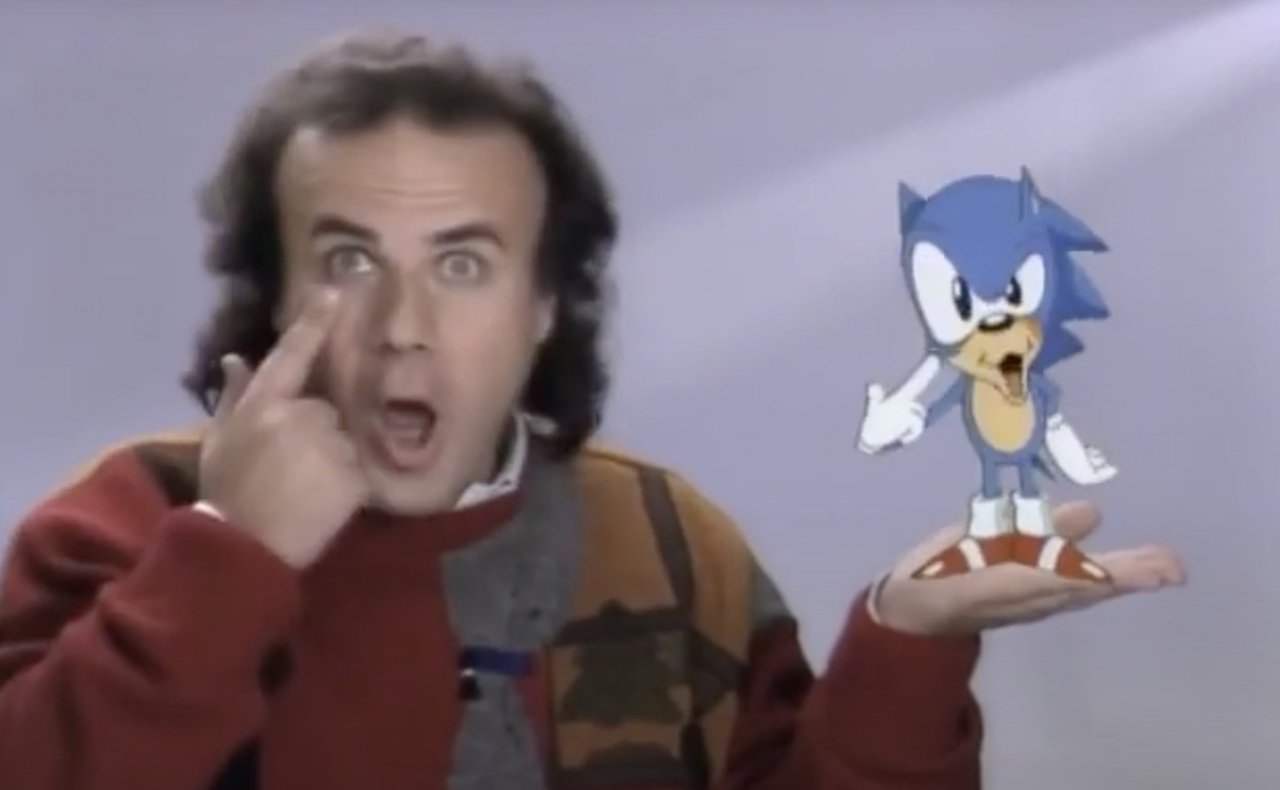
The animated Sonic commercial was a crucial component of a broader marketing strategy that revolved around a surprising celebrity endorsement: Jerry Calà. At the time, Calà was a well-known Italian actor predominantly recognized for his roles in "raunchy" comedies that, by modern standards, were far from family-friendly. However, his widespread popularity and unique appeal across different demographics made him an unexpected but highly effective choice.
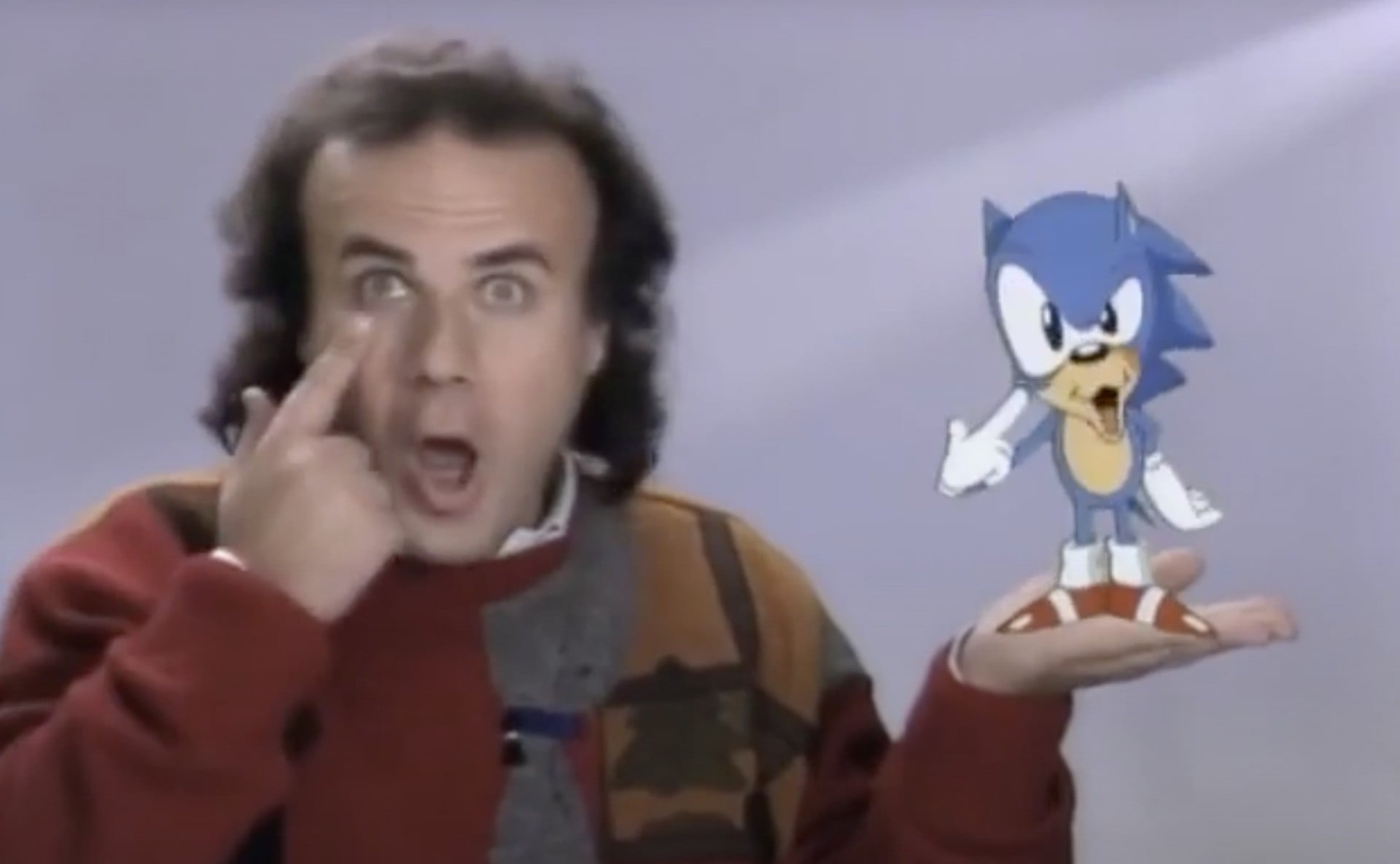
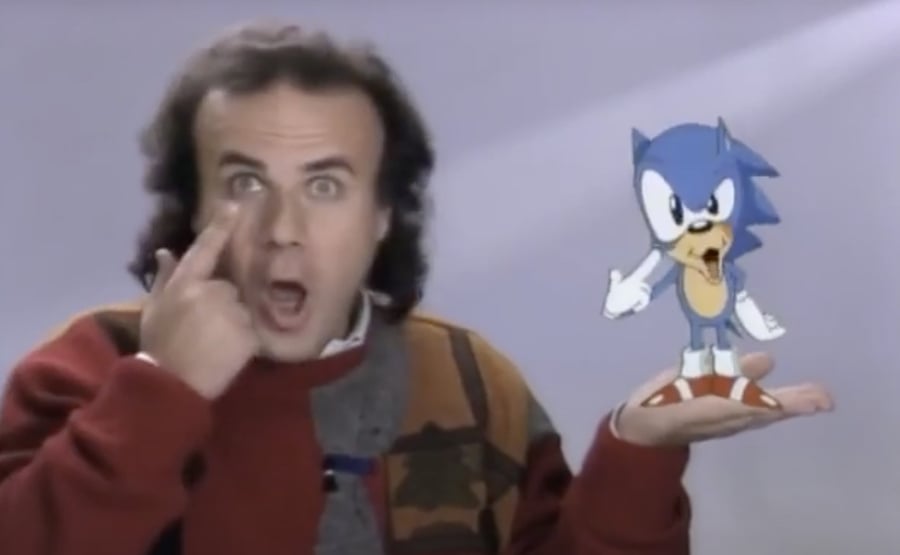
Francesco Malaspina elaborated on the decision: "Everyone liked Jerry, he seemed to be a hit both with kids and families, so it was a natural choice for him to be the face of Sega." From 1991 to 1993, Calà effectively replaced the soccer players, becoming the charismatic face of the Mega Drive and, subsequently, the Game Gear. His involvement marked another significant milestone: he was the first real-life actor to "interact" with an animated Sonic, an honor that would be famously repeated nearly three decades later by James Marsden in the Sonic the Hedgehog feature films.
The very first commercial featuring Calà saw Sonic emerge from a backdrop of the iconic Green Hill Zone, declaring the Mega Drive as the superior console. The animated hedgehog then playfully jumped onto Calà’s hand, where they both performed the "ocio però" sign. This phrase, roughly translating to "be careful" or "looky-looky" with a touch of humor, was a distinctive slogan jointly conceived by Calà and Preziosi. Its purpose was pragmatic: to subtly urge consumers, especially children, to exercise caution when purchasing consoles and games, ensuring they bore the authentic Giochi Preziosi logo. This clever inclusion served both as a catchy tagline and a brand protection mechanism, reinforcing Giochi Preziosi’s role as the trusted distributor.
A Marketing Blitz and Unconventional Creativity
The success of the initial animated Sonic commercials led to their extensive reuse and expansion. These distinct animations not only featured in subsequent Sega Mega Drive advertisements but were also cleverly recycled for the launch campaign of Sonic the Hedgehog 2. While Mazzoli lamented not being commissioned to animate Sonic’s new sidekick, Tails, he fondly recalled his time at Winter Video. "It ended up being my main thing during my time at Winter Video! I remember I used to participate at these delirious marketing meetings with Jerry Calà, Enrico Preziosi and Francesco Malaspina. They would just throw whatever ideas at the wall to see what worked."
This description paints a vivid picture of a dynamic, high-energy marketing environment, driven by instinct and immediate feedback rather than extensive market research. "It was really a sort of working-on-the-spot marketing, since there was no time to test out what worked and what didn’t on a limited audience, before releasing the commercials. Whatever crazy ideas they thought of, we would try it and see if the commercials connected with the audience. Most times, they did!" This agile and daring approach was a hallmark of Giochi Preziosi’s strategy, allowing them to rapidly adapt and innovate in a fast-evolving market.
Interestingly, despite the concurrent production of the Sonic the Hedgehog (SatAM) cartoons by ABC and co-produced by Reteitalia (a company owned by Silvio Berlusconi, known for his close ties with Enrico Preziosi), these internationally produced Sonic cartoons saw minimal broadcast in Italy and only for a limited duration. This peculiar circumstance further underscores the unique and almost exclusive reliance on Giochi Preziosi’s in-house animated Sonic for the Italian market, suggesting a deliberate preference or perhaps a contractual exclusivity that favored the domestic production.
Sega of Europe’s Approval and Market Dominance
The bold and unconventional marketing tactics employed by Giochi Preziosi in Italy naturally raised questions about how Sega of Europe perceived this localized, highly distinct approach. Dario Berté, then marketing director for Giochi Preziosi and Sega, clarified that Sega of Europe was largely supportive. "Our main contact was Shigekazu Hayashi, and we never had any problems with him," Berté recalled. "I think that as long as we were successfully selling the consoles, they seemed to be happy." This pragmatic stance from Sega of Europe allowed Giochi Preziosi considerable autonomy, recognizing the local team’s expertise in navigating the specific cultural nuances of the Italian market.
This flexibility proved highly effective. While precise official sales data remains elusive, interviews with various marketing directors who worked with both Sega and Nintendo during that period unanimously confirm that Giochi Preziosi held a commanding lead in the Italian console market up until 1992. This period represented the zenith of Sega’s success in Italy, largely attributable to the aggressive and innovative marketing campaigns orchestrated by Preziosi and his team.
Shifting Tides: Decline and Disillusionment
The landscape began to shift dramatically with the arrival of the Super Nintendo in 1992. Nintendo’s formidable new console, coupled with its own robust marketing, started to erode Sega’s lead. Furthermore, Sega’s subsequent ventures, the 32X and Mega CD add-ons, proved to be commercial failures in Italy, mirroring their global underperformance. These missteps significantly dampened Giochi Preziosi’s enthusiasm and faith in Sega’s future prospects.
Following a series of unsuccessful attempts to market these new add-ons, Giochi Preziosi reportedly began to curtail its advertising budget for Sega. A significant blow to the campaign also came at the end of 1993, when campaign star Jerry Calà was involved in a serious car accident, sidelining him for several months of recovery. This confluence of commercial failures and the temporary loss of their high-profile endorser meant that Sega slowly began to slip down Giochi Preziosi’s list of strategic priorities. The initial fervor and lavish spending gave way to a more conservative approach, reflecting a cooling of the partnership.
Riccardo Mazzoli’s direct involvement with Sega’s marketing also scaled back, though he continued his relationship with the brand in a different capacity. He became the presenter of "USA Today," a container program originally showcasing gameplay snippets from Amiga and Commodore 64 titles. From 1993, Giochi Preziosi sponsored the program, shifting its focus exclusively to Sega titles, with the company dictating which games would be featured. However, as Preziosi continued to cut marketing budgets, "USA Today" too fell victim, quickly canceled in 1994, marking the end of an era of ambitious promotional content.
The End of an Era and Lingering Legacy
While Dario Berté remained reluctant to fully discuss the period between 1994 and 1998, it became increasingly apparent that the relationship between Sega and Giochi Preziosi deteriorated rapidly. The extravagant animated commercials and high-profile celebrity endorsements became a relic of the past. Despite Giochi Preziosi continuing to distribute Sega consoles until 1998, reports in Italian gaming magazines as early as 1995 hinted at a looming crisis between the two companies. The confusion surrounding the partnership even impacted the launch of the Sega Dreamcast, which arrived just as Giochi Preziosi began its phased withdrawal from the video game market, explaining why many of the console’s early commercials were conspicuously absent from Italian airwaves.
The animated Sonic commercial stands as a testament to the striking consequences of Sega’s aggressive and uniquely Italian marketing strategy. Riccardo Mazzoli, the artist behind this pioneering animation, still encounters surprise and fondness when people discover his role. "Everyone still remembers the commercial very fondly! It was a pleasure for me to do them, despite not having worked with games any more after 1994." He added, "But I still do keep all the Sega games I played but, I confess, these days my kids have more fun with Sonic than I do. But, who knows, one day I might get back to animating Sonic…"
The Italian Sega marketing saga is a compelling narrative of how localized, culturally attuned, and boldly unconventional strategies can yield immense success, even if ultimately constrained by broader corporate decisions and shifting market dynamics. It highlights the significant impact a distributor like Giochi Preziosi had on a global brand’s regional fortunes and etched a unique, fondly remembered chapter into the history of video game advertising.