
 Jia Lissa
The global amusement industry is currently navigating a period of unprecedented transformation, characterized by the rapid transition from electromechanical machines to sophisticated television-based gaming systems. At the forefront of this evolution is Sega Enterprises, Ltd., a firm that has spent the last six years integrating into the vast corporate ecosystem of the Gulf & Western (G&W) Corporation. In a comprehensive discussion regarding the company’s strategic direction, Hayao Nakayama, Executive Vice President and Representative Director of Sega, has outlined a vision that prioritizes technological innovation, cross-continental synergy, and a rigorous defense of intellectual property. This strategic pivot comes at a time when the "Golden Age" of arcades is reaching a fever pitch, with Japan and the United States emerging as the dual engines of global production.
The Corporate Architecture: Sega’s Integration with Gulf & Western
The institutional framework of Sega is notably complex, reflecting the conglomerate-driven business environment of the late 1970s. Since 1974, Sega Enterprises, Ltd. has operated under the umbrella of Gulf & Western Corporation, a New York-headquartered giant led by Charles Bluhdorn. G&W’s stature is formidable; in 1980, the corporation ranked 52nd in the United States, reporting sales of $5.3 billion and a declared income of $230 million. While G&W is a diversified powerhouse with interests in automotive components, energy, and household appliances—and is famously the parent company of Paramount Pictures—its leisure division has become an increasingly vital component of its portfolio.
Mr. Nakayama clarified the tiered structure of the organization, noting that while Sega of Japan is technically a "grandchild company" of G&W, its functional autonomy remains significant. The hierarchy begins with G&W owning Sega of America (Sega Enterprises Inc.), which in turn owns Sega of Japan. This structure has facilitated aggressive expansion, including the 1976 and 1979 acquisitions of Gremlin Industries in the U.S. and the acquisition of Esco Trading in Japan. This dual-presence allows Sega to leverage American engineering and Japanese manufacturing efficiency simultaneously.
Chronology of Sega’s Growth and Diversification (1974–1980)
To understand the current trajectory of the Sega Group, one must examine the timeline of its expansion under the G&W banner:

- 1974: Sega Enterprises, Ltd. is fully incorporated into the Gulf & Western group, providing the capital necessary for large-scale R&D.
- 1976: Sega of America acquires Gremlin Industries, a move that secures a foothold in the American manufacturing sector.
- 1978: The release of Space Invaders by Taito triggers a global "invader boom," fundamentally altering market expectations for TV games.
- 1979: Sega acquires Esco Trading to bolster its domestic distribution and operational capabilities in Japan.
- April 1979: Sega of Japan reports record financials, with 24 billion yen in sales and 5.37 billion yen in declared income.
- 1980: Sega expands into the "eatertainment" sector with the launch of the PJ Pizzazz pizza restaurant chain and the continued rollout of Sega Center arcade locations.
This chronology illustrates a shift from being a mere manufacturer of amusement hardware to a vertically integrated entertainment provider.
Strategic Focus: The Primacy of TV Games
The most significant takeaway from Mr. Nakayama’s policy disclosure is the company’s decision to allocate 70% to 80% of its resources toward TV game development. This is a calculated response to the global trend where digital visual entertainment is eclipsing traditional mechanical amusements. Nakayama argues that the "novelty and entertainment value" inherent in TV games provides a competitive edge that mechanical machines can no longer match.
However, this focus brings unique challenges, particularly regarding cabinet design. In Japan, the "table-type" machine has become the dominant format, largely due to the "Invader House" and cafe culture where space is at a premium. Conversely, the U.S. market continues to favor "upright" cabinets, which offer higher aesthetic value and brand presence. Nakayama noted that Sega is currently navigating these cultural differences by experimenting with "Mini" cabinets. For instance, the Mini Monaco racing game proved to be a massive success in the U.S. and Europe due to its space efficiency and competitive two-player features, despite underperforming in the Japanese market.
Financial Performance and Operational Scale
The fiscal year ending in April 1979 serves as a benchmark for Sega’s current health. The company’s 24 billion yen in sales is supported by a robust infrastructure consisting of 1,200 employees across Japan. This includes three major branch offices in Sapporo, Osaka, and Fukuoka, as well as 89 operational offices.
A unique aspect of Sega’s business model is its dual role as both a manufacturer and an operator. While some industry critics suggest this creates a conflict of interest, Nakayama maintains that an "operator mindset" is essential for producing successful hardware. By operating their own game centers, Sega gains immediate, data-driven insights into player behavior and machine durability. Nakayama emphasized that the company’s goal is to maintain a balance between "consistent revenue and detailed, attentive service," leveraging economies of scale to ensure long-term sustainability for both Sega and the independent operators who purchase their machines.

The Legal Frontier: Combating the "Copycat" Industry
As the value of TV games has skyrocketed, so too has the prevalence of unauthorized "copy" products. During the height of the Space Invaders era, a lack of clear legal frameworks allowed many small manufacturers to produce clones with impunity. Nakayama addressed this head-on, signaling a new era of aggressive legal enforcement.
The turning point was a landmark case in the United States where Sega/Gremlin sued Exidy over the game Head-On. Exidy ultimately admitted fault, a victory that has empowered Sega to use trademarks, copyrights, and unfair competition laws to protect its R&D investments. Nakayama noted that while Japanese law has been slower to adapt, the tide is turning. Sega is now actively identifying "copycats" and pursuing them legally.
"Manufacturers should aim for high-quality machines that sell well, even if they are expensive," Nakayama stated. He warned that the proliferation of cheap clones ultimately hurts the operator by devaluing the product image and creating excessive, unsustainable competition. Furthermore, Sega is investing in advanced hardware that is increasingly difficult and expensive to replicate, though Nakayama acknowledged that this technical arms race will inevitably lead to higher costs for legitimate operators.
Diversification and the Secondary Market
While TV games are the priority, Sega is not abandoning other sectors. The company continues to see potential in:
- Pinball and Medal Games: Sega remains a consistent supplier of pinball machines, sourcing high-quality units from partners like Williams and Stern. In the medal game sector, the company is focusing on "upcycling" older units, such as Blackjack and Punto Banco, to offer operators cost-effective alternatives to entirely new hardware.
- Prize and Sports Games: The company plans to release one or two new sports-related or prize-vending machines annually to ensure a diverse floor mix for arcade owners.
- Eatertainment: The launch of PJ Pizzazz in the U.S. represents an attempt to marry the arcade experience with the food service industry, a model that seeks to capture a wider family demographic beyond the traditional youth market.
Analysis of Broader Impact and Industry Implications
The strategies outlined by Mr. Nakayama reflect a maturing industry that is moving away from its "Wild West" roots toward a more structured, corporate future. By aligning with a conglomerate like Gulf & Western, Sega has secured the financial "war chest" necessary to survive the volatile shifts of the technology sector.
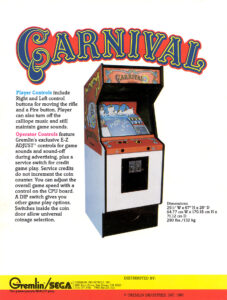
The focus on TV games is a recognition that software—not just hardware—is the future of the amusement industry. The ability to iterate on game design, introduce "bonus rounds" (as seen in Carnival), and create competitive multiplayer experiences is what will drive coin-drop revenue in the coming decade. Moreover, the emphasis on international cooperation between Sega’s Japanese and American wings suggests a future where gaming is a global, borderless medium.
As Sega strengthens its distribution networks and reinforces its regional distributors, it is setting a standard for how a modern multinational gaming firm should operate. The move toward protecting intellectual property will likely lead to a consolidation of the market, where only the most innovative and legally compliant manufacturers survive. This professionalization of the industry, as championed by Nakayama, suggests that the "Golden Age" of arcades is not just a temporary boom, but the foundation of a permanent and highly profitable global entertainment sector.








