Farhan hamdan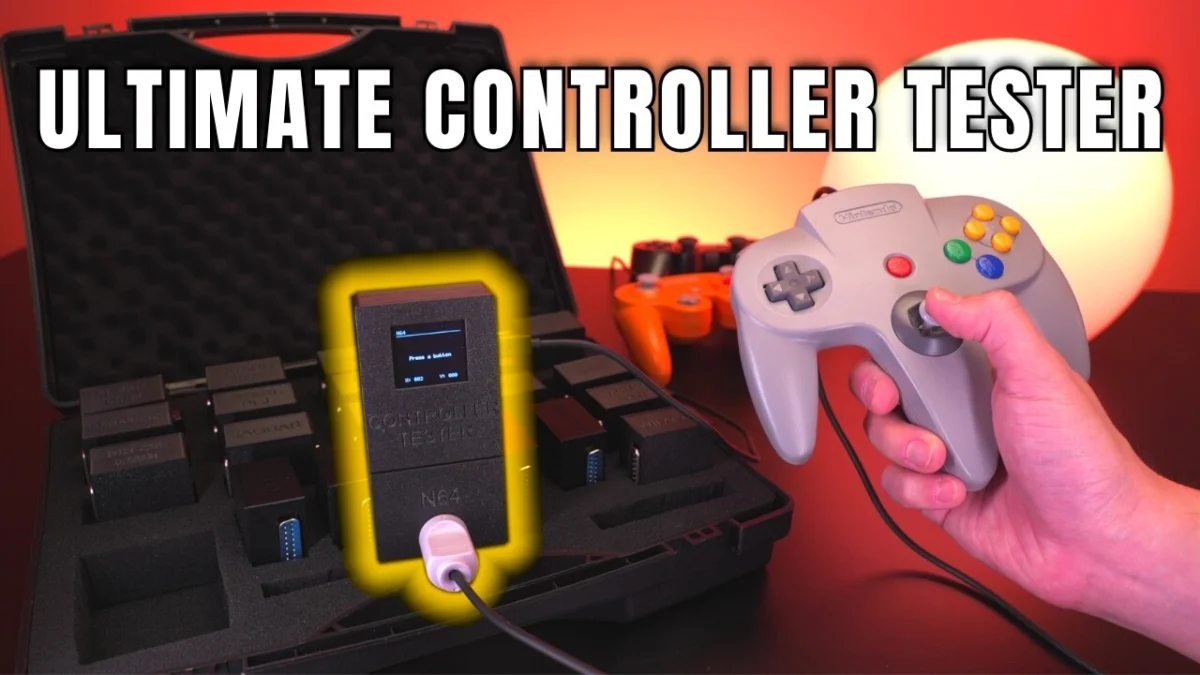
The landscape of retro gaming, a vibrant and ever-expanding niche within the broader entertainment industry, has seen a significant advancement in hardware diagnostics with the introduction of the Retroverse Controller Tester. This sophisticated kit, developed by Consoles4You, a Switzerland-based specialist in vintage console repair and restoration, promises to revolutionize the way used game controllers are assessed, primarily targeting the burgeoning market of professional repair shops, resellers, and serious collectors. Recently highlighted in a comprehensive video demonstration by Tito from Macho Nacho Productions, a prominent voice in the retro gaming community, the Retroverse Controller Tester is positioned as an indispensable tool designed to dramatically reduce the time and effort traditionally associated with verifying the functionality and integrity of classic gaming peripherals.
A New Era for Retro Hardware Diagnostics
At its core, the Retroverse Controller Tester is a modular diagnostic system that enables the thorough examination of various retro game controllers without the need for the original console. This "console-less" testing capability is its most significant innovation, addressing a long-standing challenge for businesses and individuals dealing with vintage hardware. The system operates by providing power to a specific controller module and its corresponding adapter, allowing for a detailed analysis of all inputs, including buttons, D-pads, joysticks, and other unique functionalities inherent to different controller designs. The demonstration by Tito showcased the tester’s intuitive operation and its ability to quickly cycle through various input tests, offering immediate feedback on the controller’s condition. This level of efficiency is particularly valuable in environments where dozens, or even hundreds, of controllers need to be processed weekly.
The Burgeoning Retro Gaming Market and its Challenges
The global retro gaming market has experienced explosive growth over the past decade, driven by nostalgia, the cultural significance of classic titles, and a new generation of enthusiasts discovering these timeless experiences. Industry reports estimate the retro gaming market to be a multi-billion dollar sector, with a consistent year-on-year growth rate. This surge in popularity has led to a parallel increase in demand for vintage consoles, cartridges, and, crucially, functional controllers. However, the very nature of retro hardware presents inherent challenges. These devices, some dating back several decades, are prone to wear and tear, material degradation, and component failure.
The Longevity Paradox of Vintage Gaming
Controllers, as the primary interface between player and game, endure the most physical stress. Common issues include unresponsive buttons due "carbon pad wear, stick drift in analog joysticks, frayed cables, and general structural fatigue. For a casual enthusiast testing a single controller, connecting it to a console and running a game might suffice. However, for a business acquiring large lots of used controllers for refurbishment or resale, this manual, console-dependent process becomes a significant bottleneck. Each controller requires a compatible console, specific games to test all inputs, and a substantial amount of time to ensure thoroughness. This "longevity paradox" – the desire for enduring classics coupled with the reality of aging electronics – underscores the critical need for specialized diagnostic tools.
The Economic Imperative of Reliable Hardware
The economic implications for sellers and repair shops are substantial. Unreliable testing can lead to customer dissatisfaction, costly returns, and damage to reputation. Conversely, meticulous testing, while time-consuming with traditional methods, ensures quality and builds trust. The market for professionally refurbished retro controllers is robust, with collectors and players willing to pay a premium for guaranteed functionality. Therefore, investing in tools that enhance testing efficiency and accuracy directly translates to improved profitability and operational scalability for businesses in this sector.
Traditional Testing: Inefficiency and Limitations
Before the advent of dedicated testers like the Retroverse, the standard procedure for evaluating retro game controllers was often rudimentary and labor-intensive. This process typically involved:
- Console Connection: Physically connecting the controller to its native console. This often meant maintaining a collection of various working consoles, each compatible with specific controller types.
- Game Loading: Booting up a game known to utilize all the controller’s buttons and directional inputs. This could be a specific fighting game for button mashing, a platformer for precise movement, or an adventure game for menu navigation and complex input combinations.
- Manual Input Verification: A technician would then manually press every button, rotate joysticks, and manipulate D-pads, observing the in-game response. This relies heavily on human observation and can be subjective.
- Cable Inspection: Visual inspection of cables for fraying or damage, which doesn’t always reveal internal breaks.
The Manual Gauntlet
This "manual gauntlet" approach presented several significant drawbacks. Firstly, it was incredibly time-consuming. Testing a single controller thoroughly could take several minutes, and multiplying that by dozens or hundreds of units quickly accumulated into hours of labor. Secondly, it put unnecessary wear and tear on valuable, often irreplaceable, retro consoles. Continuously plugging and unplugging controllers, powering consoles on and off, and loading games contributed to the degradation of the consoles themselves. Thirdly, it was prone to human error; a technician might miss an intermittent button press or a slight drift in an analog stick. Moreover, certain subtle issues, such as specific dead zones in a joystick’s range of motion or slight inconsistencies in button response, might be difficult to detect reliably through mere gameplay.
Hidden Costs for Businesses
For repair shops and resellers, these inefficiencies translated into tangible hidden costs. Increased labor hours directly impacted operational expenses. The need to maintain multiple working consoles added to overhead. The risk of missing defects led to post-sale issues, eating into profit margins through returns, refunds, and negative reviews. The fragmented nature of retro hardware, with each console generation often featuring unique controller connectors and communication protocols, further complicated matters, demanding a broad inventory of testing equipment and expertise. The market was ripe for a standardized, efficient, and accurate solution.
Engineering Precision: Inside the Retroverse Tester
The Retroverse Controller Tester is a testament to thoughtful engineering, embodying the precision and quality often associated with Swiss manufacturing. Its design prioritizes modularity, comprehensive compatibility, and ease of use, making it an ideal tool for professional environments.
Modular Design and Extensive Compatibility
The core of the Retroverse system is a central testing unit that interfaces with an array of interchangeable modules and adapters. As demonstrated, a full kit can encompass over 20 different modules, covering a vast spectrum of retro controllers from various manufacturers and generations. This includes, but is not limited to, iconic controllers for systems like the Nintendo Entertainment System (NES), Super Nintendo Entertainment System (SNES), Nintendo 64 (N64), Sega Genesis/Mega Drive, Sega Saturn, Sony PlayStation (PS1, PS2), and potentially others. Each module is specifically designed to recognize the unique electrical signals and input protocols of its corresponding controller type. This modularity ensures that as new needs arise or more retro systems gain popularity, Consoles4You can develop and release additional adapters, extending the system’s longevity and utility.
The Swiss Standard of Quality
The "Swiss-Made" designation, often associated with exceptional craftsmanship and reliability, resonates with the perceived quality of the Retroverse Tester. This implies a rigorous development process, high-quality components, and meticulous assembly, crucial for a diagnostic tool that needs to provide consistent and accurate results over extended periods of use. The build quality suggests durability, an essential attribute for equipment that will be handled frequently in a workshop setting. This commitment to quality instills confidence in users regarding the accuracy and longevity of the investment.

Operational Mechanics and User Experience
Operating the Retroverse Tester is straightforward. A controller is simply plugged into its appropriate adapter, which is then connected to the main unit. The system powers the controller and initiates a diagnostic sequence. While the specific display and user interface details weren’t exhaustively detailed in the initial summary, the implication from "saves a ton of time" is that the feedback is clear, concise, and immediate. This might involve an LED display indicating button presses, a graphical representation of joystick movement, or pass/fail indicators for specific functions. The efficiency comes from the dedicated nature of the hardware; it’s not emulating a console or running software on a general-purpose computer. Instead, it’s directly interrogating the controller’s inputs at an electrical level, providing precise and rapid verification of functionality, including the detection of intermittent faults or subtle analog stick issues that might be missed during gameplay.
From Concept to Community: The Role of Consoles4You and Macho Nacho Productions
The journey of the Retroverse Controller Tester from an innovative concept to a recognized solution in the retro gaming community involves key players, each contributing to its visibility and adoption.
Consoles4You: A Vision for Vintage Hardware
Consoles4You, the developer behind the Retroverse, embodies a commitment to the preservation and functionality of vintage gaming hardware. Their expertise in console repair and restoration likely provided firsthand insight into the inefficiencies of traditional controller testing. This background positioned them uniquely to identify a market need and engineer a targeted solution. Their development of the Retroverse reflects a deeper understanding of the technical intricacies of retro controllers and a dedication to supporting the ecosystem of retro gaming, not just for enthusiasts but also for the businesses that serve them. Their focus on a professional-grade, "Swiss-Made" product signals their intent to establish a new benchmark for quality and reliability in retro hardware diagnostics.
Macho Nacho Productions: Amplifying Innovation
Tito from Macho Nacho Productions plays a crucial role as an influential figure and technical expert within the retro gaming community. His channel is known for in-depth reviews, technical explanations, and practical demonstrations of retro gaming hardware and accessories. His endorsement and detailed video demo of the Retroverse Controller Tester provide invaluable validation and exposure. For many in the community, Tito’s review serves as a trusted source of information, offering practical insights into how the device performs in real-world scenarios. His demonstration likely covered various modules and highlighted the operational advantages, thereby communicating the product’s value proposition effectively to its target audience of repair shops and serious collectors. The collaboration between a specialized manufacturer and a respected community influencer is a powerful model for product adoption in niche markets.
Economic Implications: A Strategic Investment for Professionals
The price point of the Retroverse Controller Tester, with a full kit including over 20 modules and a protective case approaching $600, places it firmly in the category of professional-grade equipment rather than a casual purchase for an individual enthusiast. However, for its intended audience, this cost is framed not as an expense but as a strategic investment with a clear return.
Quantifying the Return on Investment
Consider a retro repair shop or reseller that processes an average of 50-100 controllers per week. If traditional console-based testing takes, conservatively, 5 minutes per controller, that amounts to 4.1 to 8.3 hours of labor weekly dedicated solely to testing. At an average labor cost of $20-$30 per hour, this translates to $80-$250 per week, or approximately $4,160-$13,000 annually. The Retroverse Tester, by significantly cutting down testing time (e.g., to 1 minute per controller), could reduce this labor to less than 2 hours weekly, saving a business potentially thousands of dollars per year. The initial $600 investment could, therefore, be recouped within a few months, depending on the volume of controllers processed. This rapid return on investment, coupled with increased accuracy and reduced console wear, makes the Retroverse an economically sound decision for high-volume operations.
Professionalizing the Retro Repair Industry
Beyond direct cost savings, the Retroverse Tester contributes to the professionalization of the retro repair and resale industry. By providing a standardized, efficient, and reliable method for controller diagnostics, it elevates the quality of refurbished products available on the market. Businesses utilizing such tools can offer higher guarantees of functionality, differentiate themselves from competitors relying on less rigorous methods, and enhance their brand reputation. This fosters greater consumer confidence in the retro gaming market, encouraging further investment by enthusiasts and collectors.
The Value Proposition for Collectors
While the individual price tag might deter most hobbyists, the Retroverse still offers an indirect value proposition to the broader collector community. The existence of such a tool means that the refurbished controllers purchased from professional vendors are more likely to be truly "like new" in terms of functionality. This contributes to the overall health and sustainability of the retro gaming hobby by ensuring that high-quality, reliable hardware remains accessible. For the most dedicated individual collectors who frequently buy, sell, or repair controllers, the long-term benefits of precise diagnostics and time savings could still justify the investment, especially if they view their collection as a serious endeavor or a potential future asset.
Broader Impact and Future Outlook
The introduction of the Retroverse Controller Tester marks a significant milestone in the retro gaming hardware ecosystem, promising broader impacts on industry standards and the future of hardware preservation.
Setting a New Industry Standard
The Retroverse has the potential to set a new benchmark for controller diagnostics within the retro repair and resale industry. As more businesses adopt such dedicated tools, the expectation for quality and reliability in refurbished controllers will likely rise. This could lead to a de facto standardization of testing protocols, ensuring a more consistent and trustworthy experience for consumers. The modular nature of the system also positions it for future adaptability, allowing it to evolve with the retro gaming market and support new controller types or diagnostic capabilities as needed. This proactive approach to tool development is vital for an industry dealing with aging and diverse hardware.
The Future of Retro Hardware Preservation
Ultimately, innovations like the Retroverse Controller Tester play a crucial role in the long-term preservation of retro gaming. By enabling efficient and accurate repair, these tools help extend the lifespan of original hardware, reducing the reliance on emulation or modern reproductions. Ensuring that original controllers remain functional is key to maintaining the authentic retro gaming experience, which is often tied to the tactile feel and responsiveness of the period-specific peripherals. As the pool of original, working hardware naturally diminishes over time, effective repair and diagnostic tools become increasingly important for keeping these cherished artifacts alive and playable for future generations. This not only supports a thriving economic sector but also contributes to the cultural heritage of video games.
In conclusion, the Retroverse Controller Tester represents a pivotal development for the retro gaming community, particularly for its professional segments. By addressing the critical need for efficient, accurate, and console-independent controller diagnostics, Consoles4You has introduced a tool that promises to save businesses significant time and resources while elevating the quality of refurbished retro hardware. Endorsed by influential figures like Tito from Macho Nacho Productions, this Swiss-made innovation is poised to become an essential piece of equipment, underscoring the ongoing evolution and professionalization of the retro gaming industry. Its impact extends beyond mere convenience, contributing to the economic vitality of the market and the enduring legacy of classic video games.