Farhan hamdan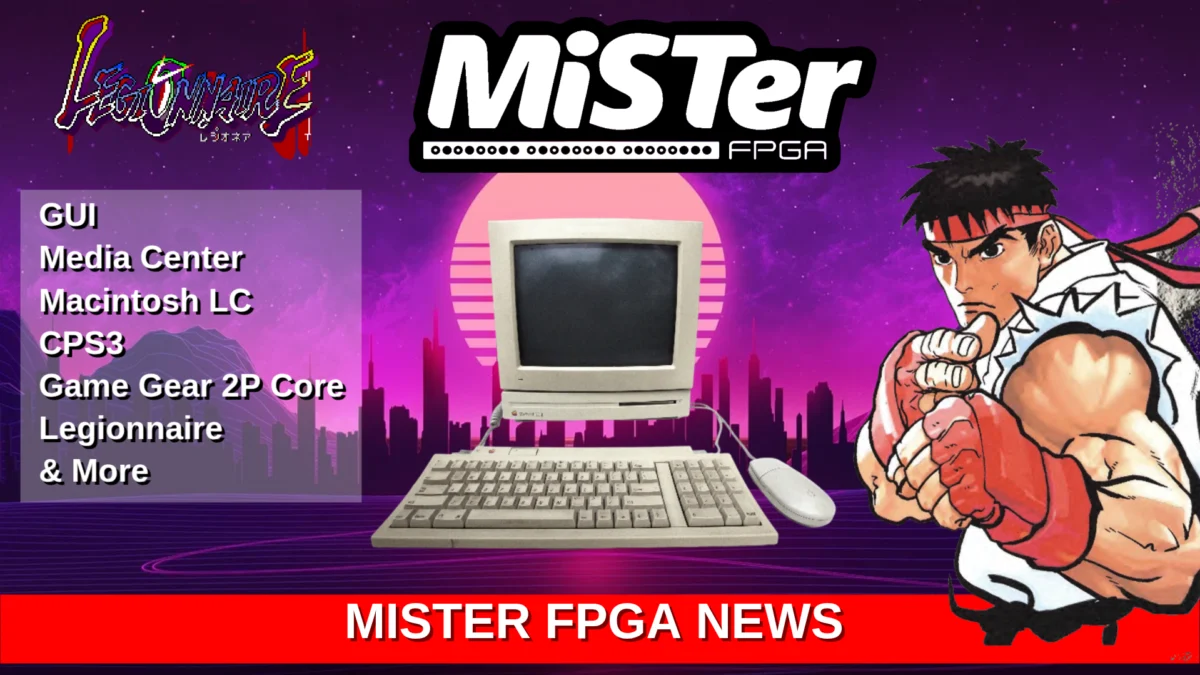
The MiSTer FPGA platform continues its rapid evolution, marking a period of significant advancements in core development, user interface enhancements, and expanded functionalities that solidify its position as a premier solution for retro gaming and computing preservation. Recent weeks have witnessed a cascade of releases and updates, including the highly anticipated public beta for the RetroRemake Console Mode GUI, the imminent launch of the CPS3 arcade core, and innovative projects like MiSTer GroovyRelay, transforming the MiSTer into a versatile media casting target. These developments, largely driven by a dedicated global community of developers, underscore the platform’s commitment to both historical accuracy and modern usability.
Major Core Developments Broaden MiSTer’s Horizons
One of the most eagerly awaited announcements within the MiSTer community is the upcoming beta release of the CPS3 core by developer Jotego, scheduled for Friday, June 12th. The Capcom Play System 3 (CPS3) stands as a monumental achievement in arcade hardware, renowned for its visually stunning 2D graphics and pivotal role in titles like Street Fighter III, JoJo’s Bizarre Adventure, and Warzard (Red Earth). Its complex architecture, featuring a Hitachi SH-2 CPU and a custom security system that decrypts game data on the fly, has historically posed significant challenges for accurate emulation and FPGA recreation. Jotego’s meticulous work promises to bring this iconic platform to MiSTer with unparalleled fidelity. While initial access to the beta will be exclusive to Patreon subscribers, a common and vital funding model for complex FPGA development, the core is slated for a free public release once it transitions out of its beta phase, ensuring broad access to this pinnacle of 2D arcade gaming. The release of a stable CPS3 core on MiSTer is not merely an addition to the library; it represents a major milestone, proving the platform’s capability to accurately replicate some of the most sophisticated and beloved arcade systems, further cementing its status as a critical tool for digital preservation.
Beyond the arcade realm, MiSTer’s capabilities in vintage computing continue to expand with the release of a test version for the Macintosh LC core. The Macintosh LC, first introduced by Apple in 1990, was a significant machine designed to be a more affordable color Macintosh, targeting the education and home markets. Its development on MiSTer is a testament to the platform’s ambition to preserve not just games but entire historical computing environments. The current test build, available for download on Discord, already boasts impressive functionality, including the ability to boot System 7, support for SCSI hard disk drives, RAM expansion, and functional serial mouse and keyboard inputs, alongside Ethernet connectivity. While aspects like sound output, floppy drive support, and full ADB keyboard/mouse functionality are still undergoing development, the progress made offers enthusiasts a tangible experience of early 1990s graphical computing. This core provides an invaluable resource for historians, educators, and retro computing aficionados, offering a hardware-accurate platform for exploring software and operating systems from a pivotal era in personal computing.
The handheld gaming segment also received a notable enhancement with the release of a 2-player core for the Sega Game Gear. Originally, the Game Gear supported multiplayer gaming through a dedicated link cable, allowing two players to connect their consoles for compatible titles. This new MiSTer core ingeniously replicates and enhances this functionality, enabling side-by-side play of Gear-to-Gear link compatible games on a single MiSTer setup. This innovation eliminates the need for multiple physical consoles and link cables, simplifying the multiplayer experience and making it more accessible for users to enjoy classic Game Gear titles like Columns or Sonic the Hedgehog 2 with a friend. It represents a significant quality-of-life improvement for Game Gear enthusiasts and highlights the community’s drive to optimize the retro gaming experience.
Further enriching the console landscape, the Sega Genesis/Megadrive core has received an update enabling MD+ support, courtesy of John Sheppard. MD+ is a community-driven initiative that allows certain Sega Genesis cartridge games to incorporate CD-quality audio tracks, leveraging the capabilities of external audio hardware, similar to how some later cartridges utilized enhancement chips. This enhancement bridges the gap between the Genesis’s native sound capabilities and the superior audio quality found on the Sega CD add-on, offering a revitalized auditory experience for classic titles. The integration of MD+ support means that players can now enjoy their favorite Genesis games with significantly upgraded soundtracks, breathing new life into a beloved console’s library and showcasing the ongoing innovation within the MiSTer development scene to push the boundaries of retro gaming.
Arcade Preservation: A Deep Dive into Prolific Development
The MiSTer FPGA community thrives on the tireless efforts of developers dedicated to preserving arcade history. One such prolific figure, rmonic79, has been at the forefront of numerous arcade core releases and developments, recently highlighted in an insightful interview conducted by Pixel Cherry Ninja. rmonic79’s contributions span a wide array of challenging titles, particularly focusing on Taito’s complex multi-screen arcade games, which present unique challenges for FPGA implementation due to their non-standard display configurations.
Among rmonic79’s notable releases are the cores for Taito’s multi-screen classics: Darius, Darius II, and The Ninja Warriors. These games are iconic for their expansive, horizontally scrolling environments achieved by linking multiple monitors, creating an immersive widescreen experience. Recreating such a setup accurately on FPGA requires intricate synchronization and display handling. The successful implementation of these cores allows modern players to experience these games as they were originally intended, a critical aspect of game preservation. Looking ahead, rmonic79 has also announced a core for Warrior Blade, another multi-screen Taito title, indicating a continued commitment to this challenging yet rewarding sub-genre.
In addition to these multi-screen marvels, rmonic79 has recently shared preview builds for two more arcade games: Trio The Punch and Sky Smasher. These titles, now working thanks to previous foundational core work, demonstrate the iterative nature of FPGA development, where initial work on a system architecture can pave the way for numerous game implementations. Further solidifying the MiSTer’s arcade library, rmonic79 has also released two new games as stable and publicly available: D-Con and Blood Bros. These additions further diversify the arcade offerings, catering to a broad spectrum of retro gaming enthusiasts.
The dedication to arcade preservation extends to ongoing projects, with rmonic79 providing a development update for TAD Corporation’s Legionnaire. This classic beat ’em up is currently booting and running gameplay on MiSTer, albeit still a work in progress. The ability to bring such diverse and often overlooked arcade titles to the MiSTer platform ensures that these pieces of gaming history remain accessible and playable for future generations. The Pixel Cherry Ninja interview serves as an excellent resource for those interested in delving deeper into rmonic79’s development philosophy, the challenges faced, and other cores currently in the development queue.
Another key contributor to arcade preservation is Anton Gale, whose recent efforts have focused on refining the Taito SJ core. Gale recently posted an update confirming that KickStart Wheelie King now boots on this core. The journey to this milestone highlighted common debugging challenges in FPGA development; Gale noted chasing an MCU (microcontroller unit) issue, only to discover it was caused by a "stuck" coin input—a subtle bug that underscores the complexity of replicating vintage hardware behavior. The next phase for KickStart Wheelie King involves implementing the line-by-line scroll, crucial for accurately rendering the game’s iconic curving road effect. In a creative twist, Anton Gale has also successfully ported the classic home computer game Jet Set Willy to the Taito System SJ hardware. This unique homebrew adaptation showcases the versatility of FPGA cores, allowing beloved titles from one platform to be reimagined on another, with the MRA (MiSTer ROM Archive) files and ROMs for this port now available on GitHub for enthusiasts to explore.
Enhanced User Experience and Expanded Functionality
Beyond the expansion of its core library, the MiSTer platform is also making strides in improving user accessibility and broadening its utility beyond purely retro gaming. The RetroRemake Console Mode GUI for MiSTer has now entered a public beta test, opening its refined interface to a wider audience. Previously, this graphical user interface (GUI) was limited to owners of specific MiSTer-based products like the MiSTer Pi and the Super Station One. The transition to an open beta, with installation instructions readily available on GitHub, signifies a major step towards making the MiSTer experience more user-friendly and approachable for newcomers. A well-designed GUI is crucial for abstracting the underlying technical complexities of the MiSTer, allowing users to navigate libraries, configure settings, and launch cores with greater ease, akin to a modern console experience. This move is expected to significantly lower the barrier to entry for prospective MiSTer users, fostering greater adoption and engagement within the community.
Perhaps one of the most innovative and unexpected expansions of MiSTer’s capabilities comes in the form of the MiSTer GroovyRelay project, posted on GitHub by user idio-sync. This project transforms the MiSTer FPGA into a sophisticated video cast-target bridge, effectively turning it into a versatile media receiver. MiSTer GroovyRelay is designed to run alongside popular media servers such as Plex or Jellyfin. It advertises itself as a cast target on the local area network (LAN), allowing users to select their MiSTer from a client’s "Cast" menu. Upon selection, the project transcodes the video output through FFmpeg and streams raw RGB fields plus PCM audio over the custom Groovy_MiSTer UDP protocol directly into the MiSTer FPGA.
The critical innovation here is the MiSTer’s ability to then drive a 15 kHz analog CRT (Cathode Ray Tube) display directly, producing genuine NTSC/PAL video. This capability is paramount for video purists and enthusiasts who seek the authentic visual experience of vintage media on period-appropriate displays, free from the scaling artifacts and input lag often associated with modern digital displays. As described by idio-sync, "The idea was to have a way for the MiSTer to act as a dumb cast receiver for different types of media via a headless background bridge." This functionality extends MiSTer’s utility far beyond gaming, making it a unique bridge between modern streaming ecosystems and vintage display technologies, appealing to home theater enthusiasts and retro computing fans alike. The project currently supports a wide array of video cast sources, making it a highly adaptable solution for integrating MiSTer into a comprehensive home media setup.
Finally, user interaction with the MiSTer is also being enhanced through improved peripheral support. The Steam Controller Wrapper has been updated to version 0.0.4c, a program installed on the MiSTer FPGA that enables the use of the distinctive Steam Controller. This update brings crucial fixes and introduces basic rumble and haptics support, significantly enhancing the tactile feedback experience for games. In its current state, the wrapper allows the Steam Controller to function effectively as a standard gamepad, with all main buttons, analog sticks, and triggers working seamlessly. Notably, the right trackpad can be utilized as a mouse, a feature particularly useful for certain lightgun games or classic computer titles that benefit from precise cursor control. Future planned features for the wrapper include gyro support and alternative touchpad configurations, promising even greater versatility and customization for MiSTer users who prefer the unique ergonomics and features of the Steam Controller. This ongoing development ensures that modern, highly configurable controllers can be integrated into the retro gaming experience, blending contemporary control options with historical software.
Broader Implications and Future Outlook
The collective weight of these recent developments paints a vibrant picture of the MiSTer FPGA ecosystem: a platform that is not merely preserving the past but actively innovating for the future. The open beta of the RetroRemake GUI exemplifies a commitment to accessibility, aiming to democratize the sophisticated capabilities of FPGA for a broader audience beyond hardcore enthusiasts. The MiSTer GroovyRelay project showcases a remarkable expansion of utility, transforming the MiSTer from a dedicated retro gaming machine into a versatile media hub capable of bridging modern streaming services with authentic vintage display experiences.
Crucially, the relentless pace of core development, spearheaded by individuals like rmonic79 and Jotego, underscores the MiSTer’s unparalleled accuracy in hardware recreation. The imminent CPS3 core release, the expansion of multi-screen arcade support, and the meticulous work on computer platforms like the Macintosh LC are not just additions to a library; they are acts of digital archaeology, ensuring that the precise behaviors and nuances of historical hardware are preserved and made accessible. This level of fidelity is critical for educational purposes, game development studies, and the pure enjoyment of retro enthusiasts who demand authenticity.
The collaborative, community-driven nature of MiSTer development, often supported through Patreon, Discord, and GitHub, is a powerful model for open-source innovation. It demonstrates how passionate individuals, working together, can push the boundaries of what’s possible in digital preservation and retro technology. As the MiSTer FPGA continues to mature, its role as a cornerstone for hardware-accurate retro gaming, computing, and now even vintage media consumption, will only grow. These ongoing advancements not only enrich the user experience but also solidify MiSTer’s enduring legacy as a vital tool for safeguarding digital heritage for generations to come.