
 Farhan hamdan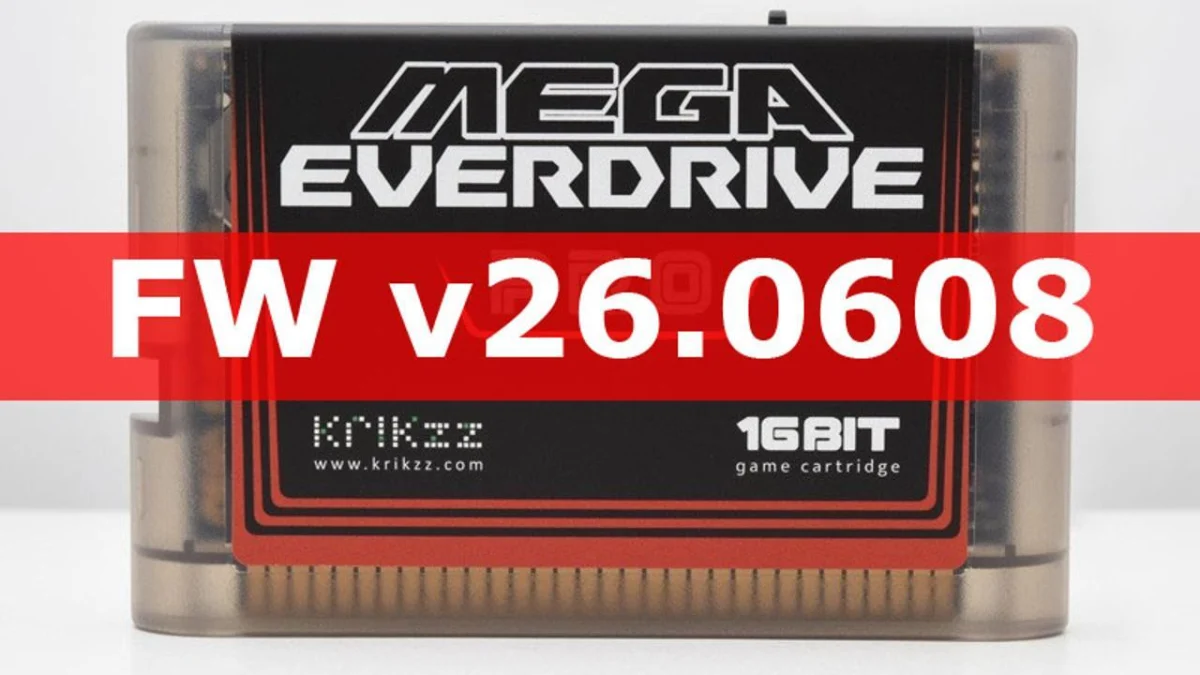
This latest firmware iteration, available for immediate download, primarily addresses critical compatibility issues for a subset of early Sega 32X units, which historically required a specific "extension unit" for proper operation. While this particular fix targets a niche segment of the retro gaming community, its inclusion underscores Krikzz’s ongoing commitment to comprehensive hardware support and preservation. Beyond the 32X enhancement, users can anticipate more robust save state capabilities, promising greater stability and reliability across a broader range of titles, alongside an expanded array of menu configurations designed to streamline the user experience and offer more granular control over gameplay settings. The full changelog, though not exhaustively detailed in initial announcements, indicates a broader set of refinements and bug fixes aimed at optimizing overall performance and stability.
Deep Dive into Key Firmware Enhancements
Addressing 32X Compatibility Challenges: The most notable feature of this update is the specific toggle designed to improve compatibility with early revisions of the Sega 32X add-on. The 32X, launched in late 1994, was Sega’s ambitious but ultimately short-lived attempt to bridge the gap between the 16-bit Mega Drive/Genesis and the then-upcoming 32-bit Sega Saturn. Due to manufacturing variations and the rushed nature of its development, some early 32X units presented unique compatibility challenges with certain peripherals, including flashcarts. The "extension unit" referred to a physical adapter or internal hardware revision necessary to ensure stable communication between the Mega Drive, 32X, and game cartridges. For users who own these specific early 32X models, the new firmware option on the Mega Everdrive Core and Pro is a critical development, potentially unlocking access to the 32X’s limited but historically significant library of games without resorting to specific, hard-to-find hardware workarounds or system revisions. This fix is a testament to the meticulous efforts of developers like Krikzz to ensure backward compatibility and preserve the playability of classic hardware, even with its inherent quirks.
Enhanced Savestates and User Experience: The improvement of savestate functionality is a welcome addition for all Mega Everdrive users. Savestates, a feature popularized by emulation and later integrated into flashcarts, allow players to save their game progress at any point, independent of the game’s native save system. This is particularly valuable for challenging retro titles that often lacked in-game saving or utilized cumbersome password systems. Improved savestates typically imply greater stability, faster saving/loading times, and compatibility with a wider array of games, including those with unusual memory mapping or timing requirements. Such enhancements reduce the risk of corrupted save files and provide a smoother, less frustrating gaming experience. Furthermore, the inclusion of "more menu options" suggests user interface refinements, additional configuration settings, or new features that empower players to customize their flashcart experience. These could range from advanced display options, regional settings overrides, cheat code management, or even subtle quality-of-life improvements that make navigating the Everdrive’s interface more intuitive.
Under-the-Hood Optimizations: While specific details are often reserved for technical release notes, firmware updates of this nature invariably include a host of general bug fixes and performance enhancements. These could encompass improvements to SD card read/write speeds, better handling of various ROM file formats, optimizations for specific game mapper chips, or refinements to the Everdrive’s FPGA logic for more accurate hardware emulation. Such incremental improvements collectively contribute to a more stable, reliable, and compatible device, ensuring that the Mega Everdrive continues to perform optimally across the vast and diverse library of Sega Genesis/Mega Drive, Master System, and 32X titles.
The Role of Everdrives in Modern Retro Gaming
Flashcarts: Guardians of Gaming History: Flashcarts like the Mega Everdrive series have revolutionized how enthusiasts interact with retro gaming hardware. These devices, which typically house an SD card slot and an FPGA (Field-Programmable Gate Array) or dedicated microcontroller, allow users to load entire libraries of games, homebrew creations, and ROM hacks onto a single cartridge. Their significance lies in their ability to offer a convenient, hardware-accurate way to play classic games on original consoles, bypassing the need for dozens or hundreds of physical cartridges. This not only makes game collections more manageable but also plays a crucial role in game preservation, ensuring that digital copies of rare or fragile titles can be played on authentic hardware for generations to come. They also foster vibrant homebrew and translation communities by providing an accessible platform for testing and distributing new content.
Krikzz: A Legacy of Innovation: At the forefront of the flashcart revolution is Igor Golubovskiy, the Ukrainian developer known by his online moniker, Krikzz. Since the early 2000s, Krikzz has earned a reputation for producing high-quality, robust, and feature-rich flashcarts for a wide array of retro consoles, including the Nintendo 64, Super Nintendo, Game Boy, and Sega Genesis. His products are celebrated for their exceptional compatibility, stability, and ongoing firmware support, which often extends for many years post-release. This commitment to continuous improvement, exemplified by the latest Mega Everdrive update, has cemented Krikzz’s position as a pillar of the retro gaming hardware community, providing essential tools that bridge the gap between digital preservation and authentic gameplay experiences. The tragic circumstances surrounding the war in Ukraine, which have directly impacted Krikzz’s operations and personal life, have only underscored the resilience and dedication of his work, with the community rallying to support him.
Historical Context: The Sega Mega Drive/Genesis and 32X Era
A Console’s Journey: The Sega Mega Drive, released in Japan in 1988 and North America as the Genesis in 1989, was a commercial and critical success, becoming a direct competitor to Nintendo’s SNES during the fiercely contested 16-bit console wars. Its powerful Motorola 68000 CPU and dedicated Zilog Z80 sound chip allowed for fast-paced action games and distinctive audio. The console’s diverse library, iconic mascots like Sonic the Hedgehog, and aggressive marketing carved out a significant market share and left an indelible mark on video game history.

The Ambitious Add-on: As the 16-bit era began to wane and the industry looked towards 3D graphics, Sega introduced the 32X in 1994 as an add-on for the Mega Drive/Genesis. Designed to provide a taste of 32-bit gaming and 3D capabilities, it featured two 32-bit Hitachi SH-2 processors. However, its high price, limited library of only 40 games, and the imminent launch of the Sega Saturn (Sega’s true next-generation console) led to its rapid discontinuation within a year of its release. Despite its commercial failure, the 32X remains a fascinating, if quirky, piece of gaming history, and its unique hardware architecture presents ongoing challenges for developers seeking to ensure full compatibility with modern flashcart solutions. The need for specific "extension unit" support in the latest firmware update highlights the enduring complexity of this particular piece of retro hardware.
Development and Support Chronology
Krikzz’s history of firmware development for the Everdrive line is characterized by consistent, albeit sometimes spaced, updates that reflect both ongoing bug discovery and the integration of community-requested features. The Mega Everdrive series, first launched years ago, has seen several major hardware revisions and numerous firmware iterations. Each update typically builds upon the last, refining core functionalities, expanding game compatibility, and addressing specific edge cases. This iterative development process is crucial for FPGA-based devices, where the "software" (firmware) directly configures the hardware logic, allowing for continuous improvements without requiring physical hardware modifications. The release of this particular update, addressing a very specific 32X hardware variant, demonstrates a commitment to even the most niche segments of its user base, underscoring Krikzz’s philosophy of long-term product support that extends well beyond the initial purchase.
Community Reception and Industry Implications
User Feedback and Community Engagement: While Krikzz himself typically communicates updates via his official website and social media channels rather than formal press releases, the retro gaming community’s response to such updates is usually swift and positive. Forums like RetroRGB, AssemblerGames, and various subreddits dedicated to retro gaming become hubs for discussion, bug reporting, and feature requests. The inclusion of fixes for specific hardware like early 32X units often garners significant appreciation, as these issues can be deeply frustrating for affected users. Improved savestates and menu options are generally welcomed as universal quality-of-life enhancements that benefit all users, regardless of their specific hardware setup. This direct engagement with the user base is a hallmark of the retro gaming hardware scene, where passionate developers often work closely with their community to refine products.
Maintaining Product Longevity and Brand Reputation: For a developer like Krikzz, consistent firmware updates are vital for maintaining product longevity and reinforcing brand reputation. In a market where flashcarts can represent a significant investment for hobbyists, the assurance of ongoing support and continuous improvement adds substantial value. It signals to consumers that their purchase is not a static device but a dynamic platform that will evolve and improve over time, ensuring compatibility with new discoveries, homebrew releases, and unforeseen hardware quirks. This commitment distinguishes high-quality flashcart manufacturers from lesser alternatives that may offer little to no post-launch support.
Broader Impact on Retro Preservation: The efforts of developers like Krikzz, through firmware updates that resolve compatibility issues and enhance functionality, have a profound impact on the broader retro preservation movement. By enabling more games to be played on original hardware with greater accuracy and convenience, these devices help keep classic titles accessible and relevant. They ensure that future generations of gamers and historians can experience the original intent of these games on the hardware they were designed for, free from the inaccuracies or limitations often associated with software emulation. The continuous support for complex and sometimes problematic legacy hardware like the 32X underscores the dedication required to truly preserve the authenticity of retro gaming.
Technical Aspects and Future Outlook
The development of flashcart firmware, especially for FPGA-based systems, involves intricate knowledge of classic console architecture, digital logic design, and low-level programming. Emulating or interfacing with vintage hardware, particularly complex add-ons like the 32X, requires meticulous reverse engineering and a deep understanding of timing, memory mapping, and communication protocols. The challenges are compounded by manufacturing variations in original hardware, which often necessitate specific firmware adjustments for different revisions. As retro gaming continues to grow in popularity, the demand for high-quality, authentic ways to play classic titles will only increase. Krikzz’s ongoing commitment to developing and refining his Everdrive products positions him as a key player in this evolving landscape. Future firmware updates may continue to explore deeper compatibility, introduce new diagnostic tools, or even integrate features that respond to emerging trends in the retro gaming community, such as new homebrew standards or community-driven hardware modifications.
Conclusion
The latest firmware update for the Mega Everdrive Core and Pro models is more than just a routine software patch; it represents a significant step forward in enhancing the usability and compatibility of these essential retro gaming devices. By specifically addressing the long-standing compatibility issues with early Sega 32X units, improving savestate functionality, and expanding menu options, Krikzz has once again demonstrated his unwavering dedication to the retro gaming community. This commitment to continuous improvement not only benefits individual users by providing a more reliable and enjoyable experience but also plays a crucial role in the broader effort to preserve the rich history of video games on their original, authentic hardware. The Mega Everdrive series continues to stand as a testament to the enduring appeal of classic consoles and the innovative spirit that keeps their legacies alive.
Users are encouraged to visit the official Krikzz website for the latest firmware downloads and detailed instructions:
Core FW: https://krikzz.com/pub/support/mega-everdrive/core-series/firmware/
Pro FW: https://krikzz.com/pub/support/mega-everdrive/pro-series/firmware/
For those looking to acquire an Everdrive, purchase links are available, and the comprehensive manual provides guidance on installation and usage:
Purchase Everdrives: https://amzn.to/3QJ4zSJ
Manual: https://krikzz.com/pub/support/mega-everdrive/pro-series/mega-ed-pro-manual.pdf








