Ganda Hendra Perkasa
The International Center for the History of Electronic Games (ICHEG) has officially launched a significantly enhanced version of its digital archive platform, a move poised to revolutionize how researchers, enthusiasts, and the public interact with its vast collection of gaming history. This comprehensive update, rolled out today, represents a substantial investment in user experience, directly addressing feedback from the community and aiming to make the platform more intuitive, efficient, and visually engaging. The new iteration promises to streamline navigation, improve search functionality, and offer a more robust browsing environment for the ever-expanding repository of digital artifacts.
A Foundation Rebuilt: Enhancing the Browsing Experience
At the core of this overhaul is a complete reimagining of the digital archive’s interface. The development team at ICHEG has meticulously rebuilt the front-end from the ground up, prioritizing a seamless and enjoyable browsing experience. A key improvement is the visual presentation of content. Images, such as magazine covers and file thumbnails, are now significantly larger, providing users with a clearer and more immediate understanding of the items within the archive. This visual enhancement also serves a functional purpose, enabling users to more easily distinguish between different types of content, such as folders containing multiple files versus individual digital files.
Beyond the visual, performance has been a critical focus. The new interface boasts considerably faster loading times compared to its predecessor, a crucial factor for users navigating large datasets. Furthermore, the implementation of improved loading states offers clearer visual cues as content is being retrieved, reducing user uncertainty and frustration. Navigation itself has also been refined, with the platform now demonstrating a superior ability to retain user context as they move between different sections and pages within the archive. This means users will experience fewer instances of being abruptly returned to the beginning of their search or browse path, fostering a more fluid research flow.
The strategic decision to prioritize user feedback in this update underscores ICHEG’s commitment to its community. This iterative development process, informed by direct input, is a testament to the organization’s dedication to serving the needs of those who rely on the archive for historical research and preservation.
Amplifying Discovery: Enhanced Search Functionality
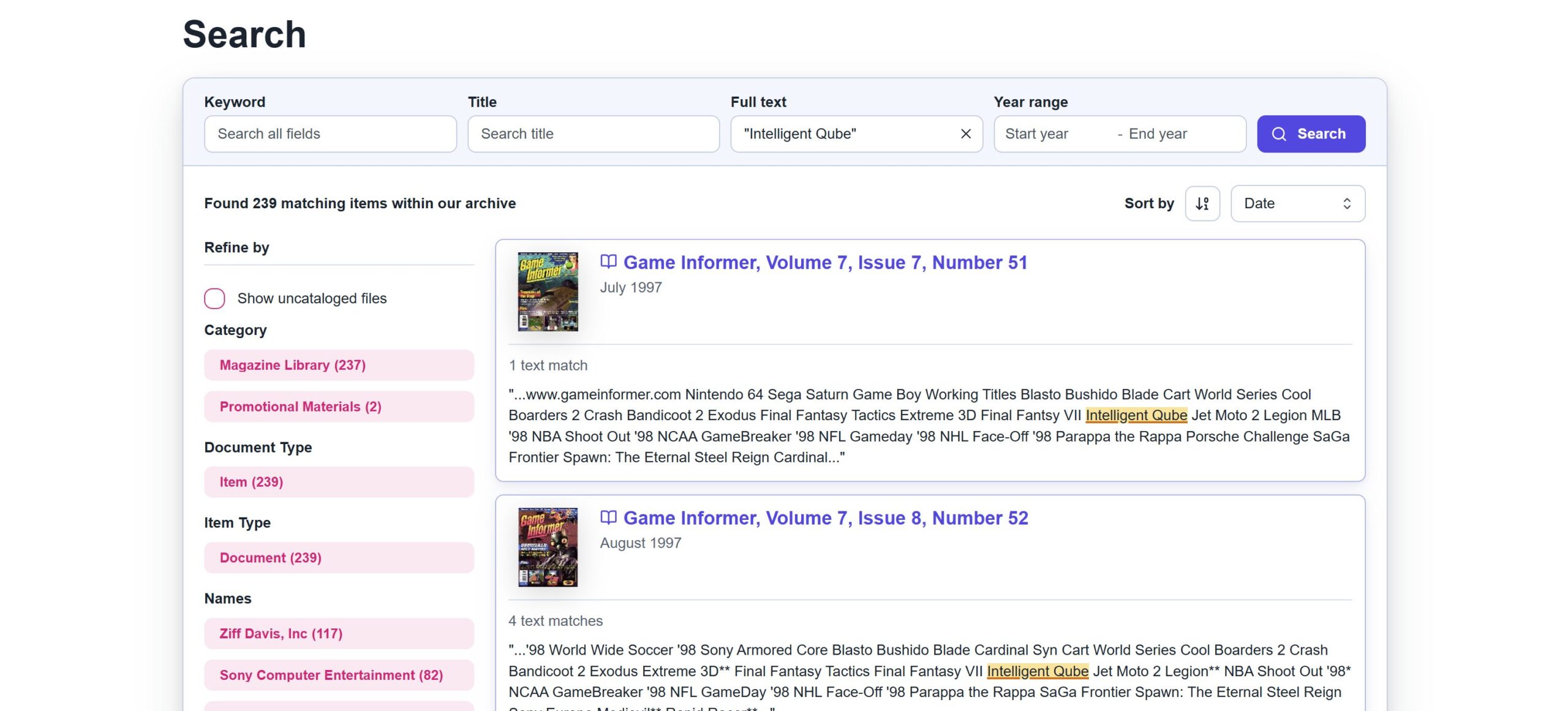
Recognizing the critical role of search in accessing historical information, ICHEG has also made substantial improvements to its search capabilities. The platform’s search interface now provides an unprecedented level of contextual detail for keyword searches. A standout feature is the expansion of the "snippet view." Previously offering limited surrounding text, this view now displays approximately four times more content around matching keywords. This significant increase in contextual information allows users to more rapidly and accurately assess the relevance of their search results without needing to open each individual item.
This enhancement is particularly impactful for researchers working with textual documents, such as game manuals, magazine articles, or developer correspondence. By providing a richer preview, the new search functionality accelerates the discovery process, enabling users to quickly identify pertinent information and make informed decisions about which resources to explore further. The implications for academic research, journalistic inquiry, and even casual exploration are profound, as the friction in finding specific pieces of information has been demonstrably reduced.
Streamlined Access: The "Explore the Archive" Initiative
Making the archive more accessible from the outset was another key objective of this update. ICHEG has introduced a new "Explore the Archive" section directly on the homepage. This feature allows users to immediately begin browsing the archive’s extensive collections without the necessity of navigating to a separate, dedicated page. This integration aims to lower the barrier to entry, encouraging spontaneous exploration and discovery.
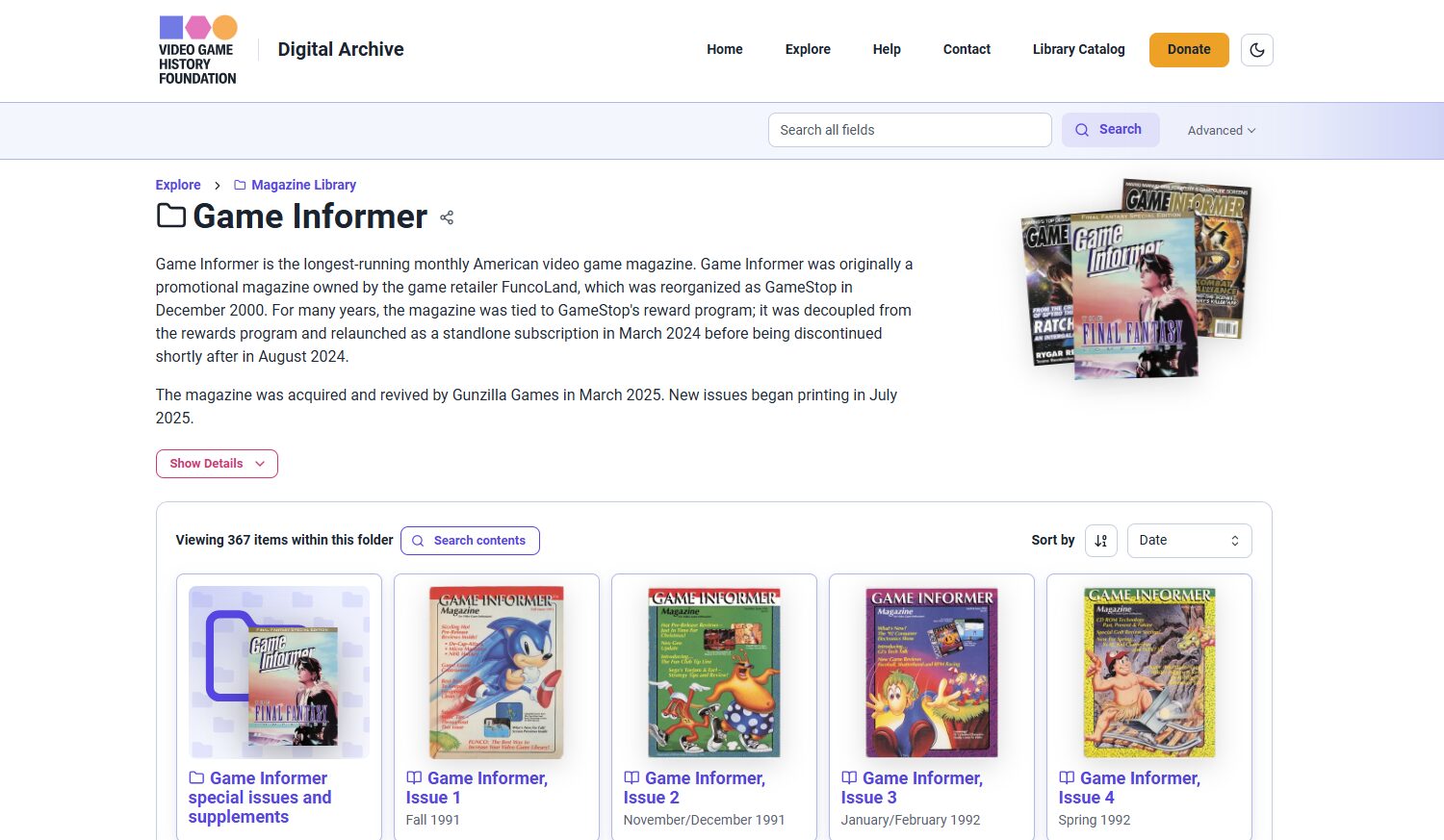
Further enhancing the homepage experience, a "Featured Collections" bar has been incorporated. This dynamic section highlights new and notable additions to the archive, ensuring that users are consistently aware of the most recent and significant contributions to the digital repository. This curated approach not only draws attention to valuable new content but also provides a snapshot of the archive’s ongoing growth and the diverse range of historical materials it encompasses.
A Glimpse into the Future: Ongoing Development and Vision
The current release represents a significant milestone, but ICHEG is not resting on its laurels. The organization has articulated a forward-looking vision for the digital archive, with plans for continued development and the integration of several new, transformative features. Among these future enhancements is the development of a new, advanced viewer specifically designed for image files. This would likely offer more sophisticated tools for examining and interacting with visual assets, potentially including zoom capabilities, metadata display, and annotation features.
Furthermore, ICHEG is actively exploring the integration of character recognition technology for Japanese magazines. This would unlock a wealth of textual information currently inaccessible within these visually rich publications, opening up new avenues for research into the Japanese gaming landscape. The ultimate goal, as stated by the organization, is the eventual integration of the digital archive with the full library catalog. This ambitious undertaking promises to create a unified and comprehensive resource, allowing users to seamlessly search and access both digital and physical holdings, thus providing an unparalleled depth of historical research capability.
Broader Impact and Implications for Game History
The comprehensive overhaul of the ICHEG digital archive platform carries significant implications for the field of electronic game history. By providing a more user-friendly, efficient, and context-rich environment for accessing historical materials, ICHEG is democratizing access to invaluable primary sources. This accessibility is crucial for a discipline that is still solidifying its academic footing and relies heavily on the preservation and study of often ephemeral digital and print materials.
Supporting Data and Context:
The history of video games, while a relatively young field, has seen a proliferation of academic interest and public fascination in recent decades. Organizations like ICHEG play a vital role in safeguarding this cultural heritage. The sheer volume of content within such archives can be staggering. For example, the global video game market generated over $200 billion in revenue in 2023, a testament to the industry’s cultural and economic significance. However, the preservation of its history has often lagged behind its commercial growth. Many early game consoles, software titles, and supporting materials are rare, fragile, or exist only in private collections. Digital archives, therefore, serve as essential bulwarks against the loss of this history.
Timeline of Development (Inferred):
While a specific timeline for the development of this update was not provided, the announcement implies a period of significant design, development, and testing. Typically, such a comprehensive rebuild would involve several phases:
- Phase 1: User Feedback and Requirements Gathering: Months dedicated to collecting and analyzing community input on the previous platform.
- Phase 2: Design and Prototyping: Conceptualizing the new interface, user flows, and visual design.
- Phase 3: Development and Implementation: The core coding and engineering work to build the new platform.
- Phase 4: Testing and Quality Assurance: Rigorous internal and potentially beta testing to identify and fix bugs.
- Phase 5: Deployment and Launch: The official release of the updated platform.
- Phase 6: Post-Launch Monitoring and Iteration: Ongoing performance monitoring and planning for future updates based on continued user interaction.
Given the scope of the changes, it is reasonable to infer that this project has been in development for at least 12-18 months, if not longer.
Official Responses (Inferred):
While no direct quotes were provided, the language used in the announcement suggests a deep commitment from the ICHEG leadership and development team. Phrases like "improves the user experience based on your feedback" and "We think these small changes will make the research experience even better than before" convey a sense of pride and confidence in the work completed. The emphasis on future developments, such as character recognition and library integration, indicates a long-term strategic vision for the platform’s evolution as a central hub for game history research.
Broader Impact and Implications:
The enhanced ICHEG digital archive platform has the potential to significantly impact several areas:
- Academic Research: Researchers in game studies, media history, cultural studies, and technology history will benefit from more efficient access to primary sources. This could lead to new scholarly works, a deeper understanding of game development trends, and more nuanced analyses of gaming’s societal impact.
- Journalism and Media: Journalists and content creators focusing on gaming history will find it easier to source information and visual assets for their stories, leading to more accurate and in-depth reporting.
- Education: Educators can leverage the archive to create engaging lesson plans and provide students with direct access to historical materials, fostering a greater appreciation for the evolution of interactive entertainment.
- Preservation Efforts: The platform serves as a model for other institutions aiming to digitize and preserve historical artifacts, highlighting best practices in user-centric design and technological integration.
- Public Engagement: For the gaming community and the general public, the improved interface makes exploring gaming history more enjoyable and accessible, potentially sparking new interest and engagement with the past.
The launch of this revamped platform marks a significant step forward in the ongoing effort to document, preserve, and make accessible the rich and complex history of electronic games. ICHEG’s commitment to user feedback and continuous improvement positions its digital archive as a vital and evolving resource for generations to come.