Ganda Hendra Perkasa
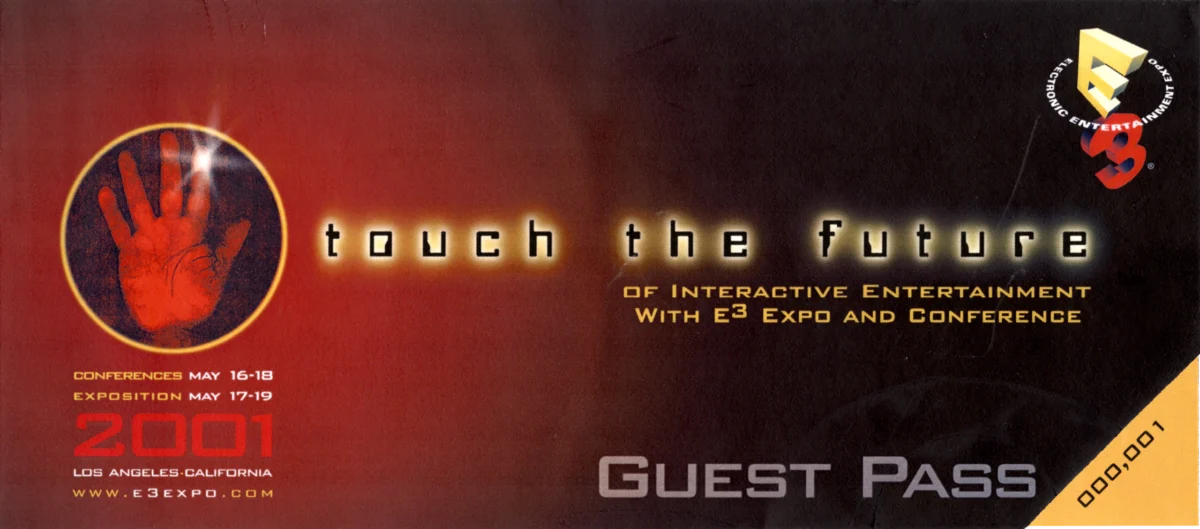
The Video Game History Foundation has launched a comprehensive expansion of its digital archive, introducing thousands of rare documents, administrative files, unreleased media, and hours of video footage chronicling the rise and fall of the Electronic Entertainment Expo (E3). For over two decades, E3 served as the definitive global stage for the interactive entertainment industry, acting as a cultural barometer for a medium that evolved from a niche commercial product into a dominant multi-billion-dollar global entertainment powerhouse.
The newly added materials bridge critical gaps in the historical record of video game marketing, corporate strategy, and public relations. By compiling internal directories, daily trade newspapers, executive ephemera, and floor-level convention recordings, the foundation aims to provide academics, journalists, and enthusiasts with unprecedented, free access to primary source materials detailing how the modern gaming landscape was forged.
From Consumer Electronics Show Offshoot to Standalone Spectacle
To understand the cultural weight of E3, historians must examine the industry landscape of the early 1990s. Prior to the establishment of the Electronic Entertainment Expo, video games lacked an exclusive, dedicated platform of their own. Instead, major software publishers and hardware manufacturers showcased upcoming titles at the Consumer Electronics Show (CES), a massive multi-industry trade convention where video games shared floor space and executive attention with consumer electronics, household appliances, and audio equipment.
By the mid-1990s, the growing friction between the priorities of traditional consumer electronics companies and the explosive economic momentum of the interactive entertainment sector reached a tipping point. Following a succession of lackluster and marginalized convention appearances, industry leadership recognized that video games required a standalone venue capable of reflecting their burgeoning cultural and commercial gravity.
In 1995, the Interactive Digital Software Association (IDSA)—which later became the Entertainment Software Association (ESA)—partnered with Infotainment World to establish the inaugural E3 in Los Angeles, California. Designed from its inception to be a high-production, high-impact spectacle, E3 quickly eclipsed all other trade events, becoming the epicenter where consumer dreams and corporate fortunes intersected on an annual basis.
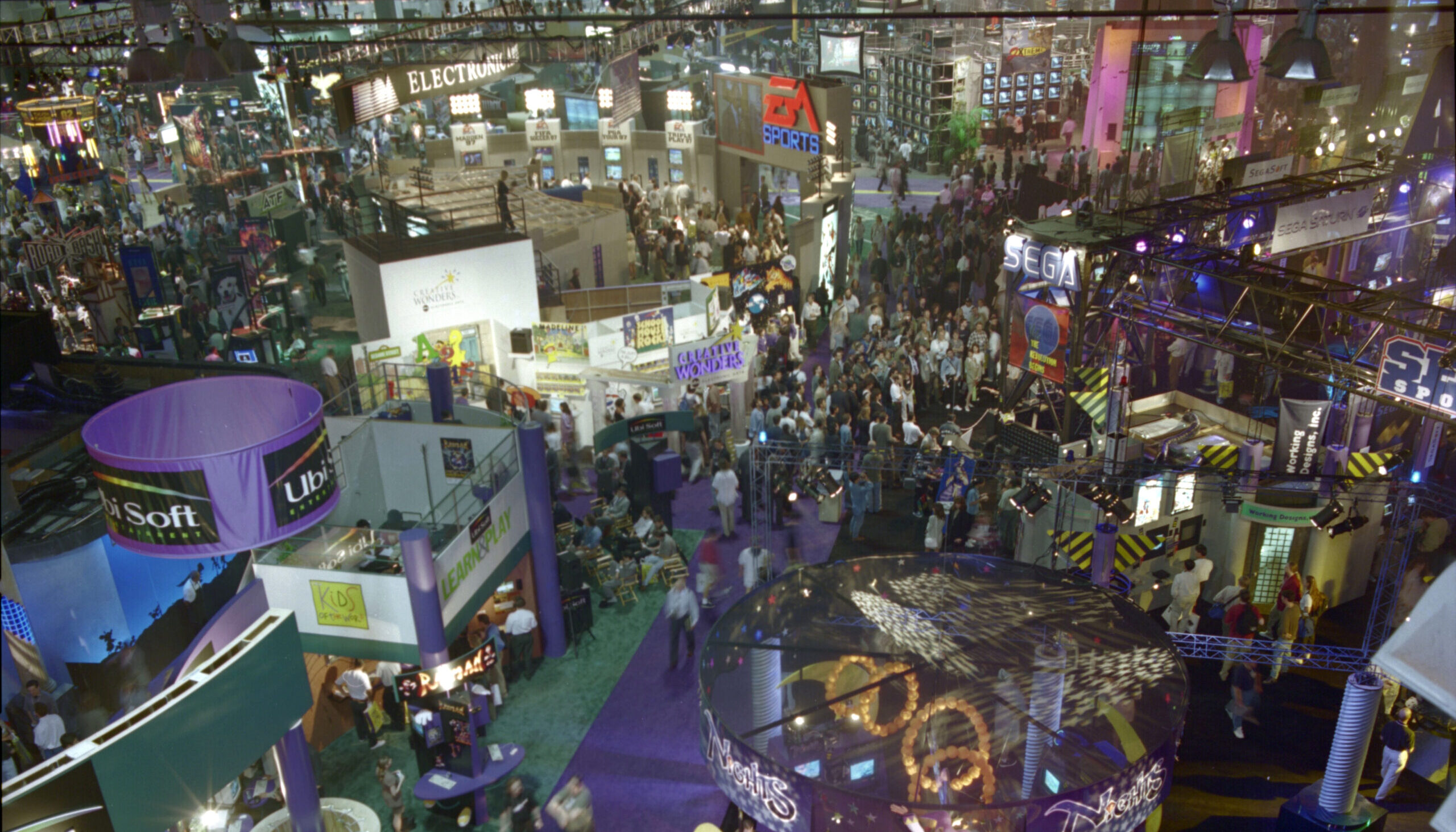
The Carolyn Rauch Event Ephemera Collection
At the core of the foundation’s latest archival release is the Carolyn Rauch event ephemera collection. Donated by founding IDSA member and former Senior Vice President Carolyn Rauch—who oversaw the day-to-day administration of E3 across nearly its entire operational lifespan—the collection encompasses over 1,000 pages of historically significant material spanning from 1996 through 2011.
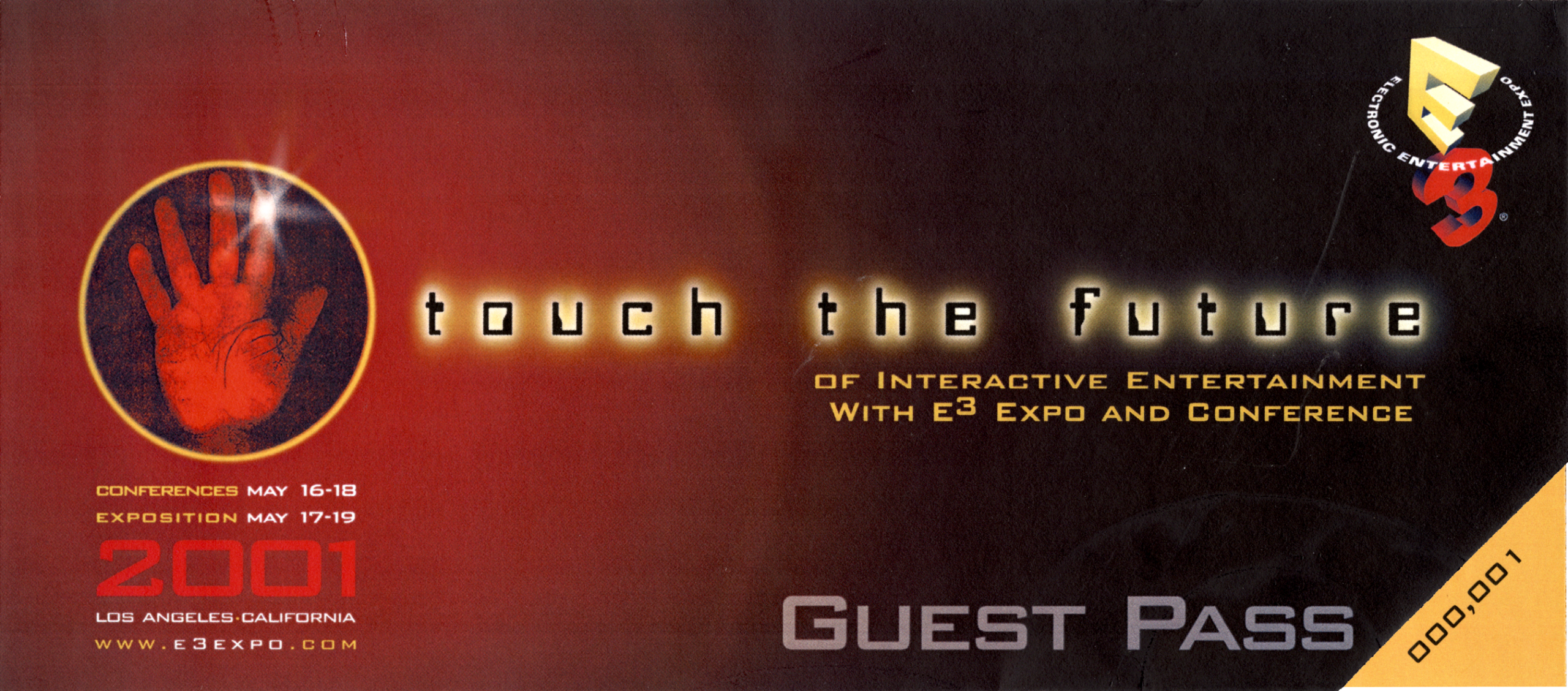
The acquisition provides a granular look at the operational mechanics of managing a convention of E3’s magnitude. It features promotional flyers, official press kits, guest credentials, internal panel transcripts, and extensive industry reports. Crucially, a significant portion of the archive sheds light on the business-to-business infrastructure of the expo, detailing the exorbitant costs and strategic positioning required for exhibitors to capture attention on a crowded, hyper-competitive show floor. For example, archival records indicate that corporate branding opportunities, such as sponsoring attendee badge lanyards during the 1999 expo, commanded investments reaching $25,000 per placement.
Furthermore, the collection preserves documentation from the E3 Media & Business Summit, a scaled-down, invitation-only iteration held in 2007 and 2008 following a brief hiatus and reorganization of the primary trade show format. These elusive business-centric events, largely absent from conventional video game histories, are now thoroughly documented, offering researchers critical insight into a transitional era when publishers sought more intimate environments away from consumer distractions.
Eyewitness History: The Anthony Parisi Tapes and Early Media Artifacts
Complementing the administrative ephemera is a vast trove of audiovisual media, highlighted by the donation of nearly 12 hours of digitized video footage captured by early attendee Anthony Parisi. Having attended the first four E3 conventions with a camcorder, Parisi documented crucial transitional moments in hardware history that were otherwise lost to time or poorly preserved in analog formats.
Parisi’s footage captures raw, firsthand reactions of attendees experiencing monumental titles—such as Super Mario 64 and Castlevania: Symphony of the Night—months before their commercial releases. More importantly, the tapes preserve rare recordings of foundational industry keynotes. Among them are the surprise, unannounced launch of the Sega Saturn and Sony’s iconic executive presentation in 1995, wherein head of Sony Computer Entertainment America Steve Race took the stage solely to announce a $299 price point for the original PlayStation, delivering a devastating blow to competing hardware manufacturers.
To further bolster this visual archive, the foundation has cataloged assorted event tapes sourced from defunct outlets like Subspace Publishers and Tronix Multimedia. This includes specialized coverage such as Atari Explorer Online’s 1995 documentation of the Atari Jaguar ecosystem, featuring candid interviews with cult-classic developer Jeff Minter regarding Defender 2000. Additionally, the archive now hosts pristine digital transfers of press B-roll distribution tapes provided by Nintendo and Sony between 1995 and 1998. Notably, a Nintendo of America press tape from E3 1997 contains over a minute and a half of high-quality pre-release footage from Rareware’s famously overhauled and delayed project, Conker’s Quest.
Comprehensive Infrastructure Records: Directories and the E3 Show Daily
Historical research requires more than promotional highlights; it demands structural context. To fulfill this need, the foundation has completed the digitization of its exhaustive run of E3 directory books, covering the years 1995 through 2006. Comprising roughly 2,500 pages, these directories provide complete floor maps, exhibitor rosters, corporate hierarchies, and panel schedules. They serve as an indispensable cartographic resource for mapping the shifting corporate alliances and corporate real estate footprints of the late 20th and early 21st-century games industry.
Alongside the directories, the archive has expanded its holdings of the E3 Show Daily, the official on-site newspaper distributed daily during the convention. With newly added scans from 1995 and 1997, the digital repository now houses approximately 1,500 pages of contemporaneous reporting. Unlike traditional enthusiast magazines published months after the fact, the Show Daily captured breaking announcements, shifting exhibitor strategies, and off-hours industry nightlife in real-time, providing an unvarnished chronicle of the convention’s daily pulse.
Firsthand Reflections from Leadership
In conjunction with the archive launch, the Video Game History Foundation hosted Carolyn Rauch and former IDSA president Doug Lowenstein on an episode of the Video Game History Hour podcast. The discussion marked a rare joint public appearance by the two executives, who reflected on the immense political, cultural, and logistical hurdles of establishing the video game industry’s premier showcase during an era when interactive entertainment still faced mainstream skepticism.
Mary Dolaher, long-time event director of E3 and eventual CEO of IDG World Expo, also offered reflections on orchestrating the convention from the ground level over its two-decade lifespan. Dolaher managed every logistical permutation required to transform convention centers into immersive brand ecosystems.
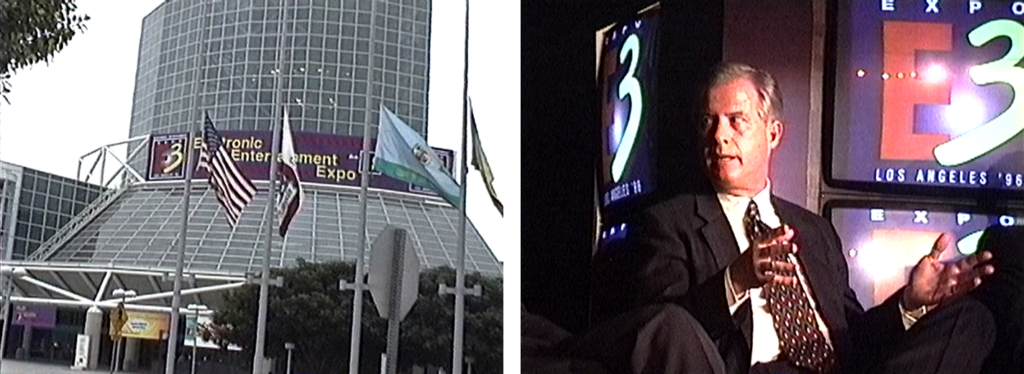
"We sold every square inch of the [Los Angeles Convention Center] and beyond it, into the surrounding hotels and streets: bus wraps, elevator graphics, mirror clings in hotel rooms, giant Post-it note collages, chalk art," Dolaher recalled. "You had to be there to understand the enormity, the noise, and the impact it had on the industry and beyond."
Dolaher also highlighted ancillary programs hosted under the E3 umbrella, such as "Into the Pixel," an initiative designed to legitimize video game concept art and digital illustration as a recognized artistic medium. By exhibiting these works globally, the program actively challenged prevailing cultural stereotypes regarding the artistic validity of interactive media. Furthermore, she emphasized the convention’s community outreach, including the annual tradition of hosting Make-A-Wish participants—an impact she notes extended far beyond corporate metrics by inspiring future generations of developers and honoring fans.
Implications and Future Outlook
The systematic archiving of E3 arrives at a critical juncture for digital preservation. As physical trade shows give way to digital-only streaming presentations and decentralized corporate marketing, the physical and ephemeral artifacts of the convention era run a high risk of permanent degradation or loss.
By centralizing these documents, photographs, and video recordings into a searchable, open-access digital library, the Video Game History Foundation provides institutional and independent researchers with the raw data necessary to construct objective, rigorous historical narratives. The initiative guarantees that the cultural, economic, and social phenomena that defined the golden age of physical trade conventions will remain accessible to future generations studying the evolution of modern entertainment.