Jia Lissa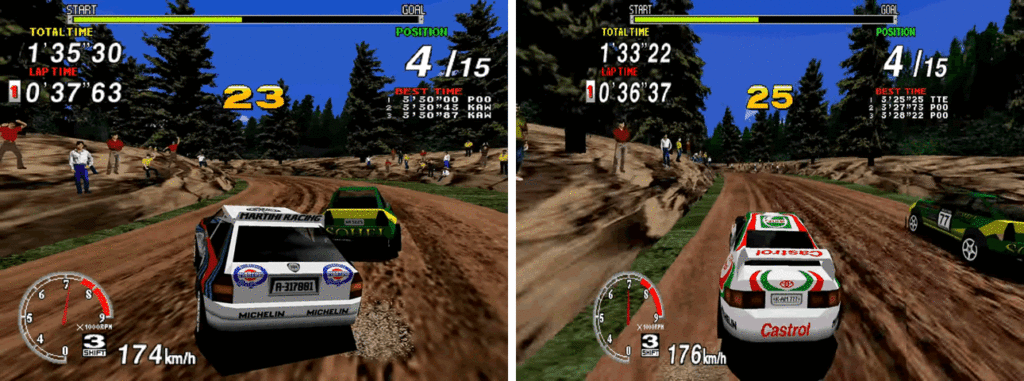
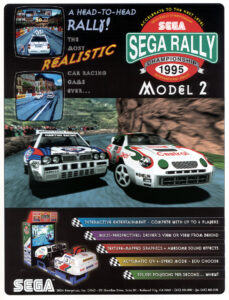
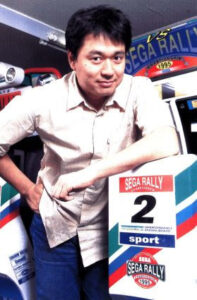
The 1990s represented a transformative era for the coin-operated amusement industry, defined by a fierce rivalry between Sega and Namco for dominance in the burgeoning 3D arcade racing market. While the consumer-level competition between Sega and Nintendo captured mainstream headlines, the arcade front was a battleground of technical engineering and creative risk-taking. Out of this competitive crucible emerged Sega Rally Championship in 1995, a title that not only redefined the racing genre but also established a new standard for immersive simulation and technical hardware utilization. Developed by Sega’s AM3 division and led by future industry visionary Tetsuya Mizuguchi, the project leveraged the cutting-edge Model 2 arcade architecture to deliver an experience that contrasted sharply with the sleek, urban aesthetics of its contemporaries.
The Genesis of 3D Innovation and the Emotion Design Lab
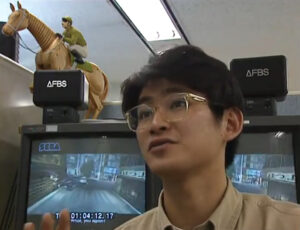
The transition from 2D sprites to 3D polygons was more than a graphical upgrade; it was a fundamental shift in how interactive entertainment was conceptualized. At Sega, this transition was spearheaded by figures like Tetsuya Mizuguchi, who joined the company in 1989 with a background in media and a vision for the "future of entertainment." Mizuguchi’s entry into the industry was unconventional; rather than focusing on traditional game design, he proposed a "virtual environment display system" inspired by NASA’s Mars rover simulations.
Recognizing his potential, Sega R&D head Hisashi Suzuki appointed Mizuguchi as an assistant, eventually allowing him to form the "Emotion Design Lab." This unit was granted a budget of approximately 100 million yen (roughly $1 million USD at the time) to acquire Silicon Graphics workstations and Softimage software. The lab’s primary goal was to explore how 3D computer graphics (CG) could evoke emotional responses similar to cinema. Mizuguchi’s early work on the AS-1 Simulator, a high-end motion cabinet used in theme parks, provided the technical foundation for what would eventually become a revolution in arcade racing.
Technical Foundations: The Model 2 Architecture
The development of Sega Rally Championship coincided with the arrival of the Model 2 arcade board, a hardware suite resulting from a partnership between Sega and GE Aerospace. This hardware was a significant leap over the previous Model 1, capable of pushing 500,000 polygons per second compared to the earlier 180,000. Key technical advancements included:
- Texture Filtering: A process used to determine the pixel color on 3D surfaces, reducing visual noise.
- Texture Anti-Aliasing: A technique to smooth jagged edges and flickering on distant textures.
- Trilinear Filtering: This smoothed the transitions between different texture resolutions (mipmaps), ensuring a consistent visual quality as objects moved closer or further from the camera.
Despite these advancements, the Model 2 was not without its limitations. It lacked support for Gouraud shading and had limited texture memory. To overcome these hurdles, the programming team, led by Sohei Yamamoto, employed creative workarounds, such as applying curved-looking textures to flat, octagonal polygons to simulate the appearance of round tires.
Chronology of Development: From California to the Pacific Coast
The project’s inception was marked by a desire to create a racing game that appealed to European sensibilities, where World Rally Championship (WRC) racing enjoyed massive popularity. Mizuguchi noted that while Daytona USA was a massive success in North America, European staff felt its NASCAR focus was too localized. After witnessing the intensity of live rally racing on television, Mizuguchi pivoted the project toward off-road competition.
The development timeline was marked by several critical phases:
- The Research Phase (1994): Mizuguchi and a team of five, including director Kenji Sasaki, embarked on a 1,200-mile road trip across the United States and Mexico. They captured over 4,000 photographs and extensive video footage to serve as texture references. This trip was essential for capturing the "dry air" and vast scale of the American West, which the team felt was missing from their early Japanese-influenced sketches.
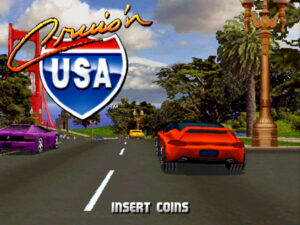
- The Conceptual Pivot: Originally titled Rally California, the project faced a sudden challenge when Midway Games announced Cruis’n USA, which shared a similar cross-country premise. To differentiate their product, the AM3 team narrowed the scope to the Pacific Coast and focused on varied terrain—desert, forest, and mountain—leading to the title Pacific Coast Rally.
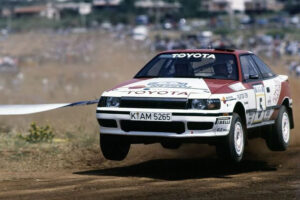
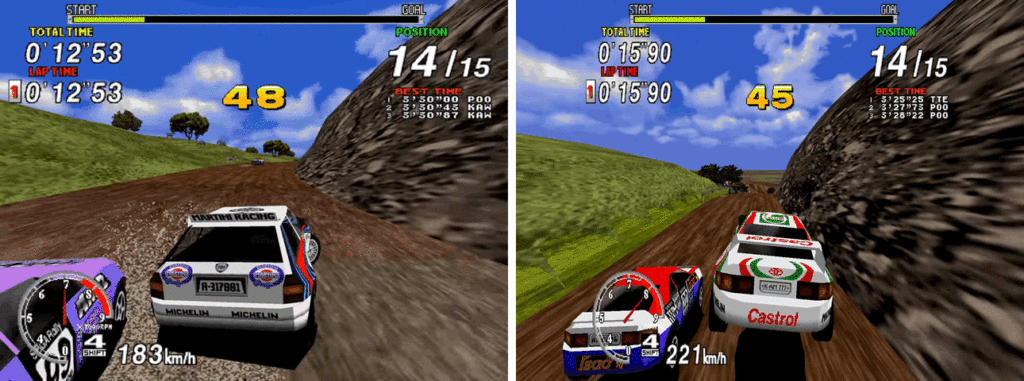
- The Final Branding: As the team secured official licenses from Toyota and Lancia, the game was renamed Sega Rally Championship. This move was historic, as it marked one of the first instances of a video game featuring fully licensed vehicles with official sponsor decals.
Strategic Licensing and Professional Validation
Securing licenses from Toyota and Fiat (owner of Lancia) was a grueling process. Mizuguchi recalled that Toyota executives were initially dismissive, claiming that "video game players don’t buy cars." However, upon seeing the high-fidelity 3D renders of the Toyota Celica ST205, the executives relented. A similar pitch in Turin, Italy, secured the Lancia Delta and the legendary Lancia Stratos HF.
The game’s realism was later validated by professional WRC drivers Juha Kankkunen and Didier Auriol. During a promotional event, both drivers praised the game’s handling, with Auriol reportedly expressing interest in purchasing a cabinet for his personal use. The inclusion of the "navigator" system—audio cues like "Easy right!" and "Over jump!"—further mirrored the authentic rally experience, where 70% of a driver’s information comes from their co-driver.
Audio Innovation and the "Game Over" Phenomenon
The auditory experience of Sega Rally Championship was as influential as its visuals. Composed by Takenobu Mitsuyoshi, the soundtrack blended jazz-fusion and funk elements. Mitsuyoshi, who had previously achieved fame for his work on Daytona USA, utilized the Model 2’s improved sampling capabilities to record longer vocal phrases. This led to the creation of the iconic "GAME OVER, YEAH!" jingle.
To ensure the mechanical sounds were authentic, the team visited the Maruwa Autoland Nasu dirt track. They recorded engine idles, revs, and the sound of gravel splashing against the chassis of a real Toyota Celica GT-Four. These sounds were integrated into the "Active Shock Generator" (ASG) system, which used audio frequencies to trigger two vibration motors in the cabinet seat, providing tactile feedback that surpassed the single-motor system used in Daytona USA.
Market Impact and Hardware Variants
Upon its February 1995 release in Japan, Sega Rally Championship sold approximately 12,000 units. While this was lower than the 40,000 units moved by Sega’s UFO Catcher, it was a significant figure for a high-end 3D dedicated cabinet. The game was available in several configurations:
- Upright/Twin Units: The most common versions, featuring force-feedback steering wheels and link-play capabilities.
- Deluxe Cabinet: Priced at $22,000, this version featured a vibrating seat, a built-in clutch, and a premium sound system.
- Special Stage (Joypolis): An exclusive, massive motion simulator found at Shinjuku Joypolis. It featured full-sized Toyota Celica shells mounted on a six-axis motion base, offering the most immersive experience in the history of the franchise.
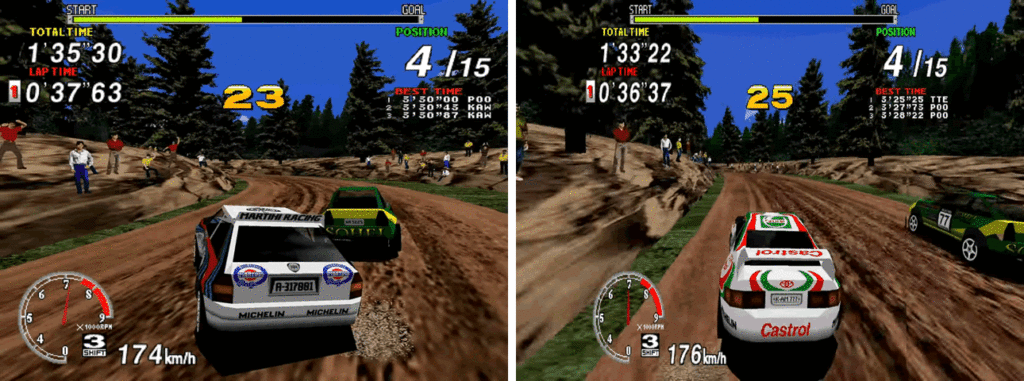
The subsequent 1996 port to the Sega Saturn was a critical success, often cited as one of the best arcade-to-home conversions of the 32-bit era. Despite a reduction in frame rate and resolution, the Saturn version added a "Time Attack" mode and split-screen multiplayer, helping the console compete against Sony’s PlayStation.
Broader Industry Implications and Legacy
The success of Sega Rally Championship had far-reaching effects on the racing genre. Guy Wilday, producer of the Colin McRae Rally series, noted that the car handling in Sega’s title served as the foundational benchmark for their own physics engine. The game demonstrated that players craved more than just speed; they wanted "tactile" racing, where the friction of the surface—mud, gravel, or asphalt—directly impacted the gameplay.
For Tetsuya Mizuguchi, the project was a springboard to his future as a lead producer. The Emotion Design Lab evolved into AM Annex and eventually United Game Artists, where he would create avant-garde titles like Rez and Space Channel 5.
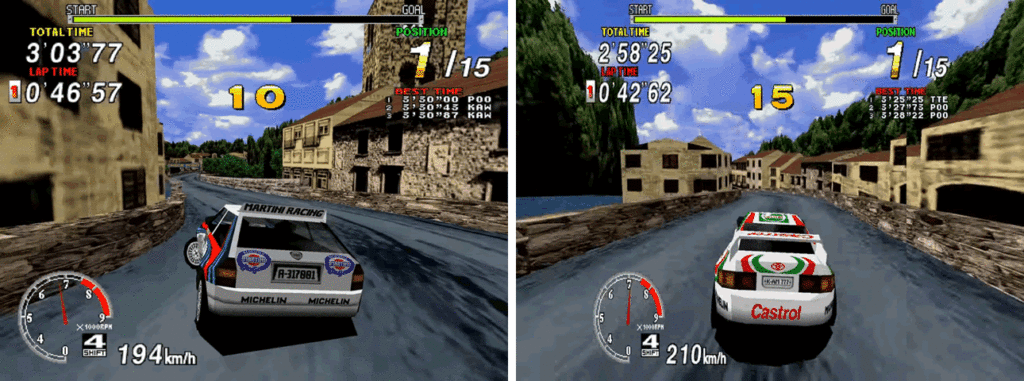
Sega Rally Championship remains a masterclass in how technical constraints can breed innovation. By focusing on the "emotion" of the drive and the specific physics of off-road racing, AM3 created a title that transcended the arcade fad of the 1990s. It stands as a testament to a period when Sega was not just a hardware manufacturer, but a pioneer in the sensory future of interactive entertainment. To this day, the game is remembered not just for its polygons, but for the thrill of a perfectly executed drift and a booming, celebratory "YEAH!" that signaled the end of a hard-fought race.