Retno Hari Mulyono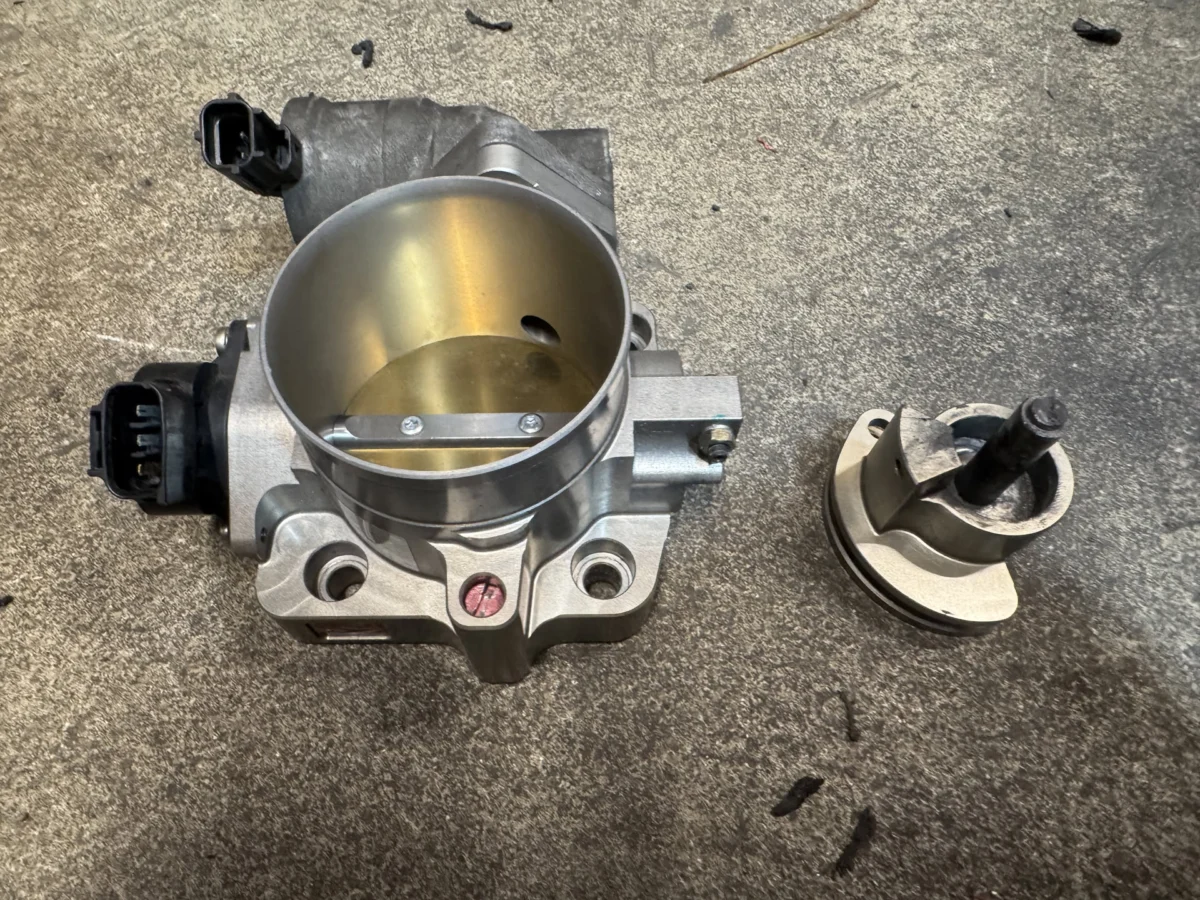
The transition from mechanical cable-driven throttles to electronic drive-by-wire (DBW) systems represents a significant technological leap in the automotive aftermarket, particularly for legacy platforms like the Mazda Miata NB (1998–2005). While hundreds of thousands of these vehicles remain in operation globally using traditional cable-actuated systems, a growing cohort of performance enthusiasts and competitive racers are migrating toward DBW integration. This shift is driven not merely by a desire for modernization but by documented reliability failures in aftermarket mechanical components and the superior tuning granularity offered by digital control. For owners utilizing the Megasquirt MS3Pro platform, the adoption of DBW involves navigating a complex landscape of CAN-bus controllers and OEM hardware adaptation to achieve a level of precision previously reserved for modern high-performance vehicles.
The Catalyst for Change: Mechanical Reliability and Component Failure
The movement toward drive-by-wire in the Miata community has been accelerated by persistent issues with both stock and aftermarket cable-driven throttle bodies. For years, the Skunk2 throttle body was considered a standard upgrade for the NB Miata, intended to provide increased airflow for engines producing upwards of 140 wheel horsepower. However, field reports and track-day data from the 2025 racing season have highlighted critical failure points. Users have documented instances where the throttle plate sticks partially open, leading to erratic idle speeds and dangerous "runaway" conditions during high-speed maneuvers.
Furthermore, the original equipment manufacturer (OEM) units are not immune to age-related fatigue. Documented cases within the Miata racing community show that the screws securing the throttle blade can back out over time due to vibration, potentially being ingested by the engine and causing catastrophic internal damage. In more extreme scenarios, the throttle blade shaft itself has been known to snap under heavy use. While some racers have attempted to mitigate these risks by applying industrial-grade epoxies, such as 3M DP420, to the throttle shaft and screws, these remain temporary solutions to a fundamental mechanical limitation.

The Technical Advantages of Drive-by-Wire Integration
Drive-by-wire technology replaces the physical connection between the accelerator pedal and the engine with an electronic signal. This system utilizes an Accelerator Pedal Position Sensor (APPS) to send data to the Engine Control Unit (ECU), which then commands an electric motor to open the throttle plate. The advantages of this system are manifold:
- Enhanced Idle Control: Traditional systems rely on a separate Idle Air Control Valve (IACV) to manage airflow at a standstill. DBW systems utilize the main throttle plate for idle adjustments, offering faster response times and eliminating the need for external plumbing.
- Customizable Throttle Mapping: Drivers can adjust the relationship between pedal travel and throttle opening. This allows for "linear" maps for track use or "progressive" maps for improved street drivability.
- Safety and Fail-safes: Modern DBW controllers include redundant sensors. If the system detects a discrepancy between the pedal position and the throttle plate position, it can automatically enter a "limp-home" mode or shut down the throttle to prevent engine damage.
- Advanced Features: Digital control enables seamless integration of traction control, launch control, and auto-blip downshifting, features that are difficult or impossible to implement with a physical cable.
A Comparative Analysis of Megasquirt-Compatible DBW Controllers
Because the Megasquirt MS3Pro Evo does not support drive-by-wire natively through its hardware pins, users must employ external controllers that communicate via the Controller Area Network (CAN) bus. As of late 2025, several key players have emerged in the market, each offering distinct features and price points.
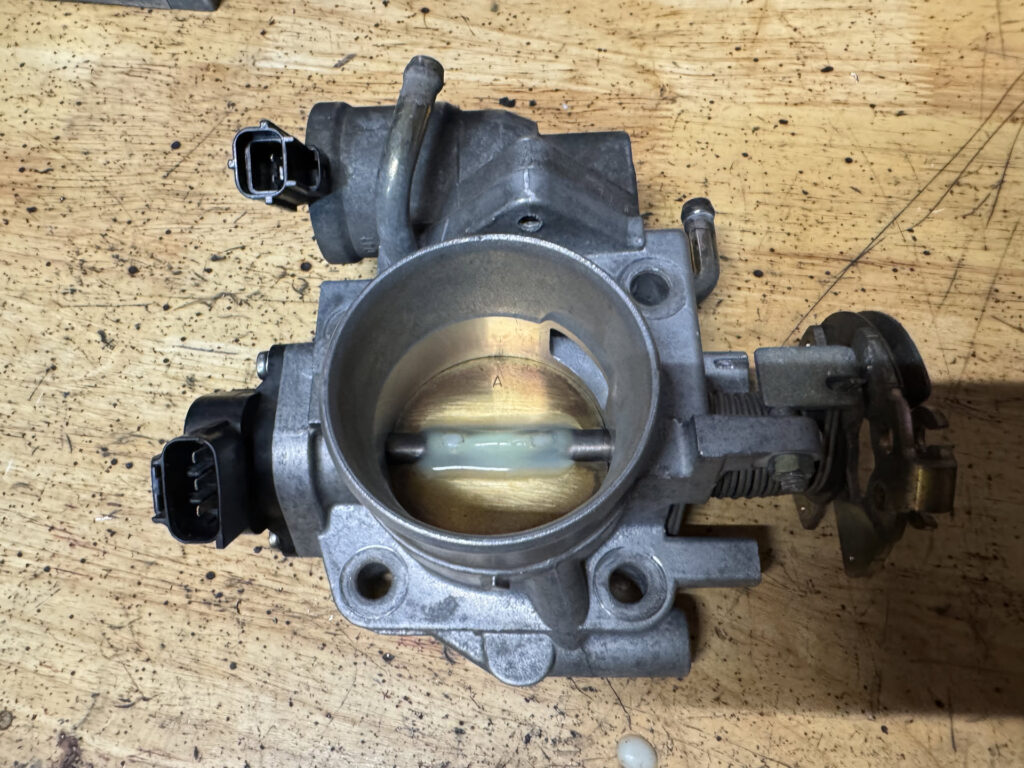
The DBWX2 Controller
Introduced in 2019, the DBWX2 remains the premium option in the market, retailing for approximately $500. Its primary advantage is its ability to control two independent throttle bodies simultaneously. This is particularly useful for complex forced-induction setups, such as "hot side" superchargers or twin-throttle intake manifolds. It features full TunerStudio integration and a robust, waterproof enclosure suitable for engine bay mounting.
The LD Performance Controller
Positioned as a mid-tier option at $200, the LD Performance unit is a functional, albeit less integrated, solution. It requires a dedicated USB connection for configuration rather than utilizing the existing ECU software interface. Its non-waterproof design necessitates interior mounting, which may complicate wiring for some builds.

The SPTronics Controller
At a competitive price point of $150, the SPTronics unit offers a dual-channel version that allows for two throttle bodies to follow the same mapping. While it lacks the advanced firmware update capabilities and configurable CAN-bus termination of higher-end models, it provides a cost-effective entry point for enthusiasts who require basic DBW functionality without the need for extensive PID (Proportional-Integral-Derivative) tuning.
The MS Labs Controller
Historically popular in the European market, the MS Labs controller offers some of the most advanced idle control logic and dedicated support for auto-blip downshifts. However, its limited availability in North America and higher price bracket have restricted its adoption among domestic Miata tuners.

The AMP EFI Controller
The newest entry to the market, released in October 2025, the AMP EFI controller retails for approximately $300. It bridges the gap between standalone and integrated systems. It can function as a completely independent controller using its own TPS (Throttle Position Sensor) output and idle input pins, making it a versatile choice for those who might eventually move away from the Megasquirt platform.
Hardware Selection: The Bosch 60mm Standard
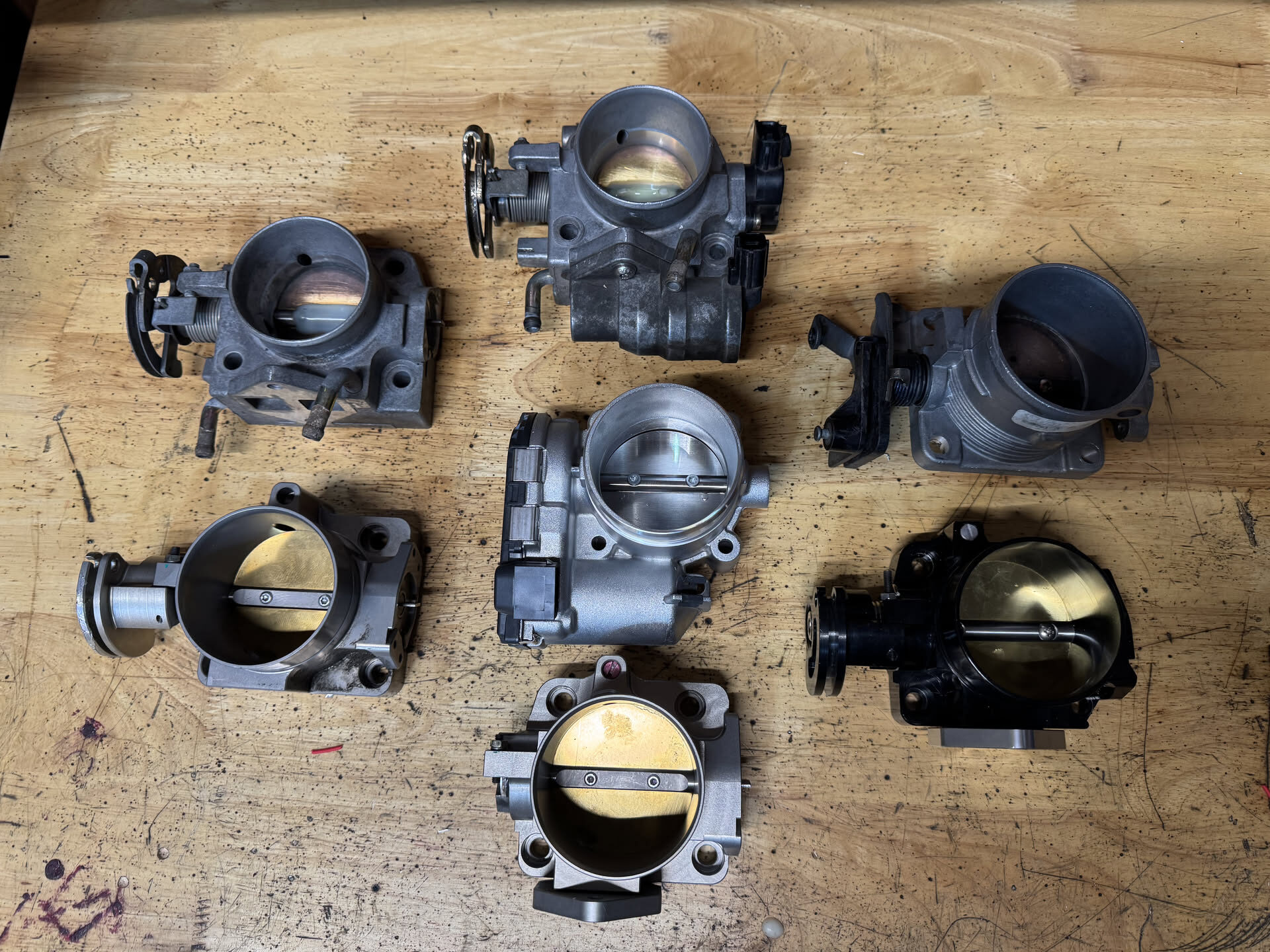
For the physical conversion, the Bosch Motorsports 60mm electronic throttle body has become the industry standard for the 1.8L Miata engine. These units are OEM-grade, widely available, and relatively inexpensive, typically costing around $150. The 60mm diameter provides a significant increase in flow over the stock unit without sacrificing the air velocity required for low-end torque.

To mount this unit to the factory NB intake manifold, specialized adapters are required. Companies such as Outsider Garage and ChathamCNC have developed CNC-machined flanges that bridge the gap between the Bosch bolt pattern and the Mazda manifold. These adapters, ranging from $95 to $150, have simplified the conversion process, removing the need for custom fabrication or welding.
The Human-Machine Interface: Choosing a Pedal Sensor
The final component of the DBW conversion is the Accelerator Pedal Position Sensor (APPS). Enthusiasts generally choose between two paths: retrofitting a modern electronic pedal from a vehicle like the Mazda RX-8 or utilizing a cable-driven remote sensor.

The remote sensor approach, often using components from early 2000s Honda V6 models, has gained traction for its ease of installation. These sensors allow the user to keep the factory Miata pedal and throttle cable. The cable simply attaches to the sensor mounted in the engine bay or under the dash, which then converts the mechanical pull into an electrical signal. This method preserves the "mechanical feel" of the original pedal while enabling the digital benefits of drive-by-wire. Furthermore, it allows for the retention of factory cruise control systems, which are often lost during full electronic pedal swaps.
Timeline and Market Implications
The evolution of these systems has followed a clear chronology. From 2019 to 2023, DBW was considered an "expert-only" modification due to the lack of dedicated controllers. The period between 2024 and 2025 saw a surge in support, culminating in the October 2025 release of the AMP EFI unit, which signaled the democratization of this technology for the average hobbyist.
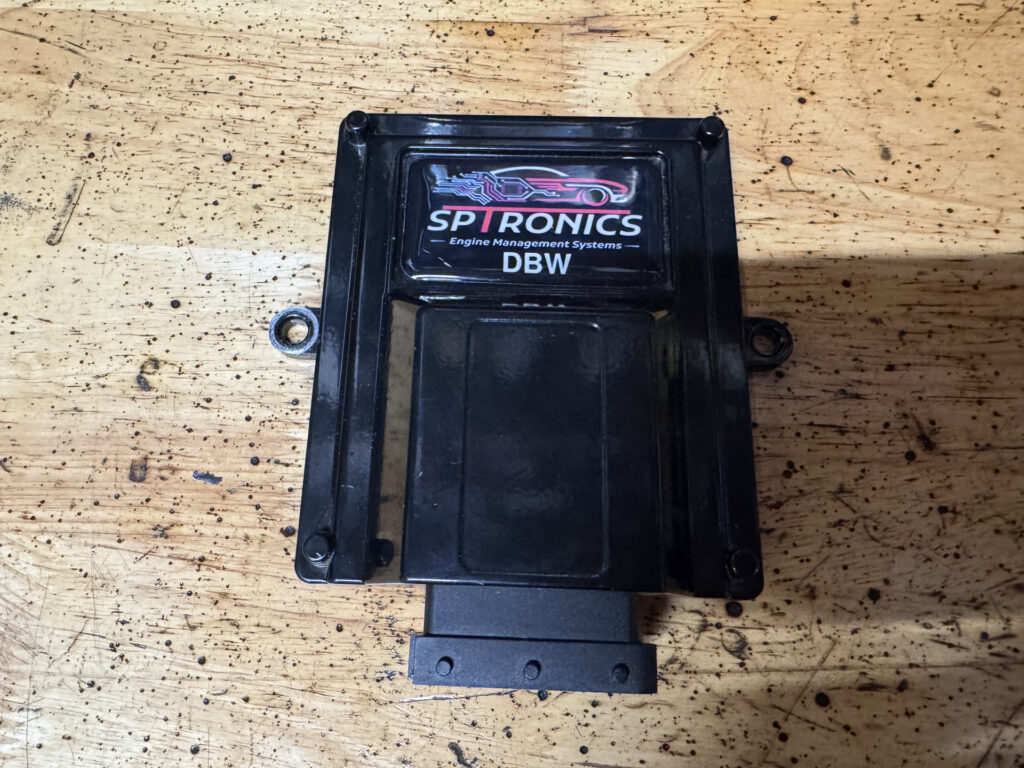
Industry analysts suggest that the shift toward DBW in the aftermarket will continue to grow as mechanical parts for 25-year-old cars become harder to source and as the demand for modern "driver aids" in vintage chassis increases. The ability to software-tune a throttle’s behavior has transformed the Miata from a simple mechanical roadster into a sophisticated platform capable of competing with modern sports cars in terms of drivability and safety.
Conclusion
The conversion of the Mazda Miata NB to a drive-by-wire system via Megasquirt is more than a trend; it is a calculated response to the limitations of aging mechanical hardware. By integrating high-quality Bosch components with sophisticated CAN-bus controllers from manufacturers like SPTronics or AMP EFI, owners can achieve a level of reliability and performance consistency that was previously unattainable. As the project documentation for these conversions becomes more widespread, the "Junk2" era of failing mechanical throttle bodies is likely to give way to a new standard of digital precision in the Miata performance community. The next phase of this technological evolution will likely focus on even deeper integration, where the ECU and throttle controller work in a seamless loop to optimize every millisecond of the internal combustion process.