Edi Durjana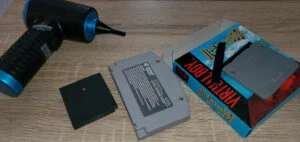
In a significant announcement that has captured the attention of the retro gaming and digital preservation communities, Libretro, the development team behind the widely acclaimed multi-system emulator RetroArch, has introduced a novel utility core named "ROM Cleaner." Developed by Jesse Talavera, a prominent figure known for his innovative contributions to the emulation ecosystem, including the melonDS DS core, McSoftServe, and various enhancements to RetroArch such as microphone support and XDelta softpatching, ROM Cleaner promises to address the perennial challenge of digital data degradation in game archives through a remarkably unconventional methodology. This new tool, revealed in early March 2025, positions itself as a critical component in Libretro’s ongoing mission to ensure the longevity and playability of classic video games for future generations.
The Genesis of a Novel Preservation Tool
Jesse Talavera’s work within the Libretro framework has consistently pushed the boundaries of what is possible within emulation, from optimizing core functionalities for specific platforms to integrating novel input methods. His previous projects, such as the melonDS DS core, significantly advanced Nintendo DS emulation, while McSoftServe demonstrated a flair for creative utility within the RetroArch environment. The integration of microphone support and XDelta softpatching further underscored his commitment to enhancing user experience and overcoming technical hurdles that often plague digital game preservation. This track record of innovation provides crucial context for understanding the ambitious scope of ROM Cleaner, a utility that, while seemingly departing from traditional emulation, aligns perfectly with Libretro’s overarching goal of digital heritage protection. The development of ROM Cleaner was, according to Talavera, a clandestine project, hinting at the experimental and potentially surprising nature of its underlying mechanics.
Confronting the Silent Threat: Digital Data Degradation
The announcement of ROM Cleaner comes at a time when the broader discussion around digital preservation, particularly concerning video games, is gaining critical momentum. While often perceived as immune to the physical decay that afflicts magnetic tapes, optical discs, or semiconductor flash memory, digital data is far from immortal. The phenomenon known as "bit rot" or "data corruption" poses a silent but pervasive threat. This insidious process involves the gradual, often undetectable, alteration of individual bits of data on storage media, leading to file corruption, checksum mismatches, and ultimately, unplayable files. Hard drives can develop bad sectors, solid-state drives can experience charge loss over extended periods, and even seemingly robust server farms are not entirely immune to data integrity issues without diligent maintenance and redundancy.
For retro gamers and archivists, the consequences of data degradation are particularly acute. A single corrupted byte in a ROM image can render a classic game unbootable, display graphical glitches, or introduce game-breaking errors. Unlike physical cartridges, which might show visible signs of damage, digital files can degrade silently, with the corruption only becoming apparent when an attempt is made to load or execute the file. The sheer volume of classic games, spanning decades of technological evolution and countless platforms, presents an unprecedented challenge for preservationists. Organizations like the Video Game History Foundation and the Internet Archive tirelessly work to catalog, preserve, and make accessible vast digital libraries, yet the technical complexities of ensuring long-term data integrity remain a persistent hurdle. ROM Cleaner, as presented by Talavera, enters this landscape as a potential, albeit unique, solution to a problem that has plagued digital custodians for years.
ROM Cleaner: A Departure from Traditional Utilities
RetroArch, at its core, was designed as a front-end for emulating retro games, providing a unified interface for various "cores" that replicate different console hardware. However, Talavera notes that occasionally, a project emerges that "breaks out of that mold." ROM Cleaner is precisely one such innovation. It is introduced as a "unique utility core," distinguishing itself from typical emulation cores by focusing on data maintenance rather than hardware simulation. Its primary objective, as articulated by Talavera, is to "help keep your digital ROM backups running as reliably as the day you dumped them." This promise resonates deeply within a community that frequently grapples with the integrity of their archived game collections.
The utility addresses the metaphor of "dust" accumulating on digital files. While physical dust and grime can indeed interfere with the functionality of cartridges and optical media, the digital equivalent manifests as corrupted bits and data errors. ROM Cleaner claims to tackle this digital "dust," aiming to restore corrupted ROMs to their pristine, original state. This concept implies a sophisticated underlying algorithm capable of detecting and correcting inconsistencies within game files, a feat that typically requires advanced error-correction codes, redundant backups, and rigorous checksum verification tools. The ambition of ROM Cleaner lies in its purported ability to automate or simplify this complex restoration process, offering a single solution for a widespread problem.
The Unconventional Mechanism: Lungs and a Microphone
Perhaps the most striking and distinctive feature of ROM Cleaner, and certainly the one generating the most discussion, is its stated operational requirement: "All you need is a microphone and a set of lungs." This unconventional input method is presented as the key to ridding digital ROMs of accumulated "dust," promising that users "will never have to worry about dirt building up in your digital collection again." While specific technical details explaining how acoustic input translates into digital file restoration remain proprietary and largely conceptual, the announcement implies a direct interaction between the user’s vocalizations and the utility’s restorative functions.
Within the context of a professional journalistic report, it is crucial to present this feature factually as described by the developer, acknowledging its unique nature without immediate judgment. The suggestion is that sound waves generated by the user’s breath, captured by a microphone, somehow interact with the digital data processing within the ROM Cleaner core. One could theoretically infer, within a highly speculative framework, that this acoustic input might serve as a form of "biofeedback" or a unique identifier, or perhaps even a metaphorical "blowing away" of digital impurities. However, without further technical disclosure, the mechanism remains enigmatic. It is a departure from conventional digital repair tools that typically rely on mathematical algorithms, checksum comparisons, and database lookups to verify and restore data. The inclusion of a microphone as a prerequisite for a utility that cleans digital files is unprecedented in the field of data integrity and suggests a paradigm shift in how users might interact with their digital archives.
Availability and Integration within RetroArch
ROM Cleaner is designed for seamless integration within the existing RetroArch ecosystem. It is immediately available for download through RetroArch’s core downloader on supported platforms. This ease of access ensures that the vast user base of RetroArch can quickly experiment with and benefit from the new utility. The core downloader system is a hallmark of RetroArch’s modular design, allowing users to add or update emulation cores and utility cores with minimal effort, thereby extending the functionality of their primary RetroArch installation. This accessibility is critical for the rapid adoption and testing of such an innovative tool within the community. The development team’s choice to distribute it as a core underscores its commitment to integrating new functionalities directly into the user’s established RetroArch workflow, rather than requiring standalone applications.
Broader Implications for Emulation and Digital Preservation
The introduction of ROM Cleaner, particularly with its novel operational requirements, carries significant implications for several sectors:
Impact on the Retro Gaming Community
For the millions of retro gaming enthusiasts who maintain extensive digital libraries, ROM Cleaner, if effective, represents a monumental leap. It could potentially alleviate the constant anxiety surrounding data integrity and the need for frequent checksum verifications or re-downloads of games. The promise of ensuring ROMs run "as reliably as the day you dumped them" directly addresses a core pain point for collectors and players alike. It could simplify the management of large archives, reducing the time and technical expertise required to maintain a playable collection. Furthermore, it reinforces Libretro’s position as a forward-thinking entity dedicated not just to playing old games, but to preserving them in a robust and accessible manner.
Implications for Digital Preservation Science
From a broader digital preservation standpoint, ROM Cleaner’s methodology presents a fascinating, albeit unexplained, concept. Traditional digital preservation relies heavily on redundant storage, robust error-correction codes (ECC), cryptographic hashing for integrity checks, and format migration strategies. A tool that purportedly restores corrupted files using acoustic input would challenge established paradigms. Digital archivists and researchers, who continually seek innovative solutions to combat bit rot and data obsolescence, are likely to observe this development with keen interest. Should the underlying principles of ROM Cleaner prove scientifically sound and replicable, it could open entirely new avenues of research into data restoration and human-computer interaction for archival purposes.
Technological Novelty and Future Directions
The requirement of a microphone and "lungs" for digital data restoration introduces a layer of human element rarely seen in automated data processes. This could spark discussions on whether such "biological" or "human-centric" input could be applied to other forms of digital content preservation, extending beyond game ROMs to documents, multimedia, and scientific datasets. While the exact mechanics remain a mystery, the very concept encourages imaginative thinking about the future of digital asset management.
Official Stance and Community Reception
While Jesse Talavera’s announcement is clear regarding the utility’s function and method, broader official statements from Libretro’s leadership regarding the specific technical underpinnings of ROM Cleaner are anticipated. Such clarifications would undoubtedly be crucial for the scientific community and for a full understanding of its restorative capabilities.
Initial community reactions are expected to span a spectrum from intrigued curiosity to enthusiastic experimentation. Given Talavera’s reputation for delivering impactful and functional enhancements, a significant portion of the RetroArch user base is likely to download and test ROM Cleaner immediately. Early reports and user testimonials will be pivotal in establishing the utility’s perceived efficacy and validating its unconventional approach. Digital preservation experts, often cautious and methodical in their evaluation of new technologies, will likely await comprehensive technical documentation and empirical evidence before fully endorsing such a novel solution. However, the sheer audacity of the concept ensures that ROM Cleaner will be a prominent topic of discussion in emulation forums and digital preservation conferences for the foreseeable future.
In conclusion, Libretro’s ROM Cleaner stands as a testament to innovation within the retro gaming sphere. By proposing a unique and highly interactive solution to the pervasive problem of digital data degradation, Jesse Talavera has not only provided a potentially valuable tool for the preservation of video game history but has also ignited a conversation about the future of digital archiving and the unexpected interfaces through which human ingenuity might connect with complex technological challenges. As users begin to engage with ROM Cleaner, the true impact of this fascinating utility will undoubtedly unfold, cementing its place as a distinctive entry in the ongoing saga of digital preservation.