Vera Clarissa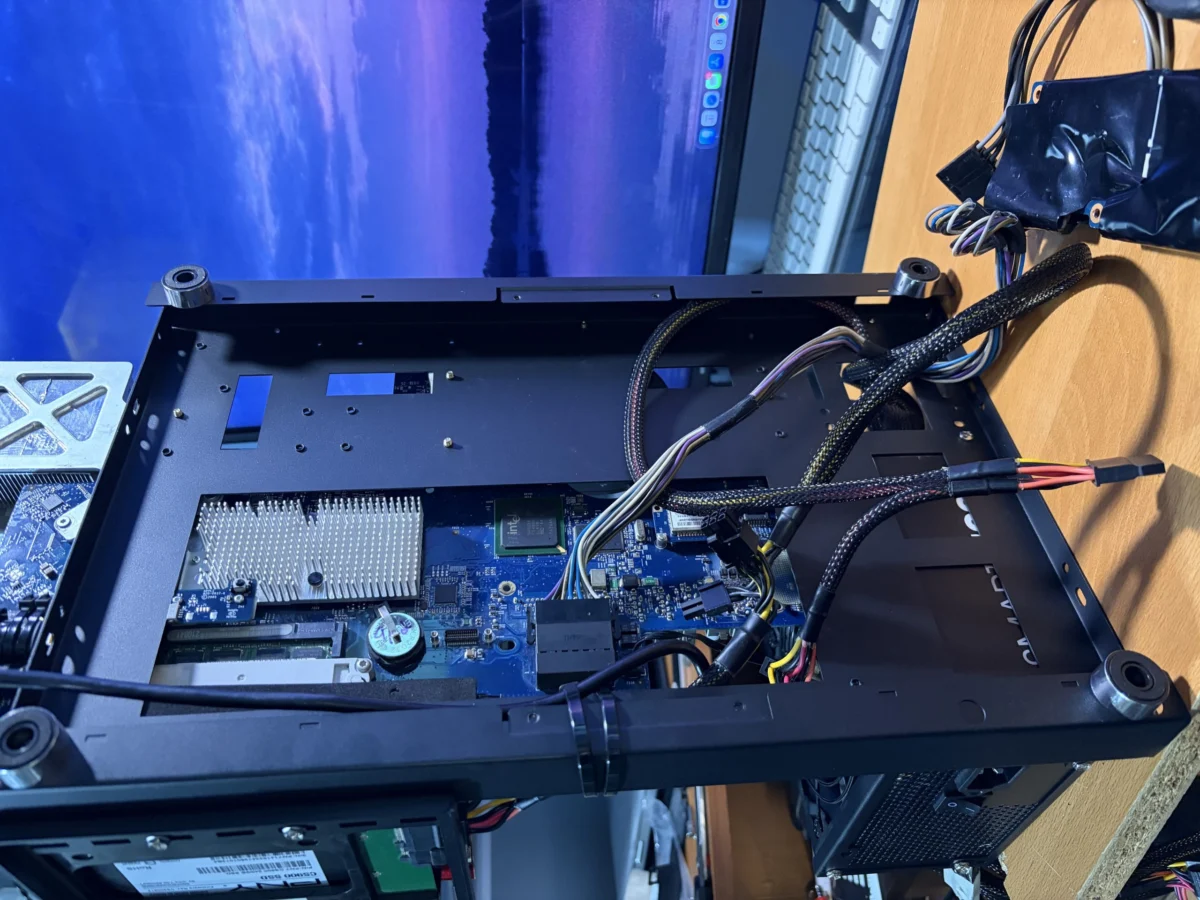
The pursuit of longevity for vintage hardware often requires creative engineering solutions that deviate significantly from original manufacturer specifications. Recently, a notable project involving the migration of an iMac logic board into a modern, open-air PC chassis has highlighted the intersection of retro-computing preservation and contemporary hardware customization. This transition marks a departure from makeshift housings—such as wooden boards or repurposed furniture—toward a standardized, albeit non-traditional, mounting architecture that prioritizes component stability and thermal efficiency.

Historical Context of the iMac Logic Board
The iMac series, particularly those models from the mid-to-late 2000s, were designed as all-in-one (AIO) units where the logic board was integrated into a compact, proprietary enclosure with the display and power supply. When these units inevitably fail due to thermal fatigue or display degradation, the logic boards often remain functional, yet their non-standard form factors make them notoriously difficult to repurpose for standard desktop use.
For years, the enthusiast community has employed various "FrankenMac" methodologies to keep these boards running. These methods have historically included mounting components to open wooden shelves or discarded drawer components. While functional, these solutions lack the structural integrity and cable management capabilities of standardized enclosures. The recent shift toward open-air, modular cases represents a maturation of these hobbyist efforts, moving from ad-hoc assembly to a more disciplined structural approach.

The Engineering Challenge: Structural and Thermal Constraints
The core challenge in repurposing an iMac logic board lies in its unique input/output (I/O) placement and the absence of standardized ATX mounting holes. Unlike commodity motherboards, the iMac logic board is engineered to sit flush against the rear of a display panel, relying on the chassis for both structural support and the dissipation of heat.
During the recent transition project, the engineer opted for a $25 open-air modular chassis. This assembly, composed of a reinforced bottom plate and a series of metal brackets typically reserved for PCIe devices, provided a framework that allowed for a cleaner, more organized cable run. The assembly process involved a delicate balancing act: because the logic board exceeded the dimensions of the mounting area, the builder had to utilize a "sandwich" configuration, placing the solid-state drive (SSD) and GPU assembly on the lower PCIe brackets while keeping the main logic board positioned securely on the upper tiers.

Chronology of the Migration Process
The assembly process was documented over the course of a full business day, reflecting the complexities inherent in improvising a custom workstation.
- Preparation and Unpacking (Morning): The project commenced with the inventory of the $25 modular kit, which included a collection of standard machine screws, zip ties, and structural metal struts. Initial structural integrity was established by securing the base plate, which provided the necessary tension for the remaining components.
- Structural Mapping (Midday): The builder identified a critical design hurdle: the width of the iMac logic board necessitated a non-standard mounting strategy. By creating a tiered arrangement, the builder successfully isolated the thermal load of the GPU from the logic board, effectively creating a more efficient airflow path than the original AIO design.
- Component Integration (Afternoon): Securing the logic board proved to be the most rigorous phase. By utilizing two primary anchor points, the board achieved sufficient rigidity to withstand standard operational vibrations without the need for a full, custom-machined bracket.
- System Verification (Late Afternoon): The final stage involved the integration of existing peripherals and verifying system integrity. Despite initial concerns regarding potential electrical shorts or mechanical failures, the system initialized without incident, confirming the viability of the open-air configuration.
Technical Limitations and Software Considerations
A significant aspect of the project involved the software environment. The system currently operates under OS X Yosemite, a legacy operating system that introduces specific compatibility hurdles. Notably, the internal speaker arrays of the iMac are not natively supported under this configuration due to the absence of specific kext (kernel extension) patches.

The builder circumvented this by utilizing Bluetooth-enabled audio peripherals. This workaround serves as a reminder that hardware migration is only one half of the equation; software-level support—or the lack thereof—often dictates the functional utility of vintage hardware. The reliance on Bluetooth indicates a broader trend in the "FrankenMac" community: when proprietary physical interfaces fail, developers increasingly turn to wireless protocols to restore missing functionality.
Data Analysis: Thermal and Structural Efficiency
While formal thermal testing was not conducted in a laboratory setting, the transition from an enclosed AIO chassis to an open-air environment generally yields a measurable improvement in thermal headroom. iMacs are historically prone to component failure due to the accumulation of heat in a cramped, poorly ventilated space.

By removing the logic board from its original plastic or aluminum housing, the surface area exposed to ambient air increases exponentially. Furthermore, the use of a modular, open-air structure allows for the natural convection of heat, which is significantly more efficient than the forced, low-volume airflow of the original iMac fans. This shift suggests that such modifications may actually extend the operational lifespan of the hardware by reducing the thermal stress on the capacitor banks and the CPU socket.
Broader Implications for Hardware Preservation
The movement to repurpose iMac logic boards serves as a microcosm for the larger "Right to Repair" and hardware longevity movements. As manufacturers move toward increasingly glued, soldered, and proprietary designs, the ability to extract and reuse a logic board becomes an act of technical preservation.

Industry analysts observe that projects of this nature are becoming increasingly relevant as corporate support for older hardware terminates. By demonstrating that an iMac logic board can function outside of its original intended shell, builders are challenging the perception of "obsolete" technology. This is not merely an aesthetic choice; it is a functional assertion that the computational power of a decade-old device remains useful if the user is willing to invest the time in re-engineering the chassis.
Expert Perspectives and Community Impact
While no official statements have been issued by Apple regarding the modification of its legacy logic boards, the community response has been largely supportive. Online forums dedicated to retro-computing have seen a rise in "case-swap" documentation.

"The shift toward modular open-air cases is the natural evolution of the FrankenMac hobby," notes one industry observer. "It signals a transition from ‘can we make it turn on’ to ‘can we make it a viable, stable workstation.’"
The implication here is that the modular chassis provides a standardized path for future repairs. Should a component fail, the open-air design allows for rapid component replacement, a stark contrast to the original iMac design, which required a complex disassembly of the entire display panel to access the logic board.

Conclusion: The Future of Modular Legacy Computing
The project serves as a compelling case study in the utility of modern modular components for vintage electronics. By moving away from the "drawer and shelf" aesthetic and toward a structured, open-air configuration, enthusiasts are demonstrating that legacy hardware does not have to be relegated to the landfill.
As the industry continues to push toward more integrated, non-repairable hardware, the skills developed by the FrankenMac community—mechanical assembly, cable management, and software patch development—are becoming increasingly valuable. The success of this project confirms that with a modest budget of $25 and an afternoon of labor, one can transform a legacy piece of technology into a functional, reliable, and aesthetically distinct computing tool. The project is now complete, and the focus shifts to the next iteration of hardware revival, ensuring that these machines continue to serve their owners for years to come.