Vera Clarissa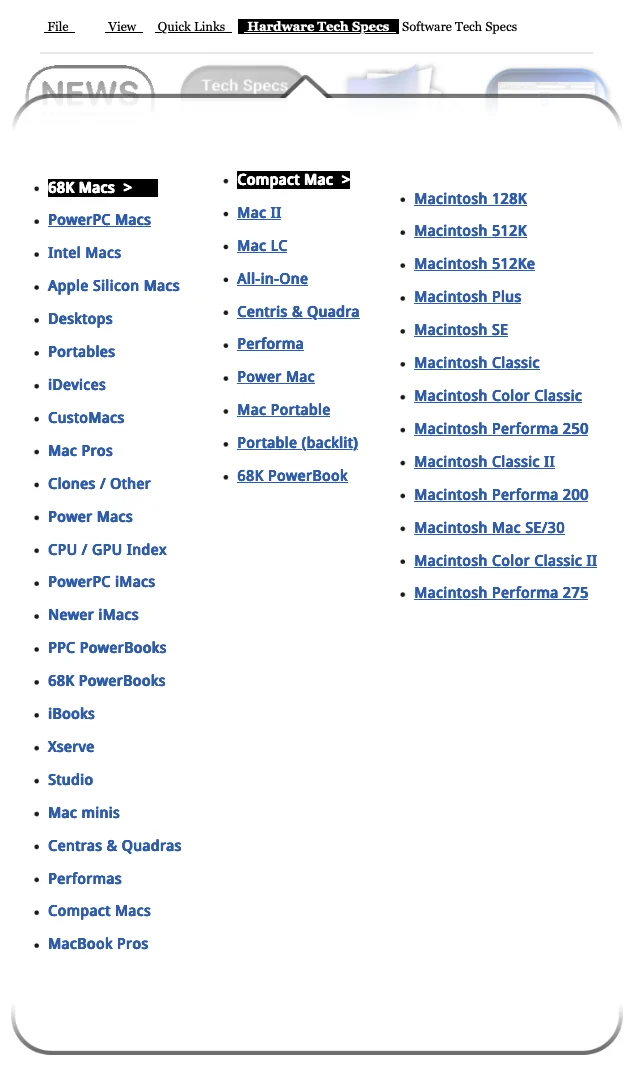
The digital architecture of Low End Mac has undergone a comprehensive transformation, marking the successful conclusion of a large-scale site migration and a series of technical refinements intended to bolster security, improve user accessibility, and modernize the platform’s visual interface. As an established repository for vintage computing documentation and community discussion, the platform has faced the perennial challenge of balancing legacy support with the demands of contemporary web standards. These updates, finalized during the week of August 9, 2026, represent a significant pivot toward a more stable and responsive infrastructure, ensuring that the site remains a viable resource for enthusiasts and historians alike.

The Completion of the Migration Phase
The primary milestone achieved this week is the finalization of the site migration process. Transitions of this magnitude, particularly for platforms hosting extensive archives of historical tech data, are inherently complex. Early stages of this migration were characterized by significant technical friction, including theme-related rendering errors, the temporary disappearance of historical articles, and structural layout inconsistencies.
The migration was not merely a server-side transition; it served as a foundational cleanup of the site’s backend architecture. By addressing these legacy bottlenecks, the technical team has transitioned from a period of restorative maintenance to one of active content development. The resolution of these issues ensures that historical archives are properly indexed and that the site’s underlying framework is capable of supporting future technical expansions without the performance degradation observed during the previous months.

Security Enhancements and User Data Integrity
In an era where web security is paramount, maintaining a community-focused resource requires constant vigilance. The recent updates included an extensive overhaul of the site’s security posture. This involved a multi-layered approach: patching known software vulnerabilities, strengthening the site’s firewall configuration, and implementing more robust, automated site monitoring tools.
Beyond the technical backend, the site’s user management system was also streamlined. The goal of this initiative was to eliminate ambiguity regarding account management, ensuring that community members can engage with articles and discussion threads with greater confidence. By unifying the user database, the platform has reduced the friction associated with account authentication and interaction, a change that aligns with broader industry standards for community-driven web portals. The implementation of these security measures serves to protect both the integrity of the archived data and the personal information of the community members who frequent the platform.

Modernizing the User Experience and Navigation
The user interface (UI) updates introduced this week reflect an attempt to reconcile the site’s aesthetic with modern mobile-first browsing habits. Among the most notable additions is the integration of the "lemOS" page toolbar. This feature provides visitors with the flexibility to toggle between a standard layout and an "icon view," which is specifically optimized for tablet and smartphone interfaces. This adaptive design strategy acknowledges the shift in user behavior toward mobile device usage, ensuring that the extensive database of Low End Mac remains accessible to users regardless of their hardware.
To assist in the adoption of these new UI elements, a dedicated "Help" page has been deployed. This resource provides immediate assistance for navigation, reducing the learning curve for long-term users accustomed to the previous site architecture.

Experimental Interface Developments
While several updates have been finalized, the development team is simultaneously exploring experimental navigation paradigms. One such initiative is the "Column View" interface, a proof-of-concept inspired by the file-browsing systems found in modern desktop operating systems. This feature is currently in a preliminary testing phase. Its purpose is to simplify the navigation of complex technical specifications, which are often dense and difficult to parse on traditional web layouts.
While development of this feature stalled temporarily due to the urgent requirements of the site migration, its emergence signals a shift toward more intuitive, data-rich browsing. The team is treating this as an iterative project, acknowledging that while the current implementation is incomplete, it serves as a necessary testbed for future enhancements to how users interact with the site’s vast catalog of technical information.

Chronology of Site Evolution
The path to these updates has been defined by a series of planned and reactive changes.
- Pre-August 2026: Initial migration efforts were hampered by legacy theme constraints and software incompatibilities, necessitating the use of temporary workarounds.
- August 1–7, 2026: Finalization of backend migrations and the stabilization of the site theme, ensuring all archived articles were accurately mapped and rendered.
- August 8, 2026: Deployment of the updated site banner and the re-centering of graphical assets to improve visual consistency across different display resolutions.
- August 9, 2026: Activation of the lemOS toolbar, the mobile-responsive icon view, and the release of the updated navigation bar, which had remained largely static for years.
Implications for the Community
The overarching implication of these updates is a transition toward professional-grade sustainability. For a platform dedicated to the preservation of technology that has long since passed its commercial prime, the importance of a reliable, secure, and accessible web presence cannot be overstated.

The successful implementation of these changes addresses the "technical debt" that had accumulated over years of operation. By fixing the navigation toolbar—which had proven notoriously difficult to modify prior to the migration—the site administrators have unlocked the ability to implement rapid, iterative changes in the future. This move toward modularity suggests that Low End Mac is positioning itself to better serve its audience by reducing the time required to deploy new features or content categories.
Broader Context and Future Outlook
The challenges faced by Low End Mac during this migration are representative of the difficulties encountered by many legacy web platforms. The requirement to maintain compatibility with older browser standards while simultaneously adopting modern web-security protocols creates a delicate balancing act.

By prioritizing the stability of the backend and the security of the user database, the site is ensuring that it can continue to host its unique perspective on the evolution of computing. The feedback loop established during this week—where user suggestions were integrated into the migration process—underscores a commitment to transparency and community involvement.
As the site looks toward the remainder of 2026, the focus is expected to remain on balancing the preservation of its historical identity with the necessity of technical evolution. With the infrastructure now stabilized, the platform is well-positioned to expand its reach, ensuring that the legacy of low-end computing remains documented and accessible in a modern, secure digital environment. These updates are not merely cosmetic; they are structural prerequisites for the continued growth of the platform in an increasingly complex digital landscape.