Retno Hari Mulyono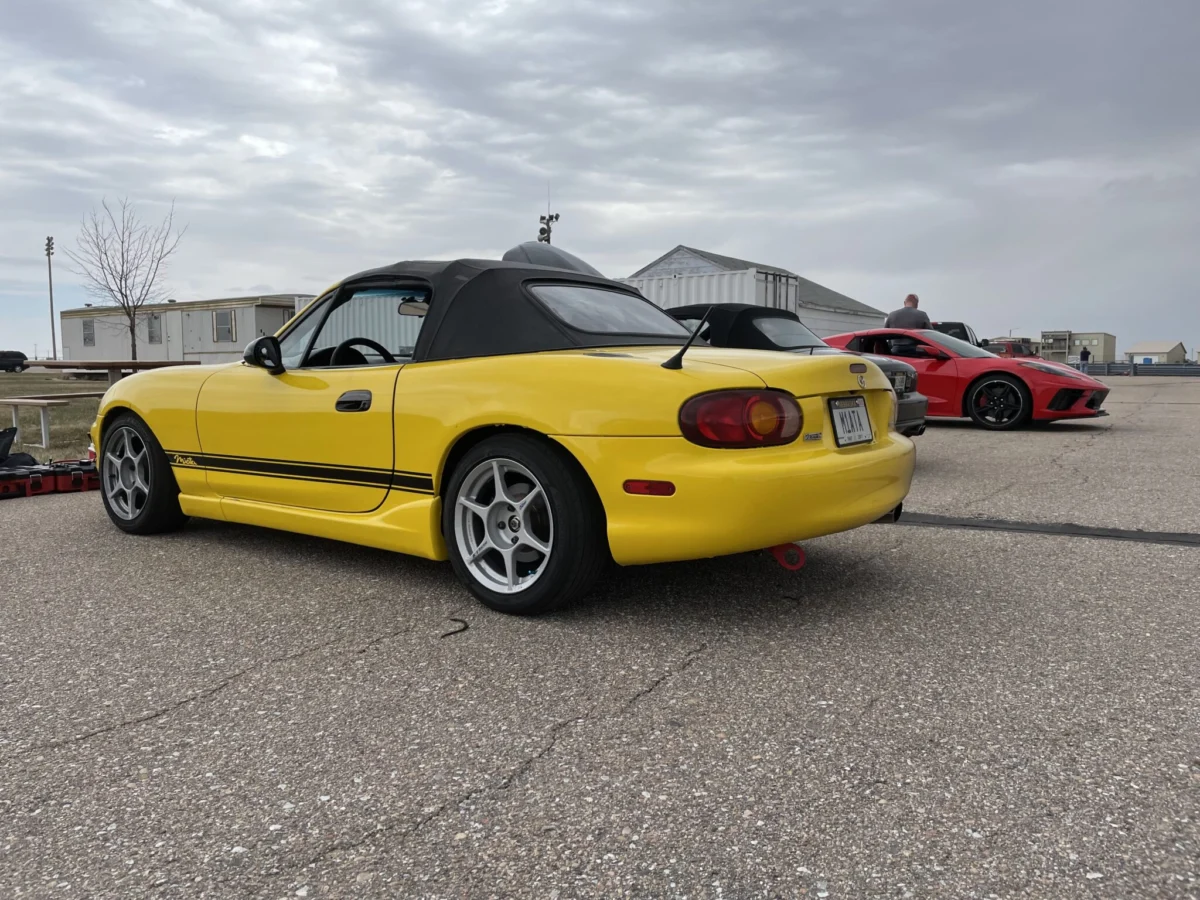
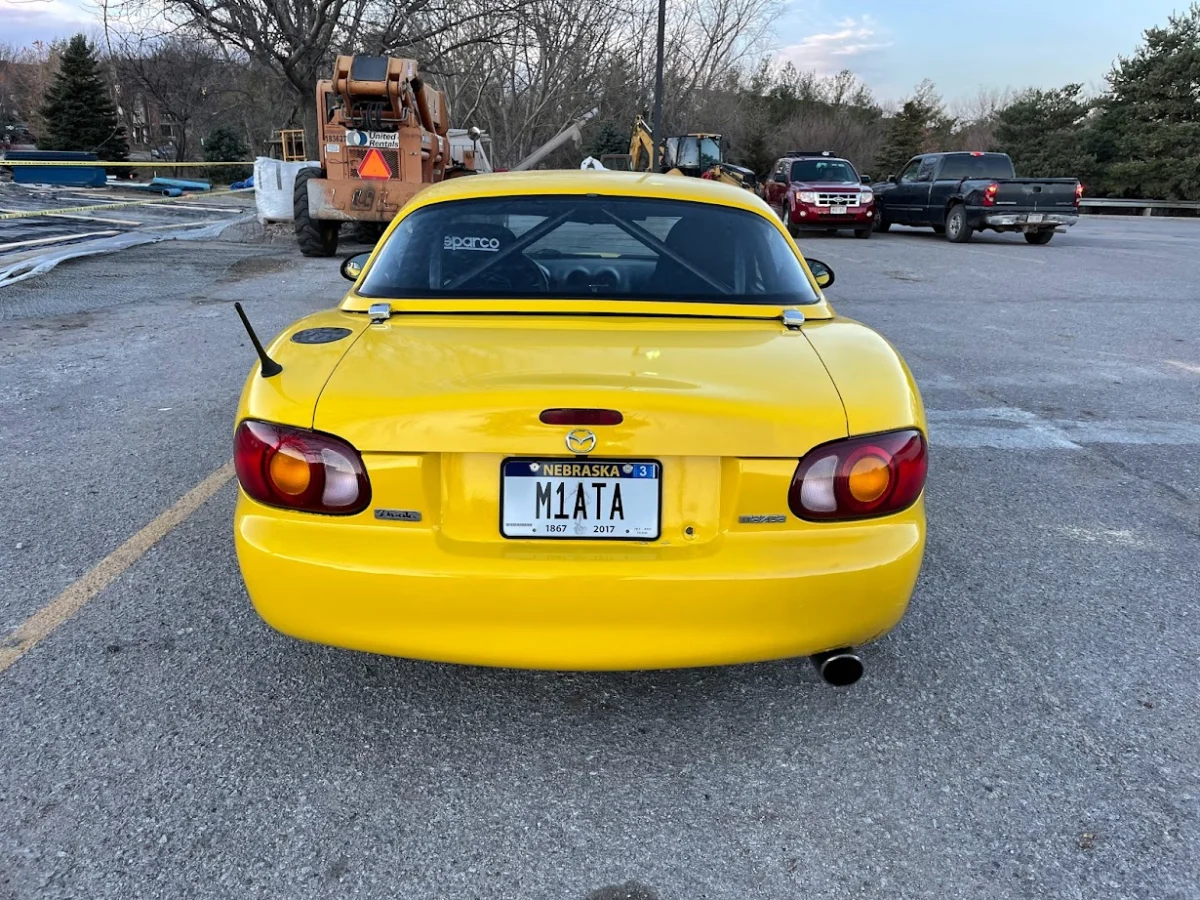
The second generation Mazda MX-5, known internally as the NB platform, has long been a cornerstone of grassroots motorsports due to its balanced chassis, mechanical simplicity, and vast aftermarket support. Following a 24-month development cycle beginning in March 2021, a specific NB1 Miata project has demonstrated the significant performance dividends of iterative mechanical upgrades and driver development. By the conclusion of its second year of ownership in February 2023, the vehicle transitioned from a lightly modified roadster into a specialized track-focused machine, achieving substantial gains in power, handling, and aerodynamic efficiency. This report analyzes the chronological development, technical specifications, and performance data recorded during this transformative period.
Performance Benchmarking and Circuit Proficiency
The driving season for the second year of ownership commenced on March 19, 2022, at Raceway Park of the Midlands (RPM). As the primary testing ground for the vehicle, RPM provided a consistent environment to measure both mechanical improvements and driver skill acquisition. Over the course of eight track days at this facility, the vehicle’s lap times showed a consistent downward trajectory.
Initial sessions in early 2022 saw the driver navigating the technical, often bumpy surface of RPM while acclimating to the faster run groups. Data logs indicate a staggering 11.29-second improvement in lap times over a seven-month period. While mechanical modifications contributed to this delta, technical analysis suggests that "driver modification"—the refinement of braking points, corner entry speeds, and line selection—remained the most significant factor in these early gains.
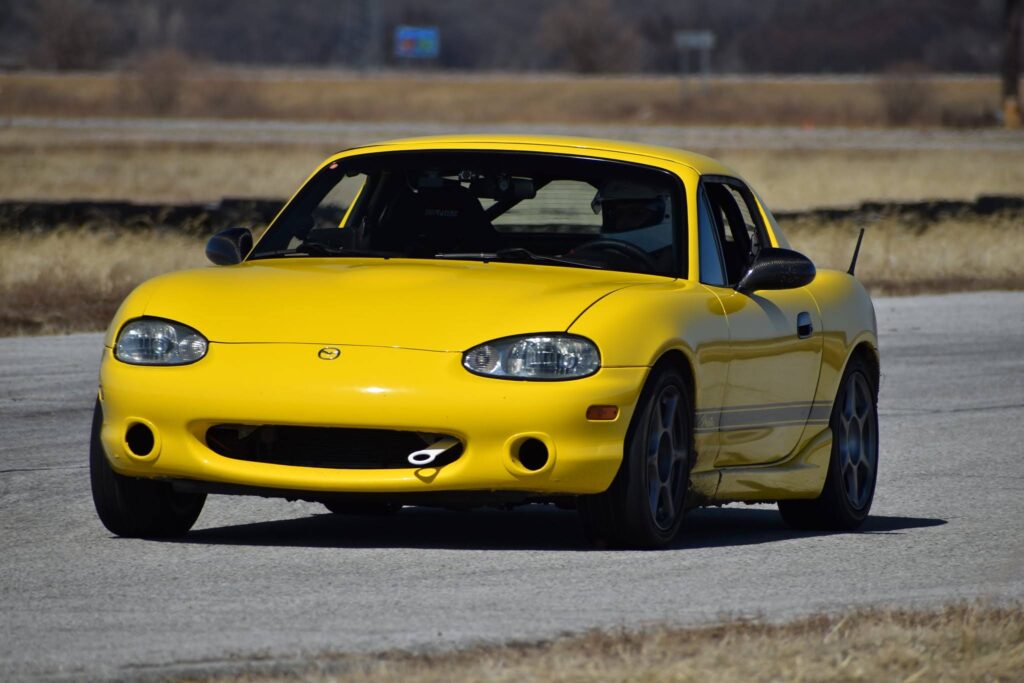
In April 2022, the vehicle was tested at Motorsports Park Hastings. Unlike the rougher surface of RPM, Hastings offered a recently repaved asphalt surface, providing a high-grip environment that allowed for a comparative analysis of the Miata’s suspension behavior. The contrast between the two tracks highlighted the necessity of a versatile setup capable of handling both high-frequency bumps and smooth, high-lateral-G sweepers.
Structural Maintenance and Logistical Engineering
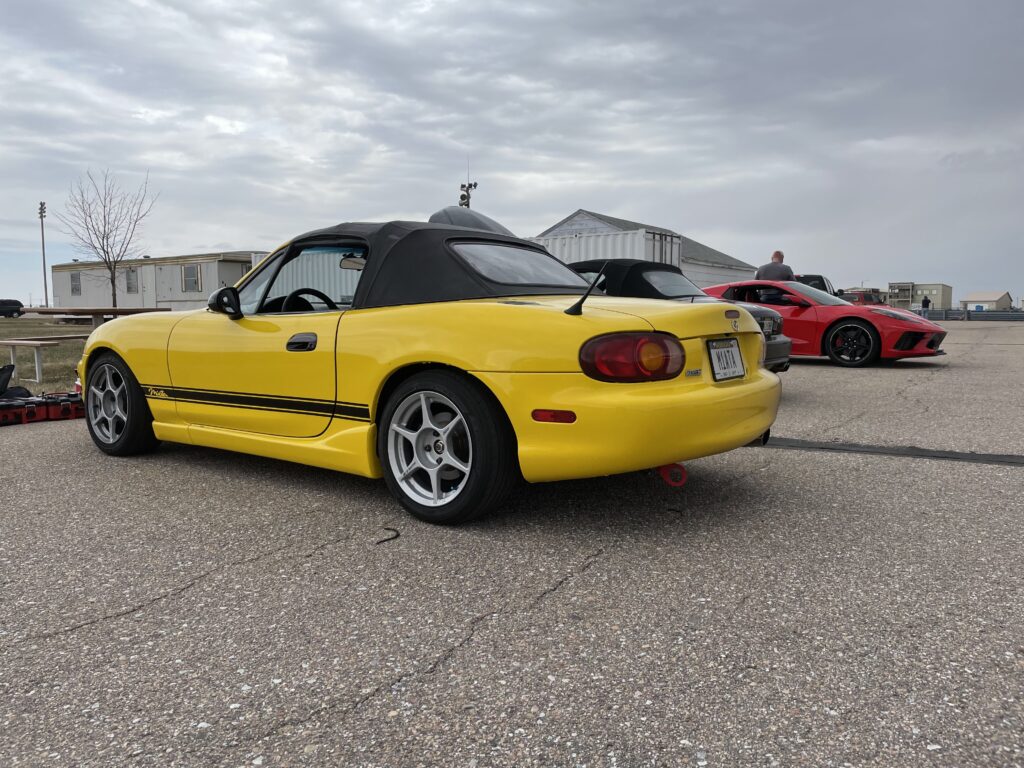
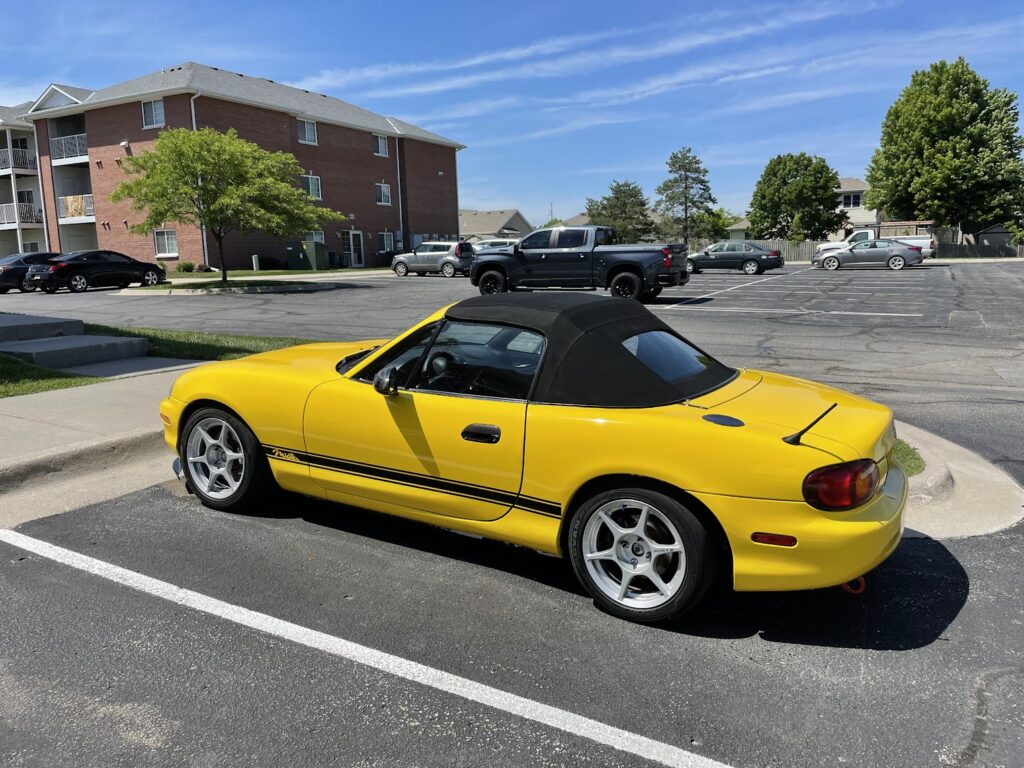
Mid-year developments shifted toward long-term reliability and logistical independence. In May 2022, the original, deteriorating vinyl soft top was replaced with a premium Robbins canvas top featuring a zippered glass window. This upgrade was not merely cosmetic; the canvas material offers superior thermal stability and ease of operation in colder climates compared to standard vinyl, which is prone to cracking. The installation utilized a secondary frame to minimize vehicle downtime, a common strategy in high-efficiency hobbyist workshops.
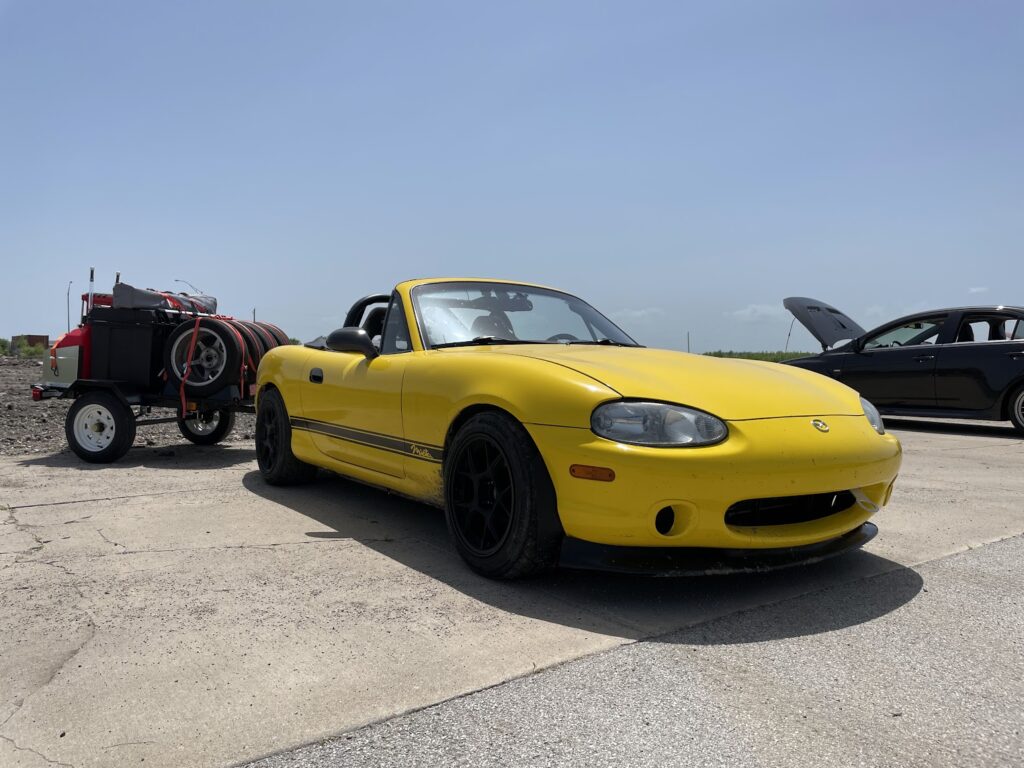
To address the inherent cargo limitations of the MX-5 platform, a custom tire trailer was engineered in June 2022. Built upon a 40×48 Northern Tool chassis, the trailer was modified with an extended plywood deck to accommodate a full set of track tires, toolboxes, fuel jugs, and paddock supplies. Weighing approximately 700 lbs when fully loaded, the trailer allowed the vehicle to remain self-sufficient during long-distance transits to regional tracks. Over 1,000 miles of towing were logged without mechanical failure, proving the viability of the NB Miata as a light-duty tow vehicle for its own racing consumables.
Powertrain Optimization and Dyno Validation
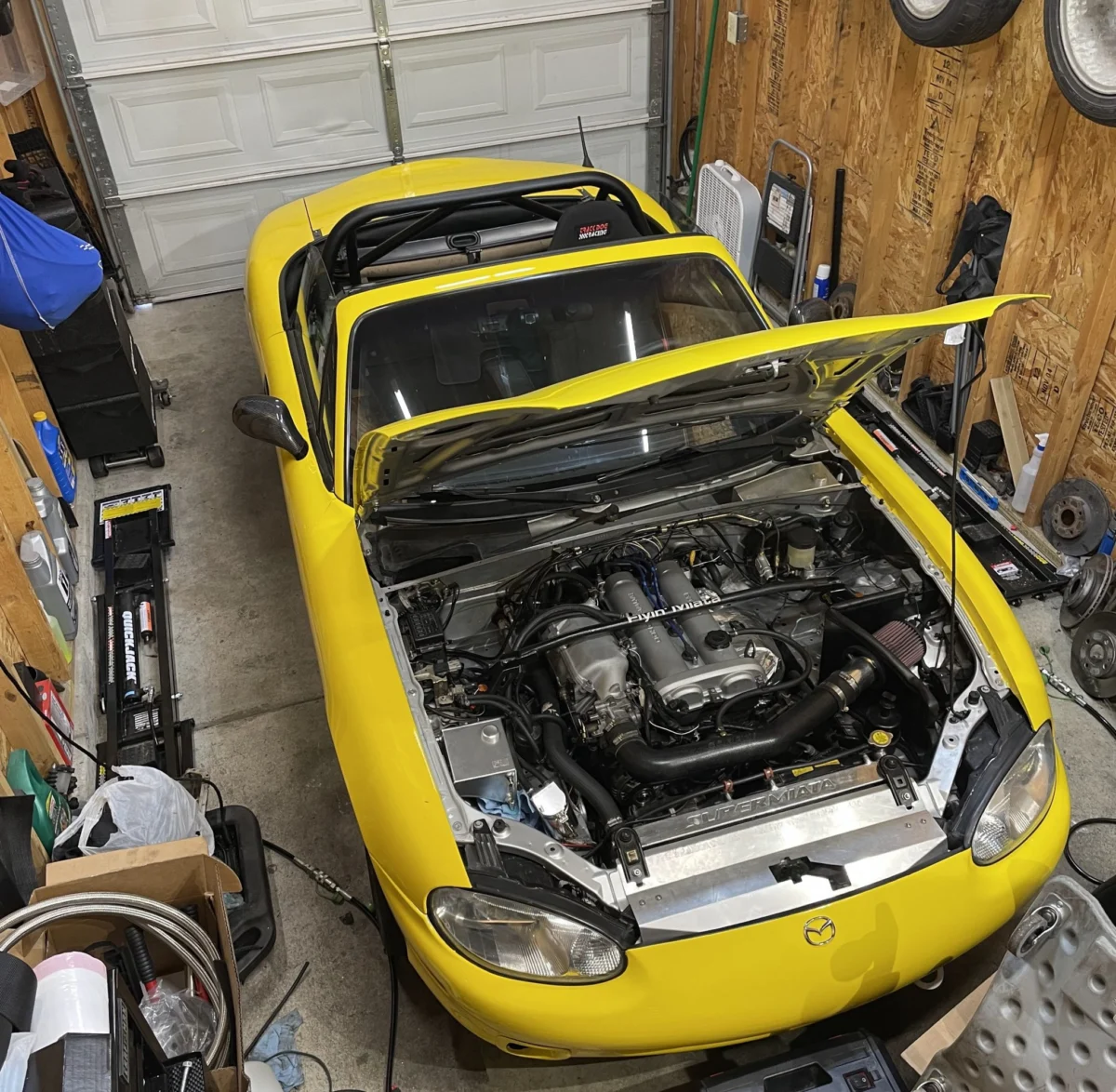
A critical milestone occurred in July 2022, when the vehicle underwent dynamometer testing to quantify the impact of several engine modifications. The baseline figures from August 2021 showed the NB1’s 1.8-liter BP-4W engine producing 115 wheel-horsepower (whp) and 106 lb-ft of torque with basic intake and exhaust modifications.
By July 2022, the integration of a "squaretop" intake manifold (originally sourced from European and Japanese market NBs) and a Megasquirt standalone ECU tuned for E85 ethanol fuel resulted in a significant power increase. The updated figures showed 136 whp and 119 lb-ft of torque—an 18% increase in peak power. This gain is particularly notable for a naturally aspirated engine of this displacement, highlighting the efficiency of E85 in managing heat and allowing for more aggressive ignition timing. Analysts suggest that further gains could be realized through professional dyno tuning and high-lift camshaft upgrades.
Competitive Diversification: Autocross and Rallycross
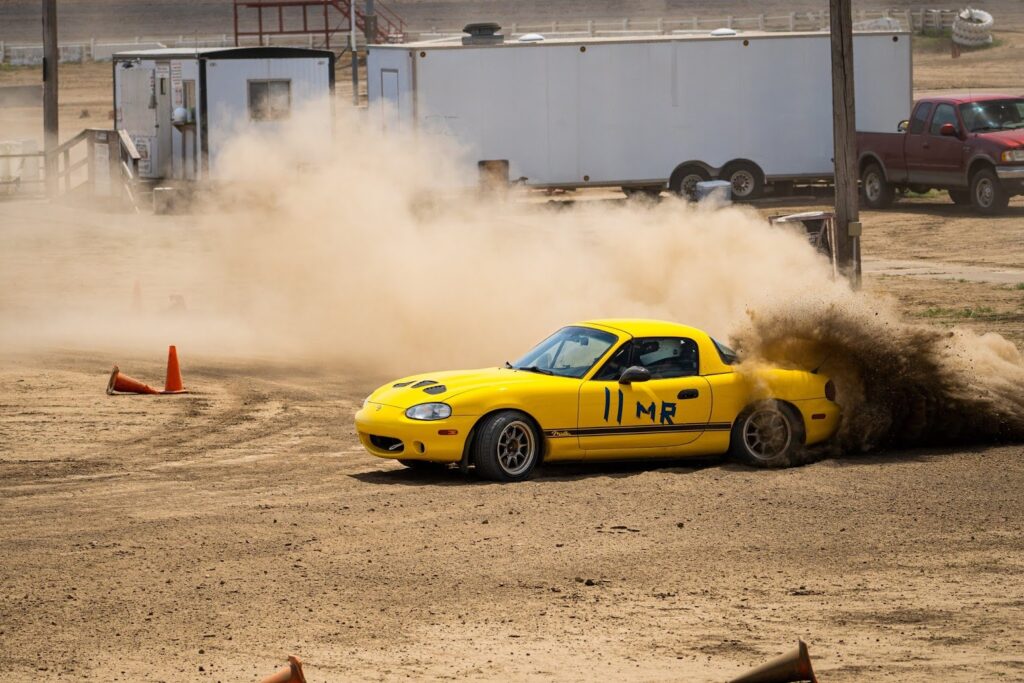
The vehicle’s versatility was tested in late 2022 through participation in diverse motorsport disciplines. In August, the driver entered an SCCA Rallycross event at I80 Speedway in Nebraska. Despite the car being optimized for tarmac, the session provided valuable data on low-traction car control. Although the front lip spoiler was lost during the event, the experience underscored the robustness of the Miata’s double-wishbone suspension in off-pavement conditions.
Simultaneously, the vehicle participated in the full Nebraska Region SCCA Autocross season. Competing at the site of the SCCA Solo Nationals, the driver utilized the long, complex courses to refine precision handling. The driver’s performance metrics showed a dramatic rise in competitiveness, moving from the bottom 8% of the field to the top 50% by the end of the season. This improvement reinforces the consensus that the Miata platform serves as an exceptional educational tool for mastering weight transfer and tire slip angles.
The Turn 10 Incident and Structural Restoration
On October 29, 2022, during the final track session of the year at RPM, the vehicle suffered its first significant on-track incident. While navigating Turn 10, the driver encountered an oversteer condition at high speed. A subsequent correction led to an understeer excursion into the track’s primary tire wall at approximately 60 mph.
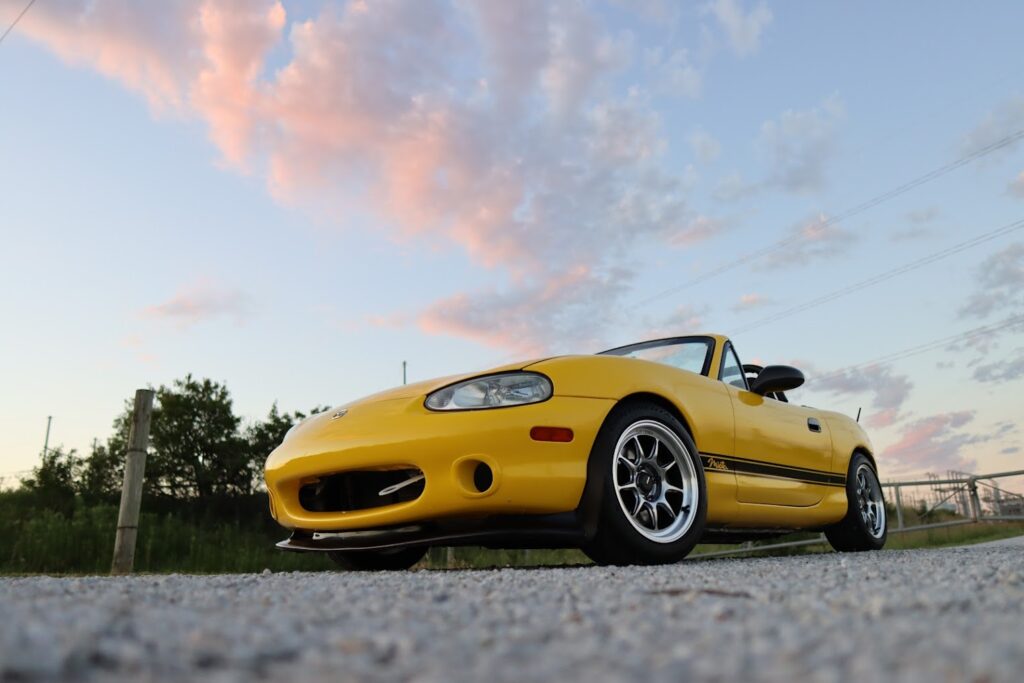
The impact resulted in cosmetic and minor structural damage to the front left quadrant, including the hood, bumper, fender, and headlight assembly. However, the tire wall effectively dissipated the kinetic energy, preventing damage to the frame rails or the engine cooling stack. Demonstrating the repairability of the platform, the owner performed a full restoration within weeks. Using a combination of junkyard parts and new vinyl wrap, the vehicle was returned to "paddock-ready" condition by November. This incident served as a practical test of the vehicle’s safety systems and the economic viability of the NB platform in high-risk environments.
Advanced Suspension Engineering and Winter Maintenance
The winter of 2022–2023 was dedicated to a comprehensive overhaul of the vehicle’s suspension and drivetrain. Moving away from the IL Motorsports rubber bushings installed in year one, the owner opted for A1 Ground Control Nylatron bushings and Paco Motorsports adjustable rear upper control arms.
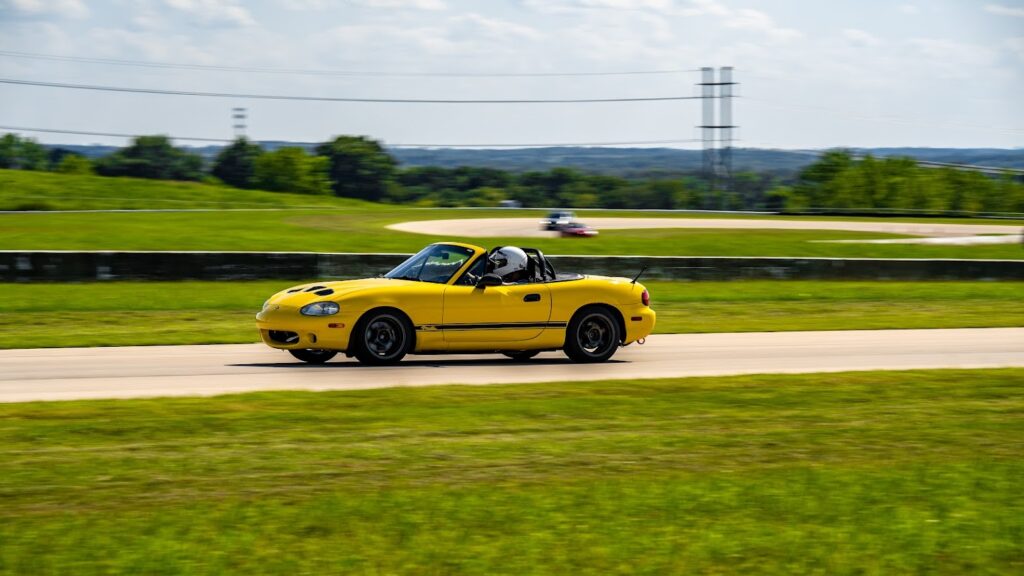
Nylatron, a glass-filled nylon material impregnated with molybdenum disulfide, offers a high-strength, low-friction alternative to both rubber and polyurethane. Unlike polyurethane, which requires frequent lubrication to prevent binding and squeaking, Nylatron is largely self-lubricating. While the upgrade significantly increased Noise, Vibration, and Harshness (NVH) levels—making the vehicle less suitable for casual street use—it provided a more rigid and predictable platform for high-load track cornering.
Further drivetrain maintenance included the replacement of a leaking rear main seal and the acquisition of a BP-6D Variable Valve Timing (VVT) engine and a six-speed manual transmission. This acquisition signals a planned transition to a more modern power unit, which offers a broader torque curve than the current BP-4W engine.
Aerodynamic Integration and Stability Analysis
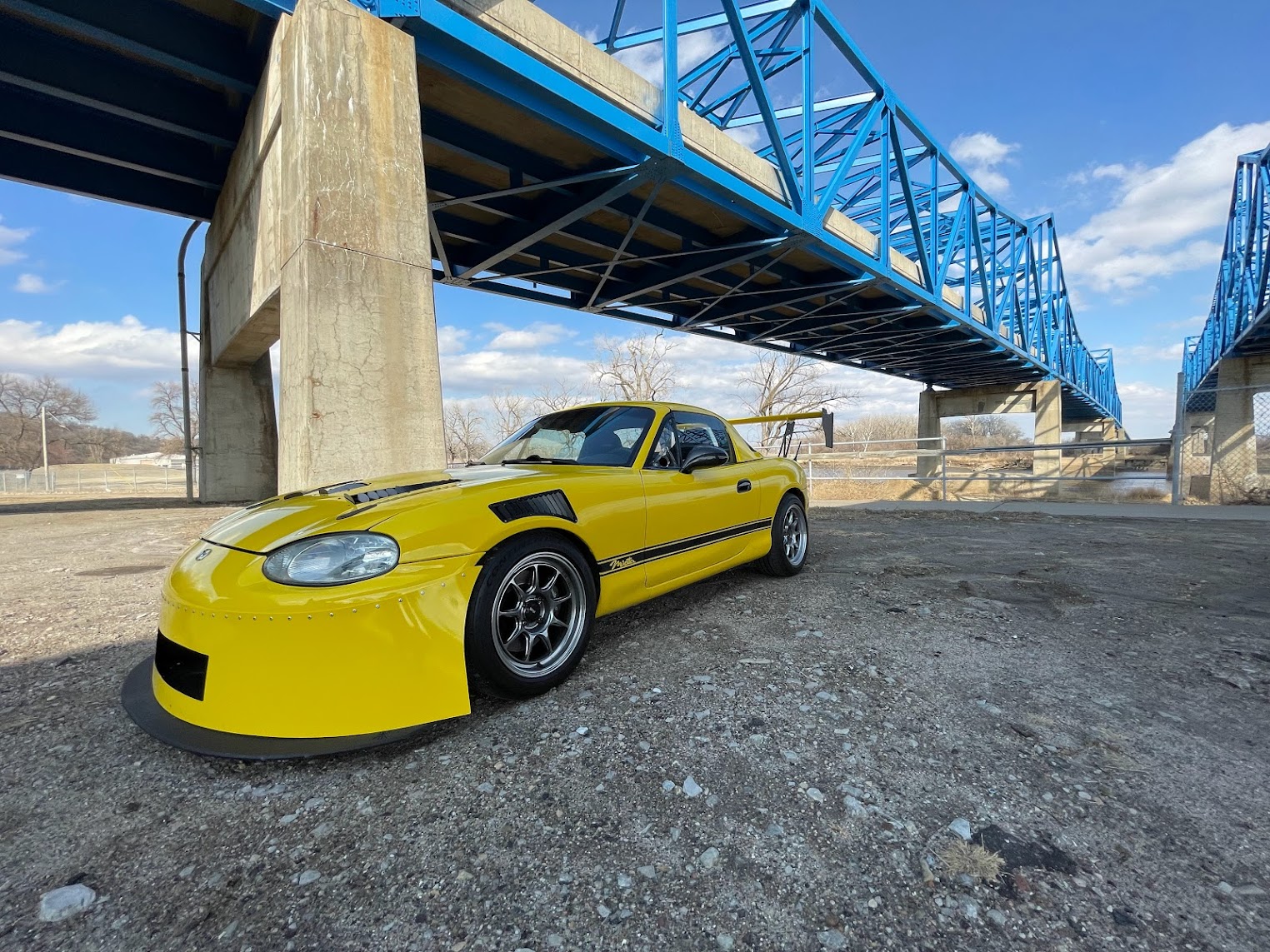
In February 2023, the vehicle received its most visible performance upgrade: a Nine Lives Racing medium downforce aero kit. The kit includes a chassis-mounted aluminum rear wing and a front air dam/splitter combination.
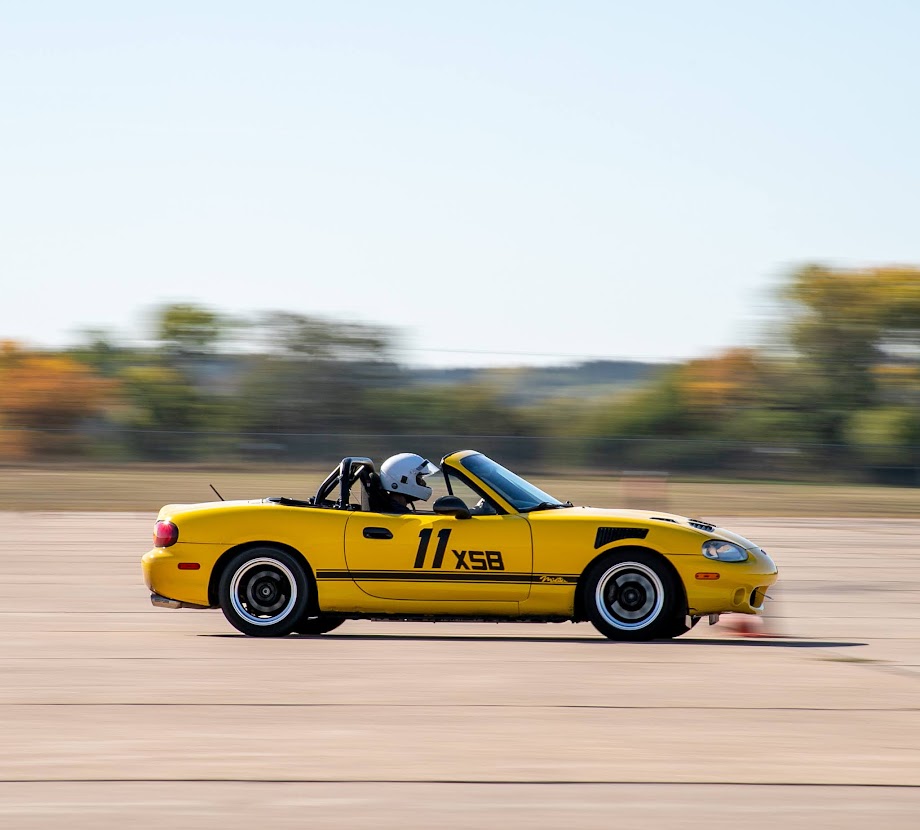
Aerodynamic lift is a known characteristic of the Miata body style at high speeds, often leading to a "light" steering feel and rear-end instability above 80 mph. Initial street testing of the Nine Lives Racing kit indicated a marked improvement in high-speed stability. The owner reported that the car felt more "planted," with the downforce effectively countering the natural lift of the chassis. Importantly, the aerodynamic drag introduced by the wing did not significantly penalize acceleration, suggesting a high lift-to-drag ratio. The car’s eligibility for the SCCA XS-B autocross class remains intact, as the class allows for such bolt-on aerodynamic packages.
Conclusion and Future Outlook
The two-year journey of this NB Miata illustrates a disciplined approach to automotive development. By balancing seat time with calculated mechanical upgrades, the owner has created a vehicle that is significantly faster, more stable, and more capable than its factory counterpart.
As of March 2023, the vehicle stands as a testament to the enduring relevance of the second-generation MX-5 in the modern enthusiast landscape. With the foundation of high-performance suspension, optimized engine management, and functional aerodynamics now in place, the project enters its third year positioned to challenge significantly more expensive machinery in regional time-trial and autocross competitions. The transition from a "project car" to a "purpose-built tool" is complete, setting the stage for continued technical refinement and competitive growth.