Retno Hari Mulyono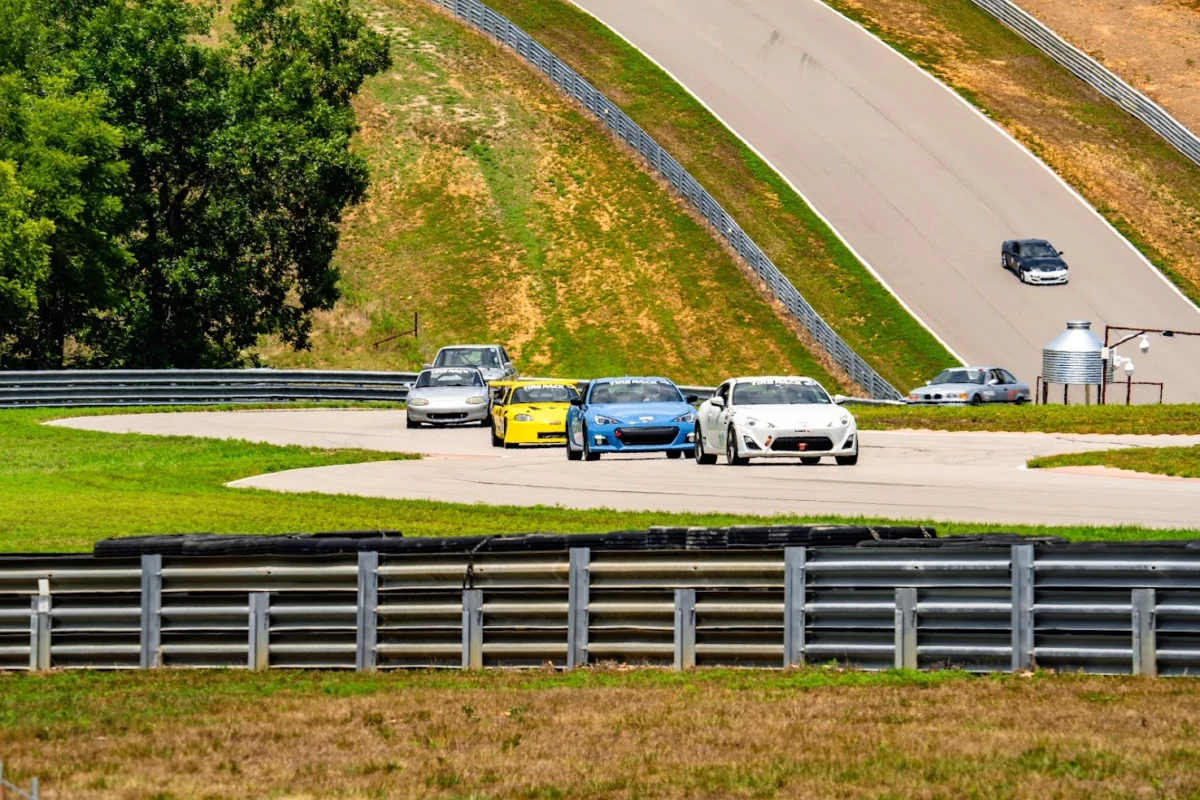
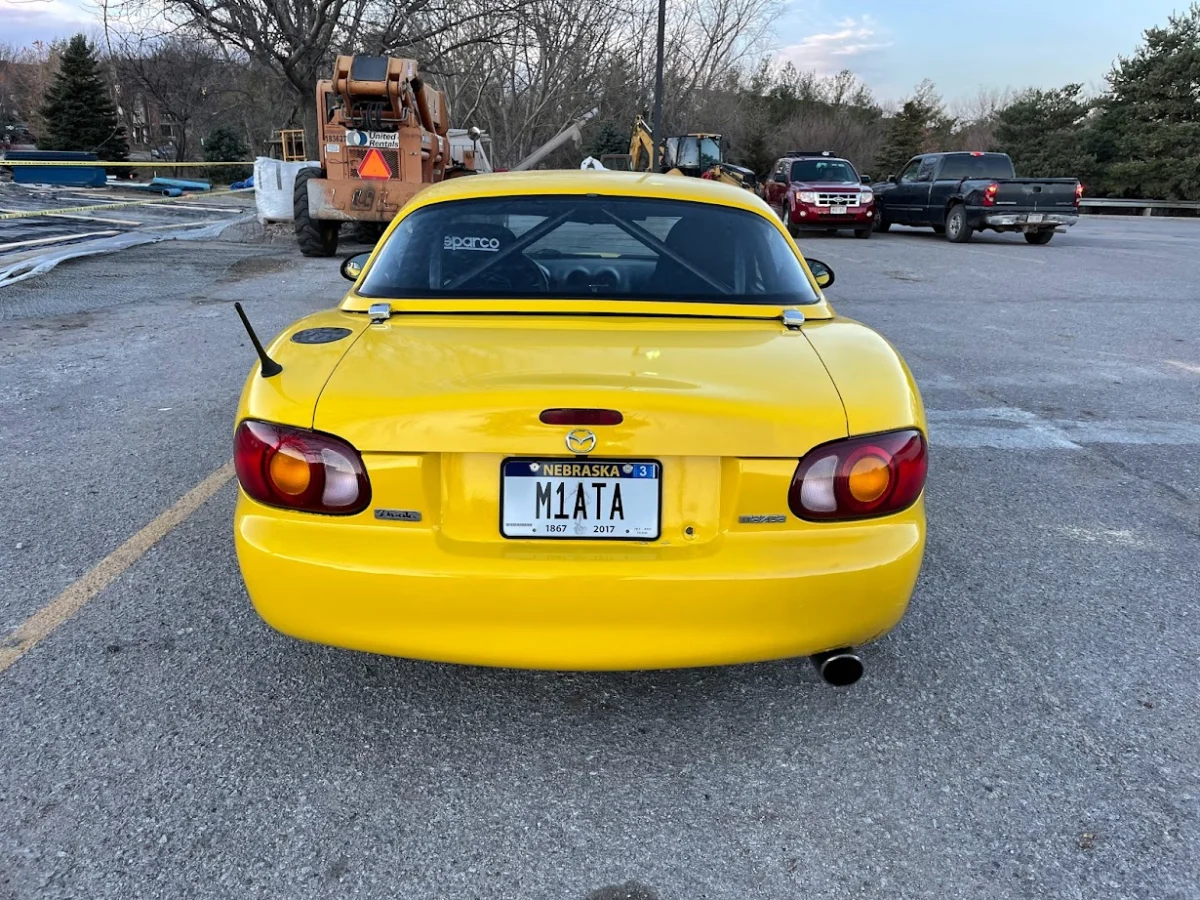
The Mazda MX-5 Miata, specifically the second-generation NB chassis, has long been a cornerstone of the amateur motorsports community due to its balanced handling, mechanical simplicity, and vast aftermarket support. For one dedicated enthusiast, the conclusion of a third year of ownership marks a significant transition from basic maintenance to advanced performance engineering. Spanning the period from March 2023 to February 2024, this retrospective analyzes the technical progression, logistical challenges, and competitive results of a vehicle optimized for both SCCA Time Trials and regional autocross events. The following report details the evolution of this platform, the impact of regional racing infrastructure changes, and the technical data gathered through rigorous track testing.
Logistical Enhancements and Aerodynamic Trials
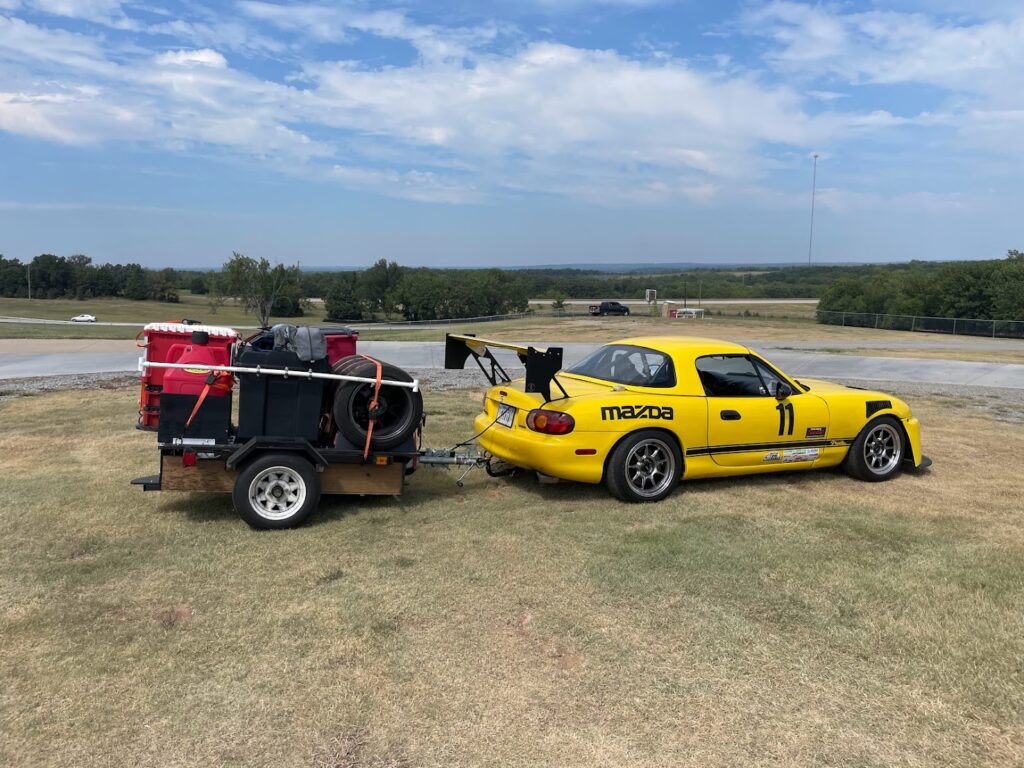
The 2023 season commenced with a focus on logistics and aerodynamic reliability. In March, the owner implemented significant upgrades to a custom-built tire trailer, an essential component for "arrive-and-drive" track participants who do not utilize a dedicated truck and flatbed. The modifications included a lowered deck for improved center of gravity, a 15-gallon fuel cell to accommodate high-consumption track sessions, and specialized mounts for spare aerodynamic components.
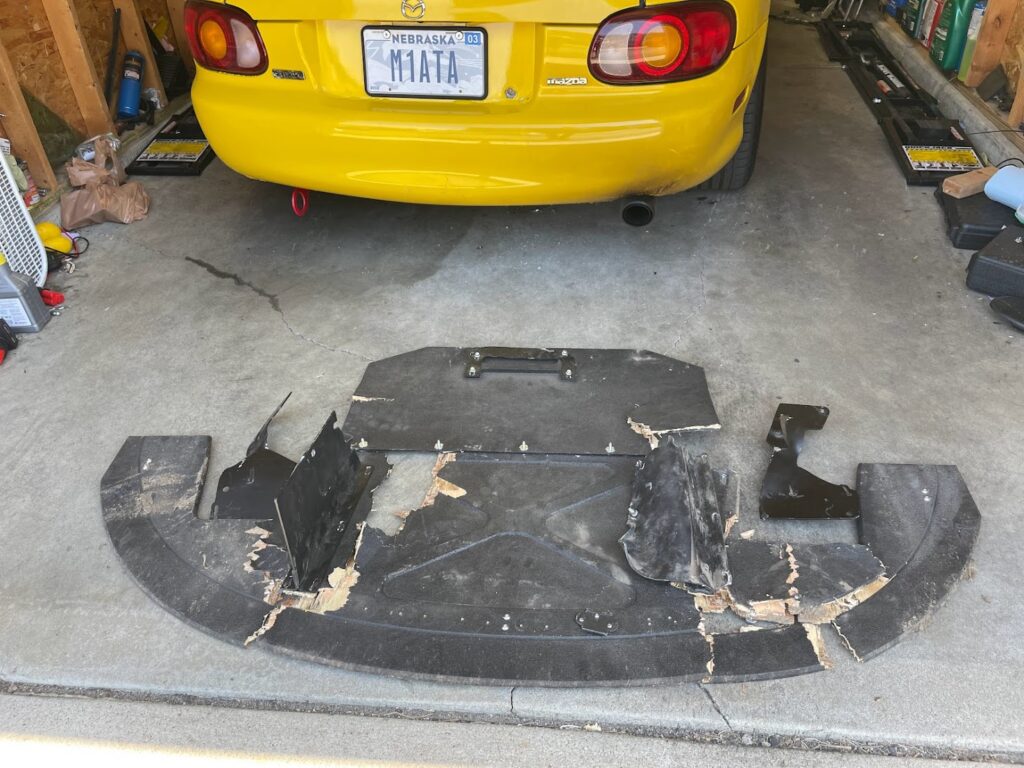
The necessity of these spares was proven in April during a high-speed outing. Following the installation of a Nine Lives Racing medium-downforce kit, the vehicle suffered a significant aerodynamic failure. While navigating a high-speed turn, an off-track excursion resulted in the destruction of the front splitter and damage to the radiator support. This incident highlighted a critical aspect of amateur racing: the balance between performance and "disposable" engineering. The owner subsequently transitioned to 1/2-inch plywood splitters with reinforced side supports, a cost-effective and durable alternative to carbon fiber or composite materials that can withstand the rigors of frequent track use and occasional bottoming out.
The Regional Impact of Track Closures: Heartland Motorsports Park
In May 2023, the vehicle participated in the SCCA Time Trials at Heartland Motorsports Park in Topeka, Kansas. This event served as a performance benchmark, utilizing 225/45R15 Falken RT660 tires mounted on 15×9-inch wheels. The RT660 has become a staple in the "Super 200" treadwear category, offering a compromise between the longevity of an endurance tire and the raw grip of a qualifying tire.
However, this event was overshadowed by the permanent closure of Heartland Motorsports Park at the end of the 2023 season. The facility, which had been a fixture of Midwestern motorsports since 1989, shuttered due to a protracted legal dispute involving property taxes. The loss of this venue represents a significant blow to the regional racing community, forcing enthusiasts to travel further to find comparable high-speed road courses. For the NB Miata project, this closure necessitates a shift in focus toward other regional circuits like Ozarks International Raceway and Motorsports Park Hastings.
Aerodynamic Efficiency and Structural Modifications
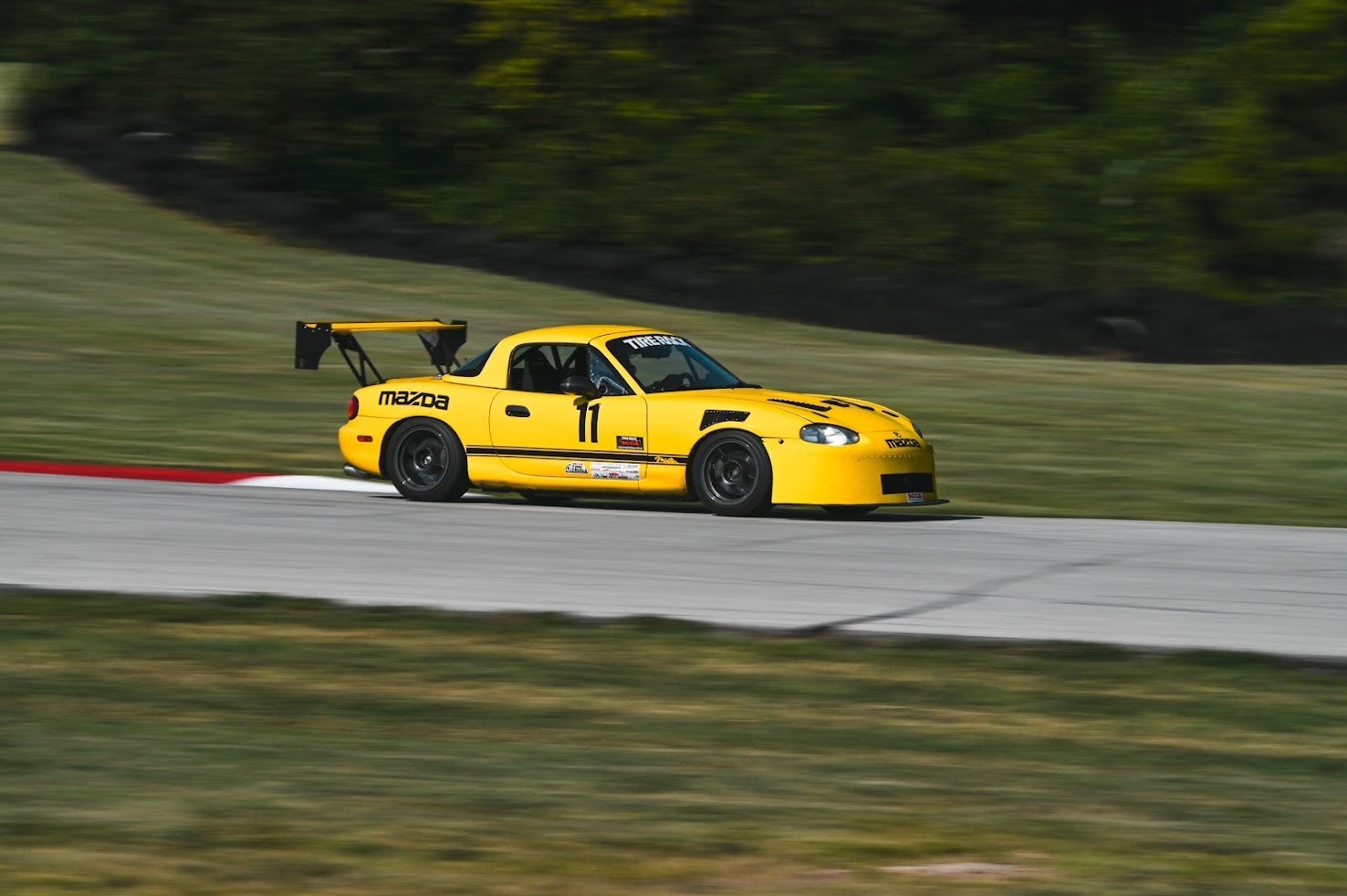
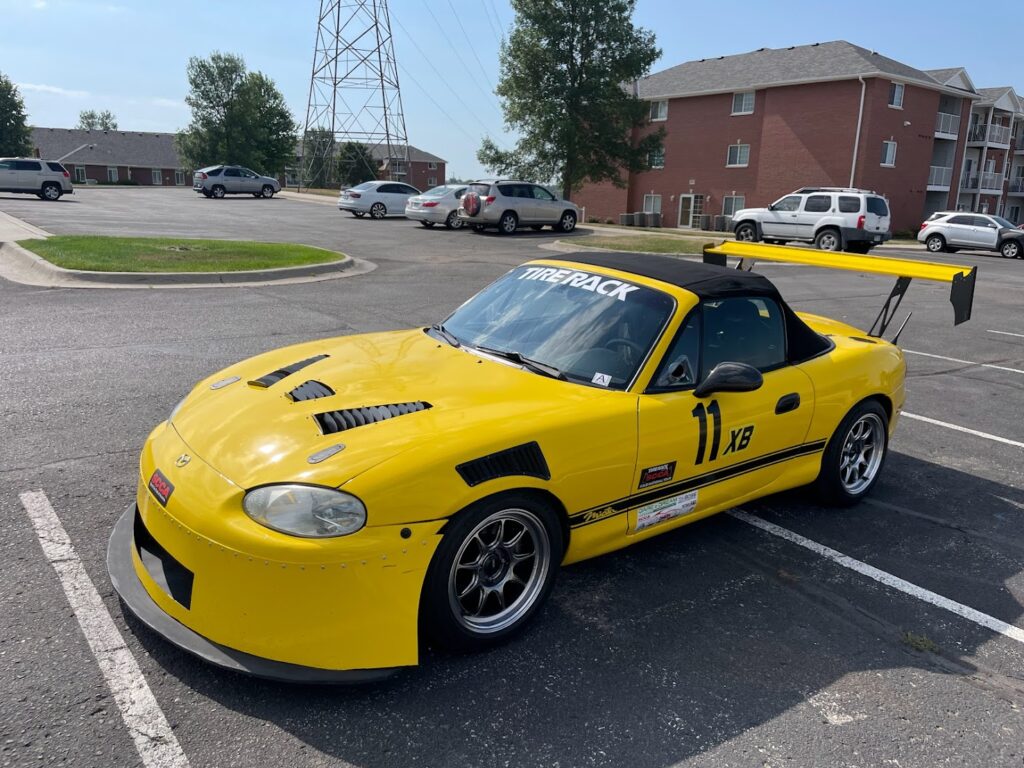
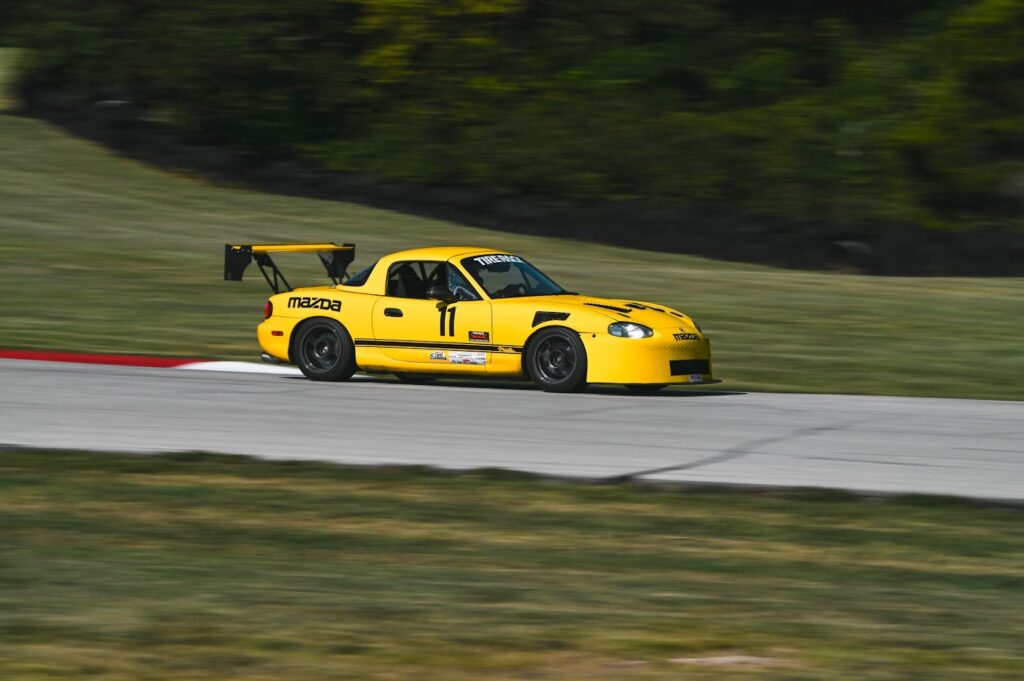
By June, technical data suggested that the vehicle’s rear wing was underperforming due to the airflow turbulence caused by the lack of a roof. In a move toward dedicated track optimization, the owner removed the factory soft top entirely. This modification served two purposes: it reduced the vehicle’s curb weight and allowed for the permanent installation of a hardtop, which provides a cleaner boundary layer of air to the rear wing, significantly increasing downforce.
The pursuit of performance also brought about mechanical setbacks. In July, while preparing for a debut at Ozarks International Raceway, the vehicle suffered a clutch failure. Due to time constraints, the owner opted for a standard organic replacement rather than a high-performance ceramic unit. Despite the setback, the vehicle performed admirably at the Ozarks circuit, a facility known as the "Nürburgring of the Midwest" due to its extreme elevation changes and unforgiving barriers. The technical nature of the track emphasized the importance of driver confidence over raw horsepower, as the NB Miata’s aero-enhanced grip allowed for consistent lap time improvements throughout the weekend.
Performance Benchmarking and Competitive Data
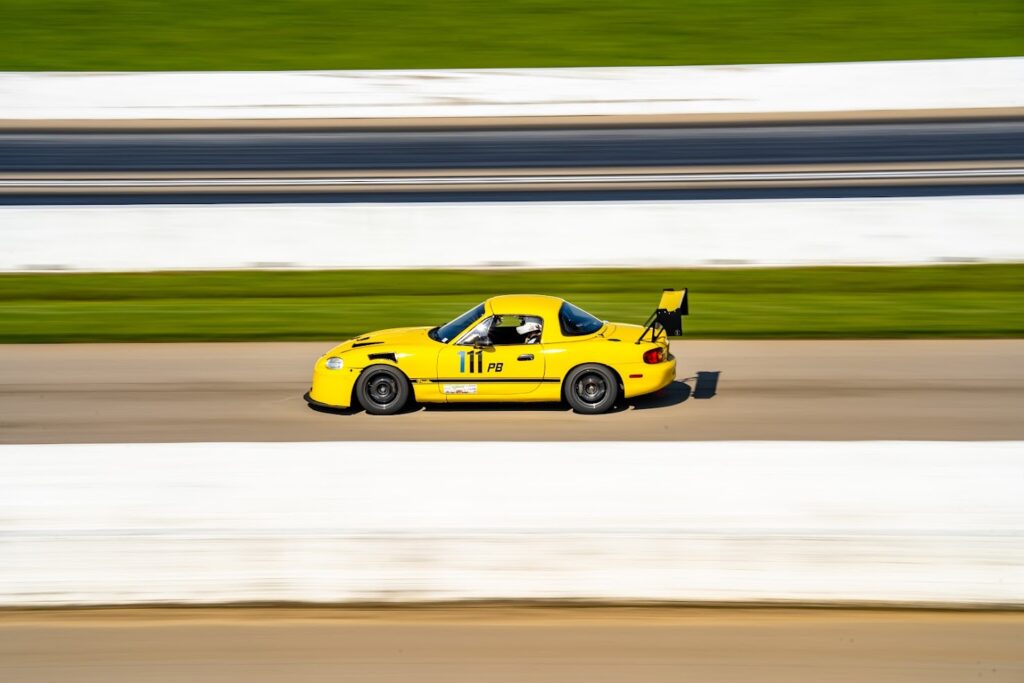
The late summer months focused on data collection and lap time benchmarking. At Motorsports Park Hastings in August, the vehicle recorded a personal best of 1:42.78. To put this in perspective, the NASA Spec Miata lap record at the same track stands at 1:40.415. While the owner’s vehicle benefits from aerodynamic aids not allowed in Spec Miata, the comparison highlights the remaining potential in the chassis, particularly in high-speed sections where the driver has yet to reach the limit of the vehicle’s lateral grip.
September saw a visit to the Hallett Motor Racing Circuit for the "Miatas at Hallett" event. This venue allowed for testing the car in both clockwise and counter-clockwise configurations. A critical addition during this period was the implementation of a "Cool Shirt" system—a thermal management solution that pumps ice water through a vest worn by the driver. In the high-temperature environment of a closed-cockpit racing car, such systems are vital for maintaining driver focus and preventing heat exhaustion, which directly correlates to safer and more consistent lap times.
Engine Architecture and Reliability Analysis
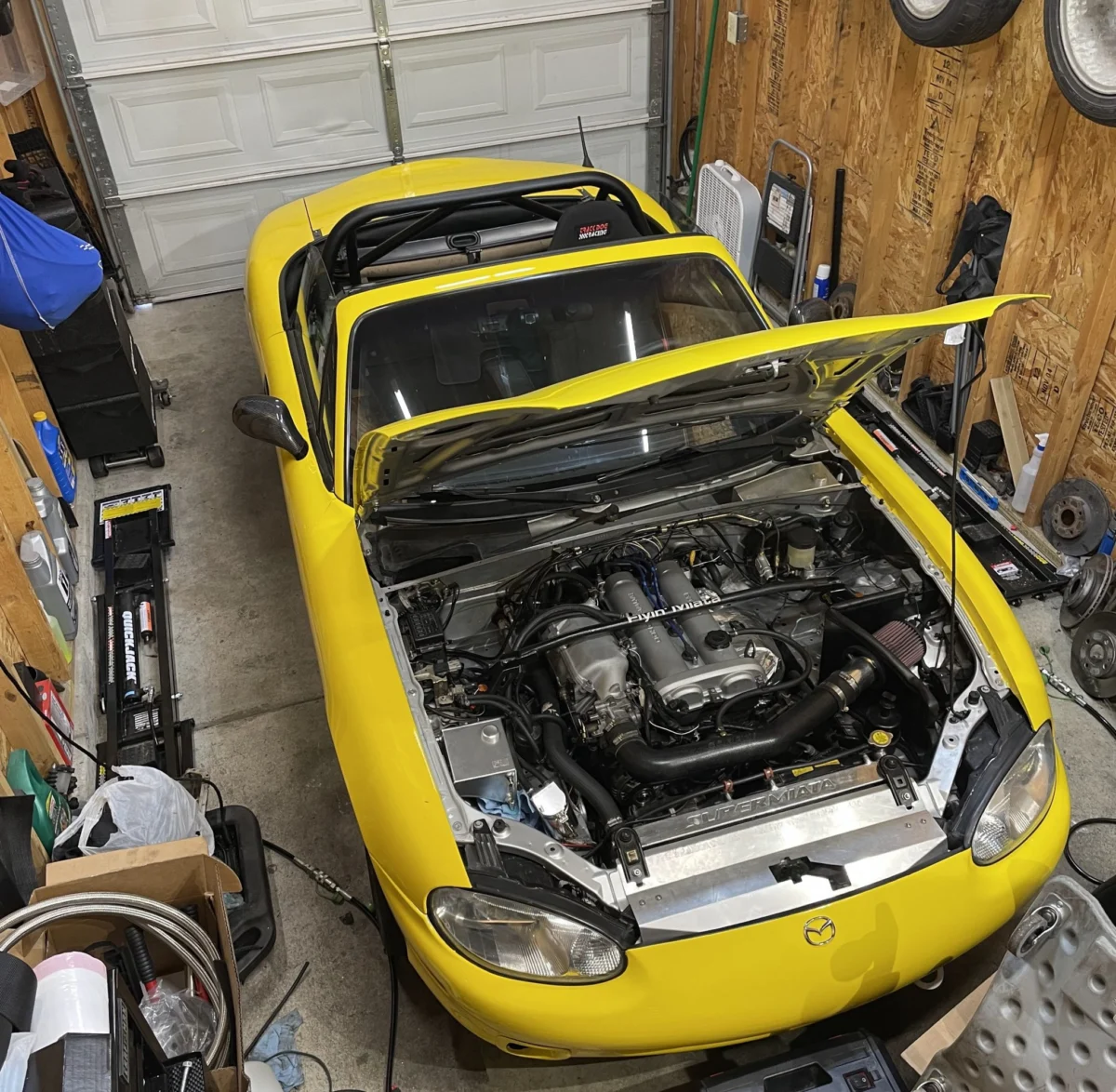
In October, the project turned toward long-term powertrain reliability. The vehicle’s original BP4W engine, while functional, began showing signs of wear, specifically oil consumption at high RPM and smoke during engine braking. These symptoms are common in high-mileage Mazda B-series engines subjected to track stress.
The owner’s inventory of spare parts highlights the technical diversity of the Miata platform. The collection includes:
- BP4W (1999–2000): Known for its high-flowing cylinder head but lack of Variable Valve Timing (VVT).
- BP6D (2001–2005): Features VVT, offering a broader power band and improved mid-range torque.
The decision was made to rebuild a "hybrid" engine, combining the BP4W bottom end with a refreshed BP6D VVT head and high-compression pistons. This configuration aims to maximize the power-to-weight ratio for future Time Trials, where vehicles are classed based on a strict formula of horsepower versus mass.
Winter Weight Reduction and Ergonomic Refinement
As the 2023 season concluded in November, the owner recorded impressive participation statistics: 15 track days and 15 autocross events. The data showed that the Bridgestone RE71-RS tires remained competitive through 70 runs, while the Falken RT660s endured over eight hours of track time across 38 heat cycles.
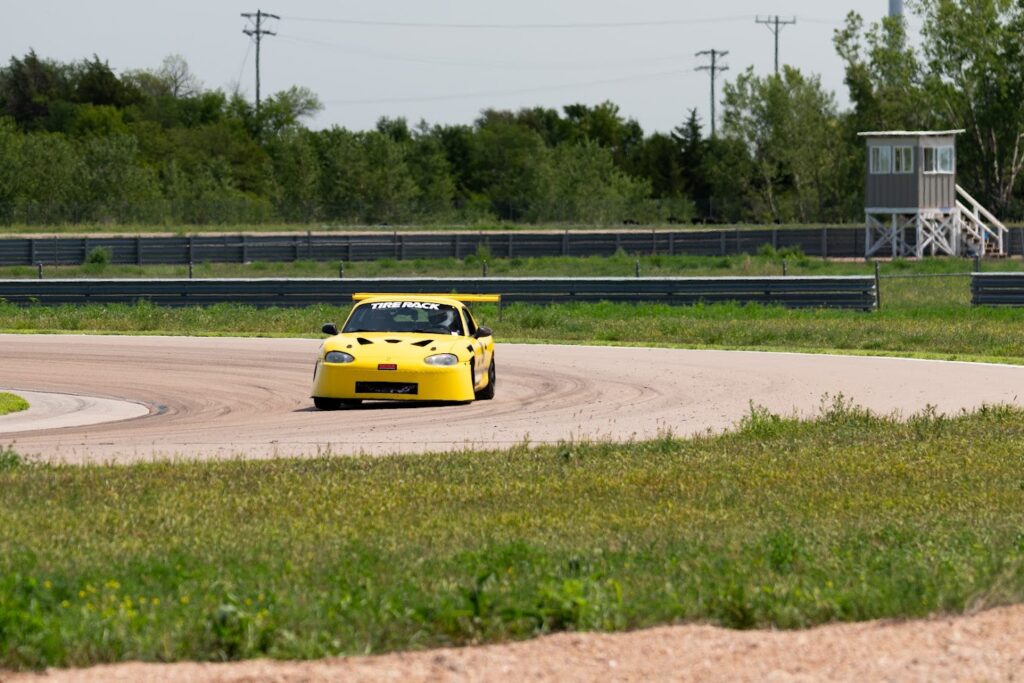
The winter months (December 2023 – February 2024) were dedicated to a "weight loss" program. By removing the dashboard, heater core, and unnecessary wiring, the owner shed approximately 50 pounds from the chassis. In the world of amateur racing, 50 pounds is a significant margin, potentially equating to several tenths of a second per lap depending on the circuit layout.
Finally, ergonomics were addressed with the installation of a 330mm OMP quick-release steering wheel. Beyond the aesthetic appeal, a smaller diameter wheel provides quicker steering response, while the quick-release hub is a safety requirement for many racing series, allowing for rapid driver egress in the event of an emergency.
Future Implications and Market Context
The evolution of this NB Miata reflects a broader trend in the automotive enthusiast market. As the prices of modern performance cars escalate, the 25-year-old Mazda platform remains one of the few accessible avenues for developing high-level driving skills and engineering knowledge.
The owner’s focus for the upcoming 2024 season involves transitioning to even more aggressive tire compounds, such as the Yokohama A052 and Nankang CRS v2, and potentially exploring forced induction. However, the project demonstrates that even in naturally aspirated form, a well-sorted NB Miata with optimized aerodynamics and reduced mass can challenge much more modern and expensive machinery. As regional tracks face economic pressures and closures, the importance of a reliable, tow-capable, and efficient racing platform like the one documented here becomes increasingly paramount for the survival of amateur motorsports.