Johny Imanuel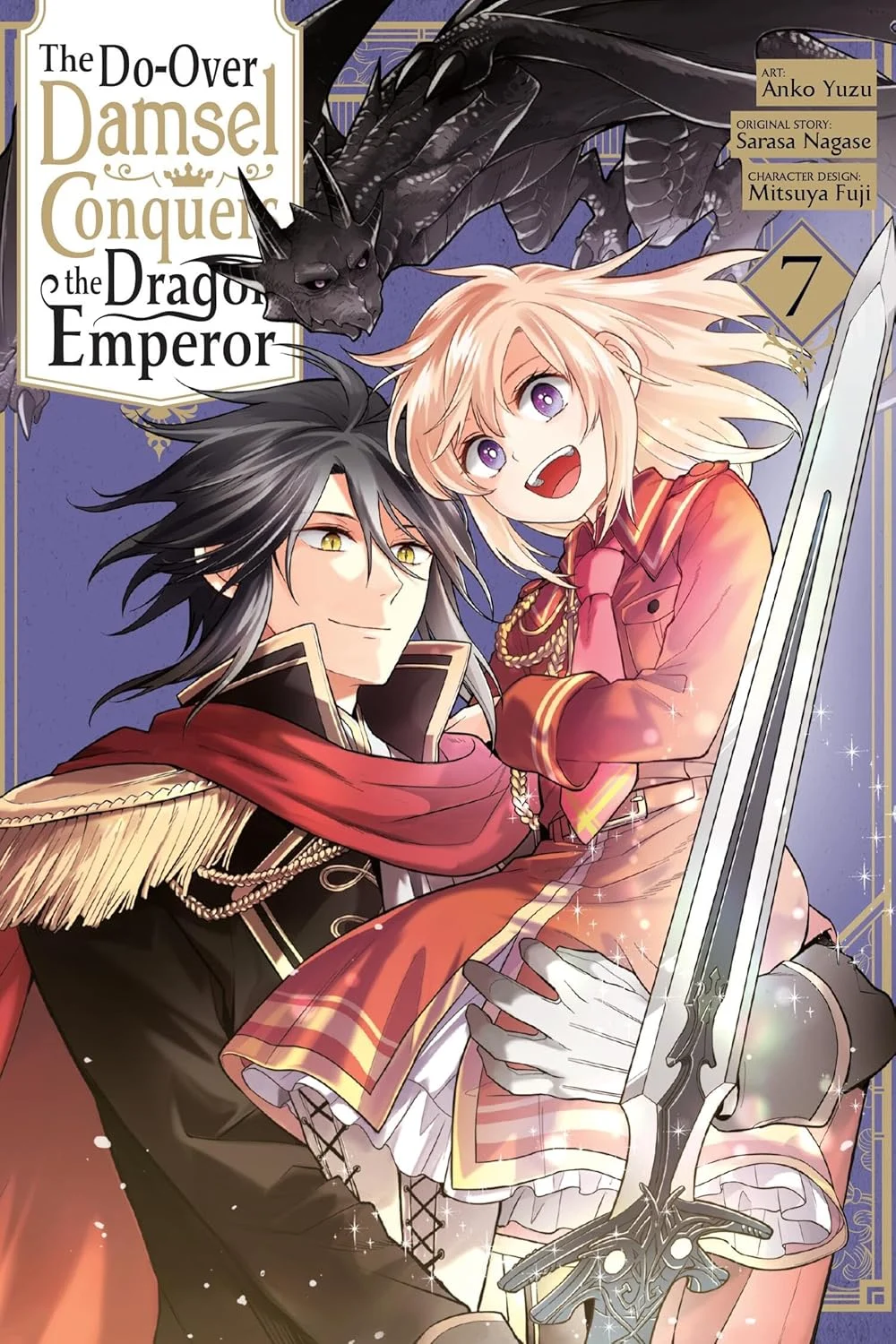
Structural Evolution and Narrative Context
The overarching premise of the series centers on Jill Saville, a young woman who, in her first life, served as a decorated military commander for the Kingdom of Kratos. Following a betrayal by her fiancé, Prince Gerard, which resulted in her execution, Jill was miraculously transported back in time to age ten. Retaining the tactical knowledge and combat experience of her previous life, she makes the radical decision to propose to the "villain" of her original timeline: Hadis Teos Rave, the Dragon Emperor.
In the original timeline, Hadis was remembered as a bloodthirsty, uncontrollable tyrant. However, Jill’s "do-over" reveals a starkly different reality. Hadis is depicted as a socially awkward, kind-hearted individual whose descent into villainy in the first timeline was the result of isolation, betrayal, and external manipulation. Volume 7 represents the culmination of Jill’s efforts to prevent that dark future. While previous volumes focused on the immediate survival of the pair, Volume 7 shifts the focus toward proactive governance and the dismantling of the conspiracy that originally led to Hadis’s corruption.
Chronology of Events in Volume 7
The seventh volume begins in the immediate aftermath of a significant betrayal within the Rave Empire. Princess Elentzia, Hadis’s elder sister, and their uncle, George, have orchestrated a coup utilizing a "fake" Heavenly Sword to suppress Hadis’s divine authority. The following timeline outlines the primary developments within this volume:
- The Captivity of the Dragon Emperor: Hadis is neutralized and captured by his relatives, leaving the empire’s leadership in a state of flux. This serves as the primary conflict, testing Jill’s ability to lead without Hadis’s overwhelming magical presence.
- The Confrontation with the Black Dragon: Jill encounters a Black Dragon, a creature of immense power. Despite her lack of innate magic in her current ten-year-old body, she utilizes her strategic memories from her past life to outmaneuver the beast. This engagement is a turning point, as it establishes Jill’s authority as the Emperor’s consort through merit rather than title.
- The Rescue Operation: Jill spearheads a mission to intercept the magicked wagon transporting Hadis. Her success relies on psychological warfare and the mobilization of the Black Dragon, effectively turning a potential enemy into a vital ally.
- The Final Conflict with Elentzia and George: The battle moves from a physical confrontation to a battle of wills. Jill intervenes during Hadis’s moment of psychological vulnerability, preventing him from entering the "berserker" state that defined his reputation in her previous life.
- The Revelation of the Mastermind: Following the defeat of the immediate usurpers, Jill, aided by the Dragon God Rave, confronts the shadow figure responsible for the empire’s instability. This confrontation sets the stage for the series’ next major arc.
Character Analysis: Jill Saville’s Strategic Agency
A defining characteristic of Volume 7 is the emphasis on Jill’s intellectual and physical autonomy. In many "reincarnation" stories, the protagonist relies heavily on a "system" or divine intervention. In contrast, Nagase portrays Jill as a seasoned veteran trapped in a child’s body. Her victory over the Black Dragon is not achieved through a sudden power-up but through a calculated assessment of the creature’s behavior and the environment.
Furthermore, Jill’s role as the emotional anchor for Hadis is solidified. The narrative addresses the theme of nature versus nurture; Hadis is not inherently evil, but his environment in the first timeline forced him into that role. Jill’s primary weapon in Volume 7 is her refusal to let Hadis succumb to the "fate" the world has designed for him. By talking him down from a murderous rage, she effectively rewrites the history she once knew. This act of emotional intelligence is presented as being just as crucial as her combat skills.
Political Intrigue and World-Building Data
The conflict in Volume 7 provides deeper insight into the geopolitical tension between the Rave Empire and the Kingdom of Kratos. The series establishes that these two powers are ideologically and magically opposed. The Rave Empire is governed by the Dragon God Rave, while the Kingdom of Kratos possesses its own divine mandates.
The introduction of the "Fake Heavenly Sword" used by Uncle George serves as a significant piece of lore. It suggests that the divine artifacts of this world can be replicated or corrupted, which devalues the absolute authority of the ruling class. This plot point highlights the instability of the Rave Empire’s internal politics. The fact that Hadis’s own family members were willing to use such a tool indicates a profound level of rot within the imperial court, which Jill must now navigate as she transitions from a "fugitive" consort to a legitimate political figure.
Industry Impact and Multimedia Presence
The Do-Over Damsel Conquers the Dragon Emperor has seen a steady rise in popularity since its inception as a light novel series by Sarasa Nagase. The manga adaptation, licensed by Yen Press for English-speaking audiences, has been praised for its pacing. Volume 7, in particular, is noted for its ability to provide a satisfying conclusion to the "Coup Arc" while maintaining reader interest through the introduction of a larger threat.
The series’ expansion into other media has further solidified its status. The first season of the anime adaptation, currently streaming on platforms like Crunchyroll, has brought the story to a wider demographic. Industry analysts suggest that the "reincarnation with a twist" trope remains highly profitable, especially when the protagonist exhibits high levels of agency and competence, as Jill does. The light novel, handled by Cross Infinite World, provides the foundational text, but the manga is often cited for its expressive character designs that enhance the emotional weight of the story’s more dramatic moments.
Implications for Future Narrative Arcs
The conclusion of Volume 7 leaves the protagonists in an uncharacteristically stable position. Unlike previous volumes that ended on high-stakes cliffhangers, this volume provides a moment of respite. The Rave Empire’s citizenry has largely shifted their support toward Hadis following the exposure of George’s treachery. This domestic stability is a necessary precursor for the inevitable international conflict with the Kingdom of Kratos.
However, the introduction of the true mastermind suggests that the "do-over" is not as simple as Jill initially believed. The presence of an antagonist who can challenge Jill’s knowledge of the future implies that the timeline is no longer a fixed track. This introduces a new layer of psychological tension: Jill can no longer rely solely on her memories of the first life, as her actions have already fundamentally altered the world’s trajectory.
Technical Merits of Volume 7
From a literary standpoint, Volume 7 excels in its "pacing of resolution." Many long-running manga struggle with the transition between story arcs, often dragging out a conflict or rushing the introduction of the next. Nagase avoids these pitfalls by using the final chapters of Volume 7 to tie up "dangling threads"—such as the fate of Hadis’s immediate family—while simultaneously planting "seeds" for the next conflict.
The artwork by Anko Yuzu in this volume is also worth noting, particularly in the depiction of the Black Dragon and the combat sequences involving Jill. The visual contrast between Jill’s small stature and the immense threats she faces reinforces the theme of "strength through competence." The use of paneling during the confrontation with the mastermind effectively conveys a sense of unease, utilizing shadows and perspective to distinguish this new threat from the more straightforward villainy of Uncle George.
Conclusion
The Do-Over Damsel Conquers the Dragon Emperor Volume 7 serves as a masterclass in narrative transition. By successfully resolving the internal imperial conflict, Sarasa Nagase has cleared the stage for a broader exploration of the world’s lore and the true nature of Jill’s second chance. The volume reinforces the series’ core themes: the power of choice over destiny, the importance of empathy in leadership, and the strategic value of experience. As Yen Press prepares for the release of Volume 8, the series remains a standout example of how to execute a high-stakes fantasy romance with tactical depth and character-driven stakes. For readers and viewers alike, Jill Saville’s journey from a doomed soldier to a world-shaping consort continues to be a compelling study in the rewriting of history.