 Indra Gunadi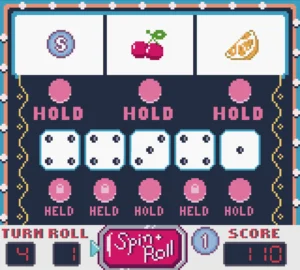
The landscape of modern homebrew game development for legacy hardware reached another milestone on September 26, 2026, with the official release of Super Slotzee. Developed by the independent programmer kaisle51, this new title for the Nintendo Game Boy Color represents a growing trend in the preservation and revitalization of 8-bit and 16-bit console ecosystems. By blending traditional slot machine mechanics with the strategic depth of the classic dice game Yacht—widely recognized by its commercial variant, Yahtzee—Super Slotzee offers a compact, high-replayability experience tailored for the constraints and aesthetic limitations of 1990s-era handheld hardware.
The Convergence of Mechanics and Hardware Constraints
Super Slotzee functions as a hybrid digital board game. In an era where mobile gaming is dominated by high-fidelity, resource-intensive applications, the development of a title like Super Slotzee highlights a deliberate move toward "bite-sized" gaming. The design philosophy behind the game centers on quick, session-based interaction, making it an ideal candidate for hardware that was originally designed for short-burst play during commutes or leisure breaks.
From a technical perspective, programming for the Game Boy Color (GBC) in 2026 requires an intimate understanding of the Ricoh LR35902 processor and the console’s distinct palette limitations. Developers must work within a hardware architecture that possesses only 32 KB of ROM banking and a mere 8 KB of internal Video RAM. By implementing a system that requires the player to manage both the luck-based elements of spinning reels and the tactical decision-making inherent in scoring combinations, kaisle51 has successfully utilized the GBC’s sprite-handling capabilities to create an engaging, low-latency interface that remains faithful to the feel of 1990s handheld software.
Chronology of the Homebrew Renaissance
The release of Super Slotzee is not an isolated event but rather a point on a timeline of sustained interest in legacy gaming that has spanned over a decade. The homebrew scene—a community of developers creating new software for discontinued hardware—has seen a professionalization of its output since the early 2010s.
- 2012–2016: The early adoption period, characterized by simple ports and hardware proof-of-concepts.
- 2017–2021: The rise of sophisticated toolsets, such as GBDK (Game Boy Development Kit) and modern cross-compilers, allowed for more complex logic and deeper gameplay loops.
- 2022–2025: A period defined by the release of "premium" homebrew titles, often featuring physical cartridge releases, custom box art, and manuals, effectively bridging the gap between hobbyist projects and retail-quality products.
- 2026: The current landscape, where releases like Super Slotzee are integrated into broader digital distribution platforms, ensuring that even users without original hardware can enjoy the software via high-accuracy emulators.
This chronology demonstrates a shift from merely ensuring the hardware is still functional to actively expanding the library of software available for platforms that Nintendo officially ceased supporting decades ago.
Supporting Data and Market Context
While the mainstream gaming market shifts toward cloud gaming, subscription services, and photorealistic graphics, the niche market for 8-bit and 16-bit software remains robust. According to community-led data aggregators in the retro-gaming space, homebrew releases for the Game Boy platform have seen a steady increase in frequency, with an estimated 15% year-over-year growth in new title submissions over the last five years.
The appeal of titles like Super Slotzee lies in their accessibility. Unlike modern "live-service" games that require constant internet connectivity and significant time investments, this title operates entirely offline and requires no updates, patches, or microtransactions. The total addressable market for such titles is twofold: collectors who own original GBC hardware and a growing demographic of enthusiasts who utilize open-source emulation software on modern handhelds, such as the Analogue Pocket or various FPGA-based devices.
Technical Implications and Developer Objectives
The developer, kaisle51, has positioned Super Slotzee as a strategic alternative to purely luck-based casino-style games. By introducing the Yacht-style scoring mechanics—where players must decide which combinations to lock in to maximize their point totals—the game introduces a skill ceiling that encourages repeat play.
In analyzing the code structure common to projects of this nature, the decision to prioritize frame rate and responsiveness over graphical complexity is paramount. For a handheld device like the Game Boy Color, which operates at a refresh rate of 59.73 Hz, input lag is the primary enemy of user satisfaction. By keeping the game logic lightweight, kaisle51 ensures that the experience remains fluid even on the original, aging hardware, where display ghosting and slow response times are common challenges.
Industry Reaction and the Future of Legacy Development
While Nintendo has not issued a formal statement regarding the specific release of Super Slotzee, the company has generally maintained a policy of intellectual property protection, leading to a complex relationship with the homebrew community. However, industry analysts note that the current "hobbyist" tier of development, which focuses on original IP rather than the modification of copyrighted ROMs, is largely viewed as a benign, if not beneficial, contributor to the longevity of the brand.
"The homebrew movement acts as a cultural preservation mechanism," says Dr. Aris Thorne, a researcher in digital history. "When a developer like kaisle51 releases a new game for a console that was discontinued in 2003, they are effectively extending the lifecycle of that machine. This creates a feedback loop where hardware remains valuable, and the community remains active."
The broader implications for the industry suggest that software development is becoming decoupled from hardware manufacturer cycles. As more developers master the instruction sets of the Game Boy and similar consoles, the software library for these devices will continue to expand, potentially far outliving the original manufacturing runs of the hardware itself.
Strategic Impact on the Retro-Gaming Ecosystem
Super Slotzee contributes to the sustainability of the retro-gaming ecosystem by providing fresh content for collectors. In the current market, the value of physical media—cartridges, boxes, and manuals—has skyrocketed, often outstripping the cost of the consoles themselves. New releases provide an entry point for newer, younger enthusiasts who may be priced out of the "classic" collecting market but still desire to experience the tactile sensation of playing on a cartridge-based system.
Furthermore, the integration of strategy elements into a gambling-themed interface serves as a design template for other developers. By demonstrating that complex logic can be distilled into a 160×144 pixel resolution, kaisle51 provides a roadmap for future developers looking to maximize the potential of the Game Boy Color’s limited hardware.
Conclusion: The Endurance of 8-Bit Design
As of late 2026, the release of Super Slotzee serves as a testament to the enduring popularity of the Game Boy Color. The title does not attempt to reinvent the wheel, nor does it strive to compete with the processing power of contemporary consoles. Instead, it leans into the strengths of the platform: simplicity, portability, and the satisfaction of a well-executed core mechanic.
For the player, the implications are straightforward: a new, reliable, and engaging way to pass the time on hardware that continues to defy its expiration date. For the industry, it serves as a reminder that the "value" of a gaming system is defined not by its hardware specifications, but by the creativity of the community that continues to support it. As we move into the final quarter of 2026, the success of Super Slotzee suggests that the appetite for high-quality, authentic retro experiences is far from sated, ensuring that the legacy of the Game Boy Color will continue to grow well into the future.