Cecilia Chamidah Nur
In a development that has captured the attention of retro gaming enthusiasts worldwide, the iconic Nintendo classic, Super Mario Bros., has been successfully demonstrated running on a Sega Master System. This remarkable feat, presented as a "proof of concept" by developer LackofTrack as part of the SMSPower 2026 coding competition, represents a significant technical achievement and a symbolic bridge between two historically rivalrous gaming empires. The unofficial port, which currently features the entirety of the game’s first level, offers a tantalizing glimpse into an alternate reality where Nintendo’s beloved plumber might have graced Sega’s 8-bit console.
A Historic Rivalry: Nintendo vs. Sega in the 8-bit Era
For decades, the idea of Super Mario Bros. appearing on a Sega console was anathema, a notion firmly rooted in the intense "console wars" that defined the 8-bit and 16-bit gaming eras. Nintendo, with its groundbreaking Nintendo Entertainment System (NES) released in North America in 1985 (after its Famicom debut in Japan in 1983), swiftly established dominance, largely thanks to its revolutionary game Super Mario Bros. The game, which sold over 40 million copies worldwide, was instrumental in reviving the video game industry after the crash of 1983 and cementing Nintendo’s position as a market leader.
Sega, a formidable competitor, launched its Master System in 1985 in Japan (1986 in North America) as a direct challenger to the NES. While the Master System boasted technically superior hardware in some respects, including a richer color palette and FM sound capabilities in later revisions, it struggled to gain significant market share against Nintendo’s established library, aggressive marketing, and stringent third-party exclusivity contracts. Key to Nintendo’s strategy was its ironclad control over its intellectual property, ensuring that flagship titles like Super Mario Bros. remained exclusive to its platforms. This strategy cultivated distinct brand identities and fierce loyalty among fans, making any crossover between the two platforms unthinkable in the official capacity. The console wars were not merely about sales figures; they were about cultural dominance, technological superiority claims, and the very identity of gamers who pledged allegiance to either "Nintendon’t" or "Genesis Does What Nintendon’t."
The Rise of the Homebrew Scene: Pushing Boundaries and Preserving History
The inability of gamers to experience their favorite titles across competing platforms during the console wars era inadvertently laid the groundwork for the modern homebrew and retro gaming communities. Decades later, with original hardware aging and official support long gone, passionate communities of developers, enthusiasts, and modders have taken it upon themselves to preserve, enhance, and reimagine classic gaming experiences.
The homebrew scene, a vibrant ecosystem of independent developers, operates outside the traditional commercial gaming industry. Its motivations are manifold:
- Preservation: Ensuring classic games and hardware remain playable for future generations.
- Technical Challenge: Pushing the limits of old hardware, often far beyond what original developers imagined.
- Creative Expression: Developing new games or ports for beloved, often overlooked, consoles.
- Community: Fostering a collaborative environment for sharing knowledge and resources.
Websites like SMSPower.org have become central hubs for these communities, dedicated specifically to the Sega Master System and its brethren (Game Gear, SG-1000). These platforms host forums, technical documentation, game archives, and, crucially, coding competitions that incentivize developers to create new content and push the boundaries of what these venerable machines can do. The SMSPower 2026 coding competition, which spurred LackofTrack’s Super Mario Bros. port, exemplifies this spirit of innovation and community engagement. Such competitions not only showcase individual talent but also contribute significantly to the collective knowledge base and the ongoing legacy of these classic systems.
Technical Hurdles: Bridging the 8-bit Divide
Porting a game as complex and iconic as Super Mario Bros. from the NES to the Master System is no trivial task. It involves overcoming fundamental differences in hardware architecture, which were designed by rival companies with distinct philosophies.
Central Processing Units (CPUs):
- NES: Utilizes a custom Ricoh 2A03 processor, based on the MOS Technology 6502, running at approximately 1.79 MHz (NTSC). The 6502 is an 8-bit microprocessor known for its efficiency and unique instruction set.
- Master System: Employs a Zilog Z80 CPU, clocked at 3.58 MHz. The Z80 is another 8-bit processor, widely used in various computers and consoles of the era, known for its robust capabilities but with a different instruction set and architecture compared to the 6502.
Direct translation of code between these two CPUs is impossible. Developers must essentially "re-write" the game’s logic, often at a low-level assembly language, to suit the target CPU. This process, known as reverse engineering or disassembling, requires an intimate understanding of both machines’ inner workings. LackofTrack’s use of the NES game’s disassembly by ‘doppelganger’ as a reference is a critical step, providing a blueprint of the original game’s logic that can then be adapted for the Master System’s Z80 processor. This approach, while highly technical, aims for a high degree of accuracy to the original gameplay mechanics, as LackofTrack himself notes, promising it "is very (but definitely not 100%) accurate to the original."

Graphics and Sound Capabilities:
- NES (Picture Processing Unit – PPU): Capable of displaying 25 colors simultaneously from a 54-color palette, with a resolution of 256×240 pixels. It handles sprites (up to 64 sprites, 8 per scanline) and background layers differently than Sega’s system.
- Master System (Video Display Processor – VDP): Features a more advanced VDP, capable of displaying 32 colors simultaneously from a palette of 64 colors, at a resolution of 256×192 pixels. It generally offers more graphical flexibility and larger sprites without flicker issues common on the NES.
The difference in graphical capabilities means that assets often need to be adapted. While the Master System generally boasts a richer palette, directly porting NES sprites might not fully utilize the Master System’s potential or could look out of place. Interestingly, LackofTrack’s project takes a unique approach by utilizing graphics "modified from the 16-bit remake of Super Mario Bros. on the Super Mario All-Stars Collection" for the Super Nintendo Entertainment System (SNES). This decision is brilliant, as it allows the port to benefit from improved, more detailed sprite work, leveraging the Master System’s superior color capabilities over the NES while retaining the classic Mario aesthetic. This also implies a significant amount of manual work to downscale and adapt the 16-bit sprites to the 8-bit Master System’s VDP limitations.
Sound Chips:
- NES: Features the Ricoh 2A03, which includes a 5-channel Programmable Sound Generator (PSG) with two square wave channels, one triangle wave channel, one noise channel, and one Delta Modulation Channel (DMC) for samples.
- Master System: Equipped with a Texas Instruments SN76489 PSG, offering three square wave channels and one noise channel. Crucially, many Master System models (especially in Japan and Europe) also supported the Yamaha YM2413 FM Sound Unit, which provided much richer and more complex audio.
LackofTrack’s expressed interest in adding "FM sound support at some point" highlights a key area where the Master System could potentially surpass the original NES audio experience. The FM unit provides a distinct, often praised, audio quality that could give the Super Mario Bros. soundtrack a fresh, vibrant interpretation, distinguishing it further from a mere carbon copy. The recent update (version 0.12) already includes tweaks to the underground music to better "reach the lower notes of the song," indicating careful attention to audio fidelity within the current PSG limitations.
LackofTrack’s "Proof of Concept": A Deep Dive into the Current State
The current iteration of the Super Mario Bros. Master System port, version 0.12, is a robust "proof of concept" that showcases the core mechanics of the game running smoothly on the Sega hardware. While it is currently limited to the first level (World 1-1), the fact that it replicates the physics, enemy behavior, power-ups, and level design of the original is a monumental achievement. The development process, often iterative, is evident in the patch notes for v0.12, which address specific gameplay elements: "fixing some power-ups spawning too high" and "tweaking the underground music." These details underscore the meticulous effort required to ensure accuracy and playability, even in an early-stage port.
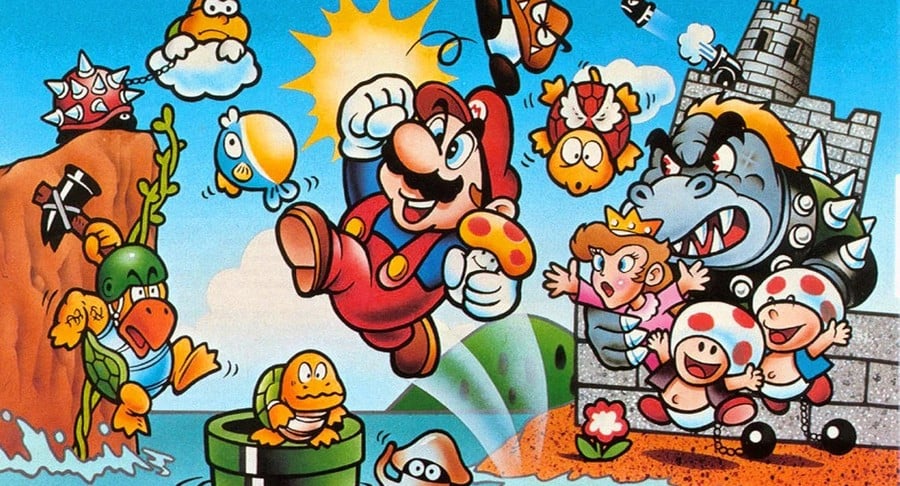
The developer’s openness about seeking help with graphics signifies the collaborative spirit inherent in the homebrew community and also points to the sheer scale of the undertaking. Creating pixel-perfect graphics that are both aesthetically pleasing and technically compatible with the Master System’s VDP requires specialized artistic talent and a deep understanding of the hardware’s constraints and capabilities. A full port would necessitate converting hundreds of sprites and background tiles, ensuring they maintain the Mario charm while fitting the Master System’s unique graphical identity.
Community Engagement and the Path Forward
The Super Mario Bros. Master System port has generated considerable excitement within the retro gaming community. Forums, social media platforms, and dedicated retro gaming news outlets have buzzed with discussions, praise for LackofTrack’s technical prowess, and eager anticipation for future updates. This project serves as a powerful reminder of the enduring appeal of classic games and the passion that drives the homebrew scene.
The roadmap for this project, as hinted by LackofTrack, includes expanding beyond World 1-1 and implementing FM sound support. If successful, a complete Super Mario Bros. port with enhanced FM audio could offer a definitive "what if" experience for fans of both Nintendo and Sega. It would stand as a testament to the versatility of classic game design and the untapped potential of retro hardware. The call for community assistance with graphics is a common and effective strategy in homebrew development, leveraging collective talent to bring ambitious projects to fruition. This collaborative approach not only accelerates development but also strengthens community bonds and democratizes the creation process.
Broader Implications: Preservation, Innovation, and Legacy
This homebrew port carries implications beyond mere novelty:
- Digital Preservation: Projects like this contribute significantly to the preservation of video game history. By porting a seminal title to different hardware, developers explore compatibility, document technical nuances, and ensure that the core gameplay experience can endure even as original platforms become scarcer.
- Challenging Assumptions: It challenges the long-held assumption that certain games are inextricably linked to their original platforms. While official exclusivity was a commercial reality, homebrew demonstrates that technical barriers, while significant, are often surmountable through dedication and ingenuity.
- Inspiring New Generations: Such projects inspire new generations of developers and enthusiasts to delve into the intricacies of retro hardware and software. It fosters a learning environment where reverse engineering, low-level programming, and creative problem-solving are celebrated.
- Revisiting Lost Potential: It allows players to experience beloved titles in new contexts, potentially discovering new facets of their design or enjoying them with hardware enhancements (like FM sound) that were not originally available.
The legal standing of such projects often exists in a grey area. While Super Mario Bros. is Nintendo’s intellectual property, homebrew ports for non-commercial distribution are generally tolerated by rights holders, especially when they cater to niche communities and do not directly compete with official products. This tacit understanding allows the homebrew scene to flourish, enriching the cultural landscape of video games.

The availability of the current version (0.12) for download on SMSPower.org allows anyone with a Sega Master System emulator or flash cart to experience this remarkable achievement firsthand. The ongoing development, with its iterative improvements and calls for community collaboration, positions this Super Mario Bros. Master System port as a dynamic and evolving project, poised to leave a lasting mark on the vibrant world of retro gaming homebrew. It is a powerful reminder that even decades after their release, classic consoles and games continue to inspire innovation, bridge divides, and ignite the imagination of a dedicated global community.