Farhan hamdan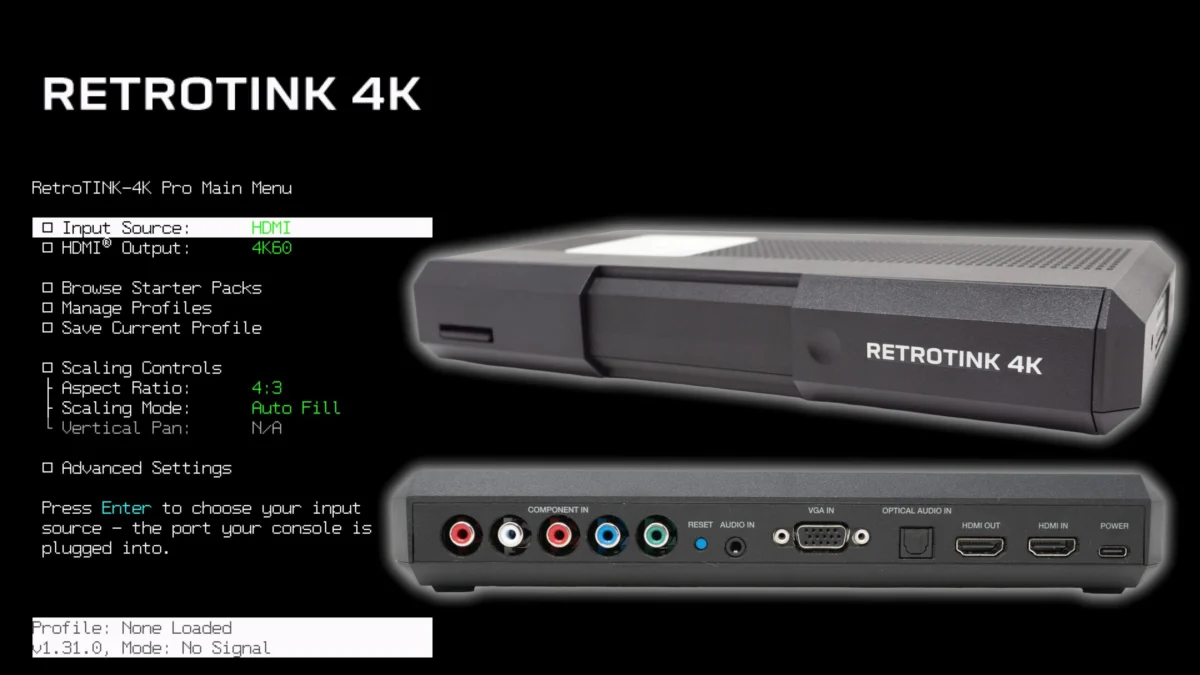
The RetroTINK 4K CE and Pro, flagship video upscaling devices for retro gaming enthusiasts, have received a significant firmware update, version 1.31.0, released by creator Mike Chi. This latest iteration introduces a revamped official menu system, designed to streamline user interaction by providing more intuitive access to frequently used controls and prominently displaying active input and output resolutions. The update also includes a new shortcut for power users, allowing direct access to advanced settings via the "AUX8" button on the remote. This release is positioned as a crucial enhancement, promising a more refined and efficient user experience for the device’s dedicated community.
The Evolution of Retro Gaming Preservation and the Role of RetroTINK
The landscape of retro gaming has undergone a profound transformation in recent decades. What was once a niche hobby for collectors has evolved into a thriving cultural phenomenon, driven by a desire to preserve gaming history and experience classic titles on modern displays. However, connecting vintage consoles, which often output analog signals like composite video, S-Video, or RGB SCART, to contemporary high-definition (HD) and ultra-high-definition (UHD) televisions presents significant technical challenges. Modern displays are designed for digital signals (HDMI) and often lack the necessary analog inputs or possess subpar internal upscalers that introduce latency, visual artifacts, or incorrect aspect ratios.
This is where dedicated video scalers, such as the RetroTINK line, become indispensable. Developed by engineer Mike Chi, RetroTINK devices are renowned for their high-quality, low-latency upscaling capabilities, effectively bridging the gap between classic hardware and modern screens. Chi, a respected figure in the retro gaming community, began his journey with simpler, yet highly effective, devices like the RetroTINK 2X, gradually escalating the technological sophistication to culminate in the RetroTINK 4K. The RT4K, specifically, represents the pinnacle of his work, offering unparalleled flexibility and image fidelity, capable of outputting resolutions up to 4K while maintaining pixel-perfect aspect ratios and minimizing input lag. The device’s success stems from its ability to not only convert signals but also to enhance them, offering a suite of filters, scanline generators, and customization options that allow users to tailor the visual experience to their precise preferences, whether aiming for absolute authenticity or a subtly modernized aesthetic.
Firmware 1.31.0: A Deep Dive into Enhanced User Experience
The 1.31.0 firmware update focuses heavily on refining the user interface, a critical aspect for a device as feature-rich as the RetroTINK 4K. The most prominent change is the introduction of a new official menu. Unlike previous iterations, which might have required more navigation through sub-menus, this updated interface aims to put the most frequently adjusted parameters within immediate reach. Visually, the new menu provides clearer feedback, displaying the active input and output resolutions directly on screen. This immediate visual confirmation is invaluable for users who frequently switch between consoles or custom settings, ensuring they can quickly verify that their desired resolution and scaling are correctly applied without needing to delve into deeper system information.
The design philosophy behind this new menu appears to be one of efficiency and clarity. By simplifying access to common controls, Mike Chi addresses a common user request: reducing the time spent navigating menus and increasing the time spent playing games. This user-centric approach has been a hallmark of RetroTINK product development, with Chi often soliciting and integrating feedback from the passionate retro gaming community. The visual overhaul not only improves functionality but also gives the device a more polished and professional aesthetic, aligning with its premium market positioning.
Further enhancing usability, the update introduces a dedicated shortcut for accessing advanced settings. Pressing the "AUX8" button on the remote now directly navigates to this comprehensive menu. For "power users" who frequently tweak granular settings related to timing, color, or specific display modes, this feature significantly reduces the number of button presses required, saving valuable time and streamlining the customization process. This particular addition underscores the developer’s understanding of his core user base, many of whom are deeply invested in optimizing every aspect of their retro gaming setup. The ability to quickly dive into advanced configurations without traversing multiple layers of menus is a testament to the continuous effort to refine the device’s operational flow.
The "Experimental" Designation: Transparency in Development
A recurring theme in RetroTINK firmware releases is the "experimental" label often applied to new versions. Mike Chi and the RetroTINK team have consistently clarified that this designation is solely intended to inform users that certain features may still be under active development or refinement. Crucially, they emphasize that there is "zero chance of harming your device" by installing these firmwares, nor does it carry any "warranty risk." Furthermore, users always retain the option to revert to a previous official firmware version at any time. This transparency builds significant trust within the community, encouraging users to try new features and provide feedback without fear of damaging their expensive hardware. It fosters a collaborative development environment where user testing plays a vital role in identifying bugs and suggesting improvements, ultimately leading to a more robust and feature-complete product. This open approach is particularly beneficial in the niche market of retro video processing, where precise performance and compatibility with a vast array of legacy hardware are paramount.
A History of Iterative Improvement: Firmware Updates as Product Evolution
The release of firmware 1.31.0 is not an isolated event but rather another chapter in a continuous narrative of iterative improvement that defines the RetroTINK 4K. Since its inception, the device has seen numerous updates, each building upon the last to expand capabilities, refine performance, and address user feedback. For instance, firmware v1.21.0 marked a significant milestone by introducing the ability to store a full page of custom modelines, allowing users to create resolution-specific profiles. This feature was revolutionary for enthusiasts seeking perfect pixel clock timings and precise aspect ratios for specific games or systems. Modelines are essentially highly detailed timing parameters that define how a display device interprets a video signal. For retro gaming, having the flexibility to define custom modelines means achieving native-like resolutions and refresh rates for various consoles, eliminating common issues like pixel shimmering or incorrect scaling artifacts.

Following this, firmware v1.28.0 further built upon the device’s capabilities, though specific details of that particular update were not extensively detailed in the original source, it points to a consistent rhythm of development. The current 1.31.0 update, therefore, represents the latest step in this ongoing commitment to product evolution. Each firmware release not only adds new features but often includes behind-the-scenes optimizations, bug fixes, and compatibility improvements, ensuring the RetroTINK 4K remains at the forefront of retro video processing technology.
The Power of Custom Modelines and Niche Applications: The VHS Pack
The flexibility offered by custom modelines is a cornerstone of the RetroTINK 4K’s appeal. The accompanying "VHS Pack" (updated on June 12, 2026, according to the provided asset link) exemplifies the broad utility of these custom settings. This pack includes a collection of modelines and profiles specifically tailored for capturing or watching VHS content. While many of the included modelines are described as "very weird, Movie-Specific use cases," they highlight the extreme customizability of the RT4K. For example, VHS-specific modelines can compensate for the unique characteristics of analog tape playback, such as inherent noise, jitter, and non-standard resolutions, allowing for cleaner captures or more authentic viewing experiences on modern displays.
The inclusion and continuous update of such niche packs demonstrate Mike Chi’s dedication to supporting diverse applications beyond just gaming. This caters to video archivists, content creators, and enthusiasts interested in digitizing or experiencing analog video formats with the highest possible fidelity. The ability to precisely tune the device for such varied inputs underscores the RetroTINK 4K’s versatility as a universal video processor, not merely a gaming scaler. The community’s contribution, through feedback on these experimental features and niche applications, further refines these offerings, making the device a truly collaborative project between developer and user base.
Community Engagement and Developer Responsiveness
The success of the RetroTINK line is inextricably linked to the strong relationship between Mike Chi and the retro gaming community. The original article explicitly thanks "everyone who provided feedback on the experimental menu," indicating a direct and responsive development cycle. This level of engagement is crucial in a specialized market where user needs are often highly specific and technical. By actively listening to feedback, integrating suggestions, and iterating rapidly, Chi ensures that the RetroTINK 4K evolves in ways that directly benefit its users. The sentiment that the new menu "kinda feels like the menu was always this way" speaks volumes about the seamless integration and intuitive design achieved through this collaborative process. It suggests that the changes are so well-conceived and executed that they feel like a natural, indispensable part of the device, rather than an added feature. This level of user satisfaction is a powerful indicator of effective product development.
Broader Implications for Retro Gaming and Archiving
The ongoing development and refinement of devices like the RetroTINK 4K have significant implications for the broader retro gaming and digital archiving communities. Firstly, it elevates the experience of playing classic games, making them accessible and visually appealing on contemporary hardware without compromising their artistic integrity or introducing detrimental latency. This helps to preserve the original intent of game developers, allowing new generations to appreciate these titles as they were meant to be seen, or even better, thanks to advanced de-interlacing and scaling algorithms.
Secondly, the continuous innovation in video processing hardware supports the burgeoning field of video game preservation. As physical media and original consoles age, the ability to accurately digitize and display their output becomes increasingly important. Devices that can handle obscure resolutions, refresh rates, and analog artifacts are vital tools for archivists and historians. The RetroTINK 4K’s robust feature set, particularly its custom modeline capabilities and support for diverse analog formats, positions it as a key instrument in these efforts.
Finally, the iterative development model, characterized by transparent "experimental" firmware releases and active community engagement, sets a high standard for niche hardware development. It demonstrates that a developer can build a premium product, maintain a loyal user base, and continuously innovate by prioritizing user feedback and transparent communication. This approach not only ensures the longevity of the product but also fosters a vibrant ecosystem around it, where users feel invested in its evolution.
Availability and Future Outlook
Users eager to experience the new interface and features can download firmware version 1.31.0 from the official RetroTINK experimental firmware page: https://retrotink-llc.github.io/firmware/4k-experimental.html. Information on purchasing RetroTINK products, including the 4K CE and Pro models, is available through official channels: https://retrorgb.com/retrotink.html. Additionally, the updated VHS Pack containing specialized modelines can be accessed at: https://www.retrorgb.com/assets/RT4K_VHS_2026-06-12.zip.
The release of firmware 1.31.0 reinforces the RetroTINK 4K’s position as a leading solution for retro video enthusiasts. By focusing on user experience, streamlining controls, and maintaining a commitment to continuous improvement through community feedback, Mike Chi ensures that the device remains an essential tool for bridging the past and present of video entertainment. As technology evolves, the challenges of preserving and enjoying retro media will persist, but with dedicated hardware and ongoing development, the future for retro enthusiasts remains bright.