Farhan hamdan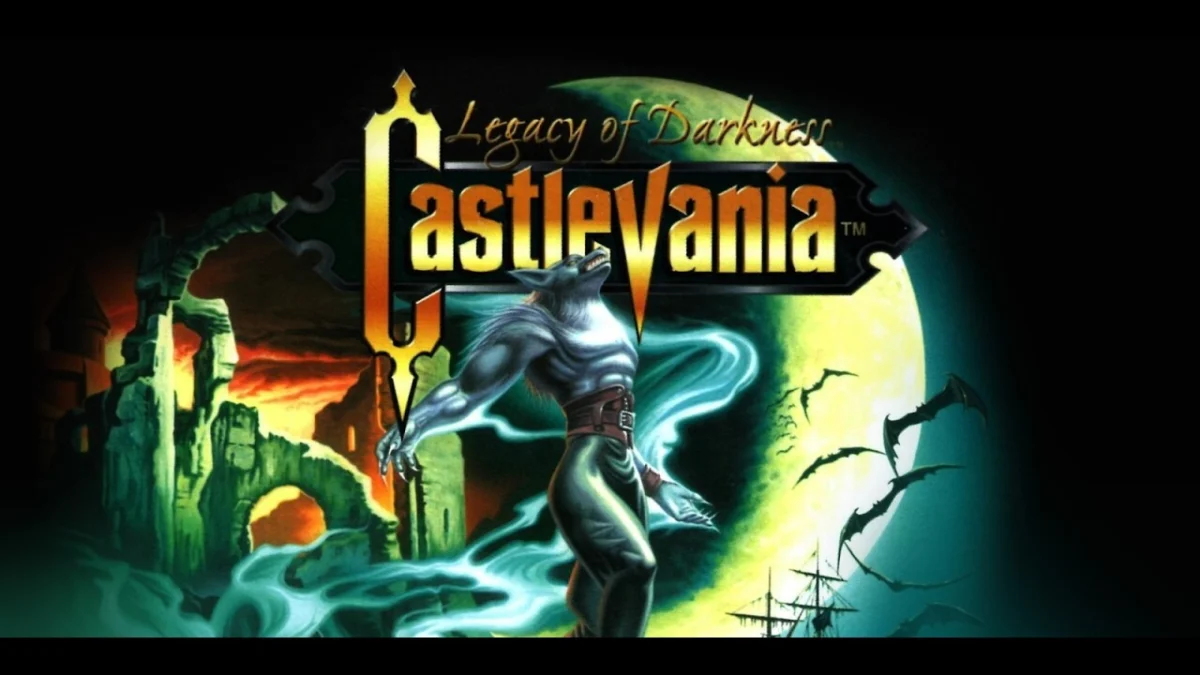
Unlocking a Classic: The Technical Achievement of Recompilation
The release of fliperama86’s recompilation represents a significant technical achievement in the realm of game preservation and modernization. Unlike emulation, which simulates the original hardware environment to run a game, recompilation involves translating the game’s original machine code into native code compatible with modern operating systems and processors. This process allows the game to run as a standalone application, leveraging the full power of contemporary hardware, which in turn enables features like higher resolutions, unrestricted frame rates, and often more stable performance than emulation can provide.
Fliperama86 describes the project as a "side project," with its primary objective being to run Castlevania: Legacy of Darkness largely as it existed on the Nintendo 64, but with crucial quality-of-life improvements. These enhancements are designed to make the game feel more contemporary without fundamentally altering its core gameplay or artistic vision. The current release, version v0.2.3, is available for download on GitHub, requiring users to provide an original N64 ROM of Castlevania: Legacy of Darkness to run the recompiled executable. This approach respects intellectual property rights while empowering enthusiasts to experience the game in a new light.
A Deeper Dive into Castlevania: Legacy of Darkness
Castlevania: Legacy of Darkness, released in 1999, holds a unique and somewhat contentious place within the venerable Castlevania series. It was Konami’s second foray into 3D gameplay for the franchise on the Nintendo 64, following the earlier Castlevania 64 (released in 1999 in North America, but late 1998 in Japan). Legacy of Darkness is not a direct sequel but rather an expanded and enhanced version of Castlevania 64, featuring new playable characters, altered storylines, and additional levels.
The game introduces Cornell, a man-beast who seeks to rescue his sister Ada from Dracula’s clutches, along with a reworked storyline for Reinhardt Schneider and Carrie Fernandez, the protagonists from Castlevania 64. It also adds Henry Oldrey, a knight on a quest to rescue children kidnapped by monsters. This narrative expansion, combined with graphical tweaks and gameplay refinements, aimed to address some of the criticisms leveled against its predecessor, particularly regarding camera control and overall polish.
Despite these improvements, both Castlevania 64 and Legacy of Darkness were met with mixed reviews upon their initial release. Critics often praised their atmospheric presentation and ambition in translating the series’ gothic horror to a 3D environment but frequently cited issues with the N64’s analog stick controls, sometimes frustrating camera angles, and the inherent limitations of early 3D graphics. Nevertheless, they have garnered a cult following over the years, recognized for their bold experimentation and unique contributions to the Castlevania lore. The N64 Castlevania titles represent a pivotal, if challenging, transitional period for the franchise as it navigated the complexities of 3D gaming.
The Expanding Landscape of N64 Recompilations
The recompilation of Castlevania: Legacy of Darkness is not an isolated incident but rather part of a growing trend within the retro gaming community. Over the past few years, developers have successfully recompiled several iconic Nintendo 64 titles, most notably Super Mario 64 and The Legend of Zelda: Ocarina of Time. These projects have demonstrated the viability and significant benefits of moving beyond traditional emulation.
The motivation behind these recompilation efforts is multifaceted. For many, it’s about preservation—ensuring that classic games remain playable and accessible on modern hardware long after their original platforms become obsolete. It’s also about enhancing the original experience, addressing technical limitations of the N64 hardware that were inherent at the time of release. The N64, while revolutionary, was limited by its processing power, memory, and cartridge-based storage, leading to compromises in resolution, frame rate, and texture detail. Recompilations unlock these constraints, allowing games to be experienced with a fidelity and smoothness previously unimaginable for N64 titles.
The technical methodology often involves reverse-engineering the game’s assembly code, understanding its underlying structure, and then translating or rewriting portions into a high-level language like C or C++ that can be compiled for modern platforms. This painstaking process requires deep technical knowledge and a profound understanding of the original game’s architecture. The success of these projects often hinges on collaborative efforts within the open-source community, with many developers contributing their expertise.
Developer’s Vision and Community Contribution

Fliperama86’s approach with Castlevania: Legacy of Darkness aligns with the ethos of these community-driven projects. The developer explicitly states that the goal is not a "full rework" but rather a "much more modern-feeling improvement." This distinction is crucial; it signifies an intent to preserve the original game’s integrity while ironing out the rough edges imposed by its 1999 release context.
The enhancements promised—high frame rates, 4K resolution, and improved controls—directly address some of the most common complaints about the N64 Castlevania games. Running the game at a stable 60 frames per second or higher, coupled with crisp 4K visuals, can dramatically transform the perceived fluidity and visual clarity of the experience. Modern control mapping, especially with native USB controller support, eliminates the often-awkward three-pronged N64 controller layout, providing a more intuitive and responsive gameplay experience for contemporary players.
Fliperama86 also extended a shoutout to K64Ret, acknowledging their contributions to the N64 Castlevania scene. While fliperama86’s project is not a direct derivative of K64Ret’s work on Castlevania 64, the collaborative spirit and shared knowledge within the N64 modding and recompilation community are evident. Such inter-developer support is a hallmark of successful open-source initiatives and highlights the interconnected nature of these efforts. The developer has also issued an open invitation for other developers to explore the GitHub repository and consider contributing, signaling an ongoing commitment to the project’s evolution and refinement.
Initial Impressions and User Experience
Early hands-on impressions of the recompiled Castlevania: Legacy of Darkness have been largely positive. Reports indicate that the game is "definitely playable" and "looked great" in its current state. The immediate benefits of the quality-of-life improvements are apparent, particularly in the responsiveness of controls and the clarity of visuals. One notable observation from initial testing was the game’s ability to "auto-detect my USB controller with no mapping necessary," a significant convenience for players accustomed to plug-and-play modern gaming setups. This eliminates a common hurdle often encountered with emulated titles, where manual controller configuration can be a time-consuming and frustrating process.
However, the "work-in-progress" designation is also reflected in some minor graphical anomalies. Reports mentioned "some background glitches that looked ‘very N64’," suggesting that while the core gameplay and visual fidelity are vastly improved, certain elements might still exhibit quirks reminiscent of the original hardware’s limitations or the recompilation’s developmental stage. These are generally considered minor imperfections in a project of this scope, especially given the overarching goal of preserving the original aesthetic rather than completely rebuilding it. The main gameplay elements, characters, and environments are reported to look and function very well, indicating a robust foundation for future iterations.
Implications for Game Preservation and Accessibility
The recompilation of Castlevania: Legacy of Darkness carries significant implications for game preservation and accessibility. For many years, playing classic N64 titles required either original hardware, which is increasingly expensive and difficult to maintain, or emulation, which, while functional, often comes with its own set of technical challenges, performance inconsistencies, and input lag. Native recompilations offer a superior alternative, providing a faithful yet enhanced experience that runs optimally on contemporary systems.
This project makes Castlevania: Legacy of Darkness accessible to a broader audience than ever before. New generations of gamers who may never have owned an N64 can now experience a historically significant title in a format that aligns with modern expectations for performance and resolution. For long-time fans, it offers a fresh perspective on a beloved classic, allowing them to revisit the game with improved fidelity and comfort.
Furthermore, these recompilation projects contribute to the digital archaeology of video games. By dissecting and understanding the original game code, developers gain invaluable insights into the techniques and challenges of game development from past eras. This knowledge is crucial for academic study, historical documentation, and inspiring future generations of game developers. The open-source nature of many of these projects ensures that this knowledge is shared and built upon by the community.
Conclusion: A New Dawn for a Dark Legacy
The release of fliperama86’s Castlevania: Legacy of Darkness recompilation marks a triumphant moment for retro gaming enthusiasts and the broader game preservation movement. It not only breathes new life into a challenging yet atmospheric N64 classic but also underscores the power of community-driven development in modernizing and preserving video game history. As the project continues to evolve, with potential contributions from other developers, the future looks bright for experiencing the "dark legacy" of Castlevania on the Nintendo 64 in a format truly fit for the 21st century. Fans of N64 Castlevania are strongly encouraged to explore this new release and witness firsthand the transformative power of native PC recompilation.