Vera Clarissa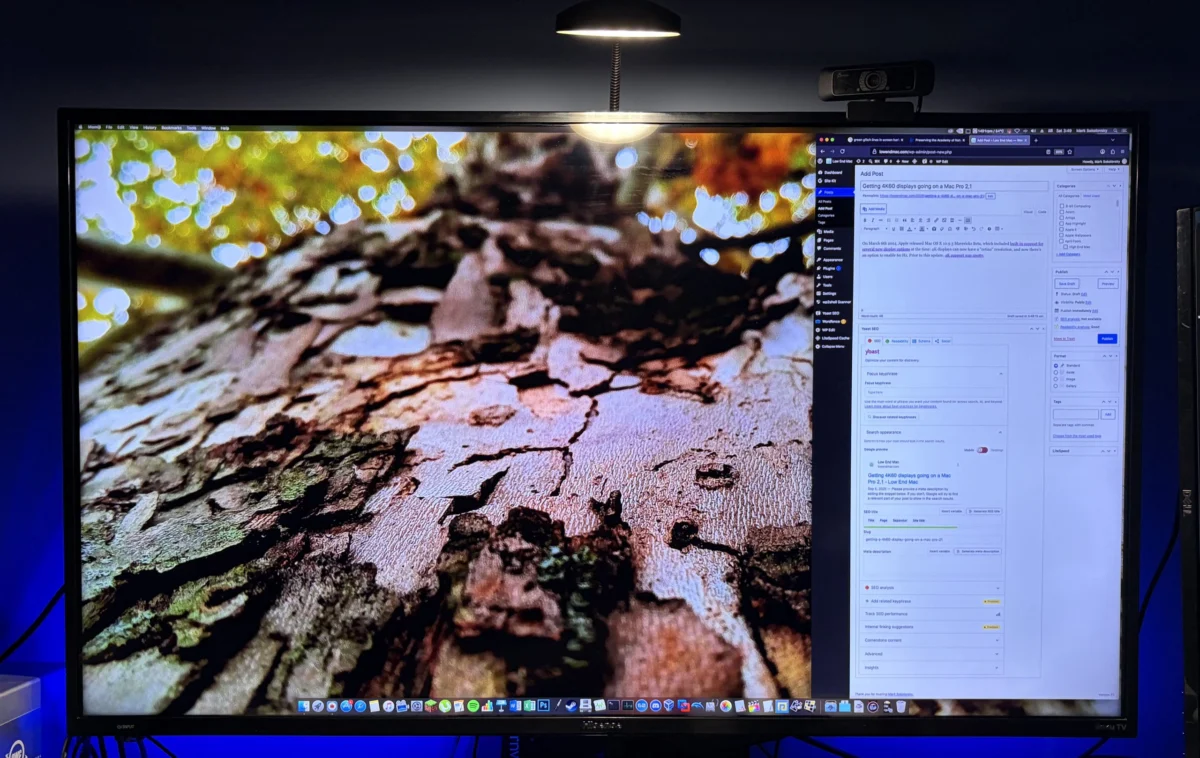
The intersection of legacy computing hardware and modern display technology has long been a subject of interest for enthusiasts and professional restorers. While Apple’s Mac Pro line, particularly the original first and second-generation models (2006–2008), was designed for an era of lower-resolution monitors, recent technical experimentation has demonstrated that these aging workstations remain capable of driving high-bandwidth 4K displays at 60Hz refresh rates. This capability, once thought to be outside the operational scope of these systems, has been made possible through a combination of strategic GPU upgrades, specialized adapter cabling, and the inherent bandwidth flexibility of the PCIe architecture.
Historical Context of 4K Support on OS X
The evolution of 4K support within the Apple ecosystem has been a gradual process. On March 6, 2014, Apple released the beta for OS X 10.9.3 Mavericks, which marked a significant milestone by introducing native support for 4K displays. Before this update, the landscape of 4K compatibility on Apple hardware was fragmented and inconsistent. The 2014 software update brought critical features, including the ability to enable "Retina" scaling resolutions on 4K panels and, more importantly, the integration of 60Hz refresh rate support via DisplayPort 1.2.
Prior to the 10.9.3 update, users attempting to connect 4K monitors to Mac hardware often found themselves limited to 30Hz refresh rates, which resulted in significant input lag, ghosting, and a general lack of fluidity in the desktop experience. While the 2013 "trashcan" Mac Pro was the first to receive robust, official support for these standards, the underlying kernel improvements in Mavericks provided the necessary driver frameworks for older systems equipped with sufficiently powerful discrete graphics cards to bridge the gap.

Technical Requirements for Modern Display Performance
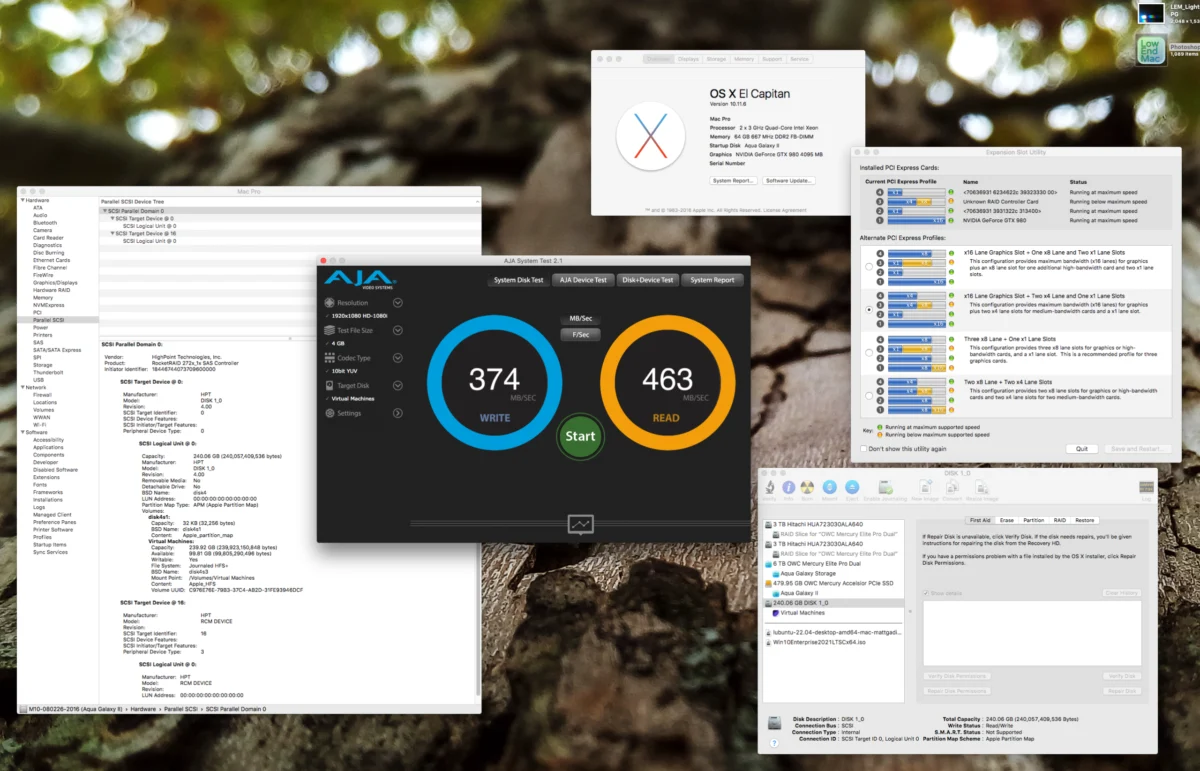
Achieving 4K at 60Hz on a legacy Mac Pro (specifically the 2,1 model) requires a departure from factory-standard components. The primary bottleneck in these machines is typically the aging stock graphics cards, which lack the requisite DisplayPort version or HDMI bandwidth to drive 3840 x 2160 pixels at 60 frames per second.
To overcome these constraints, users have turned to late-model Nvidia Maxwell-architecture GPUs, such as the GTX 980. These cards, while also considered legacy by modern gaming standards, possess 224 GB/s of VRAM bandwidth and full hardware-level support for modern display protocols. When paired with an active DisplayPort-to-HDMI 2.0 adapter, the GPU is capable of handling the high-speed data stream required for 4K resolution.
The data throughput involved in rendering a 4K desktop is surprisingly manageable for hardware of this vintage. While a 4K stream requires significant bandwidth, the load is primarily confined to the GPU’s framebuffer and the PCIe bus. Because the task is limited to rendering a graphical user interface rather than real-time 3D rendering or high-bitrate video encoding, the legacy PCIe 1.0 or 2.0 slots on a Mac Pro 2,1 are sufficient to support the interface. Data suggests that such a task utilizes less than 1% of the GPU’s total available bandwidth, proving that the hardware is not being "pushed" to its absolute limit, but rather is being utilized in a way that aligns with its high-performance architectural origins.
Chronology of the Modernized Workflow
The transition toward utilizing 4K displays on early-model Mac Pros has been facilitated by the declining cost of consumer-grade 4K television panels. In 2026, entry-level 4K displays from manufacturers like Hisense and Insignia are available at price points ranging from $139 to $300. This affordability has encouraged a "maximalist" approach to hardware restoration, where the objective is to keep the original workstation functional in a contemporary professional environment.

In recent testing, the integration of a 4K display into a Mac Pro 2,1 setup revealed that the primary obstacles are often related to link-integrity rather than software limitations. Users have reported that upon initially connecting these displays, the system may default to 30Hz or experience "handshake" issues during the boot sequence. In many instances, these problems are resolved by power-cycling the hardware or, in more complex cases, investigating the signal-to-noise ratio in the cabling. The stability of the display signal after a successful cold boot suggests that the OS X El Capitan display drivers are capable of maintaining a 4K 60Hz link once the hardware handshake is properly established.
The Role of Upgrades in Longevity
The performance of a Mac Pro 2,1 is not solely dependent on the display; the responsiveness of the system is heavily influenced by the storage subsystem. The integration of high-speed PCIe blade-style SSDs, such as the OWC Mercury Accelsior, provides read/write speeds upwards of 288 MB/s. When combined with the high-bandwidth GTX 980 and a 4K 60Hz display, the system’s perceived latency is drastically reduced.
Engineers and enthusiasts are currently exploring the viability of SATA III connectivity for these machines, which would theoretically allow for even greater storage throughput. As the industry looks toward future iterations of macOS and hardware, the Mac Pro 2,1 continues to serve as a platform for testing how legacy workstation hardware can be adapted to handle modern resolutions. The ability to run a stable, multi-tasking environment—capable of virtualization, software development, and legacy application support—highlights the enduring value of the early Mac Pro’s modular design.
Broader Implications and Industry Impact
The ability to drive a 4K 60Hz display on hardware manufactured nearly two decades ago challenges the industry narrative of planned obsolescence. It highlights that the "bottlenecks" cited by manufacturers are often software-gated or artificial limitations rather than strict hardware impossibilities. For the professional sector, this has significant implications for the lifecycle management of legacy equipment. Organizations that rely on specific, deprecated software environments (often found in the 2010s era of Mac software) can now extend the utility of their legacy workstations by integrating modern display interfaces.

Furthermore, this development provides a blueprint for "combo-computing," where a modern system, such as an Apple Silicon Mac Mini, and a legacy workstation share a single, high-resolution workspace. By utilizing a 4K display as a shared peripheral, users can switch between a cutting-edge workflow and a specialized legacy environment without sacrificing the visual fidelity or the refresh rate clarity expected of modern monitors.
Analysis of Future Maintenance
As the hardware ages, the primary concern for users remains the availability of specialized drivers and the physical integrity of the motherboard and power supply units. However, the data gathered from successful 4K deployments indicates that the core compute and graphics components remain remarkably robust. The fact that a 2007-era machine can accurately map pixels to a 2026-era television panel at 60Hz is a testament to the foresight in the design of the Mac Pro’s original architecture, specifically its focus on massive PCIe lane availability and high-performance bus throughput.
While the project of modernizing a 2006 Mac Pro is clearly a labor of love for enthusiasts, it serves a functional purpose in the broader computing landscape. It demonstrates that the transition from low-resolution to ultra-high-definition displays is not merely a feature of modern silicon, but a matter of infrastructure and driver support. As long as the PCIe standard remains the backbone of internal hardware expansion, these workstations will likely continue to defy expectations, proving that with the right upgrades, hardware longevity can be significantly extended beyond the manufacturer’s original support window.
In conclusion, the successful integration of 4K 60Hz displays into the Mac Pro 2,1 workflow confirms that legacy workstations are capable of modern graphical output. This achievement provides a viable pathway for users to maintain access to older operating systems and software libraries without being forced to compromise on display quality. As storage and display technologies continue to evolve, the Mac Pro remains a cornerstone of modular computing, continuing to adapt to the demands of a new generation of technical users.