 Hartono Sudibyo
The enduring popularity of classic video game franchises has long fueled the creativity of independent developers and retro gaming enthusiasts, particularly within the ROM hacking community. When official entities halt production on beloved spin-off series, fans frequently step in to breathe new life into vintage software. The latest example of this phenomenon is Pokémon Pinball: Ruby & Sapphire Plus, an ambitious modification of the 2003 Game Boy Advance classic developed by independent programmer and ROM hacker Callum, known online as callumsmilee. With the release of update version 1.1, the project has expanded significantly, introducing a suite of modern gameplay mechanics, extended Pokédex features, and entirely new content designed to challenge veteran players and modernize a dormant sub-genre.

Background and Context of the Pokémon Pinball Series
Released by Nintendo and developed by Jupiter, the Pokémon Pinball series began on the Game Boy Color in 1999 as a creative marriage of traditional pinball physics and creature-collection mechanics. Players used flippers to direct a Poké Ball across themed tables, triggering encounters with wild Pokémon, initiating capture sequences, and working to complete the Pokédex entirely through pinball proficiency. The formula returned in 2003 with Pokémon Pinball: Ruby & Sapphire for the Game Boy Advance, taking advantage of the system’s enhanced graphical capabilities, real-time clock features, and intricate board layouts based on the Hoenn region.

Despite critical acclaim and a dedicated fanbase, Nintendo and The Pokémon Company have not developed a new installment in the pinball sub-series for over two decades. As official support for the Game Boy Advance waned and modern platforms shifted toward different gameplay paradigms, fans turned to reverse-engineering and assembly-language hacking to create unauthorized extensions of their favorite vintage titles. These community-driven projects have evolved from simple color palette swaps into complex, content-rich overhauls that rival commercial updates in scale and ambition.
Chronology of the Pokémon Pinball: Ruby & Sapphire Plus Project

The development of Pokémon Pinball: Ruby & Sapphire Plus represents a methodical effort to modernize a legacy game without losing its core arcade identity. The project initially launched with a robust feature set that immediately drew the attention of the retro gaming community through platforms such as X (formerly Twitter) and dedicated ROM hacking forums.
Initial Release Phase:
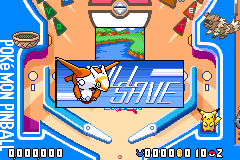
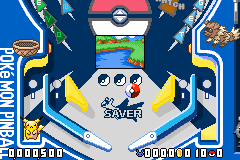
Upon its debut, the "Plus" modification introduced features previously absent from the 2003 original. Most notably, the hack integrated Shiny Pokémon variants—including rare Shiny boss encounters—a staple of mainline Pokémon games introduced in Generation II but never fully realized in the original pinball spin-off. Furthermore, the initial release incorporated an extended Pokédex to capture a broader range of creatures, a rigorous hardcore mode for experienced players, secret boss battles, e-Reader integration features, and diverse Poké Ball types.
Version 1.1 Deployment:
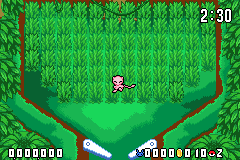
Building upon the success of the initial rollout, developer Callum released version 1.1, which significantly broadens the scope of the modification. The updated version injects 22 additional Pokémon into the Game Boy Advance classic, alongside an entirely new playable area and a specialized bonus stage. Furthermore, version 1.1 integrates the iconic PokéNav interface elements from the original Generation III RPGs and introduces Shiny Board Pokémon, adding further depth to table exploration and scoring strategies.
Accessibility and Distribution Channels

Historically, obtaining and applying complex ROM hacks required navigating obscure file-sharing forums, private Discord servers, and manual patch application software. To lower the barrier to entry for casual fans and retro gaming collectors alike, the distribution model for Pokémon Pinball: Ruby & Sapphire Plus has been streamlined.
While the project’s official Discord community remains a primary hub for developer updates and community feedback, version 1.1 is now fully integrated into HackDex, a prominent repository for ROM hacks. To experience the modification, users must obtain a legally acquired digital backup (ROM) of the official North American release of Pokémon Pinball: Ruby & Sapphire and apply the patch file using standard utility tools. For returning players transitioning from the initial release to version 1.1, the developer has advised properly renaming existing save state files to match the updated ROM designation, ensuring that accumulated progress and completed Pokédex entries are successfully carried over.
Technical Analysis and Implications for the ROM Hacking Ecosystem
The release of Pokémon Pinball: Ruby & Sapphire Plus highlights the growing sophistication of the retro gaming modification community. Historically, ROM hacking was largely confined to text editing, map design, and minor statistical adjustments within traditional role-playing games like Pokémon Red and Blue or Pokémon Ruby and Sapphire. Modifying physics-based arcade titles, however, requires a deep understanding of assembly code, collision detection algorithms, and memory allocation within constrained hardware environments like the 16-bit Game Boy Advance architecture.
By successfully implementing complex features such as dynamic sprite rendering for Shiny variants, custom boss encounter triggers, and extended table zones, independent developers demonstrate advanced technical competencies. These projects serve as an informal preservation mechanism, keeping commercially abandoned intellectual properties active in the cultural consciousness.
Furthermore, the integration of community-driven platforms like HackDex signifies a maturation in how ROM hacks are cataloged, verified, and distributed. As hardware devices tailored for retro gaming—such as the Analogue Pocket and various emulation-focused handhelds—continue to grow in commercial viability, the demand for enhanced legacy content remains high. Projects like Pokémon Pinball Plus illustrate how passionate communities can effectively fill the commercial gaps left by major publishers, ensuring that classic arcade and puzzle franchises continue to evolve decades after their initial release.