Farhan hamdan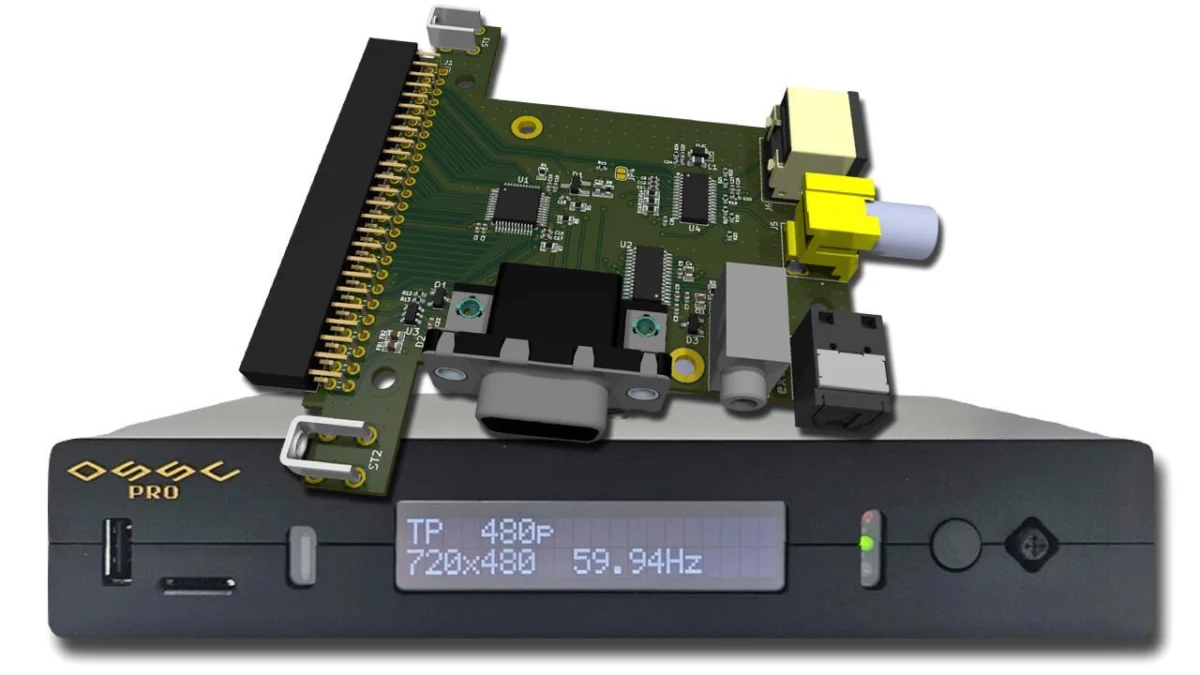
The retro gaming community is abuzz following the release of firmware v0.82 for the OSSC Pro, a significant update that introduces finalized Lumacode support for enhanced NES color palette accuracy and integration for a forthcoming Extra AV-Out adapter featuring Composite and S-Video outputs. Developed by Markus (Marqs), the architect behind the acclaimed Open Source Scan Converter (OSSC) series, this latest firmware iteration underscores a continued commitment to delivering unparalleled video signal processing for classic gaming systems. The update, made available through GitHub, is set to further solidify the OSSC Pro’s reputation as a premier solution for connecting vintage consoles to modern displays, while simultaneously expanding its utility for legacy display technologies.
Enhanced Color Fidelity for NES Enthusiasts
One of the most anticipated features in firmware v0.82 is the finalized Lumacode support, specifically tailored to address the unique color palette challenges presented by the Nintendo Entertainment System (NES). For decades, NES enthusiasts have grappled with the nuances of how the console generates its video signal, particularly concerning color accuracy when displayed on modern televisions. The NES, like many consoles of its era, relied on a somewhat unconventional approach to color encoding within the NTSC standard, often resulting in slightly off-kilter or inconsistent hues when not processed by original CRT televisions or specialized hardware.
Lumacode, a technical term referring to the specific encoding of luminance (brightness) and chrominance (color) signals, is critical in accurately rendering the NES’s distinctive palette. The original OSSC introduced foundational Lumacode support, which was groundbreaking at the time for its ability to correct these long-standing color discrepancies. The OSSC Pro’s v0.82 firmware takes this a step further, finalizing and refining the implementation to ensure that NES games are displayed with color palettes that closely mirror their intended appearance on authentic hardware and displays. This level of precision is not merely an aesthetic preference; it is a crucial aspect of video game preservation, ensuring that the visual experience developers originally envisioned is accurately replicated for contemporary audiences. The meticulous attention to such details highlights the OSSC Pro’s role in bridging the gap between historical video technology and today’s high-definition standards, offering an authentic yet enhanced visual experience.
Introducing the Extra AV-Out Adapter: A New Era for Downscaling
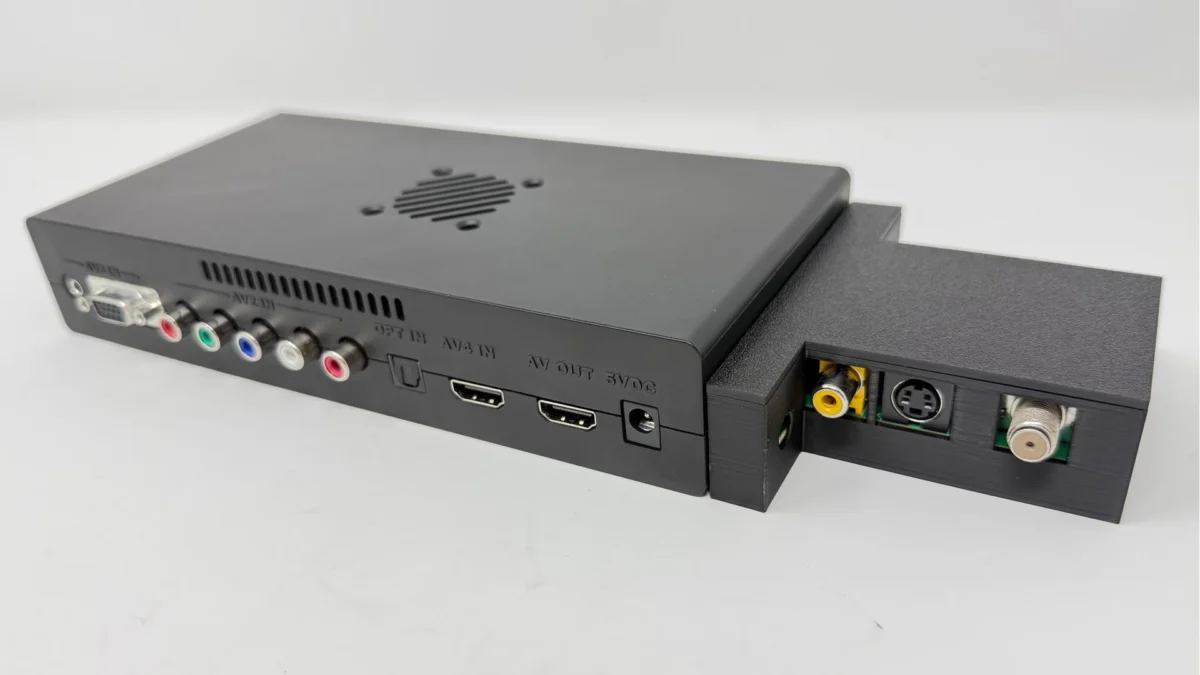
Beyond the Lumacode enhancements, firmware v0.82 lays the groundwork for an innovative Extra AV-Out adapter, poised to significantly expand the OSSC Pro’s versatility. This upcoming adapter will introduce Composite and S-Video outputs, marking a substantial development for users who require downscaling capabilities to legacy analog formats. While the OSSC Pro has primarily been celebrated for its superior upscaling performance, its potential as a downscaler has been increasingly recognized, particularly for specialized applications.
The integration of Composite and S-Video outputs directly addresses a niche but vital segment of the retro gaming community: those who wish to connect their OSSC Pro-processed signals to older CRT televisions, video capture devices, or professional broadcast equipment that still rely on these traditional analog inputs. These outputs will specifically support 15kHz signals, encompassing standard resolutions such as 240p, 288p, 480i, and 576i, adhering to PAL, PAL60, and NTSC standards. This means users can now take a pristine, line-doubled or custom-scaled signal from their retro console, processed by the OSSC Pro, and output it in a format compatible with vintage displays, potentially offering a "best of both worlds" scenario.
A particularly noteworthy feature of this forthcoming adapter, as indicated by early reports, is the ability to utilize all outputs simultaneously, including the existing VGA output via RGBs, alongside the new Composite and S-Video options. This multi-output capability opens up numerous possibilities for advanced users, including streamers who might want to capture a high-quality digital signal while simultaneously displaying the game on a CRT for an authentic feel, or for developers testing compatibility across various display types. While the price and exact availability of the Extra AV-Out adapter are yet to be formally announced, its introduction is anticipated to be a major boon for "downscaling power users" and video archivists seeking maximum flexibility.
The OSSC Pro: A Pillar of Retro Video Processing
To fully appreciate the significance of firmware v0.82 and the new adapter, it is essential to understand the OSSC Pro’s foundational role within the retro gaming ecosystem. The Open Source Scan Converter (OSSC) emerged as a revolutionary device, offering a low-latency, high-quality solution for connecting vintage gaming consoles to modern digital displays. Traditional upscalers often introduced significant input lag or artifacts, compromising the authentic retro gaming experience. The original OSSC, and its successor, the OSSC Pro, were designed to overcome these limitations by providing precise line-doubling and scaling algorithms that preserve the original pixel perfect geometry and minimize latency.

The OSSC Pro, building upon the legacy of its predecessor, represents a significant leap forward in video processing technology. It boasts more powerful hardware, greater input/output flexibility, and advanced features such as more robust sync processing, custom resolution support, and enhanced video filters. Its open-source nature has fostered a vibrant community of developers and users, contributing to continuous improvements and the rapid integration of new functionalities. The device primarily targets enthusiasts who demand the highest fidelity for their classic gaming libraries, enabling them to experience games like the NES, SNES, Genesis, PlayStation, and many others on modern HDTVs or monitors without compromising visual quality or responsiveness. The OSSC Pro effectively transforms a console’s native analog video signal (e.g., RGB, component) into a digital signal (HDMI) that is compatible with contemporary displays, often at resolutions like 480p, 720p, 1080p, or even higher, depending on the source and user configuration.
The Art and Science of Downscaling in a Digital Age
While the primary focus of devices like the OSSC Pro has traditionally been upscaling, the increasing interest in downscaling to analog formats highlights a fascinating trend within the retro gaming community. The desire to play games on CRT televisions is not merely nostalgic; many purists argue that the unique characteristics of CRT displays—such as scanlines, color bleed, and specific phosphor characteristics—were integral to the artistic intent of game developers during the 8-bit and 16-bit eras. Downscaling allows modern, processed signals to be converted back to these formats, enabling a pristine source signal to be fed into a CRT, often resulting in a superior image compared to directly connecting an un-modded console to an older TV.
The technical challenges of effective downscaling are substantial. Converting a high-quality digital signal back to a clean analog Composite or S-Video signal requires careful engineering to minimize noise, color artifacts, and signal degradation. Composite video, the most basic analog standard, combines luminance and chrominance information into a single signal, making it prone to "dot crawl" and color bleeding. S-Video separates these components, offering a noticeably sharper image with better color separation. The OSSC Pro’s new adapter aims to perform this conversion with the same high standards of quality and accuracy that define its upscaling capabilities, ensuring that even when downscaled, the output signal remains as faithful as possible to the processed source. This commitment to both ends of the signal chain—upscaling to digital and downscaling to analog—cements the OSSC Pro’s position as a comprehensive video processing hub for retro gaming.
A Timeline of Innovation and Community Collaboration
The journey of the OSSC platform is a testament to persistent innovation driven by community needs. The original OSSC, released several years ago, quickly became a benchmark for low-latency video scaling, revolutionizing how retro games were displayed. Its open-source nature fostered a vibrant ecosystem of custom firmwares and community-driven enhancements. The OSSC Pro represented a natural evolution, incorporating more powerful FPGA hardware and expanded features based on feedback from thousands of users.
Prior to v0.82, the OSSC Pro had already seen several significant firmware updates. Notably, previous iterations introduced support for custom Lumacode palettes, allowing users a degree of control over color rendering before the finalization seen in the current release. This iterative development process, with regular updates addressing specific technical challenges and user requests, is a hallmark of Markus’s approach. Each firmware release builds upon the last, progressively refining the device’s capabilities and expanding its compatibility. The current v0.82 update is a direct continuation of this philosophy, pushing the boundaries of what is possible in retro video processing. The forthcoming Extra AV-Out adapter, though a hardware component, is tightly integrated into this software development cycle, demonstrating a holistic approach to system enhancement.
Anticipated Reactions and Broader Implications
The release of firmware v0.82 and the announcement of the Extra AV-Out adapter are expected to be met with considerable enthusiasm within the retro gaming community. For NES purists, the finalized Lumacode support promises a definitive solution for color accuracy, eliminating a long-standing point of contention. The downscaling capabilities of the new adapter will be particularly welcomed by those who curate extensive CRT setups, as well as video creators and archivists looking for flexible output options. Experts in the field, such as Bob from RetroRGB, a prominent voice in retro gaming hardware reviews and news, have already expressed excitement, highlighting the "pretty big deal for downscaling power users" aspect of the new adapter. This sentiment reflects a broader recognition of the OSSC Pro’s expanding utility.
The broader implications of these developments extend beyond individual enthusiasts. They signify a maturing market for retro gaming hardware, where precision, flexibility, and authenticity are increasingly valued. The OSSC Pro’s continued evolution sets a high bar for competitors and encourages further innovation in the space. Moreover, by providing robust tools for both upscaling to modern displays and downscaling to legacy ones, the OSSC Pro contributes significantly to the digital preservation of video game history. It ensures that classic titles can be experienced in their intended glory across a wide spectrum of display technologies, from cutting-edge 4K monitors to beloved vintage CRTs. This ongoing commitment to perfecting the visual bridge between past and present gaming technologies underscores the profound impact of dedicated developers like Markus and the passionate community that supports such endeavors. The OSSC Pro, with its latest firmware, continues to be a pivotal instrument in celebrating and preserving the rich legacy of video games.