Farhan hamdan
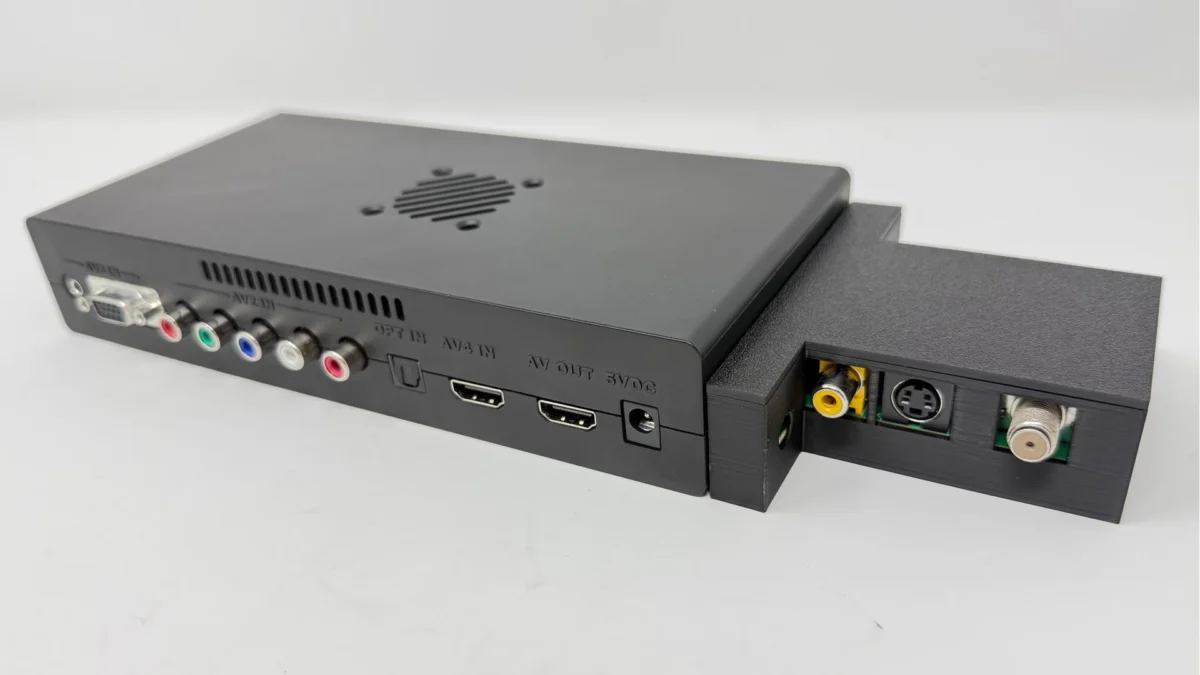
The highly anticipated OSSC Pro, an advanced open-source scan converter designed to enhance retro gaming experiences on modern displays, is once again readily available for purchase, with Stone Age Gamer in the United States and Video Game Perfection in the European Union confirming immediate stock and readiness for shipment. This replenishment comes as welcome news to a dedicated segment of the retro gaming community, particularly those seeking unparalleled video processing capabilities for their classic consoles. While the core OSSC Pro unit is now accessible, enthusiasts eagerly awaiting the updated Extra AV-Out and Legacy-In with RF boards will need to exercise continued patience, as these modular accessories are slated for release in the near future. The OSSC Pro distinguishes itself in a competitive market by catering to specialized needs, particularly excelling in downscaling and supporting unique console modifications, thereby reinforcing its position as a premium, albeit niche, solution for discerning users.
The Open Source Scan Converter Professional, or OSSC Pro, represents the pinnacle of retro video processing technology, building upon the legacy of its predecessor, the original OSSC. Conceived and developed by Markus ‘marqs’ Hiienkari, the OSSC series has been instrumental in revolutionizing how vintage gaming hardware interfaces with contemporary high-definition televisions and monitors. The "Pro" designation signifies a significant leap in hardware sophistication and feature set, offering a more robust and versatile platform for signal conversion. Its primary function is to take analog video signals from classic game consoles – often in formats like RGB, Component, S-Video, or Composite – and upscale them to digital HDMI output at resolutions suitable for modern displays, all while maintaining exceptionally low latency, a critical factor for preserving the original gaming feel. The OSSC Pro further expands on this by offering advanced features such as comprehensive input support, flexible output resolutions including line-doubling and line-tripling, and sophisticated picture adjustment controls that allow users to fine-tune the image quality to an unprecedented degree. This level of control and fidelity has made the OSSC Pro a favored tool among video enthusiasts, content creators, and competitive retro gamers who demand the purest possible signal from their vintage systems.
The current availability through Stone Age Gamer and Video Game Perfection marks a crucial moment for those who have been monitoring stock levels. These retailers are well-established within the retro gaming hardware ecosystem, known for supplying high-quality, specialized equipment. Stone Age Gamer serves the North American market, while Video Game Perfection caters to the European audience, providing convenient regional access to the OSSC Pro. Prospective buyers are advised to select their vendor based on geographical location to minimize shipping costs and transit times, as well as to consider any bundled accessories offered by each retailer. The immediate availability addresses a period where demand often outstripped supply for high-end retro gaming peripherals, allowing enthusiasts to finally acquire the main unit. The official links provided are https://retrorgb.link/osscprous for US customers and https://retrorgb.link/osscpro for EU customers, streamlining the purchasing process for interested parties.
A key point of note for the current stock release is the absence of the anticipated modular expansion boards. The "updated Extra AV-Out" module is designed to provide high-quality composite and S-Video output capabilities, allowing users to connect their OSSC Pro to legacy displays like CRT televisions or capture devices that rely on these older analog formats. This feature is particularly significant for downscaling applications, enabling the OSSC Pro to convert a high-resolution digital signal back into pristine 240p or 480i analog composite/S-Video. Similarly, the "Legacy-In with RF boards" module aims to integrate support for radio frequency (RF) input, a common, albeit low-fidelity, connection method for very early home consoles. While RF is generally avoided by serious enthusiasts due to its inherent signal degradation, its inclusion on the OSSC Pro caters to collectors seeking to connect every possible console type directly to their high-end scaler, preserving the complete historical spectrum of video output. The developer has indicated that these modules are expected in the "near future," and their eventual release will further expand the OSSC Pro’s already impressive versatility. The modular design philosophy ensures that the core unit can be upgraded and adapted to evolving needs and specialized applications, maximizing its long-term utility for users.
In the broader landscape of retro gaming video scalers, the OSSC Pro occupies a distinct, high-end segment. It is acknowledged that numerous more budget-friendly scalers are available today, such as the RetroTINK-5X Pro or GBS-C based solutions, which capably serve the needs of a majority of retro gamers seeking improved image quality on modern displays. These alternatives often offer a simpler plug-and-play experience at a lower price point, making them a "better fit for most people," as noted by prominent retro gaming hardware reviewer Bob from RetroRGB. However, the OSSC Pro differentiates itself by targeting specific, advanced use cases that are not adequately addressed by other devices. One such niche involves consoles modified with "Lumacode palettes." Lumacode is a specialized modification, typically found in certain arcade boards or highly customized console setups, that allows for an expanded color palette and finer control over video output. The OSSC Pro’s advanced signal processing and extensive customization options make it uniquely suited to correctly interpret and display these specialized Lumacode signals, a capability largely unmatched by other consumer-grade scalers.

Another significant strength of the OSSC Pro, and a primary driver of its niche appeal, is its exceptional downscaling capability. It is widely regarded within the community as "currently the best downscaler out there." Downscaling, the process of converting a higher-resolution signal to a lower one, might seem counterintuitive in an era dominated by high-definition and 4K displays. However, for retro enthusiasts, downscaling is crucial for several reasons: connecting modern consoles or upscaled retro signals to authentic CRT televisions, achieving specific visual aesthetics, or recording gameplay with the characteristics of vintage displays. The OSSC Pro’s ability to accurately and cleanly downscale to composite video, in both 240p and 480i formats, stands out. This is a complex technical challenge, as composite video is a highly compressed and inherently lossy signal format. Historically, achieving high-quality downscaling to composite involved expensive, professional broadcast equipment or intricate, multi-device signal chains, often introducing significant lag. The OSSC Pro, even with the eventual cost of the Extra AV-Out board, offers a significantly more affordable and less complicated solution, all while boasting "far less lag" than previous high-quality options. This performance makes it invaluable for capturing or displaying retro games with an authentic, low-resolution aesthetic without compromising on input responsiveness. Marco’s dedicated downscaling section on the RetroRGB website (https://retrorgb.com/osscprodownscaling.html) provides comprehensive video demonstrations and technical explanations of these capabilities, serving as a vital resource for understanding the OSSC Pro’s prowess in this area.
From a technical perspective, the OSSC Pro leverages a powerful FPGA (Field-Programmable Gate Array) architecture, which allows for highly flexible and customizable video processing algorithms. This FPGA-based design is key to its ability to handle a wide array of analog input timings and produce precise, low-latency digital outputs. It supports various analog input types, including SCART (RGBs), Component (YPbPr), VGA (RGBHV), and through its upcoming modules, S-Video and Composite. The output side offers a broad spectrum of resolutions, from standard definition 480p up to high-definition 720p, 960p, 1080p, 1200p, and even 1440p, with 4K passthrough capabilities. The open-source nature of the OSSC Pro’s firmware also fosters a vibrant community of developers and users who contribute to its continuous improvement, bug fixes, and feature enhancements. This collaborative development model ensures that the device remains at the cutting edge of retro video processing, adapting to new discoveries and community needs over time.
The chronology of the OSSC Pro’s development and release has followed a typical path for ambitious hardware projects within the enthusiast community. Initial announcements and teasers generated considerable excitement, followed by periods of intense development, prototyping, and beta testing. Like many complex electronic devices, it experienced its share of development hurdles and production delays, which are common when pushing the boundaries of technology and manufacturing quality. Following initial limited pre-order windows and smaller batch releases, the current stock availability marks a more stable production phase, allowing broader access to the device. The ongoing development and anticipated release of the modular accessory boards further underscore the project’s commitment to iterative improvement and expansion, ensuring that the OSSC Pro remains a relevant and evolving platform.
Statements from key figures and inferred reactions from stakeholders highlight the OSSC Pro’s unique position. Bob from RetroRGB, a respected authority in the retro gaming hardware space, has consistently articulated that while the OSSC Pro is not for everyone, it is an "awesome product" for those who choose it. His emphasis on matching products to users’ budgets and needs underscores the OSSC Pro’s specialized role rather than a broad market appeal. Retailers like Stone Age Gamer and Video Game Perfection, by stocking the OSSC Pro, affirm its market viability and the demand from their high-end customer base. Their role is to ensure these sophisticated tools are accessible, thereby supporting the preservation and enhancement of retro gaming. Markus Hiienkari, the designer, through his continued dedication to the OSSC platform, implicitly communicates a vision of uncompromising quality and innovation, catering to the most demanding users who seek to extract every ounce of performance and flexibility from their retro setups.
The broader impact and implications of products like the OSSC Pro on the retro gaming community are significant. They elevate the retro gaming experience beyond mere nostalgia, transforming it into a high-fidelity pursuit that can rival modern gaming in visual clarity and responsiveness. By providing advanced tools for signal conversion and enhancement, the OSSC Pro contributes directly to the preservation of retro hardware, allowing classic consoles to remain relevant and enjoyable on contemporary displays. Technologically, such devices drive innovation in video processing for legacy signals, pushing the boundaries of what is possible in terms of signal reconstruction, deinterlacing, and scaling. The continued demand for premium, specialized solutions like the OSSC Pro also reflects a growing market trend: retro gaming is no longer a fringe hobby but a significant cultural phenomenon with a dedicated following willing to invest in high-quality equipment. The modularity of the OSSC Pro, coupled with its open-source firmware and strong community support, also ensures its longevity and adaptability, setting a precedent for how specialized hardware can remain relevant and expandable in a rapidly evolving technological landscape.
In conclusion, the OSSC Pro’s return to stock at Stone Age Gamer and Video Game Perfection is a pivotal development for its target audience. While its price point and advanced feature set position it as a niche item compared to more mainstream alternatives, its unparalleled capabilities in areas such as Lumacode support, RF input experimentation, and especially high-quality, low-latency downscaling firmly establish it as an essential tool for dedicated retro gaming enthusiasts and professionals. The OSSC Pro stands as a testament to the ongoing innovation within the retro gaming hardware community, providing specialized solutions that continue to push the boundaries of how classic games can be experienced in the modern era. Its strengths lie in features that no other scalers currently offer with the same degree of precision and flexibility, making it a valuable and highly regarded product for those who truly understand and require its unique attributes.