Farhan hamdan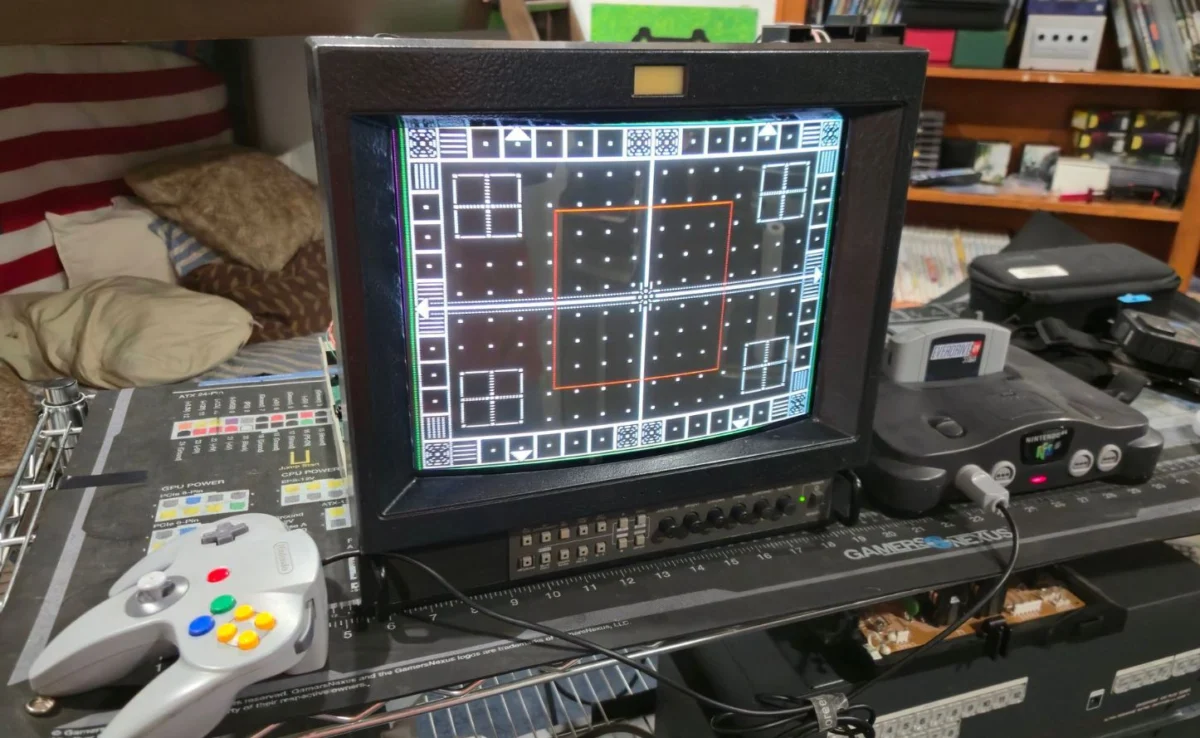
A significant update has been rolled out for most iterations of the acclaimed 240P Test Suite, a cornerstone diagnostic tool for retro gaming display calibration. Central to this update is the integration of a sophisticated new "Monoscope" test pattern, meticulously developed by Keith Raney. This innovative pattern is engineered to provide comprehensive image adjustment capabilities, addressing critical aspects such as geometry, convergence, and focus across a wide spectrum of Cathode Ray Tube (CRT) displays, from high-end Broadcast Video Monitors (PVMs) to standard consumer televisions. The introduction of this pattern marks a pivotal moment for the retro gaming community, offering enhanced precision in maintaining and optimizing vintage display hardware.
The Evolution of CRT Calibration in the Retro Era
The resurgence of interest in retro gaming has brought with it a renewed appreciation for the authentic visual experience provided by CRT displays. Unlike modern flat-panel screens, CRTs inherently render the native 240p resolution of classic consoles with unparalleled clarity and accuracy, devoid of the input lag and scaling artifacts often introduced by digital displays. However, CRTs are complex analog devices that degrade over time, requiring regular calibration to maintain optimal picture quality. This is where tools like the 240P Test Suite become indispensable.
The 240P Test Suite, originally conceived and developed by Artemio Urbina, has long been celebrated as one of the retro community’s most valuable open-source projects. Its foundational premise is to provide a comprehensive set of test patterns that allow users to meticulously adjust various display parameters on their CRTs. From color bars and scrolling patterns to overscan and linearity tests, the suite has empowered enthusiasts worldwide to achieve near-perfect picture quality, preserving the intended visual fidelity of classic games. Its availability across numerous retro platforms, including the Super Nintendo, Sega Genesis, PlayStation, and many others, underscores its versatility and widespread adoption. The suite’s continued development, often supported by community contributions, reflects an ongoing commitment to upholding the standards of retro visual presentation.
Introducing the Monoscope: A New Benchmark in Precision
The newly integrated Monoscope test pattern, developed by Keith Raney, represents a significant leap forward in CRT calibration technology. Raney, a respected figure within the retro tech community, recently detailed the development and effective utilization of this pattern during a dedicated segment on a prominent retro tech show, highlighting its intricate design and practical applications. The Monoscope pattern is not merely a collection of lines and shapes; it is a carefully engineered composite designed to simultaneously reveal multiple display imperfections that would typically require cycling through several individual test patterns.
Raney’s approach to the Monoscope pattern focuses on holistic image adjustment. Historically, calibrating a CRT involved a sequential process, adjusting one parameter at a time. The Monoscope aims to streamline this by providing visual cues for geometry, convergence, and focus all within a single, dynamic display.

-
Geometry: This refers to the shape and linearity of the image on the screen. Common issues include pincushion (sides bowing inward), barrel distortion (sides bowing outward), keystone (image wider at the top or bottom), and linearity errors (uneven spacing of lines). The Monoscope pattern features precise grids and circles that instantly highlight these distortions, allowing users to make precise adjustments to the horizontal and vertical sizing, positioning, and linearity controls, typically found within a CRT’s service menu. For instance, perfectly drawn circles within the pattern quickly reveal aspect ratio inaccuracies or non-uniform scaling across the screen.
-
Convergence: This is perhaps one of the most critical and often challenging aspects of CRT calibration. Convergence refers to the precise alignment of the red, green, and blue electron beams as they strike the phosphor dots on the screen. Misconvergence manifests as color fringing or "ghosting" around text and sharp edges, diminishing image clarity. The Monoscope pattern incorporates intricate details and fine lines designed to exacerbate any convergence issues, making them readily apparent. By observing these specific elements, users can then adjust the convergence magnets or electronic convergence controls to bring the three color beams into perfect alignment, resulting in a razor-sharp, artifact-free image. The pattern’s design cleverly integrates elements that allow for both static (center screen) and dynamic (edge-to-edge) convergence adjustments, crucial for high-quality displays like professional video monitors.
-
Focus: While often overlooked, proper focus is paramount for image sharpness. A well-focused CRT produces crisp pixels and legible text, whereas poor focus results in a soft, blurry picture. The Monoscope pattern includes minute details and high-frequency elements that make focus issues immediately discernible. Users can then manipulate the focus controls, usually located on the flyback transformer, to achieve maximum sharpness across the entire display area. The pattern’s ability to highlight subtle focus discrepancies, even in corners, ensures that the entire image field is optimized, not just the center.
Beyond these core adjustments, the Monoscope also aids in setting optimal overscan, which determines how much of the image extends beyond the visible screen area, and ensuring correct aspect ratio. This comprehensive utility makes it an invaluable addition to the 240P Test Suite, providing a unified solution for achieving peak CRT performance.
The Enduring Relevance of CRTs and the Need for Precision Tools
The journey of a CRT from its manufacturing plant to a retro gamer’s setup often spans decades, during which components age, settings drift, and the physical characteristics of the tube itself can change. Electrolytic capacitors dry out, electron guns weaken, and magnetic fields within the display can shift, all contributing to a degradation of image quality. Without precise calibration tools, many of these issues would go unaddressed, leading to a suboptimal gaming experience.
The growing demand for CRTs has also created a vibrant secondary market, where displays often come with unknown histories and varying states of calibration. Tools like the 240P Test Suite, now further enhanced by the Monoscope pattern, empower users to assess the condition of newly acquired CRTs and perform necessary adjustments themselves, reducing reliance on specialized technicians. This DIY approach not only saves costs but also fosters a deeper understanding and appreciation for the technology that defined generations of gaming.
Furthermore, the "retro renaissance" isn’t just about nostalgia; it’s about preserving gaming history. Ensuring that games are displayed as authentically as possible contributes to this preservation effort. The commitment of developers like Artemio Urbina and contributors like Keith Raney to continually refine and expand the 240P Test Suite underscores the community’s dedication to this cause. Their work helps to bridge the gap between aging hardware and the high standards of modern visual fidelity, allowing classic titles to shine as brightly today as they did upon their original release.

Looking Ahead: The N64 Version and Community Support
Excitement is also building around the impending release of a dedicated version of the 240P Test Suite for the Nintendo 64. While specific details regarding its "amazing new features" are yet to be fully disclosed, the prospect of a tailored suite for this iconic console is eagerly anticipated. The N64, known for its unique graphics architecture and often softer visual output compared to its contemporaries, presents its own set of calibration challenges. An N64-specific test suite could offer patterns optimized for its particular resolutions, anti-aliasing techniques, and video output characteristics, potentially unlocking unprecedented levels of clarity for games on the platform. Early versions of the N64 suite have already undergone testing, with Keith Raney providing input during the aforementioned show, suggesting that this iteration could indeed be the most feature-rich yet.
The development and continuous improvement of the 240P Test Suite are a testament to the power of community-driven open-source projects. The suite has always been freely available, a deliberate choice that has fostered widespread adoption and collaboration. This accessibility has cemented its status as one of the greatest contributions to the retro community, allowing anyone with the means to download and utilize it to enhance their retro gaming experience.
However, sustaining such a project requires ongoing support. Enthusiasts are strongly encouraged to consider contributing to the project, either through direct financial contributions, purchasing physical copies of the software (where available), or by supporting Artemio Urbina’s team on platforms like Patreon. These contributions are vital for funding continued development, acquiring new hardware for testing, and maintaining the infrastructure necessary to keep the suite updated and accessible. Similarly, supporting content creators like Steve from Retro Tech, who provide platforms for discussing these advancements and educating the community, is crucial for the continued vitality of the retro tech ecosystem. His Patreon, linked alongside the project’s, highlights the symbiotic relationship between developers and content creators in driving community engagement and knowledge dissemination.
Implications for the Retro Gaming Landscape
The introduction of the Monoscope pattern and the ongoing evolution of the 240P Test Suite carry significant implications for the retro gaming landscape. First, it democratizes high-level CRT calibration. What was once the domain of broadcast engineers or specialized repair shops is now made accessible to the average enthusiast, empowering them to take control of their display’s performance. This fosters a deeper engagement with the technology itself, moving beyond mere consumption to active participation in hardware maintenance and optimization.
Second, it raises the bar for visual fidelity within the retro community. As more users adopt these advanced calibration techniques, the standard for what constitutes an "optimal" retro gaming experience will likely increase. This, in turn, may spur further innovation and collaboration within the community, driving the development of even more sophisticated tools and techniques.
Finally, the project stands as a shining example of how passionate communities can contribute meaningfully to the preservation of technological heritage. By ensuring that classic games can be enjoyed on period-appropriate hardware with the best possible picture quality, the 240P Test Suite and its developers are not just creating tools; they are safeguarding a cultural legacy. The continued support and engagement from the retro gaming community will undoubtedly ensure that this invaluable resource continues to evolve, meeting the demands of enthusiasts for years to come and cementing its place as an indispensable asset in the world of vintage electronics.