
 Farhan hamdan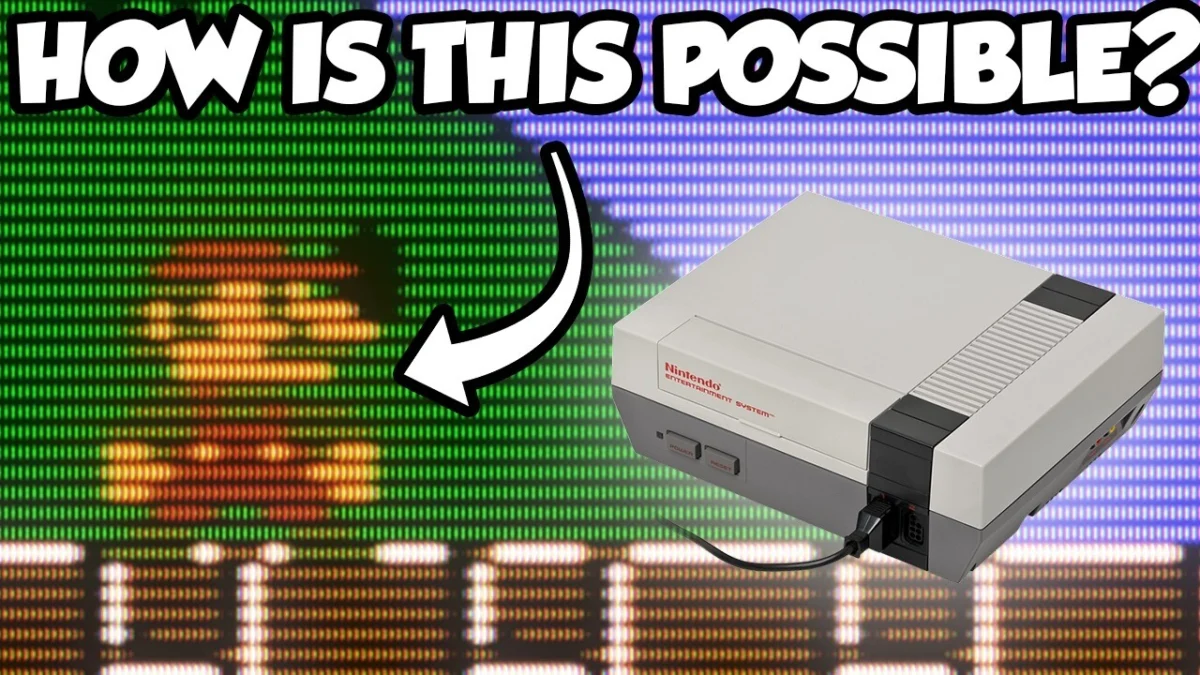
A recent video by technical content creator MattKC has shed significant light on the intricate process of extracting RGB (Red, Green, Blue) video signals from the original Nintendo Entertainment System (NES), a console notoriously known for natively outputting only a composite video signal as its highest quality option. MattKC’s detailed explanation delves into the historical journey of how developers and enthusiasts, leveraging technologies like Field-Programmable Gate Arrays (FPGAs), have managed to generate a remarkably clean RGB signal by interpreting the raw video information available within the console’s Picture Processing Unit (PPU). This exploration is a crucial contribution to the ongoing efforts within the retro gaming community to achieve optimal visual fidelity for classic hardware on modern displays.
The NES and Its Native Video Output: A Historical Context
Launched in Japan as the Famicom in 1983 and globally as the NES in 1985, Nintendo’s 8-bit console was a cultural phenomenon that revitalized the video game industry. Its success was built on innovative gameplay, iconic characters, and robust hardware for its era. However, the video output capabilities of the NES were largely dictated by the prevailing television standards and cost considerations of the 1980s.
At the time, the most common methods for connecting video game consoles to televisions were RF (Radio Frequency) and composite video. RF modulation, which bundled audio and video onto a single coaxial cable, was the most ubiquitous but offered the lowest image quality due to signal degradation and interference. Composite video, while superior to RF, combined all video information (luminance and chrominance) into a single signal, often leading to visual artifacts such as color bleeding, blurring, and dot crawl. The NES, with its custom RP2A03 (CPU) and RP2C02 (PPU) chips, was engineered to output this composite signal, providing a balance between cost-effectiveness and acceptable visual quality for the typical CRT televisions of the period.
The PPU, or Picture Processing Unit, is the heart of the NES’s video generation. It is responsible for rendering sprites, backgrounds, and generating the color palette. Internally, the PPU works with digital color information, but its output stage was designed to encode this information into an analog composite signal. This meant that while the internal color data was relatively clean, the act of combining it into a single analog waveform inherently introduced signal compromises. For decades, enthusiasts and gamers accepted this as the definitive visual experience of the NES.
The Quest for Superior Visuals: Understanding RGB
The concept of RGB video, which separates the red, green, and blue color components into individual signals, alongside horizontal and vertical synchronization pulses, offers a vastly superior image quality compared to composite. By keeping these color channels distinct, RGB eliminates the color bleeding and artifacting inherent in composite video, resulting in a sharper, more vibrant, and accurate picture. This standard was common in arcade machines and professional video equipment of the era but was rarely implemented in home consoles due to increased cabling complexity and higher costs associated with the necessary display technologies.
For the NES, the absence of native RGB output became a significant challenge for retro gaming enthusiasts seeking to preserve and experience games in their purest form on modern high-definition displays. As CRT televisions became obsolete and LCD/OLED screens became standard, the flaws of composite video became even more apparent, with scaling algorithms often exacerbating issues like blur and color smearing. This spurred a dedicated community to uncover methods for bypassing the NES’s native composite output in favor of a cleaner RGB signal.
The PPU’s Internal Workings and the "RGB PPU" Myth
A significant part of understanding NES RGB involves a deep dive into the PPU. The standard NES PPU (RP2C02) generates a video signal based on a fixed palette of 64 colors, though only 52 are unique, and further hardware limitations mean only 25 unique non-black colors can be displayed on a single scanline. Crucially, the RP2C02 does not output an RGB signal directly. It processes color information digitally and then converts it to an analog signal intended for composite encoding.
However, a crucial piece of the puzzle lies in Nintendo’s arcade hardware. The Nintendo Vs. System and PlayChoice-10 arcade boards, which were essentially modified NES systems designed for coin-op environments, utilized different PPU variants (e.g., RP2C03B, RP2C03E, RP2C04-00xx). These arcade PPUs did output RGB signals, as arcade monitors typically supported this higher-quality standard. For a time, a common method for obtaining NES RGB was to physically swap the standard RP2C02 PPU from a consumer NES with one of these "RGB PPUs" from an arcade board. While effective, this approach was limited by the scarcity and cost of these specific arcade components, making it an impractical solution for the broader retro gaming community.
The FPGA Breakthrough: Reconstructing the Signal

The real breakthrough in making NES RGB accessible and high-fidelity came with the advent and refinement of Field-Programmable Gate Arrays (FPGAs). An FPGA is an integrated circuit designed to be configured by a customer or designer after manufacturing. Unlike a fixed-function chip, an FPGA can be reprogrammed to perform a vast array of digital logic functions, essentially allowing it to mimic other digital circuits.
In the context of NES RGB, FPGAs offer a powerful solution. Instead of relying on rare arcade PPUs, an FPGA can be integrated into the NES console to intercept the digital signals directly from the standard RP2C02 PPU before they are converted to analog composite. The FPGA is programmed to "understand" the PPU’s internal operations – how it fetches pixel data, applies palette entries, and sequences the video output.
The process typically involves:
- Intercepting PPU Bus Data: The FPGA taps into the PPU’s data and address buses, reading the raw digital pixel information and palette indices as they are generated.
- Reconstructing Pixel Stream: Based on this data, the FPGA reconstructs the digital pixel stream in real-time, effectively bypassing the PPU’s internal analog composite encoder.
- Accurate Palette Mapping: The FPGA then applies a highly accurate digital color palette, often derived from extensive research into the NES’s original color generation, to map the PPU’s digital color indices to precise RGB values.
- Generating RGB Signal: Finally, the FPGA generates a new, clean digital RGB signal (typically in a modern format like HDMI or a high-quality analog RGB format like SCART or component video) which can then be displayed on contemporary televisions without the inherent artifacts of composite video.
This FPGA-based approach not only provides an RGB signal but can also offer additional benefits, such as perfect pixel scaling, de-blurring filters, and even custom palette options, further enhancing the visual experience beyond what was ever possible with the original hardware on a composite display. It effectively digitizes and re-generates the video output with modern precision, allowing the NES’s graphics to shine with unprecedented clarity.
MattKC’s Educational Contribution and its Significance
MattKC’s latest video, "How did they get RGB out of the NES?", is lauded for its ability to demystify this complex technical process for a wide audience. He meticulously walks viewers through the historical context, the limitations of original hardware, and the ingenious solutions devised by the retro gaming community, culminating in the explanation of FPGA-based RGB generation. The video’s strength lies in its clarity, making it accessible to beginners while providing enough technical depth to satisfy experts.
This video serves as an excellent companion piece to MattKC’s previous work, "Why do NES colors look so different in emulators?". That earlier video explored the nuances of how the NES generates its color palette and why emulators often struggle to accurately reproduce the original console’s unique color characteristics. Together, these two videos offer a comprehensive understanding of the NES’s video pipeline, from internal color generation to external signal output, and the challenges and solutions involved in preserving its visual integrity. Such content is invaluable for both educating new enthusiasts and deepening the understanding of seasoned veterans.
The RetroRGB Perspective: A Legacy of Preservation
The original article’s author, Bob, whose work is featured on RetroRGB.com, highlights a personal connection to this ongoing technical discourse. He notes the satisfaction of seeing his own foundational work from over fifteen years ago still being referenced and celebrated. His early efforts in meticulously documenting NES color palettes and video output, including taking detailed photographs of CRT displays, laid critical groundwork for later advancements. This underscores the collaborative and cumulative nature of knowledge within the retro gaming preservation community.
The evolution of documentation methods, from early CRT photography to today’s direct digital capture, reflects the broader advancements in technology and the community’s relentless pursuit of accuracy. While early photos were the best available method to capture the nuances of analog displays, modern direct capture techniques, often facilitated by FPGA-based RGB solutions, allow for pixel-perfect reproduction and analysis, ensuring that the visual legacy of classic games is preserved with unparalleled fidelity.
Broader Impact and Implications
The ongoing quest for perfect NES RGB, exemplified by MattKC’s educational content and the work of pioneers like Bob, has several far-reaching implications:
- Preservation and Accessibility: By enabling NES games to be displayed with optimal clarity on modern televisions, these technical solutions contribute significantly to the preservation of video game history. They make classic titles more appealing and accessible to new generations who may be put off by the blurry, artifact-ridden visuals of composite video. This ensures that the artistic and historical value of these games is maintained and appreciated.
- Community-Driven Innovation: The development of NES RGB solutions is largely a grassroots effort, driven by passionate enthusiasts and engineers. This highlights the power of community collaboration in pushing the boundaries of what’s possible with vintage hardware, fostering a vibrant ecosystem of modders, developers, and educators.
- Technological Understanding: Deep dives into console architecture, like those provided by MattKC, enhance public understanding of fundamental computer science and electrical engineering principles. They turn abstract concepts into tangible examples, illustrating how digital information is translated into visual output.
- Economic Impact: The retro gaming market continues to grow, with increasing demand for original hardware, restoration services, and high-quality display solutions. Products and services that enhance the retro gaming experience, such as FPGA-based RGB kits, contribute to this niche economy. According to various market analyses, the retro gaming market is a significant segment of the broader gaming industry, driven by nostalgia and a desire for authentic experiences.
- Benchmarking Emulation: A precise understanding of original hardware video output, including its quirks and limitations, provides crucial benchmarks for emulator developers. Accurate hardware analysis helps ensure that software emulators can faithfully replicate the original console experience, rather than just approximating it.
In conclusion, the journey to extract clean RGB from the NES is a testament to human ingenuity, technical passion, and the enduring appeal of classic video games. MattKC’s video serves as an invaluable resource, distilling years of community effort and technical discovery into an engaging and understandable narrative. It not only celebrates the technical achievement but also reinforces the importance of meticulous documentation and open sharing of knowledge in the ongoing effort to preserve and enjoy the rich history of video gaming. The ability to see NES classics with unprecedented clarity fundamentally transforms the experience, bridging the gap between nostalgic memories and the sharp realities of modern display technology, ensuring that the NES’s legacy continues to shine brightly.








