Chalid Lutfie
The Evolution of a Sonic Signature
For nearly a decade, the chiptune community—a niche but fervent corner of the independent music scene—has watched Danimal Cannon, known legally as Dan Behrens, push the boundaries of what can be achieved with the Nintendo Game Boy. While his 2011 release Roots laid the groundwork for his fusion of digital sound chips and traditional guitar work, the transition from live performance to studio recording proved to be a formidable technical hurdle.
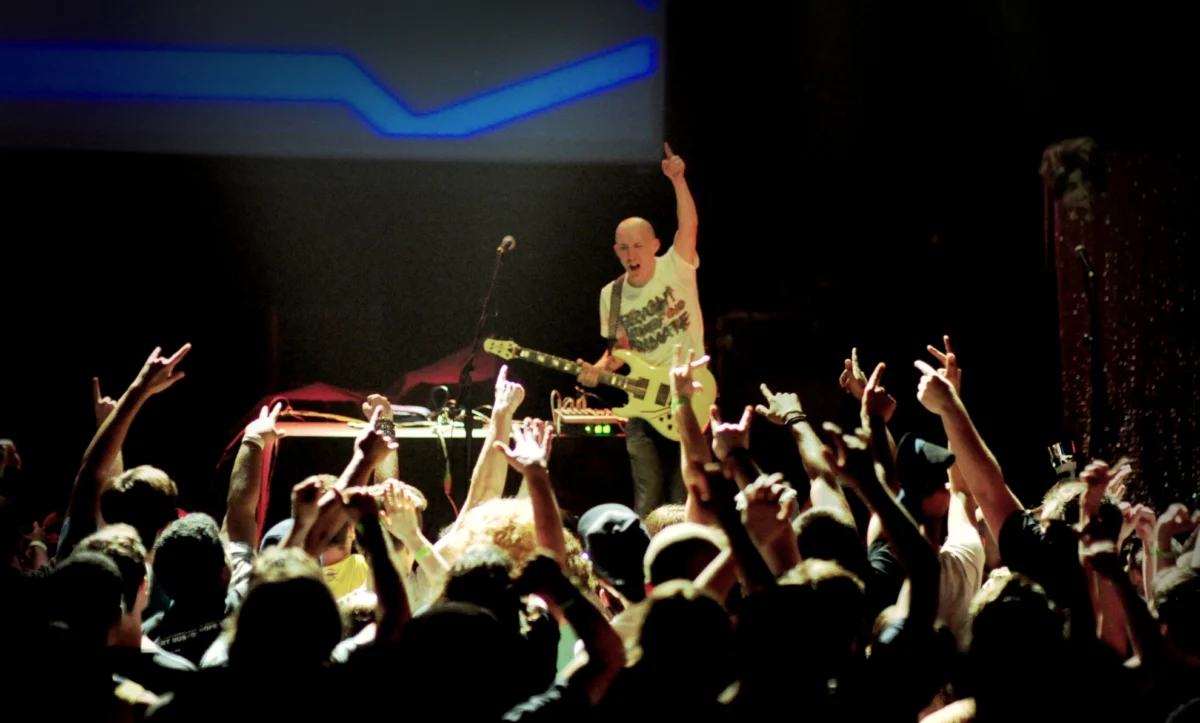
In live settings, Behrens has long been celebrated for his dexterity, juggling the rigid, monophonic limitations of the Game Boy with the dynamic, expressive possibilities of the electric guitar. Historically, however, capturing that chemistry on record remained elusive. The difficulty lies in the frequency spectrum; the square waves and white noise of the Game Boy’s sound processor are notoriously abrasive and occupy the same sonic space as lead guitar frequencies. Achieving a "cohesive" mix, as Behrens describes it, required four years of intensive experimentation and production refinement. With Lunaria, he has finally achieved a balance where the instruments function less as a digital track with a guitar solo layered on top, and more as a unified, cohesive band.
A Chronology of Artistic Development
The trajectory leading to Lunaria can be traced back to the release of Roots in 2011, which served as the experimental proving ground for the artist’s current philosophy. During that period, Behrens realized that the "live" aesthetic—where the guitar and the Game Boy act as independent, competing entities—was not translating well to the controlled environment of a studio album. Consequently, he stripped the guitar from many of those early tracks, leaving them purely chiptune-focused.
The subsequent three-year period following the 2013 release of Parallel Processing became a period of intense technical mastery. Behrens invested time into understanding the nuances of sound design and frequency management, aiming to treat the Game Boy not as a novelty, but as a legitimate synthesizer capable of professional-grade progressive rock arrangement. By 2015, the project had shifted from a collection of songs to a conceptual endeavor, culminating in the recording sessions that would become Lunaria.
Conceptual Framework and Influences
Lunaria is not merely a collection of tracks; it is a conceptual project rooted in astrophysics and theoretical science. Behrens, who maintains a self-professed habit of watching scientific lectures as a nightly ritual, drew primary inspiration from the "giant impact hypothesis." This theory, which posits that a Mars-sized body (often referred to as Theia) collided with the early Earth to form the Moon, provides the narrative backbone of the album.
To give the concept emotional weight, Behrens personified the impactor, creating a character named "Lunaria." This allows for a double-entendre in the it serves as both the name of the celestial entity and a linguistic play on "Lunar-aria," suggesting a musical aria dedicated to the moon.
The musical influences behind the project are remarkably eclectic, signaling a departure from standard chiptune tropes. Behrens cites the following as foundational to the album’s sound:
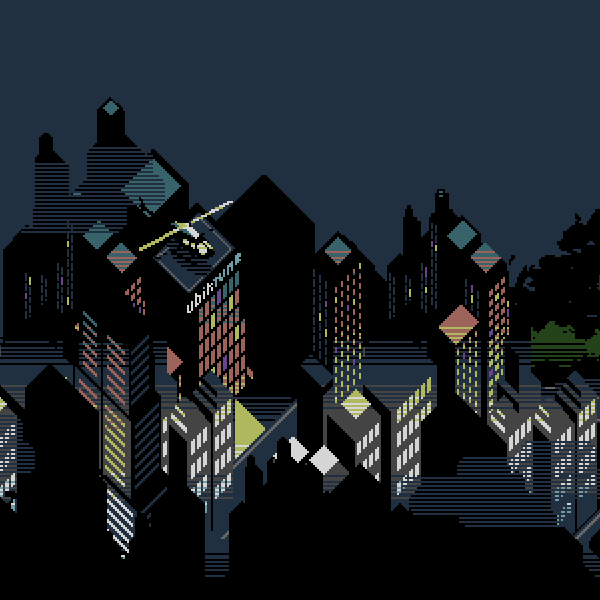
- Game Music: The Shovel Knight Original Soundtrack, which is widely considered a gold standard in modern retro-inspired composition.
- Indie Rock: The experimental textures of Buke and Gase.
- Industrial: The abrasive, rhythmic intensity of Nine Inch Nails and KMFDM.
- Classical/Choral: The work of Mozart and the contemporary choral compositions of Eric Whitacre.
This synthesis of influences—ranging from the high-bpm urgency of industrial metal to the complex, melodic layering of classical choral works—positions Lunaria as a departure from the "chiptune" label, arguably placing it closer to the "progressive metal" or "experimental electronic" genres.
Collaborative Contributions and Technical Artistry
The production of Lunaria involved a deliberate effort to diversify the album’s texture through collaboration. Two prominent features anchor the album’s more human elements.
The first is vocalist Emily Yancey, whose background in opera provides the necessary "celestial" vocal quality Behrens sought for his moon goddess character. Having lived in an adjacent apartment to Behrens for some time, Yancey’s vocal training was something Behrens witnessed firsthand, leading him to recruit her specifically to elevate the project’s thematic depth.
The second key collaborator is Samuel Ascher-Weiss, widely known by his stage name Shnabubula. Ascher-Weiss is a veteran of the independent game music scene and was a featured guest on the Roots album. For Lunaria, he was tasked with a piano rendition of the track "Axis." Behrens describes "Axis" as the most technically demanding piece on the record, stating that he wanted to see how a "traditional" virtuosic instrument would handle a composition originally designed for the rigid, digital constraints of a Game Boy. The result, according to early production notes, is a stark, high-contrast arrangement that highlights the adaptability of Behrens’ songwriting.
The visual component of the album is handled by Minerva Mopsy, whose artwork completes the conceptual cycle. The physical release includes a dedicated poster, reinforcing the album’s identity as a cohesive, multimedia experience.
Market Implications and Industry Standing
The release of Lunaria comes at a time when the chiptune subculture is undergoing a transition. As the generation of listeners who grew up with 8-bit hardware matures, the demand for more sophisticated, "grown-up" compositions has increased. By moving toward a hybrid model of guitar-driven progressive music, Danimal Cannon is arguably positioning himself to capture a wider audience that extends beyond the traditional chiptune festival circuit.
From a commercial perspective, the decision to offer the album on CD alongside digital platforms via Bandcamp suggests a strategy focused on catering to the "collector" mentality of the independent music scene. In an era where digital streaming dominates, the physical release—accompanied by artwork and posters—serves as a tangible artifact of the artist’s multi-year development cycle.
The first single from the album, "Behemoth," has already begun circulating, offering listeners a preview of the high-gain, rhythmically complex soundscape Behrens has cultivated. As the industry looks toward March 11, the success of Lunaria will likely serve as a benchmark for how independent artists can successfully integrate niche, retro-hardware-based sound design with the broader, more rigorous standards of modern progressive music. With its blend of astrophysical conceptualism, professional-grade production, and a clear, intentional shift in stylistic direction, Lunaria stands as a significant, ambitious entry in the contemporary independent music canon.