Farhan hamdan
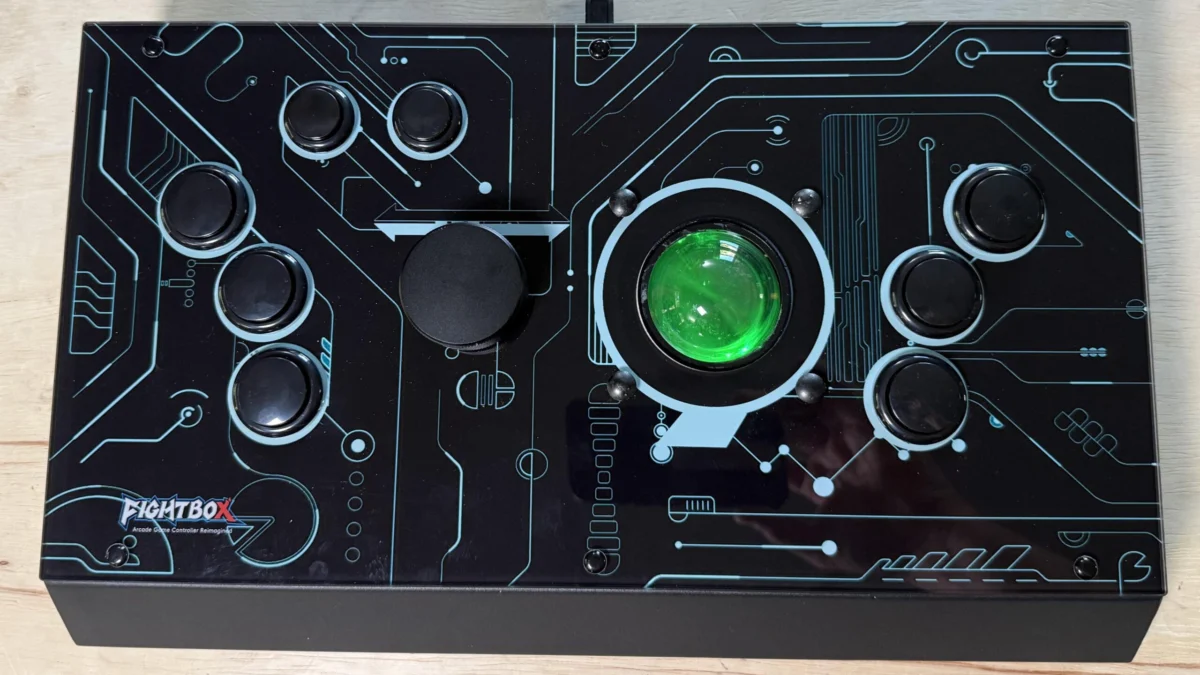
The modern landscape of retro gaming hardware continues to expand with niche peripherals designed to replicate authentic arcade experiences in contemporary home setups. Among the latest entries in this specialized market is the Fightbox R10 Remix, a modified iteration of the manufacturer’s established R10 Pro arcade controller. Eschewing the traditional multi-directional joystick in favor of a dedicated spinner and trackball layout, the R10 Remix targets enthusiasts of classic trackball and spinner-driven titles such as Tempest, Arkanoid, and Centipede. Priced at $160 for the standard artwork model—with a $10 premium for custom user-submitted designs—the controller operates fundamentally as a specialized USB computer mouse combined with supplementary arcade action buttons. As retro-gaming communities increasingly adopt advanced FPGA-based systems like the MiSTer platform, hardware compatibility, setup nuances, and input mapping present unique technical considerations for prospective buyers.
Main Facts and Hardware Architecture
At its core, the Fightbox R10 Remix functions through dual input identification, appearing to host operating systems and emulation hardware simultaneously as a standard USB mouse and a keyboard-style game controller. The top surface of the chassis houses six buttons, which physically map directly to standard three-button mouse commands (split into one set per side). Consequently, successful deployment of the controller relies entirely on emulation software capable of recognizing simultaneous mouse and keyboard inputs.
Because the R10 Remix entirely lacks a traditional directional joystick, navigating system menus, user interfaces, and operating system dashboards natively requires an auxiliary peripheral, such as a standard USB keyboard or a separate gamepad. The primary physical layout includes the central trackball, a rotary spinner for rotational input, side-mounted "pinball" utility buttons, and dedicated controls for Start and Coin functions.
The standard pricing model places the unit at $160, positioning it competitively within the boutique arcade stick market. Distribution is managed globally through authorized regional retailers, including Stone Age Gamer handling distribution within the United States and Dragonbox servicing the European market from Germany, alongside direct manufacturer availability through Fightbox Arcade. Optional ergonomic accessories, such as the newly introduced non-slip silicone pads designed for the Fightbox F and R series, are also available to enhance stability during intense gaming sessions.
Background Context and Evolution of Arcade Peripherals
The release of the R10 Remix arrives against the backdrop of a booming market for premium arcade controls, largely driven by the resurgence of arcade preservation movements and the popularity of modular FPGA hardware like the MiSTer platform. Historically, players wishing to enjoy classic arcade games utilizing spinners and trackballs were forced to either cobble together custom DIY control panels, utilize aging original hardware via complex adapters, or rely on standard gamepads that fundamentally fail to capture the mechanical feel of authentic arcade rotation and rolling.
Fightbox established itself within the competitive fighting game and arcade community through its line of all-button leverless controllers and hybrid arcade sticks, notably the R10 Pro. While the R10 Pro features a traditional joystick configuration alongside standard button arrays, a distinct segment of the arcade enthusiast community demanded a dedicated layout optimized exclusively for paddle and trackball games. The R10 Remix was developed to meet this specific demand, sharing a chassis lineage with the R10 Pro but stripping out the lever to make dedicated room for precision spinner mechanics.
However, this design specialization introduces inherent constraints. By prioritizing spinner and trackball ergonomics over a universal arcade stick, the R10 Remix shifts from an all-in-one fighting game controller to a single-purpose peripheral. This design philosophy places heavy demands on the user’s overall hardware ecosystem, requiring a clear understanding of how operating systems and emulation environments handle composite USB human interface devices (HID).
Chronology and Setup Workflow for the MiSTer Platform
Integrating specialized USB peripherals into hardware emulation platforms often requires precise configuration procedures. When utilizing the Fightbox R10 Remix with the MiSTer FPGA platform—a popular open-source hardware project that simulates vintage arcade hardware at the silicon level—users must follow a strict operational sequence to ensure proper input registration.

Initial testing phases conducted by hardware reviewers highlighted the critical importance of stable power delivery. Early configuration attempts utilizing unpowered or inadequately rated USB hubs resulted in intermittent device recognition and input dropouts. Resolving these stability issues required switching to a dedicated power supply unit rated for at least 3 amperes, equivalent to a standard Raspberry Pi 5 power adapter, which provided sufficient voltage and current to sustain both the MiSTer mainboard and the composite USB controller without interruption.
The step-by-step configuration workflow for utilizing the R10 Remix on the MiSTer platform involves the following protocol:
- Hardware Connection: Ensure a standard USB keyboard is connected to the MiSTer system to facilitate menu navigation and command overrides.
- Core Initialization: Launch the desired arcade core (such as Tempest or Arkanoid) using the system menu. Crucially, input from the keyboard must cease immediately after the core is initiated.
- Player Assignment Trigger: Press one of the side-mounted pinball buttons on the R10 Remix. This action signals the system to register the controller as Player 1, preventing the keyboard or its integrated trackpad from incorrectly capturing the primary player designation.
- On-Screen Display (OSD) Access: Open the MiSTer OSD menu using the keyboard to access the controller mapping utility.
- Directional Mapping Bypass: When the mapping utility prompts the user to input a right directional command, press an unassigned side button on the Remix. Utilize the keyboard’s spacebar to systematically skip mapping for the remaining unused directional inputs.
- Action Mapping: Proceed to map the Start, Coin, and in-game action buttons according to personal preference, then save the configuration within the MiSTer menu.
- Core-Specific Settings: Verify whether the loaded arcade core requires manual selection of "Mouse/Spinner/Trackball" within the core’s OSD settings. If required, select this input mode and save the configuration changes once more.
Following this exact sequence ensures that settings are retained across system power cycles, allowing seamless operation during subsequent gaming sessions.
Supporting Data and Technical Specifications
A technical analysis of the Fightbox R10 Remix reveals specific operational parameters that distinguish it from standard arcade controllers:
- Input Architecture: Composite USB device registering simultaneously as a standard 3-button computer mouse and a keyboard-based game controller.
- Pricing Structure: $160 for standard factory artwork; $10 additional charge for custom user-submitted artwork templates.
- Power Requirements: Minimum 3A USB power supply recommended to prevent hardware desynchronization or input dropouts on expansion hubs.
- Regional Availability: Direct sales via Fightbox Arcade, with regional fulfillment partners including Stone Age Gamer (United States) and Dragonbox (Germany).
- Primary Control Elements: Rotary spinner, precision trackball, dual side-mounted pinball utility buttons, dedicated Start and Coin buttons, and six top-mounted buttons functioning as mouse inputs.
- Compatibility Constraints: Requires host emulation environments with native support for simultaneous mouse and keyboard integration. Systems lacking stick emulation require an auxiliary keyboard or secondary gamepad for core navigation.
Industry Analysis and Implications
The introduction of the R10 Remix illuminates a broader trend within the retro gaming peripheral industry: extreme hardware micro-segmentation. As emulation ecosystems mature, the demand for generic, all-purpose gamepads is increasingly supplemented by highly specialized controllers built to emulate specific arcade cabinets of the 1980s and 1990s.
From an analytical perspective, controllers like the R10 Remix occupy a fascinating middle ground between accessibility and enthusiast friction. On one hand, the inclusion of authentic mechanical spinners and trackballs vastly improves the fidelity of specific arcade ports, offering precision that digital D-pads or analog thumbsticks simply cannot replicate. On the other hand, the reliance on mouse-emulation protocols creates potential hurdles for casual users. Because the top-mounted buttons act strictly as mouse clicks and are not universally remappable within certain older emulation environments, users who dislike the default layout may find themselves restricted by hardware-level constraints.
Comparative evaluations between the R10 Remix and its sibling, the R10 Pro, further highlight these design trade-offs. While the R10 Remix offers slightly enhanced ergonomic comfort for prolonged spinner-centric gameplay sessions, the R10 Pro provides a more versatile all-in-one solution by incorporating a traditional arcade joystick alongside similar secondary controls. For most general enthusiasts, the minor ergonomic gain of the Remix does not entirely outweigh the multi-purpose utility of the Pro model, unless the user maintains a strict preference for dedicated, single-purpose peripherals in their collection.
Conclusion and Market Outlook
The Fightbox R10 Remix stands as a well-constructed, highly specialized tool tailored for a distinct segment of the arcade preservation community. By bridging the gap between traditional arcade button layouts and mouse-driven rotary controls, it offers an authentic tactile experience for classic titles that rely heavily on spinners and trackballs. However, its specialized nature necessitates a deliberate hardware setup, stable power delivery, and compatibility with emulation platforms capable of handling composite USB HID inputs.
As manufacturers continue to explore boutique niches within the retro gaming hardware space, peripherals like the R10 Remix demonstrate the ongoing viability of specialized physical controls in a digital age. Whether the investment is justified depends entirely on the user’s specific library preferences and existing emulation rig, making it a compelling option for dedicated fans of classic trackball and spinner arcade masterpieces.