Ganda Hendra Perkasa
The Video Game History Foundation has recently spotlighted an overlooked digital artifact within its expanding preservation repository: a comprehensive archive consisting of more than 1,600 promotional photographs captured during the Electronic Entertainment Expo (E3) in 2009. Sourced from a donated DVD-R provided by Carolyn Rauch, former senior vice president of the Entertainment Software Association (ESA), the collection offers an unfiltered, granular look into a transitional period for both the convention and the broader interactive entertainment sector.
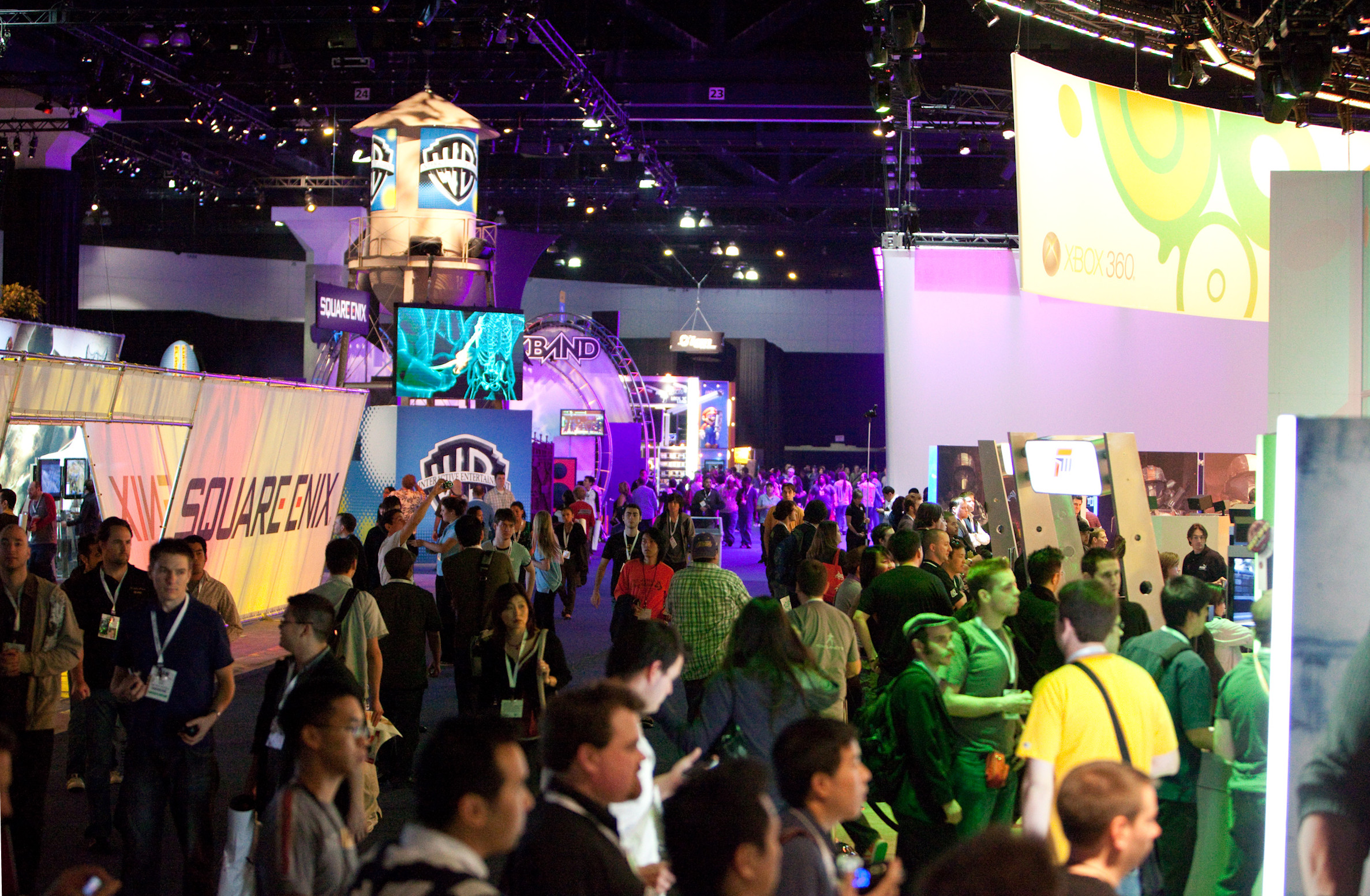
Captured primarily by professional photographer Asa Mathat, the trove extends far beyond the polished, high-gloss imagery typically disseminated by marketing departments. Instead, the archive documents the entire ecosystem of the Los Angeles Convention Center during the first week of June 2009, capturing press rooms, registration desks, quiet backroom lounges, and bustling concourses. As the industry continues to grapple with the permanent void left by the eventual demise of E3, this archival recovery serves as a critical primary source documenting how major trade events operated at the height of the seventh console generation.
Background Context: The Anatomy of an Industry Shift
To understand the significance of the E3 2009 photo collection, one must examine the tumultuous trajectory of the expo leading up to that year. Established in 1995 by the Interactive Digital Software Association (IDSA)—which later became the ESA—E3 quickly grew into the undisputed global epicenter for video game announcements, business-to-business networking, and media spectacles. Throughout the late 1990s and early 2000s, the convention expanded aggressively, characterized by deafening music, elaborate themed booths, and massive crowds.
However, by the mid-2000s, major exhibitors grew increasingly fatigued by the escalating financial costs and chaotic atmosphere of the massive trade show. Concerns regarding return on investment prompted the ESA to dramatically restructure the event. For 2007 and 2008, E3 was temporarily rebranded as the "E3 Media and Business Summit," a heavily scaled-down, invitation-only gathering held in Santa Monica hotel venues rather than the sprawling expanse of the Los Angeles Convention Center.
While the smaller summits successfully reined in corporate expenditures, they lacked the cultural gravity and broad industry footprint of the original convention. Consequently, organizers brokered a strategic compromise for 2009: E3 would return to the LA Convention Center as a full-scale convention, but with deliberate constraints designed to curb runaway excess. The goal was to re-establish a centralized marketplace for global publishers while maintaining fiscal and logistical discipline.
Chronology and Scale: Inside the 2009 Revival
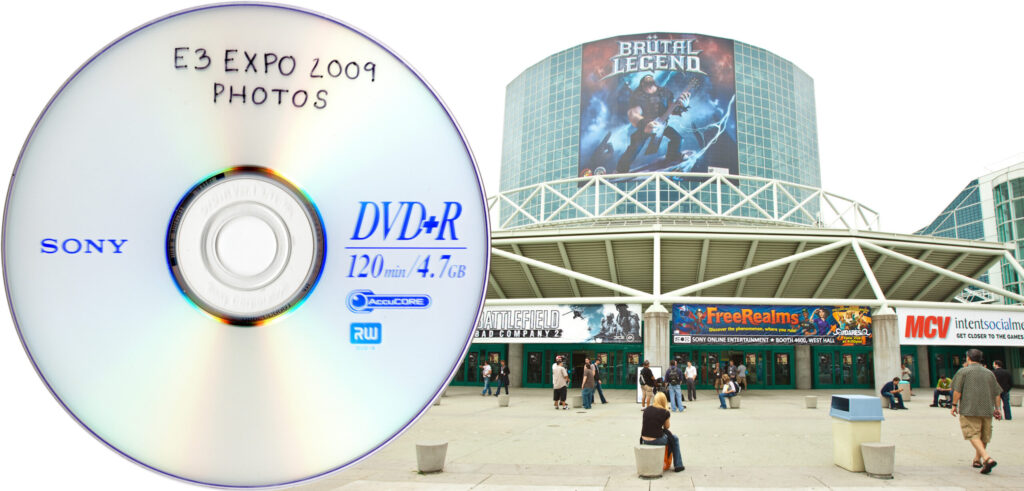
The newly unveiled photographic record provides a day-by-day visual chronology of this resurrected expo. Running from June 2 to June 4, 2009, the event marked a crucial juncture defined by the peak dominance of the Xbox 360, the PlayStation 3, and the Nintendo Wii.
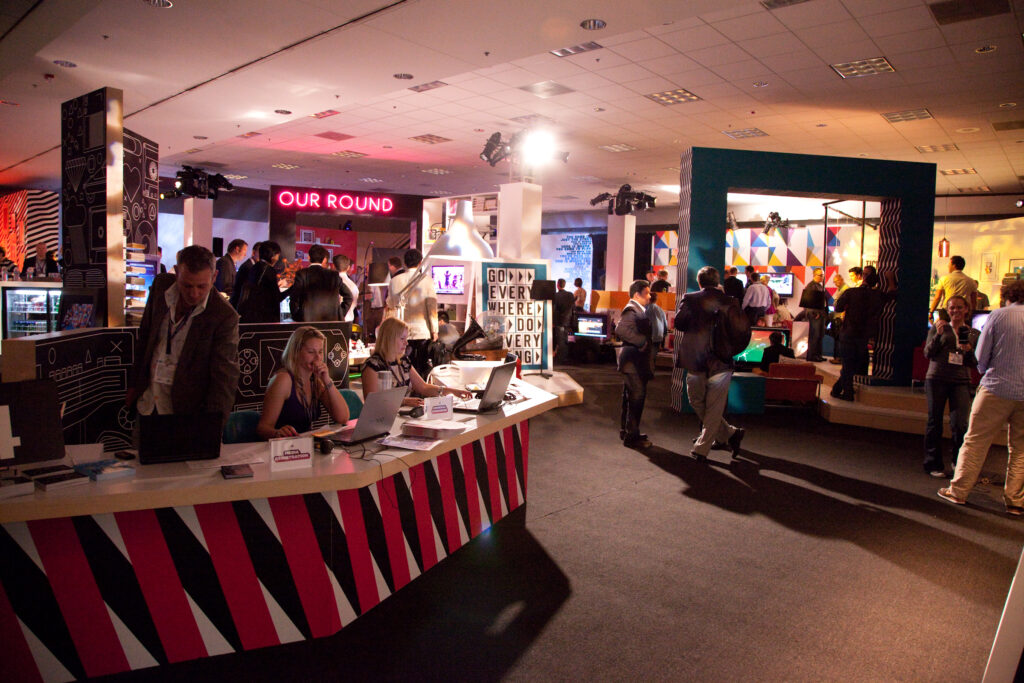
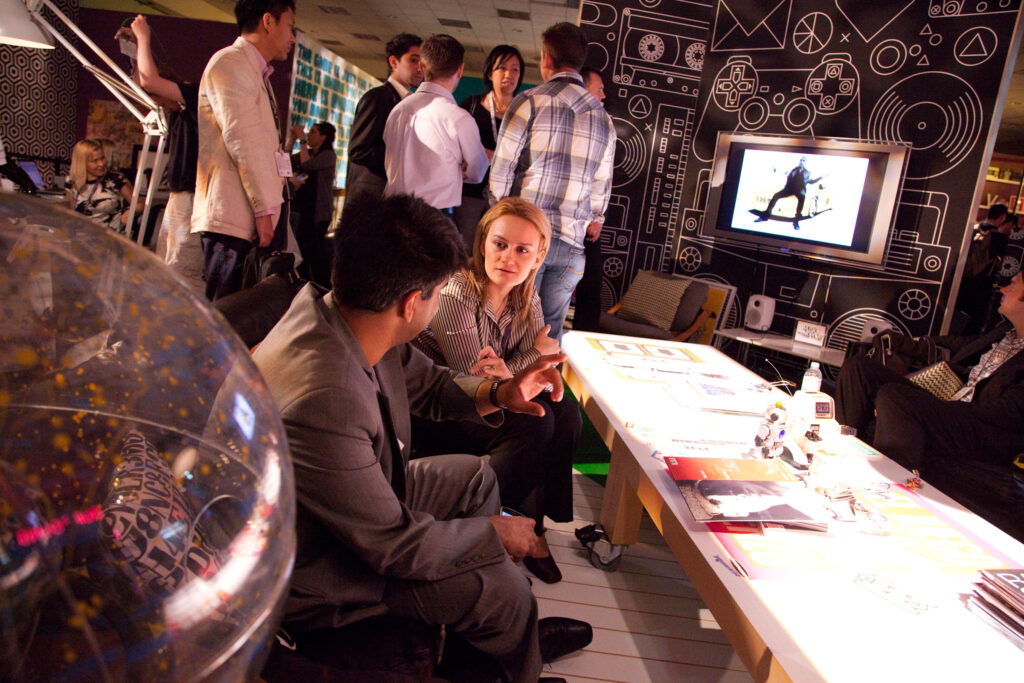
Unlike the chaotic spectacle of pre-2007 expos, the 2009 floor plan reflected a calculated re-engineering of corporate presence. Major hardware manufacturers and software publishers maintained substantial footprints, but their exhibition architecture favored cleaner, more navigable layouts. The documentation preserved on Rauch’s donated DVD reveals the deliberate creation of controlled spaces: VIP break rooms, private meeting suites, and secluded brand lounges, such as the dedicated area hosted by Sony Computer Entertainment Europe to entertain clients away from the frantic main exhibition floor.
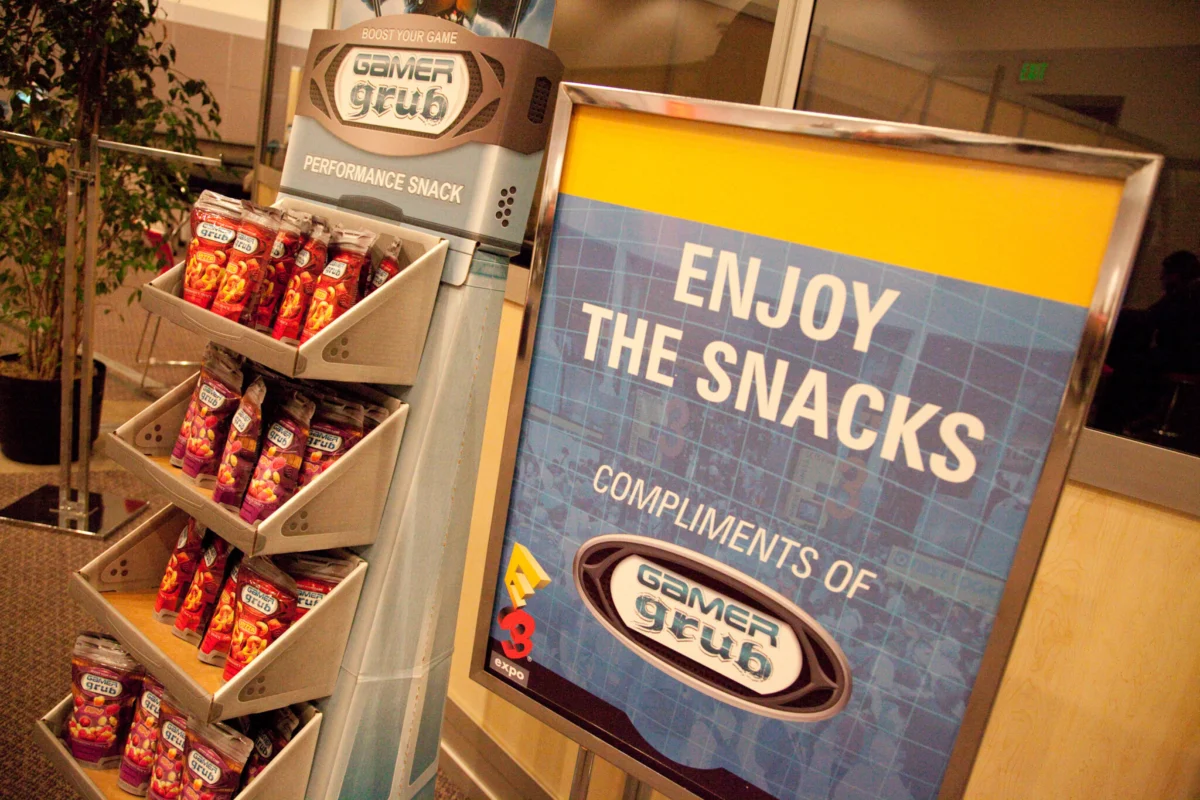
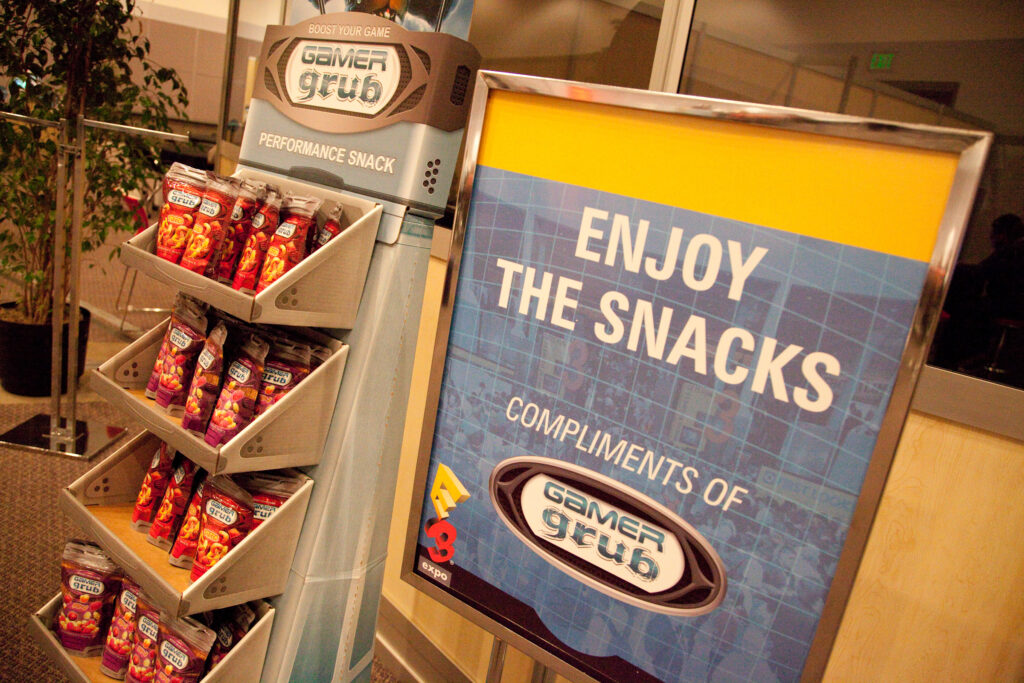
Furthermore, the archive highlights the commercial partnerships that sustained the convention’s infrastructure. Prominently featured throughout the venue are displays and promotional distributions of "Gamer Grub," a short-lived, gamer-oriented snack mix brand that served as an official sponsor or benefactor for aspects of the 2009 event. Baskets and branded signage for the product appear in numerous backstage and hospitality areas, offering a minor yet telling detail of the commercial alliances typical of mid-market convention sponsorship during that era.
Supporting Data and Archival Provenance
The provenance of the collection lends it substantial institutional credibility. Carolyn Rauch’s tenure as senior vice president at the ESA placed her at the administrative core of event planning during the transition years of the late 2000s. The digital files preserved on the single DVD-R represent official institutional record-keeping intended for promotional use across trade publications, partner networks, and internal archives.
Copyright ownership of the images is distributed among the Entertainment Software Association, IDG Communications, and photographer Asa Mathat. By making these materials accessible through the Video Game History Foundation’s online archive, researchers, journalists, and historians gain unrestricted access to high-resolution metadata capturing the precise operational realities of a multi-billion-dollar trade show.
Official Perspectives and Industry Response
Reflections from key architects of the era provide essential context regarding the strategic intent behind the 2009 expo. Speaking on episodes of the Video Game History Hour podcast, figures such as Rauch and IDSA co-founder Doug Lowenstein detailed the intense political and economic pressures involved in steering E3 through the Great Recession and the dawn of digital media distribution.
According to organizers, the decision to return to Los Angeles was driven by feedback from international publishers who argued that completely decentralizing the event had fragmented the industry’s collective voice. Yet, returning to the old model was financially untenable. The resulting 2009 summit was thus an intentional hybrid: large enough to generate global media attention, yet structurally modified to reduce floor congestion and eliminate the ostentatious marketing stunts that had come to define earlier iterations.
Broader Impact and Implications for Digital Preservation
The resurrection of the E3 2009 photo gallery arrives at a time when the broader preservation of modern digital culture faces unprecedented challenges. While physical artifacts like cartridges and promotional discs are routinely cataloged by institutions, ephemeral media—such as administrative photographs, press kits, and behind-the-counter snapshots—frequently vanishing into private collections or decaying on legacy storage media.
The vulnerability of early digital storage formats, such as the DVD-R medium utilized for this donation, underscores the urgency driving modern archival initiatives. Widespread disc rot and format obsolescence threaten to erase the visual history of the internet era just as swiftly as the physical deterioration of paper records threatened earlier centuries.
By prioritizing the digitization and public indexing of operational ephemera, organizations like the Video Game History Foundation offer a critical service to cultural historians. These photographs demystify an era of corporate media production that heavily relied on curated, public-facing broadcasting. In stripping away the glossy lens of contemporaneous consumer journalism, the 2009 E3 archive reveals the intricate logistical machinery, human labor, and corporate negotiations required to sustain the global video game industry during one of its most transformative decades.