 Cecilia Chamidah Nur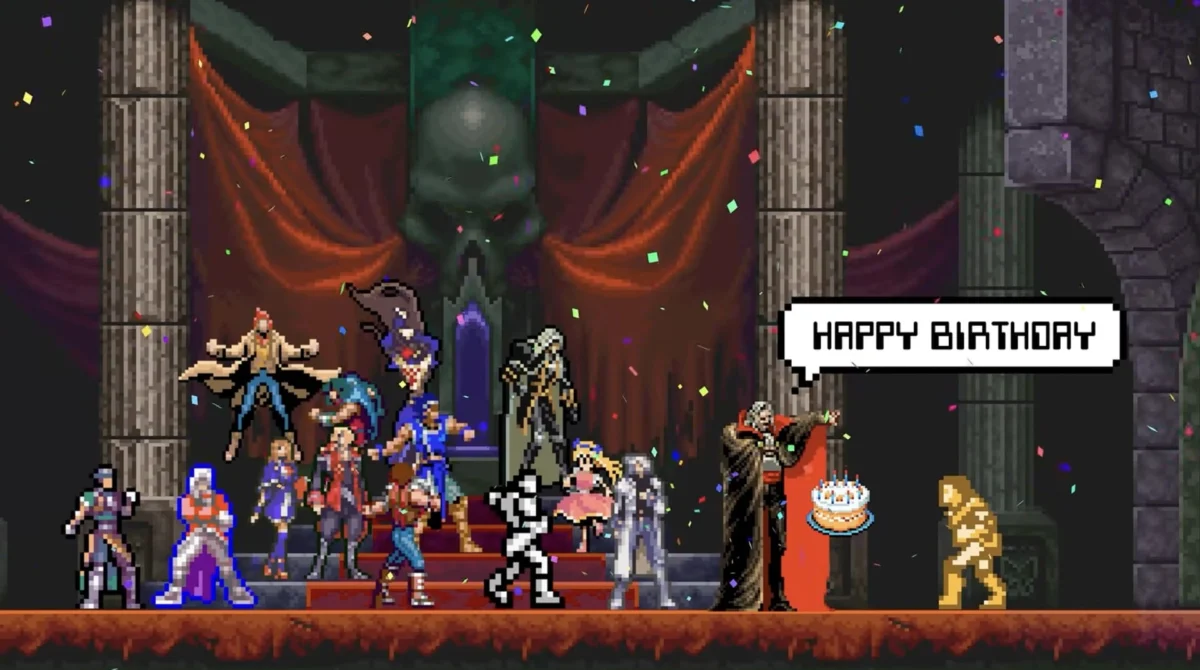
Four decades after the whip-cracking debut of the Belmont clan, the Castlevania franchise remains a cornerstone of interactive entertainment. Since its initial release on the Famicom Disk System in 1986, Konami’s gothic action-adventure series has defined the "Metroidvania" sub-genre, influenced countless developers, and cultivated a multi-generational fanbase. To commemorate the 40th anniversary of the franchise, Konami has initiated a series of global activations, including the free distribution of the original 1986 title and a strategic expansion of the series’ musical legacy.
The 40th Anniversary Initiatives
Konami’s primary commemorative effort involves providing direct accessibility to the game that launched the franchise. The original Castlevania is currently available as a free download on both the Apple App Store and Google Play Store. This offer serves as a digital gateway for new players to experience the roots of the series, which was originally developed as a high-difficulty, stage-based action game. Users who claim the title before the cutoff date of October 24, 2026, will retain permanent access to the software, allowing for repeated downloads beyond the promotional window.
In addition to the mobile release, Konami has implemented a series of price reductions across the broader Castlevania digital library, encouraging players to explore subsequent entries. Furthermore, the company is bridging the gap between legacy audio and modern digital consumption. The Music from Castlevania – Black & Red collection, a comprehensive 46-LP box set produced by the Materia Collective, features a vast library of compositions spanning the series’ history from 1986 to 2010. Konami has confirmed that this extensive catalog will be transitioned to major streaming platforms on September 26, 2026, providing fans with unprecedented access to some of the most critically acclaimed soundtracks in gaming history.

Chronology of a Legacy: 1986 to 2026
The trajectory of the Castlevania series is marked by significant technical shifts. Following the success of the 8-bit era, the franchise transitioned into the 16-bit console generation with Super Castlevania IV and the highly regarded Castlevania: Rondo of Blood. The mid-90s represented a pivotal moment for the series with the release of Castlevania: Symphony of the Night (1997), which shifted the design philosophy toward non-linear, exploration-based gameplay.
As the industry moved toward three-dimensional environments in the early 2000s, the series underwent several experiments. Titles such as Castlevania: Lament of Innocence (2003) and Castlevania: Curse of Darkness (2005) attempted to translate the series’ signature combat mechanics and atmospheric exploration into 3D space. These were followed by the Lords of Shadow series (2010), which sought a cinematic, reboot-oriented approach. The current state of the franchise involves a mix of legacy support and the recent development of Castlevania: Belmont’s Curse (2026), indicating a renewed focus on both the series’ heritage and its potential for modernization.
The 3D Collection Hypothesis
While official announcements have focused on accessibility and music, a segment of the community has directed its attention toward a 10-second sequence in the official 40th Anniversary video released by Konami. At the 01:21 mark, the protagonist Simon Belmont is depicted walking past a series of framed paintings. These portraits feature key art from four distinct titles: Castlevania: Belmont’s Curse (2026), Castlevania: Curse of Darkness (2005), Castlevania: Lament of Innocence (2003), and Castlevania: Lords of Shadow (2010).
Industry analysts and fans have noted that this specific grouping implies a thematic connection. The theory posits that the order of the paintings suggests a potential roadmap for a 3D-focused collection. By highlighting these specific titles, observers suggest that Konami may be gauging interest or preparing for a compilation that centers on the franchise’s three-dimensional efforts. Notably, this proposed collection appears to omit the Nintendo 64 entries, Castlevania (1999) and Castlevania: Legacy of Darkness (1999), which have historically held a divisive reputation among the player base.

Institutional Strategy and Future Outlook
The current promotional cycle aligns with statements made by the Castlevania Production Team earlier this year. In February 2026, the team hinted that the anniversary period would be marked by "numerous new products," suggesting that the current wave of activity is merely the beginning of a broader corporate strategy.
From an industry perspective, this approach is consistent with Konami’s recent efforts to revitalize its classic intellectual properties. By leveraging the nostalgia associated with the 40th anniversary, the company is effectively building a digital ecosystem that bridges the gap between historical titles and modern audiences. The decision to make the original game free suggests a focus on user acquisition, while the licensing of the Materia Collective soundtrack set indicates an attempt to monetize the series’ significant cultural capital.
Implications of Re-releasing 3D Titles
The potential re-release of 3D-era Castlevania titles presents unique challenges and opportunities. Unlike the 2D iterations, which are easily emulated and widely ported, the 3D entries are often tied to specific hardware architecture, such as the PlayStation 2 and PlayStation 3. A hypothetical collection would likely require significant optimization, upscaling, or emulation refinement to meet contemporary display standards.
Furthermore, the inclusion of Lords of Shadow in the promotional material is significant, as that series represented a departure from the established "Igavania" (Koji Igarashi-directed) design tropes. Including both the MercurySteam-developed titles and the earlier 3D experiments would provide a comprehensive look at the franchise’s evolution. Should these titles be compiled and released on modern platforms—such as the Nintendo Switch, PlayStation 5, and Xbox Series X/S—it would offer a rare opportunity for archival preservation of games that have, in some instances, become difficult to acquire legally.

Conclusion
As the Castlevania franchise enters its fifth decade, the focus remains on balancing the preservation of its legacy with the demands of a modern gaming audience. While Konami has yet to verify the rumors regarding a 3D collection, the strategic placement of visual cues in their anniversary media has successfully generated significant discourse. Whether or not a formal announcement follows, the current anniversary campaign underscores the enduring relevance of the Castlevania brand. With 40 years of history, the series continues to serve as a primary subject for both historical analysis and contemporary digital distribution, proving that even after four decades, the story of the Belmonts remains a vital component of the gaming landscape. As the 2026 calendar year progresses, industry observers will continue to monitor Konami for further developments regarding their long-term plans for the franchise.