 Hartono Sudibyo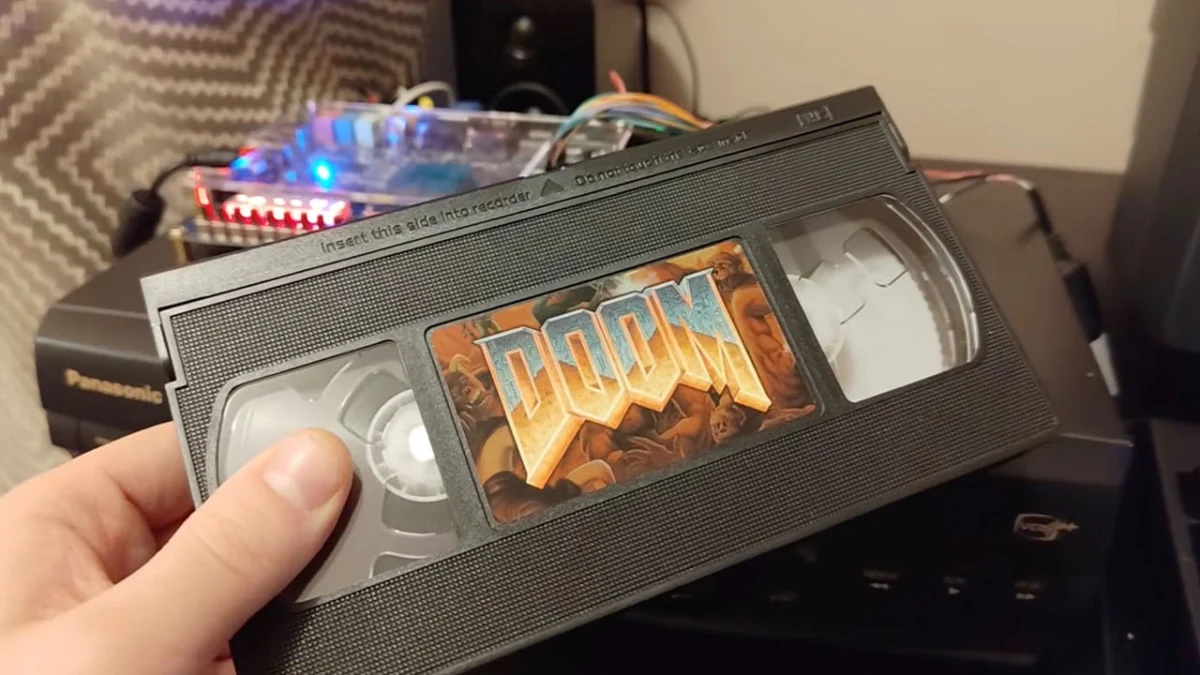
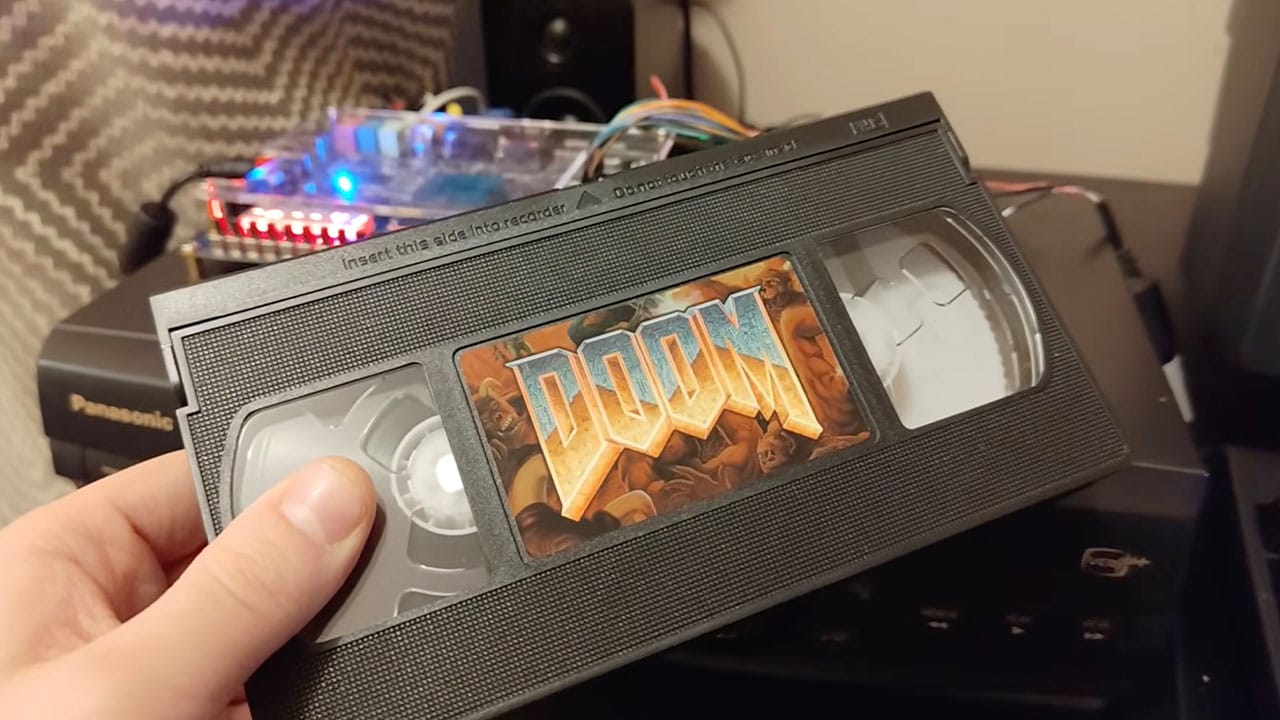
The intersection of obsolescence and innovation has yielded another remarkable engineering feat, as hardware modification specialist and content creator Throaty Mumbo has successfully designed and built a custom console capable of running classic video games directly from VHS magnetic tape. By bridging a vintage analog medium with modern Field Programmable Gate Array (FPGA) architecture and microcontroller technology, this project breathes new interactive life into a format previously relegated to linear video playback and primitive, non-interactive novelty experiences.
The implications of this development extend beyond mere nostalgia, touching upon historical media preservation, unconventional computing platforms, and the boundaries of hardware hacking. While commercial attempts to merge magnetic tape with interactive entertainment date back decades, modern engineering has enabled a level of responsiveness and processing capability that early pioneers could only conceptualize.
A Brief History of Magnetic Tape in Interactive Media
To understand the magnitude of Throaty Mumbo’s recent creation, it is necessary to examine the historical precedent of VHS-based gaming. Contrary to popular belief, magnetic tape was utilized as a gaming medium as early as the mid-1980s. Parker Brothers introduced the VHS-assisted board game version of Clue (known internationally as Cluedo) in 1985, requiring players to pause and play tape segments to receive clues and advance the narrative.
The concept evolved further with dedicated hardware, most notably the Action Max console released by Worlds of Wonder in 1987. Unlike contemporary cartridge-based systems such as the Nintendo Entertainment System (NES), the Action Max relied on standard VHS tapes to deliver gameplay. Players utilized a proprietary light sensor attached to their television screen and a wired zapper controller to shoot at targets on-screen, mirroring the light gun mechanics of the era. However, the system suffered from severe limitations: the video content was entirely linear, meaning the tape played straight through regardless of player accuracy, and the hardware lacked internal processing power to track complex game states.
Subsequent decades saw various iterations of interactive video entertainment, most notably during the DVD era of the late 1990s and early 2000s. Popular quiz formats, including interactive home video versions of Who Wants To Be A Millionaire, utilized DVD branching scenarios to simulate gameplay. Yet, true computational execution from an analog video medium remained an elusive pursuit for home hobbyists—until now.
Engineering the Modern VHS Console
Throaty Mumbo’s newly developed system transcends the static limitations of the Action Max by integrating modern processing components with analog video signals. The architecture of the custom console relies heavily on two primary components: a DE1-SoC FPGA (Field Programmable Gate Array) board and an RP2350 microcontroller unit (MCU).
The inclusion of an FPGA is critical to the project’s success. Unlike traditional microprocessors that execute software sequentially, an FPGA can be configured at the hardware level to emulate specific circuits, processors, and graphic rendering pipelines. This allows the custom console to process live inputs from modern controllers—such as an N64 controller utilized during testing demonstrations—and dynamically alter the gameplay experience. Meanwhile, the RP2350 MCU manages peripheral communication, signal processing, and synchronization between the analog tape playback and the digital computational overlay.

Rather than relying solely on the rigid, non-interactive linear video track of a standard VHS cassette, the system synchronizes pre-recorded looping video backgrounds and gameplay footage with real-time digital logic. This technical orchestration enables complex interactive titles to execute smoothly, creating a hybrid media format that merges analog storage aesthetics with digital execution.
Demonstrating Iconic Titles on Analog Tape
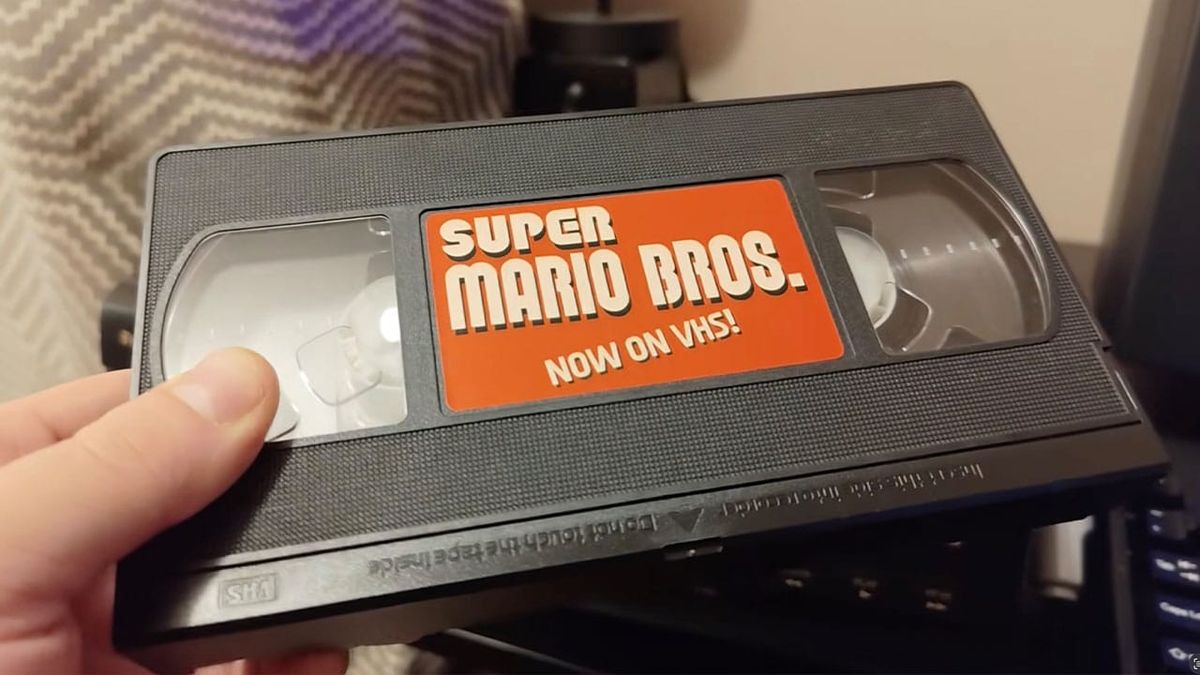
To showcase the capabilities of the newly fabricated hardware, Throaty Mumbo produced functional gameplay demonstrations of two monumental gaming milestones: Super Mario Bros. and DOOM.
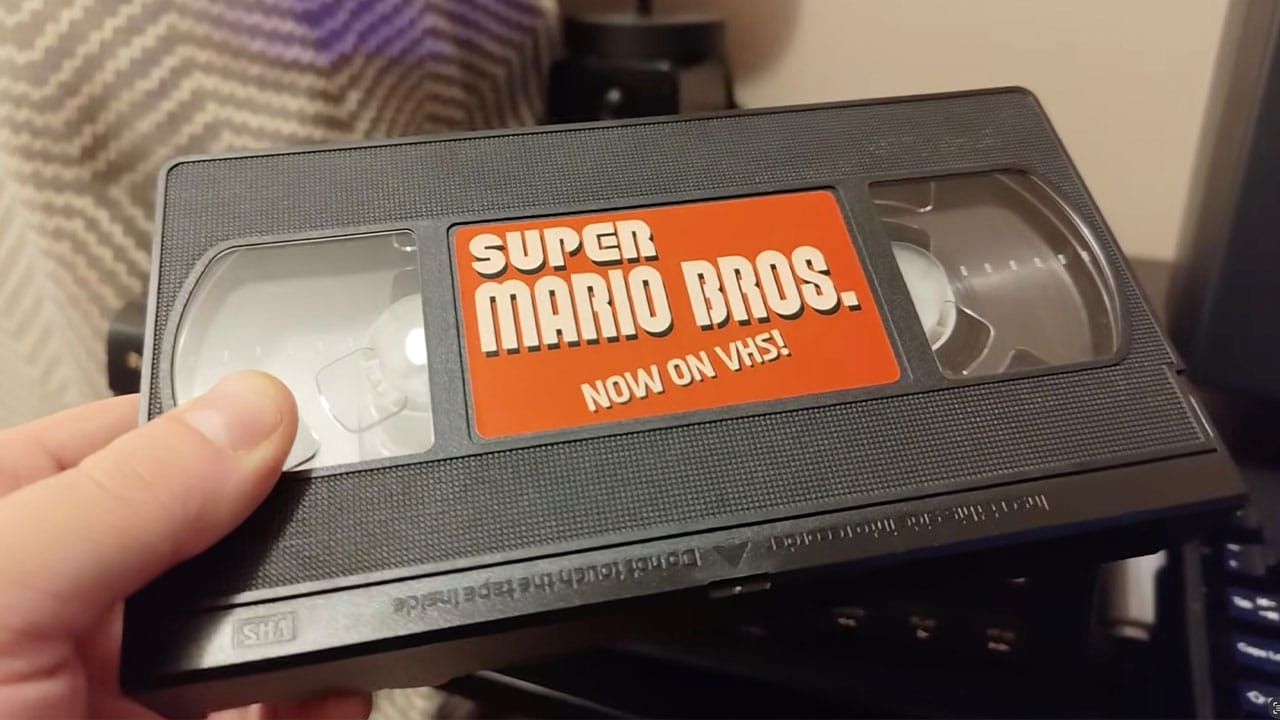
Running Super Mario Bros. via a VHS-based system presented unique synchronization challenges. The demonstration features classic level designs paired with pre-recorded looping background visuals, demonstrating that horizontal scrolling mechanics and basic platforming logic can be successfully mapped to a tape-based distribution format.
More ambitious, however, was the port of DOOM. The demonstration incorporates quick-time events (QTEs) that require the operator to input specific commands via an N64 controller to execute attacks and navigate hazards on screen. While classic first-person shooter engines demand significant processing overhead, the hybrid nature of the FPGA console allows the hardware to interpret inputs and trigger corresponding visual cues stored across the analog and digital architecture.
These demonstrations mark a significant technological leap past the primitive interactive video of the 1980s, offering a glimpse into what an alternate technological timeline might have produced if magnetic tape had evolved alongside early digital processors.
Technical Analysis and Broader Implications
From a technical standpoint, the successful integration of FPGA architecture with analog magnetic tape highlights the adaptability of modern open-source hardware components. FPGAs have long been utilized by the retro gaming community for hardware emulation, but coupling them with high-jitter, low-fidelity analog storage mediums introduces unique engineering hurdles.
Magnetic tape is notoriously susceptible to signal degradation, tracking errors, and timing drift—factors that normally render it unsuitable for precise digital data retrieval. By utilizing intelligent microcontroller management and advanced error-correction logic within the DE1-SoC board, the creator successfully mitigated the inherent instability of VHS media.
Industry analysts and hardware historians view projects of this nature as valuable exercises in alternative computing. While mass-market commercial applications for VHS-based gaming are virtually non-existent in the modern era of high-speed solid-state drives and cloud streaming, experimental hardware engineering plays a vital role in pushing technical boundaries. It encourages a deeper understanding of legacy formats, stimulates interest in electronics modification, and demonstrates that discarded consumer technologies retain untapped potential for creative reinvention.
Community Response and Future Projects
The unveiling of the FPGA VHS console has generated widespread interest across retro gaming and hardware modification communities. Observers have praised the technical ingenuity required to harmonize disparate technologies from vastly different eras.
Throaty Mumbo’s body of work consistently explores unconventional media formats. Prior to the VHS gaming console, the creator successfully engineered systems capable of executing video games stored on alternative physical mediums, including vinyl records. These projects collectively contribute to a growing subculture of hardware hackers dedicated to subverting traditional technological lifecycles.
As documentation and video logs of the build circulate online, industry observers anticipate that this project will inspire further experimentation among hobbyists and engineering students alike. Whether exploring the limits of magnetic storage or constructing bespoke FPGA consoles from scratch, modern creators continue to prove that retro technology remains a fertile ground for unprecedented innovation.