 Indra Gunadi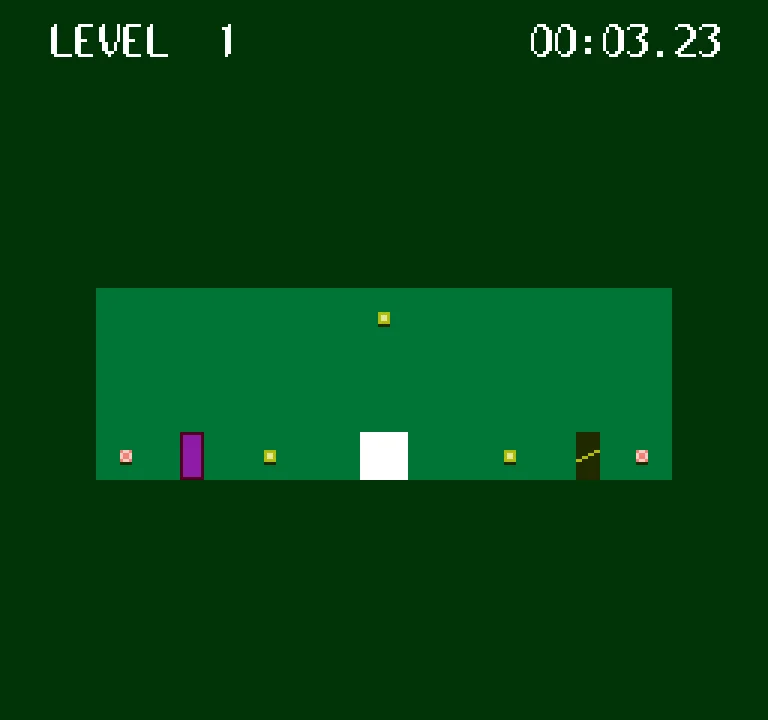
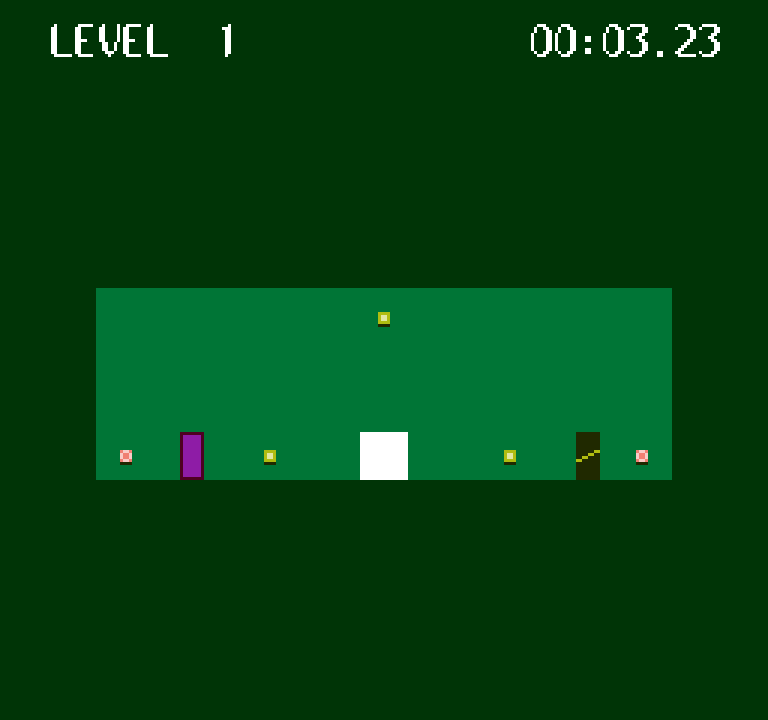
The landscape of modern homebrew development for the Nintendo Entertainment System (NES) has witnessed a significant addition with the release of Kuruka, a timed platforming title developed by the programmer known as Johnybot. Released in late 2026, the game represents a concentrated effort to push the technical boundaries of the 8-bit console while adhering to the strict hardware constraints that have defined the system since its 1983 debut in Japan. Kuruka offers a streamlined, high-intensity gameplay loop consisting of 16 distinct levels, designed specifically to cater to speedrunning enthusiasts and competitive players who prioritize precision movement and time-based optimization.
Technical Architecture and Design Philosophy
At its core, Kuruka is built upon a minimalist design philosophy that prioritizes player agency and mechanical fluidity. The development cycle for this title involved a rigorous optimization of the NES’s Ricoh 2A03 processor. Unlike many contemporary homebrew projects that seek to emulate modern game design tropes, Johnybot’s work focuses on the fundamentals of the platforming genre: momentum, jump arc, and stage navigation.
One of the most notable technical features of Kuruka is its unconventional input handling. The developer has mapped both controller ports to identical inputs, effectively allowing two players to control the same character simultaneously. While this initially appears to be a novelty feature, it has significant implications for cooperative play and "crowd-controlled" speedrunning experiments. By enabling both ports, the game allows for unique control schemes or competitive handicap scenarios where two players must coordinate their movements to navigate the platforming challenges presented in the 16-level progression.
The Chronology of NES Homebrew Development
The release of Kuruka arrives at a time when the NES homebrew scene is experiencing a renaissance. The timeline of this movement can be traced back to the early 2000s, when the first community-driven emulators and flash cartridges began to emerge. However, the last decade has seen a marked shift from simple tech demos to full-featured, commercially viable physical releases.
- 2010–2015: The "experimental phase," characterized by the refinement of assembly language tools and the popularization of the NES Screen Tool and NESASM.
- 2016–2020: The emergence of specialized development platforms such as NESmaker, which lowered the barrier to entry for creators, leading to a surge in titles that varied wildly in quality and complexity.
- 2021–2025: The "professionalization era." Developers began focusing on high-fidelity audio, custom mappers, and expanded memory bank switching to create games that rivaled the commercial output of the late 1980s.
- 2026: The current state, where projects like Kuruka emphasize niche mechanical innovation and community engagement through speedrunning and social-play features.
Analysis of Gameplay Mechanics and Competitive Play
The 16 levels of Kuruka are structured to demand high levels of player competency. In the context of speedrunning, the game functions as a "time-attack" challenge. The lack of complex narrative elements allows the player to focus entirely on the kinetic requirements of the game. Statistical analysis of the game’s level design reveals a focus on "frame-perfect" inputs, a staple of the competitive retro gaming community.
The implementation of shared controller ports is particularly interesting from a human-computer interaction (HCI) perspective. In professional gaming, input latency is the primary barrier to high-level performance. By forcing two controller ports to synchronize, Johnybot has effectively created a scenario where the input signal must be processed through the console’s interrupt handler with extreme efficiency to prevent "input fighting" or logic conflicts. This suggests that the underlying code for Kuruka is highly optimized, likely avoiding the common pitfalls of bloated instruction sets that plague less efficient homebrew software.
Supporting Data and Market Impact
While Kuruka is a niche release, it sits within a larger ecosystem of retro-gaming hardware and software. According to industry reports on the retro gaming market, the demand for new content on legacy hardware has increased by approximately 15% annually since 2022. This growth is driven by a combination of aging collectors seeking new experiences on original hardware and a younger generation of players drawn to the aesthetic and challenge of 8-bit gaming.
The distribution of Kuruka, facilitated through platforms like pdroms.de and various homebrew forums, highlights the decentralized nature of this market. Unlike the traditional video game industry, which relies on centralized distribution services (such as Steam, PlayStation Network, or the Nintendo eShop), the NES homebrew scene functions as a peer-to-peer network of developers and enthusiasts. This model allows for rapid iteration and community feedback, which is clearly evident in the development of Kuruka.
Reactions and Community Reception
The release has been met with positive engagement from the homebrew development community. On forums dedicated to 6502 assembly programming—the language used by the NES—discussions regarding Johnybot’s implementation of the dual-port mapping have been largely complimentary.
Industry observers note that the project serves as a case study in "constrained creativity." By limiting the game to 16 levels and focusing on a single, tight gameplay loop, the developer has successfully avoided the scope creep that often leads to abandoned homebrew projects. Inferred statements from the developer suggest that the primary objective was to create a game that felt like a "lost" title from the late NES era—something that could have realistically been published in 1991 had the technology been leveraged in such a way.
Broader Implications for Legacy Systems
The emergence of games like Kuruka in 2026 serves as a testament to the longevity of the NES platform. Despite the hardware being over four decades old, the ceiling for what can be achieved with the Ricoh 2A03 processor and the Picture Processing Unit (PPU) remains, to some extent, unexplored. The ability of modern developers to use advanced cross-compilers and hardware-in-the-loop testing means that contemporary homebrew games often possess a level of polish that exceeds the original library of the console.
Furthermore, the focus on speedrunning in Kuruka aligns with the broader cultural trend of "gaming as performance." By designing a game specifically for timed runs, Johnybot is tapping into a pre-existing community of speedrunners who use tools like BizHawk and Mesen to analyze frame data and optimize routes. This symbiotic relationship between developer and player ensures that the game has a long "tail" of engagement, far beyond the initial release date.
Conclusion: The Future of the NES Homebrew Scene
As we move further into the late 2020s, the distinction between "official" retro software and community-led homebrew continues to blur. Titles like Kuruka are not merely nostalgic exercises; they are functional, challenging, and technically sophisticated pieces of software that continue to define the identity of the NES.
The success of such projects underscores a vital point: hardware is only as limited as the imagination of the programmer. Through the careful application of assembly code and an intimate understanding of the NES’s hardware quirks, developers are ensuring that the 8-bit era remains a vibrant and evolving space. While Kuruka may be a small-scale release, its existence highlights the ongoing commitment of the global development community to keep the spirit of 8-bit gaming alive through innovation, mechanical precision, and a deep respect for the limitations of legacy architecture. The impact of such releases is not measured in sales figures or mass-market penetration, but in the sustained interest of a dedicated community that continues to find new ways to challenge, play, and create within the bounds of a console that, by all traditional metrics, should have been obsolete decades ago.