
 Farhan hamdan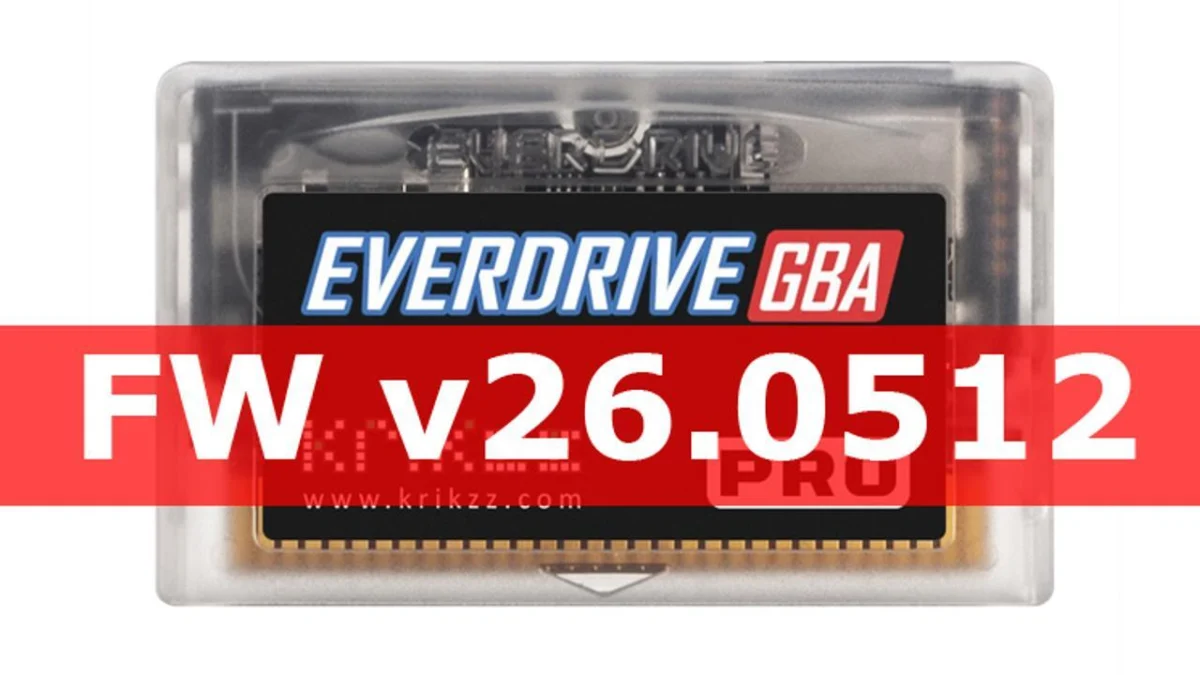
The Evolution of Flash Cart Technology and Krikzz’s Pioneering Role
To fully appreciate the significance of these updates and the Everdrive GBA Pro itself, it is essential to understand the landscape of retro gaming hardware and the pivotal role played by developers like Krikzz. Krikzz, the alias for Ukrainian engineer Igor Skochinsky, has established himself as a titan in the world of flash cartridge development. His "Everdrive" series has become synonymous with quality, reliability, and innovation, offering enthusiasts the ability to play vast libraries of classic games on original hardware without the need for numerous physical cartridges.
Flash cartridges, often referred to as "flash carts" or "ROM carts," are devices that allow users to load game ROMs (digital copies of game cartridges) from an SD card onto a single physical cartridge. This cartridge then functions identically to an original game cartridge when inserted into the console. The appeal lies in convenience, cost-effectiveness (as individual vintage cartridges can be expensive), and the ability to access games that might be rare, obscure, or otherwise difficult to acquire. Beyond mere convenience, flash carts play a crucial role in game preservation, ensuring that digital copies of titles remain playable on their intended platforms for future generations.
Krikzz’s journey began with simpler designs, gradually expanding to support a wide array of consoles, from the Nintendo 64 and Sega Genesis to the Game Boy and Game Boy Advance. Each iteration of his Everdrive products has pushed the boundaries of what these devices can achieve, often incorporating features far beyond the capabilities of the original console cartridges.
The Game Boy Advance: A Revered Handheld Legacy
The Game Boy Advance (GBA), released by Nintendo in 2001, holds a cherished place in gaming history. With its 32-bit processor, color screen, and impressive library of titles, it bridged the gap between the 8-bit and 16-bit eras and the more advanced portable consoles that followed. Its vast game catalog includes critically acclaimed original titles, faithful ports of Super Nintendo classics, and innovative games that pushed the boundaries of handheld gaming. However, like many retro consoles, playing its full library today presents challenges, including the expense and fragility of original cartridges and the lack of modern conveniences like save states or integrated sensors for certain unique titles.
Introducing the Everdrive GBA Pro: A Leap in Functionality
The Everdrive GBA Pro distinguishes itself from previous GBA flash carts, including Krikzz’s own Everdrive GBA X5 Mini, by integrating an unprecedented array of advanced features designed to replicate and even enhance the original GBA experience. It is positioned as the high-end solution for GBA enthusiasts, offering capabilities that were previously fragmented or entirely absent in the flash cart market.
At the core of its appeal are several key functionalities:
- Save States: This feature allows players to save their progress at virtually any point in a game, irrespective of whether the original game supported in-game saving. This is a game-changer for many retro titles, reducing frustration from difficult sections or providing flexibility for players with limited time. It essentially brings a modern convenience feature to classic hardware.
- Real-Time Clock (RTC): A critical inclusion for a significant subset of GBA games. Titles like the Pokémon Ruby, Sapphire, and Emerald versions, Animal Crossing, and Boktai: The Sun is in Your Hand rely on an internal clock to simulate day-night cycles, timed events, and other dynamic gameplay elements. Without a functioning RTC, these games cannot be experienced as intended. The Everdrive GBA Pro’s integrated RTC ensures full compatibility with these time-sensitive titles, a feature often missing or poorly implemented in other flash carts.
- Light, Tilt, and Gyro Sensors: This is perhaps the most ambitious and defining feature of the Everdrive GBA Pro. Certain innovative GBA games utilized specialized cartridges with integrated sensors to create unique gameplay mechanics.
- Boktai: The Sun is in Your Hand: This Hideo Kojima-produced action RPG famously required players to physically take their GBA console outdoors to absorb real sunlight using a light sensor on the cartridge. The Everdrive GBA Pro includes its own light sensor, allowing players to experience Boktai authentically without needing the original, rare, and often expensive cartridge.
- WarioWare: Twisted! and Yoshi’s Universal Gravitation: These games employed tilt and gyro sensors, requiring players to physically rotate and tilt the GBA console to control gameplay. The Everdrive GBA Pro integrates these sensors, enabling seamless play of these motion-controlled titles, which were previously inaccessible or poorly emulated on non-original hardware setups.
The inclusion of these sensors directly addresses a significant gap in the retro gaming ecosystem, allowing for the complete and accurate preservation of unique GBA experiences that were previously dependent on highly specialized and increasingly scarce original hardware.
Chronology of Firmware Updates and Their Core Focus
The release of sophisticated hardware like the Everdrive GBA Pro invariably necessitates ongoing software development, particularly in the form of firmware updates. These updates are crucial for optimizing performance, fixing unforeseen bugs, and ensuring maximum compatibility across the vast and varied GBA game library. Krikzz’s recent series of updates, released shortly after the Everdrive GBA Pro’s debut, underscores his commitment to refining the product.
While specific changelogs for each minor revision are often technical and detailed, the overarching focus of these early updates has been on stability. For a device that integrates complex components like multiple sensors, a real-time clock, and sophisticated memory management for save states, ensuring stable operation is paramount.
Here is a chronological overview of the recently released firmware versions:

- v26.0106: This was likely one of the initial post-release updates, focusing on foundational stability. It would have addressed initial boot-up issues, fundamental SD card compatibility, and basic game loading routines. For a new product with complex features, early firmware revisions often iron out critical bugs discovered during initial user testing or wider deployment. This might include optimizations for power consumption or initial calibration of core components.
- v26.0127: Building upon the previous version, this update would have continued to refine stability across a broader range of GBA ROMs. It’s plausible that this version began to address specific game compatibility issues, ensuring that more titles loaded and ran without glitches. Given the sensor integration, early tweaks to ensure basic functionality of the light, tilt, and gyro sensors would also be a logical area of focus, perhaps addressing initial calibration or responsiveness.
- v26.0421: As the product matures slightly, updates at this stage often delve deeper into feature-specific refinements. For the GBA Pro, this could include improvements to the reliability of save states, ensuring that saved data is consistent and does not corrupt. Furthermore, the accuracy and stability of the Real-Time Clock (RTC) would likely be a priority, given its importance for many iconic GBA games. Enhancements to the user interface, even minor ones, to improve navigation or display information, could also be part of such an update.
- v26.0512: The most recent update, v26.0512, represents the latest iteration of stability and performance enhancements. This version would likely incorporate cumulative fixes from previous builds and address any newly identified issues. This could involve further optimization of sensor input processing, ensuring more precise and responsive control in games like WarioWare: Twisted! It might also include refinements for handling larger SD cards, improving file system navigation, or resolving rare edge-case bugs that only appear under specific conditions or with particular game ROMs.
Collectively, these updates signify Krikzz’s dedication to delivering a polished and fully functional product. Early firmware iterations for advanced hardware are a standard practice, addressing the inevitable minor imperfections that arise when a complex device interacts with a diverse range of software and user environments.
The Importance of Ongoing Firmware Support
For high-end flash cartridges like the Everdrive GBA Pro, continuous firmware support is not merely a bonus but a necessity. The retro gaming ecosystem is vast and constantly evolving, with new ROM hacks, translations, and homebrew titles appearing regularly. A well-supported flash cart can adapt to these changes and maintain compatibility.
Furthermore, the complexity of replicating specific hardware functionalities, such as multiple sensor types and a Real-Time Clock, means that initial releases may have subtle bugs or areas for optimization. Firmware updates allow developers to:
- Enhance Compatibility: Ensure the cart works flawlessly with a wider array of game ROMs, including those with unusual mapper configurations or anti-piracy measures.
- Improve Performance: Optimize loading times, menu responsiveness, and overall game stability.
- Fix Bugs: Address glitches, crashes, or incorrect behavior that may not have been caught during initial testing.
- Refine Features: Calibrate sensors more accurately, improve save state reliability, or enhance RTC precision.
- Add New Functionality: Occasionally, firmware updates can introduce entirely new features or quality-of-life improvements based on user feedback.
Krikzz has a long-standing reputation for providing excellent post-release support for his Everdrive products, often releasing updates for years after a product’s initial launch. This commitment to ongoing refinement builds trust within the retro gaming community and ensures the longevity and value of his devices.
Broader Implications for Retro Gaming and Preservation
The Everdrive GBA Pro, with its advanced features and continuous firmware support, carries significant implications for the broader retro gaming community and game preservation efforts:
- Enhanced Accessibility: By consolidating an entire console’s library into a single cartridge and adding modern conveniences like save states, the GBA Pro makes retro gaming more accessible and enjoyable for a wider audience, including those who may find the original hardware experience too restrictive.
- Authentic Preservation: The integration of sensors and a Real-Time Clock is crucial for preserving the authentic experience of unique GBA titles. Without such a device, games like Boktai and WarioWare: Twisted! would eventually become unplayable on original hardware as their specialized cartridges degrade or become prohibitively expensive. The GBA Pro ensures these innovative experiences can continue to be enjoyed as intended.
- Stimulating Homebrew and Hacking: Flash carts traditionally empower the homebrew community by providing an easy way to test and run custom software on original hardware. The GBA Pro’s robust platform could further foster development for the GBA, potentially leading to new games, tools, or enhancements.
- Future-Proofing the GBA: As original GBA hardware ages, finding working cartridges can become a challenge. The Everdrive GBA Pro helps future-proof the console, allowing enthusiasts to continue enjoying its vast library on original hardware for decades to come, independent of the condition of individual game cartridges.
- Value Proposition: While the Everdrive GBA Pro represents a premium investment, its comprehensive feature set and ongoing support offer significant long-term value compared to the accumulating cost of collecting numerous rare and expensive individual GBA cartridges, especially those with unique sensor requirements.
Statements and Community Reaction (Inferred)
While no direct statements from Krikzz were provided in the original brief, his consistent release of updates for his products speaks volumes. It logically infers a developer deeply committed to product quality and user satisfaction. The rapid succession of these early updates suggests a proactive approach to addressing initial feedback and perfecting the user experience.
The retro gaming community’s reaction to such updates is typically one of appreciation and enthusiasm. Users who have invested in a high-end device like the Everdrive GBA Pro expect robust support, and prompt firmware releases that enhance stability and fix bugs are met with positive reception. It reinforces confidence in the developer and the product itself, assuring buyers that their investment is well-supported. Discussions on forums and social media platforms dedicated to retro gaming often highlight the relief and satisfaction among users when critical issues are addressed, particularly concerning compatibility or the proper functioning of unique features.
Acquisition and Future Outlook
The Everdrive GBA Pro is available for purchase directly from Krikzz’s official website, which serves as the primary portal for his products. Additionally, for convenience and broader market access, it can also be found on platforms like Amazon. These channels provide enthusiasts with reliable avenues to acquire this advanced retro gaming accessory.
- Purchase from Krikzz: https://krikzz.com/our-products/cartridges/everdrive-gba-pro.html
- Amazon Link: https://amzn.to/4u7c8B3
Looking ahead, it is highly probable that Krikzz will continue to release further firmware updates for the Everdrive GBA Pro. As the device gains wider adoption, more diverse usage scenarios will emerge, and ongoing feedback from the community will undoubtedly inform future development cycles. These updates could introduce new minor features, further optimize existing ones, or address compatibility with new homebrew releases. The Everdrive GBA Pro stands as a testament to Krikzz’s innovation and dedication, providing a powerful and future-proof solution for experiencing the Game Boy Advance library in its entirety on original hardware.
Enthusiasts who appreciate this level of dedication and innovation in the retro gaming space are often encouraged to support content creators and developers like Krikzz, as well as platforms like RetroRGB, which provide valuable news and technical insights. Supporting these individuals and organizations helps foster a vibrant and informed retro gaming community, ensuring that such advancements continue to be made and shared.








