Chalid Lutfie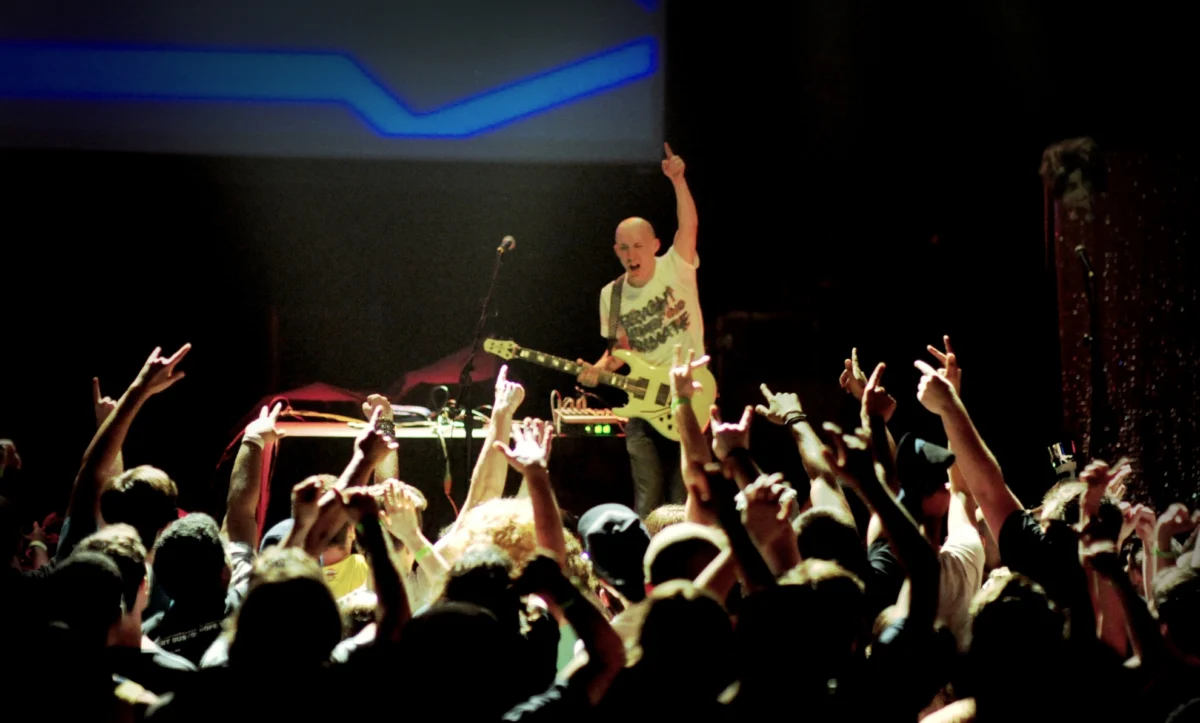
Dan Behrens, the Buffalo-based composer and performer professionally known as Danimal Cannon, has officially announced the upcoming release of his latest studio album, Lunaria. Marking his first major solo effort since the 2013 collaboration with Zef on Parallel Processing, the new project represents a significant technical and stylistic evolution for the artist. Scheduled for a worldwide release on March 11, Lunaria is positioned as the culmination of five years of experimentation in blending the distinct, hardware-limited sounds of the Nintendo Game Boy with the expansive, high-gain textures of progressive metal guitar. The album arrives during a period of increased mainstream interest in "chip-metal," a subgenre Behrens helped pioneer, and promises a more sophisticated integration of disparate musical elements than his previous discography.
The Evolution of the Game Boy and Guitar Integration
The core identity of Lunaria lies in its technical execution of a difficult sonic marriage. While Behrens has been a staple of the chiptune community for over a decade, his earlier works often kept his two primary instruments—the Game Boy and the electric guitar—somewhat segregated. In his 2011 debut solo album, Roots, Behrens began experimenting with adding guitar layers to his 8-bit compositions, which are primarily written using Little Sound DJ (LSDJ), a tracker program that runs on original Game Boy hardware. However, the artist has noted that the initial attempts felt disjointed, leading him to release many of those tracks without guitar accompaniment.
The four-year gap between Parallel Processing and Lunaria was largely dedicated to mastering the compositional techniques required to make these two instruments function as a cohesive unit. In professional music production, the sharp, square-wave and pulse-width frequencies of a Game Boy sound chip often occupy the same auditory space as the overtones of a distorted electric guitar. Achieving a balance where neither masks the other requires meticulous frequency management and arrangement. Behrens’ approach on Lunaria suggests a shift from treating the guitar as a secondary overlay to treating the Game Boy and guitar as a unified "band" lineup. This "full force" approach is reflective of his live performances, where he has long been recognized for his ability to shred over complex, programmed rhythms, a dynamic that has historically been difficult to capture with fidelity on a studio recording.
Conceptual Framework: The Giant Impact Hypothesis
Beyond its technical merits, Lunaria is a concept album rooted in planetary science and celestial mechanics. Behrens, a self-described enthusiast of scientific lectures and astrophysics, centered the album’s narrative on the "giant impact hypothesis." This leading scientific theory proposes that the Moon was formed approximately 4.5 billion years ago out of the debris left over from a collision between the young Earth and a Mars-sized astronomical body named Theia.
The title Lunaria serves as a dual-purpose identifier. It personifies the impactor and the resulting lunar body as a character, while also functioning as a linguistic portmanteau of "Lunar" and "Aria." This suggests a "vocal aria about the moon," providing a thematic bridge to the operatic and orchestral influences present in the music. By personifying a violent cosmic event, Behrens aims to give the progressive metal structures of the album a sense of narrative weight and scale, mirroring the chaotic yet creative nature of the solar system’s formation.
Collaborative Contributions and Technical Skillsets
To achieve the "aria" aspect of the album’s title, Behrens enlisted the talents of Emily Yancey, a professionally trained opera singer. Yancey, who previously lived in close proximity to Behrens, provided the vocal timbre necessary to represent the "celestial moon goddess" character within the album’s conceptual framework. Her contribution marks a departure from traditional chiptune aesthetics, which rarely incorporate operatic vocals, further pushing Lunaria into the realm of progressive art rock.
Additionally, the album features a guest performance by Samuel Ascher-Weiss, known in the electronic music community as Shnabubula. Ascher-Weiss is a celebrated pianist and composer recognized for his virtuosic improvisational skills and deep understanding of video game music theory. For Lunaria, he performed a piano rendition of the track "Axis," which Behrens describes as the most complex composition on the record. The inclusion of an acoustic piano provides a stark organic contrast to the digital constraints of the Game Boy’s four-channel sound chip, offering listeners a different perspective on the album’s harmonic depth.
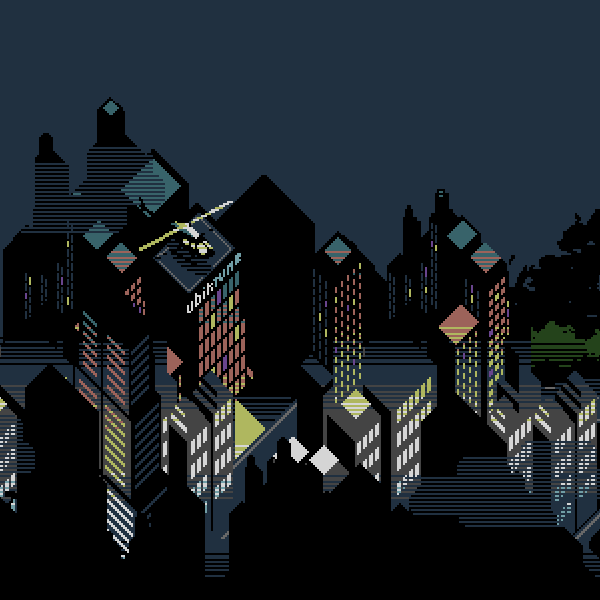
The visual identity of the project was handled by artist Minerva Mopsy, whose artwork serves to encapsulate the celestial themes of the music. The physical release of the album will include a poster featuring this artwork, emphasizing the project’s status as a comprehensive multi-media experience.
Stylistic Influences and Genre Blending
While Lunaria is fundamentally a metal album, the breadth of influence cited by Behrens indicates a highly eclectic compositional process. The artist pointed to several key pillars that informed the record’s sound:
- Video Game Music (VGM): Specifically, the Shovel Knight soundtrack by Jake Kaufman. Kaufman’s work is noted for its melodic complexity and effective use of limited hardware, a standard Behrens strives to uphold.
- Industrial Music: The influence of Nine Inch Nails and KMFDM is evident in the album’s rhythmic aggression and sound design.
- Indie Rock: The duo Buke and Gase, known for their use of handmade instruments and complex polyrhythms, provided inspiration for the album’s more experimental structures.
- Classical and Choral Music: The works of Wolfgang Amadeus Mozart and contemporary choral composer Eric Whitacre influenced the harmonic arrangements and vocal layers provided by Yancey.
This intersection of 18th-century classical theory, 20th-century industrial grit, and 21st-century digital synthesis positions Lunaria as a forward-thinking entry in the progressive music landscape.
Chronology of Production
The timeline of Lunaria’s development reveals a deliberate and patient production cycle:
- 2011: Release of Roots. Behrens identifies the difficulty of blending Game Boy and guitar.
- 2013: Release of Parallel Processing. Collaboration with Zef focuses on high-energy chiptune but leaves room for further solo exploration of the guitar-chip hybrid.
- 2012–2015: The "mastery period." Behrens spends several years refining his writing process, focusing on how to integrate live instrumentation without compromising the 8-bit aesthetic.
- Late 2015: Final recording sessions and collaboration with Yancey and Ascher-Weiss.
- Early 2016: Announcement of the album and release of the lead single, "Behemoth."
- March 11, 2016: Scheduled global release.
Market Context and Broader Implications
The release of Lunaria comes at a time when the "chiptune" label is expanding beyond its initial niche. Originally a scene defined by the repurposing of obsolete hardware for nostalgic purposes, modern chiptune artists like Danimal Cannon are increasingly viewed as legitimate progressive composers who happen to use unconventional instruments.
The industry has seen a rise in the "Bitpop" and "Nintendocore" movements, but Behrens’ work is distinct for its refusal to rely on irony or novelty. By incorporating scientific theory and operatic vocals, he is attempting to elevate the genre into a space typically reserved for high-level progressive metal acts like Dream Theater or Between the Buried and Me. The success of Lunaria could serve as a case study for how "chip-music" can transcend its hardware limitations to reach broader audiences in the metal and progressive rock communities.
Availability and Distribution
Lunaria will be available through multiple distribution channels, with a primary focus on the digital platform Bandcamp for pre-orders. In addition to the digital release, Behrens has confirmed a physical CD edition, which is becoming a rarity in the digital-first chiptune scene. The CD version is intended for collectors and audiophiles, featuring the aforementioned poster by Minerva Mopsy.
The lead single, "Behemoth," is currently available for streaming, providing a preview of the high-octane synthesis and intricate guitar work that defines the album. Early reactions from the community suggest that the five-year wait has resulted in a project that meets the high technical expectations set by Behrens’ previous work while introducing a new level of emotional and conceptual depth.
As the March 11 release date approaches, Lunaria stands as a testament to the persistence of independent artists in the digital age. By bridging the gap between the 8-bit sounds of the 1980s and the modern complexities of progressive metal, Danimal Cannon continues to redefine the boundaries of what can be achieved with a vintage handheld console and a six-string guitar.