Chalid Lutfie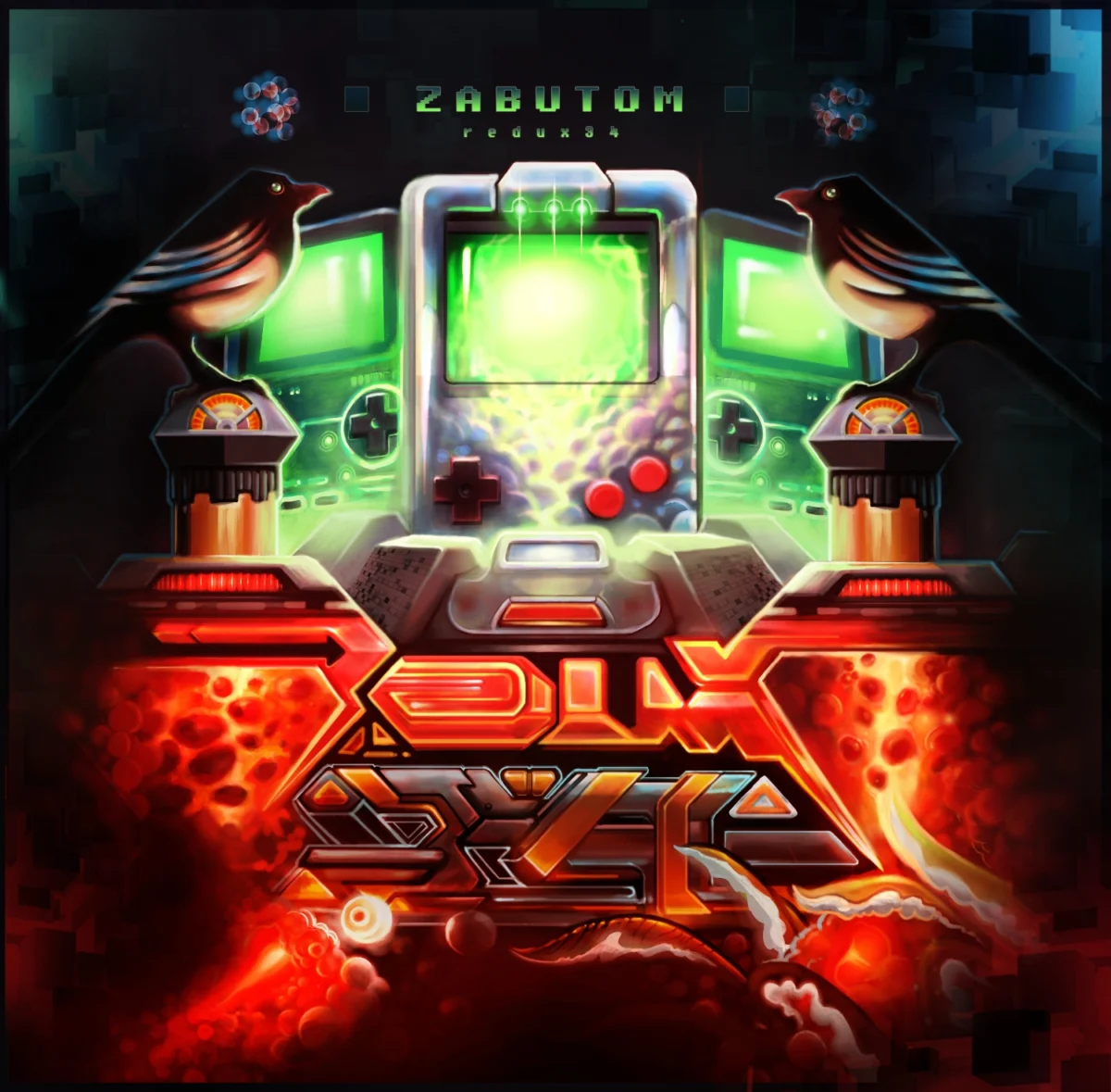
The contemporary electronic music landscape witnessed a significant milestone on September 18, 2015, with the official release of Redux34, the latest full-length studio effort from the acclaimed Swedish composer Niklas Sjövärd, professionally known as zabutom. Released under the Ubiktune label, the album represents a definitive shift in the chiptune genre, moving beyond the traditional constraints of 8-bit synthesis to incorporate a diverse array of influences including progressive rock, Intelligent Dance Music (IDM), electro, and folk-inspired melodic structures. By synthesizing the nostalgic timbres of the Nintendo Entertainment System (NES) and Game Boy hardware with modern production techniques, electric guitars, and analog synthesizers, Sjövärd has crafted a work that serves as both a technical showcase and a narrative-driven exploration of retro-futurism.
The Artistic Profile of Niklas Sjövärd
Born in 1985, Niklas Sjövärd has established himself as a central figure within the international chiptune and demoscene communities. His career, which spans over fifteen years, began in the early 2000s, a period characterized by the resurgence of low-bitrate music as a legitimate art form rather than a mere byproduct of limited gaming hardware. Sjövärd’s early contributions to various demoscene releases—multimedia presentations that push the technical limits of computer hardware—earned him a reputation for "chip wizardry," a term often used by peers to describe his ability to coax complex, emotive textures from primitive sound chips.
In 2011, Sjövärd released Zeta Force on the Ubiktune label. This debut was a curated collection of "shmup-esque" tracks—music inspired by the frantic, high-energy soundtracks of arcade "shoot ’em up" games. Zeta Force quickly ascended to classic status within the genre, praised for its rhythmic precision and melodic clarity. However, Sjövärd sought to expand his academic and technical foundations. In 2014, he earned a Bachelor’s degree in Composition and Electronic Music from the Academy of Music and Drama at the University of Gothenburg, Sweden. This formal education provided him with the theoretical framework to integrate avant-garde electronic experiments and traditional instrumentation into his established 8-bit palette, a synthesis that is fully realized in Redux34.
Technical Genesis and the Redux Concept
The development of Redux34 was a protracted and often arduous process, spanning nearly seven years of intermittent composition and production. The album’s title itself is a reference to the technical volatility inherent in working with vintage hardware. In 2008, while Sjövärd was performing extensively at international chiptune festivals using the Little Sound DJ (LSDJ) software on Nintendo Game Boys, he began drafting the title track. During the final stages of the song’s primary construction, the LSDJ cartridge suffered a catastrophic memory crash, erasing all music data.
This event forced Sjövärd to recreate the composition from the ground up, leading to the designation "Redux." The numerical suffix "34" refers to the track’s 3/4 time signature, a rhythmic choice that deviates from the standard 4/4 meter dominant in electronic dance music. This theme of loss and recreation became a leitmotif for the entire project. Throughout the production cycle, Sjövärd encountered repeated instances of lost patterns and corrupted mixes, requiring a meticulous "start-from-scratch" approach that extended the album’s timeline but ultimately refined its sonic density.
Sonic Architecture and Genre Integration
Redux34 is characterized by its seamless blending of disparate musical worlds. While the foundation of the album remains rooted in the pulse-width modulation and noise-channel percussion of 8-bit hardware, the production reaches a level of sophistication rarely seen in the genre. Sjövärd utilizes "spaced-out" delay textures and complex soundscapes that allow the electronic bleeps of the NES to coexist with the organic warmth of electric guitars and the rich harmonics of analog synthesizers.
The stylistic breadth of the album reflects Sjövärd’s diverse professional engagements outside of the chiptune scene. In the years leading up to the release of Redux34, he was involved in modular live techno via the Buchla Boys, experimental electronic projects such as Friktion and Scratches and Petals, and folk-inspired acoustic performances with acts like Fowlcloud and Léonore Boulanger. These "excursions," as Sjövärd describes them, informed the IDM and progressive rock elements found in the new album. The result is a "retro-futuristic vision" that oscillates between melancholic introspection and hopeful, anthemic crescendos, telling a wordless story through intricate arrangement rather than lyrical exposition.

The Role of Ubiktune and Collaborative Visuals
The release of Redux34 further solidifies the position of Ubiktune as a premier outlet for progressive chiptune and VGM-inspired (Video Game Music) art. Ubiktune, a netlabel and collective, has long championed artists who use the limitations of old hardware as a springboard for broader musical exploration. By hosting Sjövärd’s work, the label continues to bridge the gap between the niche demoscene and the wider independent music market.
The auditory experience of Redux34 is complemented by the visual contributions of Anders Karlsson, a concept artist and painter based in Norrköping, Sweden. Karlsson’s artwork for the album provides a visual anchor for the "strange new worlds" Sjövärd’s music conjures. The collaboration highlights a common trend in high-end electronic releases where the aesthetic packaging is as vital to the narrative as the audio itself, creating a cohesive multimedia product that appeals to collectors and audiophiles alike.
Broader Implications for the Chiptune Genre
The arrival of Redux34 comes at a time when chiptune is undergoing a significant transition. Once viewed primarily as a nostalgic novelty or a subculture of the gaming world, the genre is increasingly being recognized within academic and mainstream musical circles. Sjövärd’s background—combining grassroots demoscene experience with a formal degree in composition—is emblematic of this shift.
Analysts of the electronic music industry note that albums like Redux34 challenge the "lo-fi" label often associated with 8-bit music. By applying high-fidelity mixing and mastering to "low-fidelity" sound sources, Sjövärd creates a cognitive dissonance that forces the listener to engage with the music as a serious contemporary work. Furthermore, the integration of progressive rock elements suggests a maturation of the genre’s audience, moving toward longer-form compositions and complex harmonic structures that mirror the "progressive" movements of the 1970s.

Distribution and Availability
Redux34 was made available on September 18, 2015, across all major digital distribution platforms, including iTunes, Bandcamp, and various streaming services. In a nod to the tactile nature of the hardware used in its creation, the album was also released on physical CD. This multi-channel distribution strategy reflects the modern reality of the music industry, where digital accessibility is balanced by the demand for physical artifacts among dedicated fanbases.
Conclusion and Future Outlook
With the release of Redux34, Niklas "zabutom" Sjövärd has successfully navigated the transition from a genre-specific "chip wizard" to a multifaceted composer of contemporary electronic music. The album stands as a testament to the resilience of the creative process in the face of technical failure and the potential for ancient gaming hardware to remain relevant in a high-definition world.
As Sjövärd returns to his "chip music roots" after years of experimental exploration, Redux34 serves as a bridge between his past and his future. The album does not merely replicate the sounds of the 1980s; it repurposes them to speak to a 21st-century audience, ensuring that the legacy of the demoscene continues to evolve. For the listener, Redux34 offers a complex, multi-layered journey that proves that even within the rigid constraints of 8-bit code, there is infinite room for human expression and sonic innovation.
The industry will likely look to this release as a benchmark for production quality in the chiptune-fusion space. As more artists with formal training enter the scene, the boundaries between "computer music" and "fine art" continue to blur, with zabutom leading the vanguard of this sophisticated electronic movement.