Farhan hamdan
A significant wave of updates for the MiSTer FPGA platform has been released by lead developer Sorg, integrating the cumulative efforts of numerous community contributors and marking a pivotal moment for retro gaming enthusiasts. This extensive refresh, encompassing a vast array of system cores, introduces previously beta-tested features, new functionalities, and a modernized framework designed to enhance accuracy, stability, and user experience. The updates address a broad spectrum of classic consoles and vintage computer systems, solidifying MiSTer’s position as a premier hardware-level emulation solution for digital preservation and retro gaming.
Understanding the MiSTer FPGA Ecosystem
The MiSTer FPGA project stands at the forefront of hardware-accurate retro computing and gaming. Unlike traditional software emulators that simulate a system’s behavior through software running on a modern CPU, MiSTer utilizes Field-Programmable Gate Arrays (FPGAs). An FPGA is a semiconductor device that can be configured by a user after manufacturing. In the context of MiSTer, these FPGAs are programmed to replicate the original hardware circuitry of classic systems at a transistor level. This distinction is critical, as it allows for near-perfect timing accuracy, minimal input lag, and a level of authenticity often unmatched by software emulation.
The MiSTer platform is built around a central DE10-Nano FPGA board, augmented by various add-on boards (like the I/O board for analog video/audio output, SDRAM module for specific system requirements, and USB hubs for peripheral connectivity). The "cores" are the specific FPGA configurations that transform the generic hardware into a particular classic console or computer, such as a Super Nintendo, Sega Genesis, or Commodore 64. The continuous development and refinement of these cores are central to the MiSTer project’s success, driven by a global community of engineers, reverse-engineers, and retro gaming enthusiasts.
The Scope of the Latest Update Wave
This latest update, spearheaded by Sorg, represents a culmination of months, if not years, of intricate development work by a dedicated community. The sheer volume of updated cores, ranging from iconic 8-bit consoles to powerful 16-bit machines and venerable home computers, underscores the collaborative spirit of the MiSTer project. The update cycle integrated features that had previously been available only through manual beta downloads, standardizing them across the platform. This consolidation simplifies the update process for users and ensures broader access to the latest enhancements.
A key aspect of this release is the deployment of an updated core framework. This foundational change allows for more consistent development practices, improved performance, and paves the way for future innovations. It’s a testament to the project’s maturity, moving beyond individual core improvements to a more integrated and robust architecture. The framework update impacts how individual cores interact with the MiSTer’s main system software, leading to a more unified and efficient experience.
Navigating the Update Process: A Minor Configuration Note
Users performing the update will immediately notice a minor operational change upon rebooting their MiSTer devices. Following the update, initial boots may present error messages. This is a direct consequence of the new framework seeking updated .ini options that are not present in older mister.ini configuration files. The .ini file serves as the central configuration hub for the MiSTer, allowing users to customize settings for video output, audio, controller inputs, and various core-specific parameters.
For the majority of users, these initial error messages can be safely ignored, as they do not affect the functionality of the updated cores or the overall system. The MiSTer will continue to operate as expected with existing configurations. However, to fully leverage the new features and ensure future compatibility, users are advised to download the latest MiSTer.ini file directly from the official MiSTer-devel GitHub repository. After downloading, users can reapply their preferred custom settings, gaining access to any newly introduced options and eliminating the boot-time error messages. This process ensures the system is fully synchronized with the latest development standards.
The Collaborative Engine of MiSTer Development
The scale of this update highlights the unique development model of the MiSTer FPGA project. Unlike proprietary hardware or software development, MiSTer thrives on open-source collaboration. Engineers, hobbyists, and enthusiasts worldwide contribute their expertise, dedicating countless hours to reverse-engineer original hardware, write VHDL/Verilog code for FPGA implementations, and rigorously test new features and bug fixes. This distributed, community-driven approach accelerates development cycles and fosters a highly resilient ecosystem.
Sorg, as the primary maintainer and integrator, plays a crucial role in curating these contributions, ensuring compatibility, stability, and adherence to the project’s high standards. The integration of "cumulative work of many contributors" signifies a peer-reviewed, iterative process where ideas are shared, code is optimized, and features are refined before being merged into the main distribution. This collaborative ethos is a cornerstone of the MiSTer’s success and its ability to consistently deliver high-quality, hardware-accurate retro experiences.
Enhanced Compatibility for Specialized Hardware: The SuperStation One Example
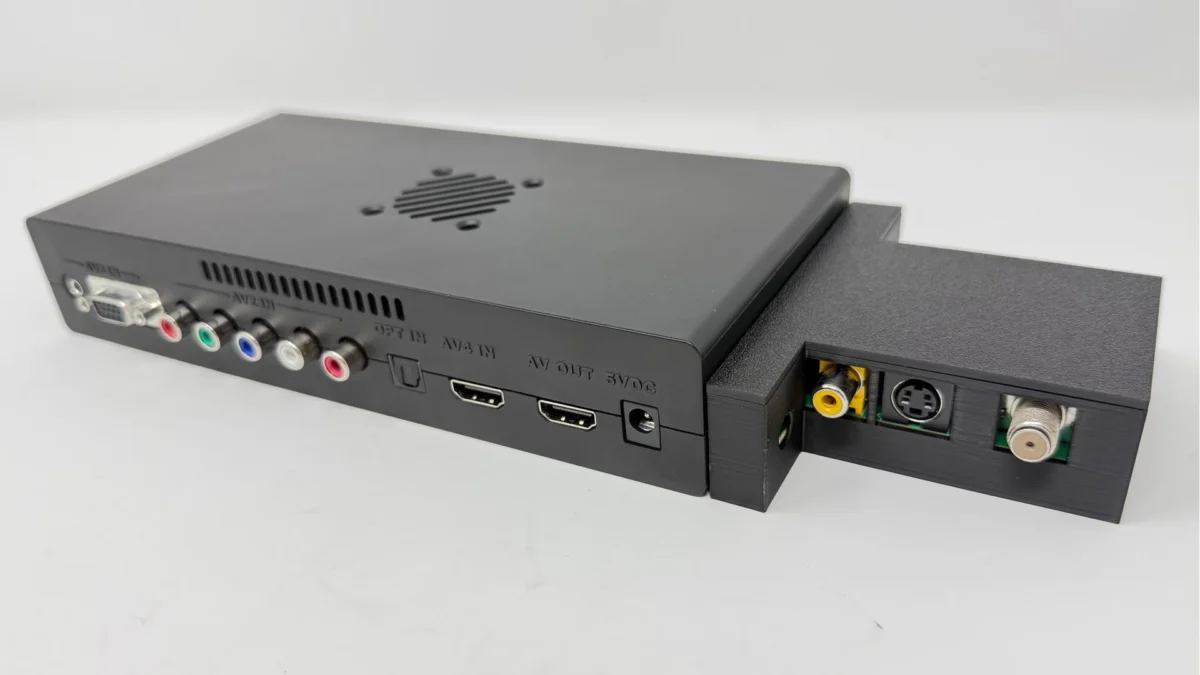
One of the direct beneficiaries of this comprehensive update is users of specialized MiSTer accessories, such as the SuperStation One (SSO). The SSO is a popular add-on that enhances the MiSTer’s capabilities, particularly regarding analog video output. Previously, users desiring simultaneous RGB and Composite/S-Video output often relied on modified core versions provided on the SSO’s included MicroSD card. This manual modification process could be cumbersome and occasionally out of sync with official core updates.

With the latest update, a significant number of major cores now natively support simultaneous analog output types directly from the official update_all script. This means SSO owners can simply run the standard update_all script, and their cores will automatically inherit this enhanced functionality without needing custom versions. This standardization greatly simplifies the user experience for SSO owners, ensuring they benefit from the latest core improvements while maintaining their desired video output configurations. However, as a precautionary measure, SSO users are still advised to back up their current MicroSD configuration before initiating the update, safeguarding against any unforeseen compatibility issues or accidental data loss. This emphasis on backup protocols reflects a prudent approach to system management within the MiSTer community.
A Deep Dive into the Updated Cores
The extensive list of updated cores touches nearly every corner of the retro computing and gaming landscape represented on the MiSTer platform. While specific feature lists for each core were not detailed in the original announcement, the general improvements typically include:
- Improved Accuracy and Timing: Refinements to how the FPGA mimics the original system’s internal clocks, memory access, and component interactions, leading to more faithful reproduction of game behavior and visual effects.
- Expanded Peripheral Support: Enhancements to support a wider range of controllers, light guns, mice, keyboards, and other accessories.
- Bug Fixes: Addressing specific game incompatibilities, graphical glitches, audio anomalies, or stability issues identified by the community.
- New Features: Implementation of quality-of-life improvements, new display options, aspect ratio controls, or specialized modes that enhance the user experience.
- Performance Optimizations: Making cores run more efficiently, potentially reducing resource usage or improving responsiveness.
The updated cores span a wide array of historical platforms:
Classic Consoles Receive Significant Overhauls:
- NES (Nintendo Entertainment System): Improvements often focus on PPU (Picture Processing Unit) and APU (Audio Processing Unit) accuracy, addressing specific mapper complexities and enhancing compatibility with obscure titles.
- SNES (Super Nintendo Entertainment System): Updates frequently involve fine-tuning DSP (Digital Signal Processor) chip emulation, improved special chip support (e.g., Super FX, SA-1), and better timing for complex visual effects.
- Genesis / Mega Drive and Sega CD / Mega CD: Enhancements typically target Z80 and 68k CPU synchronization, VDP (Video Display Processor) accuracy, and better handling of CD audio and data streaming.
- Sega 32x: Given its complexity, updates often focus on improved inter-processor communication and graphical rendering accuracy for its unique dual-SH2 architecture.
- TurboGrafx16/CD: Core improvements here might include refinements to its HuC6260 video chip, sound accuracy, and CD-ROM BIOS integration.
- SMS (Sega Master System): Simpler than its 16-bit successors, updates often revolve around VDP improvements and game compatibility.
- Neo Geo: Known for its massive ROMs, Neo Geo updates often involve optimizing memory management and ensuring accurate hardware behavior for its arcade-perfect reproductions.
- GameBoy: Updates for this handheld system might include improved LCD timing, color palette accuracy, and support for various game-specific enhancements.
Vintage Computers Gain Enhanced Fidelity:
- C64 (Commodore 64): A highly complex system, updates often focus on SID chip accuracy, VIC-II video improvements, and broader disk drive/peripheral support.
- C16 (Commodore 16): Similar to C64, but for its less common sibling, updates would focus on specific hardware replication.
- VIC20: Enhancements for this early 8-bit computer often involve memory mapping, sound, and character generation accuracy.
- PET2001: For this very early Commodore machine, updates would focus on its monochrome display and basic I/O.
- MSX: A standard for home computers, MSX updates often include improved VDP support (e.g., MSX2/2+ features) and cartridge slot handling.
- Atari 800/5200: These systems share architecture, so updates would target ANTIC and GTIA chip accuracy for graphics and sound.
- Apple-II: Core improvements for this influential system typically involve video modes, disk drive emulation, and expansion card support.
- MacPlus: Replicating an early Macintosh, updates would focus on its GUI, SCSI controller, and specific hardware quirks.
- Oric: A less common European 8-bit computer, updates would focus on its unique features and peripheral support.
- X68000: A powerful Japanese computer, updates for this complex core would involve its custom graphics chips, sound, and SCSI support.
This comprehensive list demonstrates the breadth of the MiSTer project’s ambition: to accurately preserve and make accessible a significant portion of computing and gaming history.
Broader Impact and Implications for Retro Preservation
The continuous, massive updates like this one have profound implications beyond just improved gaming experiences. They represent a critical effort in digital preservation. As original hardware ages and becomes increasingly prone to failure, MiSTer provides a robust and accurate alternative. By replicating the hardware at a fundamental level, it ensures that the nuances of these classic systems – from precise timing to specific graphical artifacts – are faithfully preserved for future generations. This is particularly important for systems where software emulation might fall short in capturing the full authentic experience.
Furthermore, the open-source nature of MiSTer fosters a community that actively documents and reverse-engineers these vintage systems. This process not only creates the cores but also generates invaluable knowledge about the inner workings of forgotten technologies, contributing significantly to the historical record of computing. The MiSTer platform effectively democratizes access to this heritage, making it available to anyone with the affordable hardware and the desire to explore it.
The platform’s growth also influences the retro gaming hardware market, driving innovation in accessories and peripherals that bridge modern displays and controllers with the MiSTer’s output. The SuperStation One’s improved integration is a prime example of this symbiotic relationship.
Sustaining the Future: Community Support and Development
The MiSTer FPGA project, while driven by passion, also relies on financial support to sustain its lead developers and infrastructure. Initiatives like Sorg’s Patreon campaign (https://www.patreon.com/cw/FPGAMiSTer) are vital. These contributions enable developers to dedicate more time to complex tasks, acquire necessary testing hardware, and maintain the collaborative platforms that facilitate development. Without this community backing, the pace and quality of updates like the current massive release would be difficult to sustain.
The Update_All script (https://github.com/theypsilon/Update_All_MiSTer), a crucial tool for users, also underscores the community’s contribution, providing an easy method for users to keep their systems current. This tool, developed by a community member, abstracts away the complexity of managing numerous core files and dependencies.
In conclusion, this massive update wave for the MiSTer FPGA platform is more than just a collection of new features and bug fixes; it is a powerful affirmation of the project’s vitality, the strength of its collaborative community, and its unwavering commitment to accurate retro hardware preservation. It reinforces MiSTer’s status as an indispensable tool for enthusiasts, historians, and anyone passionate about experiencing the rich legacy of computing and gaming with unparalleled authenticity. Users who have not updated their MiSTer in some time are strongly encouraged to do so, to unlock the full potential of these latest advancements.