Chalid Lutfie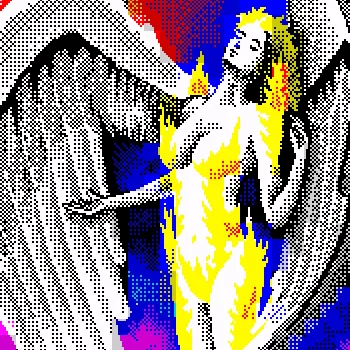
The Technical Foundations of Still Flying
To understand the significance of Still Flying, one must examine the hardware constraints under which it was produced. The ZX Spectrum, a home computer released by Sinclair Research in 1982, became a cornerstone of computing culture in the United Kingdom and, subsequently, Eastern Europe and the CIS region. While the original hardware featured rudimentary sound capabilities, the later models—and the numerous clones popular in Russia—were equipped with the General Instrument AY-3-8910 (or the Yamaha YM2149) programmable sound generator.
This chip provided three channels of square-wave synthesis and a single noise generator. Composing for the AY chip required a meticulous approach to "tracking," a method of music sequencing where notes and effects are entered into a vertical grid. For Still Flying, C-Jeff utilized Pro Tracker 3, a sophisticated software tool for the ZX Spectrum that allowed composers to push the hardware to its limits. The use of "real hardware" in 2002, a period when modern PC-based digital audio workstations were becoming the industry standard, underscores a commitment to the authentic timbre and mechanical nuances of the 8-bit era.
Chronology of Composition and the 2002 Demoparty Circuit
The development of Still Flying was inextricably linked to the demoscene—a computer art subculture focused on producing "demos," which are non-interactive audiovisual presentations. Throughout 2002, C-Jeff composed the tracks that would eventually form the album’s core, frequently submitting individual pieces to competitive "demoparties."
A pivotal moment in the album’s history occurred during the CAFe 2002 demoparty. C-Jeff entered the track "My Mind is Free" into the ZX Spectrum AY Music competition. Due to a self-acknowledged limited proficiency in English at the time, the track was originally registered and released under the title "My mind free." Despite the grammatical oversight, the composition resonated with the community, eventually securing 13th place in a highly competitive field. Following the event, the track was refined and integrated into the album’s final tracklist.
Later that same year, another significant composition, "Lonely Soul," was completed. While it was not part of the initial conceptualization of the album, the track shared a distinct aesthetic and melodic direction with the Still Flying sessions. "Lonely Soul" was entered into the Paradox 2002 demoparty, where it achieved substantial critical success, earning 2nd place in the ZX Spectrum AY Music competition. This accolade solidified C-Jeff’s reputation as a premier composer within the scene and led to the track’s inclusion in the broader Still Flying project.
The 2003 Musicdisk Release and Collaborative Credits
Approximately 18 months after the initial compositions were finalized, Still Flying was transformed from a collection of music files into an "executable musicdisk." In the demoscene, a musicdisk is a standalone software program designed to play an album while displaying synchronized graphics and interfaces. This format was the primary method of distribution for chiptune artists before the advent of widespread high-speed internet and streaming platforms.
The creation of the musicdisk was a collaborative effort involving several prominent figures in the ZX Spectrum community:
- Vortex: Responsible for the software coding, ensuring the music played back accurately on original hardware while managing the user interface.
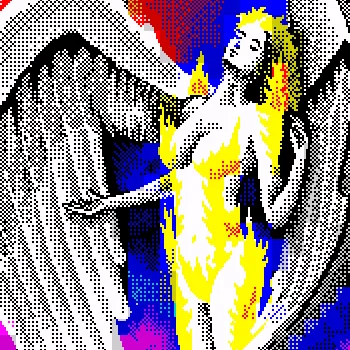
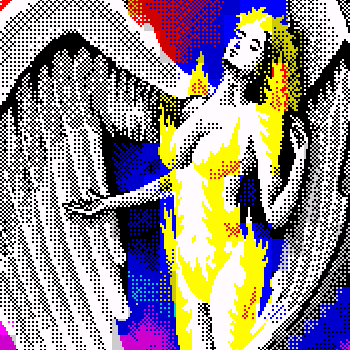
- Schafft: Provided the visual identity for the project, including the artwork and graphical assets used within the executable.
- Poisoned CyberJack: Handled the "packing" and technical optimization, a crucial step in ensuring the software could fit within the memory constraints of the ZX Spectrum.
- MmcM: A legendary figure in the Russian chiptune scene, MmcM provided the mastering for the album, balancing the levels and frequencies to ensure the AY chip’s output was optimized for both hardware and modern recording.
The involvement of these contributors highlights the communal nature of the demoscene, where the release of an album was often a multi-disciplinary software project rather than a simple audio export.
Artistic Analysis: The Lyric Music Novel
C-Jeff’s choice of the tagline "lyric music novels" provides insight into the album’s thematic goals. Unlike much of the high-tempo, dance-oriented chiptune music of the era, Still Flying focuses on atmospheric storytelling and emotional resonance. The compositions utilize the AY chip’s three channels to create intricate counterpoints and lush arpeggios that mimic the complexity of progressive rock and neoclassical music.
The "novel" aspect of the album suggests a linear progression, where each track serves as a chapter in a larger narrative. This approach was revolutionary for the 8-bit medium, which was often relegated to the background of video games. By centering the music as the primary vessel for storytelling, C-Jeff helped elevate the status of tracker music from a hobbyist technical exercise to a legitimate form of contemporary electronic art.
Supporting Data and Technical Specifications
The legacy of Still Flying is supported by its technical preservation. The album exists in multiple formats, reflecting the evolution of digital distribution:
- Original PT3 Files: The raw tracker data, which allows other composers to study the note-for-note construction of the songs.
- TAP/TRD Images: Virtual disk formats that allow the original musicdisk to be run on modern PC emulators such as Fuse or Spectaculator.
- Modern Digital Reissues: The album has been archived on platforms like Bandcamp and Demozoo, ensuring that the 2002 recordings are accessible to a global audience.
The data from the CAFe 2002 and Paradox 2002 competitions provides a snapshot of the regional demoscene’s health. During this era, hundreds of entries were submitted annually to parties across Russia, Poland, and Ukraine, with Still Flying standing out as a rare example of a cohesive solo album emerging from the sea of individual competition entries.
Broader Impact and Implications for the Chiptune Genre
The release of Still Flying had a lasting impact on the global chiptune community. It demonstrated that the ZX Spectrum remained a viable and powerful instrument long after its commercial obsolescence. Furthermore, it served as a springboard for C-Jeff’s career, which would later see him transition into multi-instrumental production, blending 8-bit sounds with live guitars and modern synthesizers in acclaimed works like Electric_Adventures and Big-Endian.
From a historical perspective, the album is a testament to the cultural resilience of the 8-bit aesthetic in Eastern Europe. While Western markets moved quickly toward 16-bit and 32-bit consoles, the "Speccy" community in the East continued to innovate, pushing the AY chip to produce sounds that its original designers never envisioned. Still Flying is a primary text in this narrative, showcasing a sophisticated level of music theory and sound design that transcends the limitations of its hardware.
The album also reflects the transition of the demoscene from a closed-loop subculture to a source of professional talent for the broader music and gaming industries. Many of the techniques pioneered by C-Jeff and his contemporaries in 2002 have since been adopted by modern indie game developers and electronic music producers seeking the specific "lo-fi" warmth of authentic 8-bit synthesis.
Conclusion and Legacy
In the decades following its release, Still Flying has maintained its status as a classic of the ZX Spectrum era. Its 2002 origins place it at a crossroads between the raw, experimental days of early computer music and the more polished, professional chiptune movement that would follow in the late 2000s. Through its technical precision, collaborative spirit, and narrative ambition, the album remains a vital piece of digital history.
As the demoscene continues to be recognized by cultural heritage organizations—such as the inclusion of the demoscene in the UNESCO Finnish National Registry of Intangible Cultural Heritage—works like Still Flying serve as essential evidence of the movement’s artistic depth. C-Jeff’s debut is not merely a collection of 8-bit songs; it is a meticulously crafted "lyric music novel" that continues to fly through the digital landscape, preserved for future generations of listeners and programmers alike.