Jia Lissa
The Genesis of the Isometric Vision
The conceptual origins of Landstalker date back to March 1991, a period when Climax Entertainment was already stretched thin between its joint venture with Sega—Sonic Co., Ltd.—and the development of Shining Force. Kan Naitō, obsessed with the potential of 3D environments, felt that the first-person corridors of Shining in the Darkness were too restrictive. His vision was to create what he termed an "electronic diorama world," where players could navigate vertically and diagonally with a sense of cinematic immersion.
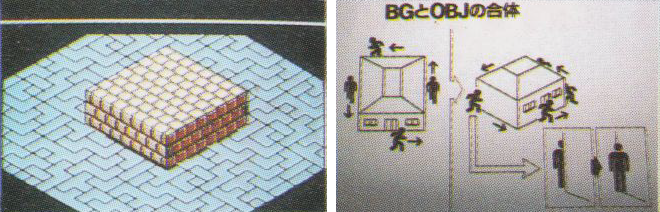
The inspiration for the game’s unique perspective famously came to Naitō while observing traffic and pedestrians from his 10th-floor apartment window. The diagonal, top-down view provided a clear sense of spatial relationships that horizontal or vertical perspectives could not achieve. However, implementing this on the 16-bit Mega Drive presented significant technical hurdles. At the time, isometric games were largely confined to home computers like the Amiga or were restricted to single-screen environments due to Video Random Access Memory (VRAM) limitations. To overcome this, Naitō spent over a year developing a proprietary engine that could handle diagonal scrolling and complex sprite priority without crippling the console’s processing speed.
The Technical Architecture of DDS520
The centerpiece of Landstalker’s development was the Diamond-Shaped Dimension System 520 (DDS520). This engine used diamond-shaped panels—64×64 pixel units—as the foundational building blocks of the game world. Unlike standard tile-based engines, the DDS520 had to calculate the "priority" of every object on the screen. Because the game world featured height and depth, the engine needed to determine whether a character was in front of, behind, or on top of an object at any given moment.

Naitō utilized the Mega Drive’s Motorola 68000 processor to perform rapid vector calculations, representing the diamond panels as mathematical vectors rather than simple static images. This optimization allowed for smooth diagonal scrolling, though it came at a cost. The team famously debated the inclusion of character shadows to aid in platforming—a common player grievance due to the difficulty of judging jump distances in an isometric plane. Naitō ultimately vetoed the inclusion of shadows, concluding that the additional data required for dynamic shadows would halve the number of height levels the engine could support and significantly reduce the number of on-screen NPCs and enemies.
To manage the massive scope of the game world, which eventually ballooned to 850 individual maps, the team utilized a secondary software tool called "Mirage III." Developed by Yasuhiro Kumagi, this tool allowed designers to visualize the 3D data as wireframes, ensuring that the complex geometry of dungeons and towns remained consistent and free of collision errors.
Creative Direction and the Influence of Indiana Jones
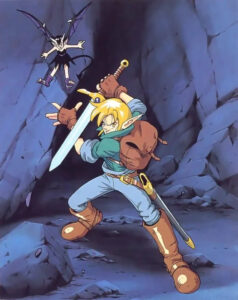
While Naitō focused on the engine, Yoshitaka Tamaki was tasked with defining the game’s aesthetic and narrative tone. Moving away from the high-fantasy seriousness of the Shining series, the team aimed for an "Indiana Jones" style adventure. Nigel was designed not as a traditional hero, but as a professional treasure hunter—a forest elf motivated by wealth and wit rather than duty.
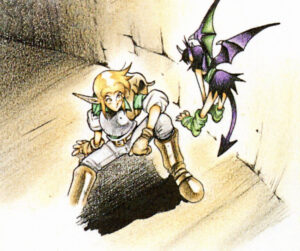
The inclusion of Friday, a nymph companion, added a layer of personality and a gameplay mechanic for revival. However, the duo’s resemblance to Link and Navi from The Legend of Zelda prompted internal concerns. To differentiate the project, Tamaki emphasized Nigel’s status as a rogue and centered the plot on the legendary hidden treasure of King Nole on Mercator Island. The narrative was built using what Director Kenji Orimo called the "flexible scenario method," where map designs often preceded the story. If a designer created a unique structure, such as a tall tower or a lush courtyard, the writers would then invent characters—like Princess Lara or a specific gardener—to justify the environment’s existence.

The Soundtrack and Orchestral Ambitions
The auditory landscape of Landstalker was crafted by Motoaki Takenouchi, a protégé of the legendary Koichi Sugiyama. Takenouchi, who had previously worked on Jewel Master, sought to push the Mega Drive’s Yamaha YM2612 sound chip to its limits. He composed 40 tracks that blended orchestral arrangements with rhythmic, adventurous themes.
Takenouchi’s approach was notably meticulous; for "A Ballad for Princess Loria," he attempted to replicate a live piano performance without the standard data compression used in game music. This track, which plays for two minutes during a non-interactive event, was intended to encourage players to simply stop and listen. Takenouchi’s involvement with Climax was prolific, though he later expressed frustration with the industry’s tendency to release "unfinished products," a sentiment that eventually led to his departure from game composition in 1996.

Chronology of the Landstalker Project
- February 1991: Initial programming begins on the 3D diorama engine.
- June 1991: Formation of Sonic Co., Ltd., a joint venture between Climax and Sega to bolster RPG development.
- October 1991: Yoshitaka Tamaki begins character designs for Nigel and Friday.
- Autumn 1991: Yasuhiro Ōhori joins as a map designer, bringing expertise from the arcade and fanzine industries.
- Early 1992: The DDS520 engine is finalized after twelve major revisions.
- June 11, 1992: Climax officially unveils Landstalker at the Tokyo Prince Hotel, distancing the game from the Shining franchise.
- September 1992: The final ROM is mastered at 16Mb.
- October 30, 1992: Landstalker is released in Japan, selling 35,000 units in its first week.
- 1993: The game is localized for North American and European markets.
Industry Impact and the Camelot Split
The success of Landstalker solidified Climax Entertainment’s reputation as a premier developer for Sega, but it also marked the beginning of a divergence within the studio. Hiroyuki Takahashi continued to focus on the Shining series, eventually forming Camelot Software Planning. Meanwhile, Kan Naitō remained at Climax, further exploring isometric technology with titles like Dark Savior on the Sega Saturn.
This internal division has long been a subject of speculation. While the official reason for Landstalker being a separate IP was its radical gameplay shift, statements from staff like Takenouchi hinted at "internal frictions." Regardless of the cause, the split resulted in two distinct lineages of RPG design: Camelot’s traditional turn-based mastery and Climax’s experimental 3D action.

Legacy and Modern Re-Releases
In the decades since its release, Landstalker has maintained a dedicated cult following. Its influence can be seen in spiritual successors like Alundra (developed by Matrix Software, co-founded by Landstalker map designer Yasuhiro Ōhori). Sega has recognized the game’s enduring value by including it in various retrospective collections, including the Wii Virtual Console, Steam, and the Mega Drive Mini.
Attempts to revive the franchise have been met with mixed results. A spinoff, Lady Stalker, was released for the Super Famicom in 1995 but remained exclusive to Japan. In 2005, Naitō announced a full 3D remake of Landstalker for the Sony PlayStation Portable (PSP). Despite a promising technical demo at the Tokyo Game Show, the project was ultimately canceled. With Climax Entertainment ceasing operations in 2014, the future of the series remains uncertain.
Landstalker stands as a testament to an era of daring technical experimentation. By refusing to play within the established rules of 16-bit perspective, Kan Naitō and his team created a "diorama world" that challenged players and developers alike. While the lack of a proper sequel remains a point of contention for fans, the original adventure on Mercator Island continues to be celebrated for its charm, its difficulty, and its uncompromising vision of what a 3D world could look like in a 2D age.