Jia Lissa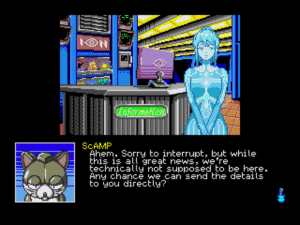
The landscape of retro-style development has seen a significant shift in recent years, moving from simple arcade-style throwbacks to complex, narrative-heavy experiences that push the boundaries of vintage hardware. Pixel Pusher Games, an independent studio dedicated to high-fidelity retro experiences, has recently unveiled its latest project, Chords. This title aims to redefine the capabilities of the Sega Genesis (known internationally as the Mega Drive) by delivering a cinematic graphic adventure that rivals the expansive library of the Sega CD. While the Sega CD was historically the primary host for storage-intensive adventure games like The Secret of Monkey Island, The Adventures of Willy Beamish, and Hideo Kojima’s Snatcher, Pixel Pusher Games is utilizing modern development techniques to bring that same level of depth and aesthetic polish to a standard cartridge format.
The Narrative Core and World-Building
At the heart of Chords is the story of Akio, an aspiring musician caught in the high-stakes world of a global battle-of-the-bands competition. However, the game quickly transcends its musical premise, spiraling into a complex web of corporate manipulation and social intrigue. Players follow Akio as he uncovers the machinations of a powerful shadow group that is exerting influence over the competition for its own clandestine purposes.
The narrative is structured into three distinct acts, a format designed to provide a cohesive and paced storytelling experience. According to the development team, the game is built to offer several hours of gameplay, a substantial figure for a genre often criticized for its brevity on 16-bit consoles. Lead developer Matt has noted that even a speedrun of the first chapter requires approximately 45 minutes, suggesting that a standard playthrough will offer the kind of "meat on the bones" typically reserved for CD-ROM titles of the early 1990s. This focus on narrative density is a deliberate attempt to honor the legacy of Japanese Adventure (ADV) games while introducing a fresh, music-centric perspective to the noir-inflected genre.
Gameplay Mechanics and Interactive Storytelling
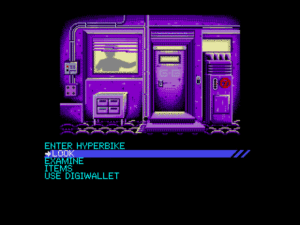
Chords utilizes a classic command-driven interface familiar to fans of Snatcher and Rise of the Dragon. Players navigate the world through a menu of actions such as "Move," "Look," "Talk," and "Investigate." However, Pixel Pusher Games is moving beyond the "brute force" method of gameplay, where players simply click every option until the story progresses. Instead, the game emphasizes logical deduction and environmental awareness.
The puzzles within Chords are integrated into the narrative fabric, requiring players to synthesize information gained from conversations, analyze background art for subtle clues, and apply deductive reasoning to overcome obstacles. The developers have emphasized that while the puzzles are designed to be accessible, they demand a high level of scrutiny. A seemingly insignificant poster on a wall or a minor detail in a character’s dialogue may hold the key to advancing. This approach to game design encourages a slower, more methodical pace, allowing the atmosphere and world-building to take center stage.
Technical Innovation on 16-Bit Hardware
One of the most significant aspects of Chords is its technical ambition. During the original lifecycle of the Sega Genesis, the console was often limited by the storage capacity of its cartridges, which typically ranged from 4 to 32 megabits (0.5 to 4 megabytes). In contrast, the Sega CD offered up to 650 megabytes of data, allowing for full-motion video (FMV), expansive soundtracks, and thousands of lines of text.
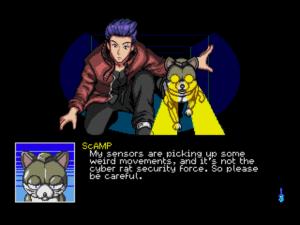
Pixel Pusher Games is bridging this gap by employing advanced compression techniques and optimized asset management. The visual presentation is handled by Daniel "108 Stars" H, a veteran of the homebrew scene who previously worked on the acclaimed RPG Pier Solar. Pier Solar itself was a milestone in Genesis development, utilizing a massive 64-megabit cartridge to deliver high-resolution art and a sprawling story. In Chords, Daniel’s 16-bit pixel art aims to replicate the gritty, cinematic aesthetic of early 90s cyberpunk adventures, featuring detailed character portraits and atmospheric environments that utilize the Genesis’s limited color palette to maximum effect.
The auditory experience is equally critical, given the game’s musical themes. The soundtrack is composed by SuperJet Spade, who is utilizing the Genesis’s Yamaha YM2612 FM synthesis chip to create an energetic chiptune score. By leaning into the unique "gritty" sound profile of the Genesis, the music serves to reinforce the game’s identity as a legitimate 16-bit era artifact while maintaining the high production standards expected by modern audiences.
Chronology of Development and Studio Background
The development of Chords is the culmination of several years of iteration. Pixel Pusher Games, led by the developer known as Matt, began the project with the goal of creating a tribute to Hideo Kojima’s work that could stand on its own merits. The studio has maintained a transparent development cycle, frequently sharing updates through social media platforms like BlueSky and their official website.
A playable demo of Chords has already been circulated among enthusiasts and journalists, garnering positive feedback for its narrative flow and seamless interface. The demo focuses on the introductory elements of Akio’s journey, establishing the stakes of the musical competition and the initial hints of the underlying conspiracy.
Timeline of Key Milestones:
- Concept Phase (Early 2021): Initial brainstorming of a music-themed adventure game for the Genesis.
- Artistic Partnership (Late 2021): Daniel "108 Stars" H joins the project to lead visual development.
- Engine Refinement (2022-2023): Development of a custom adventure engine capable of handling high-resolution portraits and branching dialogue on the Genesis.
- Public Demo Release (2024): A playable slice of the first chapter is released to showcase the game’s mechanics and art style.
- Future Planning: The studio is currently working toward a dual digital and physical release, with the physical version expected to include a high-quality cartridge and manual, adhering to the standards of original Sega releases.
The Broader Impact on the Retro Gaming Market
The announcement of Chords comes at a time when the "aftermarket" for the Sega Genesis is thriving. Recent years have seen the release of high-profile indie titles such as Tanglewood, Xeno Crisis, and Paprium, proving that there is a viable commercial market for new software on 35-year-old hardware. However, the majority of these releases have been action-oriented, such as platformers, shooters, or beat-’em-ups.
Chords represents a diversification of the indie Genesis library. By focusing on the graphic adventure genre—a genre that was historically underserved on the base Genesis console due to hardware constraints—Pixel Pusher Games is filling a significant niche. This move signals to other developers that the Genesis hardware is capable of supporting deep, slow-burn narratives, provided the development team is willing to invest in the necessary technical optimization.
Furthermore, the game’s support for multiple languages—including English, French, German, Spanish, and Portuguese—highlights the global nature of the retro gaming community. By ensuring accessibility for a worldwide audience, Pixel Pusher Games is positioning Chords as a major international release within the homebrew ecosystem.
Comparative Analysis: Cartridge vs. CD-ROM
To understand the achievement of Chords, one must look at the historical context of its inspirations. Snatcher, originally released for the PC-8801 and later ported to the Sega CD, relied heavily on the CD-ROM’s ability to store redbook audio and voice acting. These elements were crucial in establishing the game’s cinematic atmosphere.
Chords attempts to achieve a similar atmospheric depth without the benefit of CD-ROM storage. This requires a greater reliance on "cinematic storytelling" through text and visual cues. The design philosophy of Pixel Pusher Games treats the video game as a form of interactive literature. By blending dramatic pacing and impactful dialogue, the studio aims to deliver an immersive experience that compensates for the lack of spoken dialogue with superior writing and evocative art.
This "limitations-as-strength" approach is a hallmark of the most successful modern retro projects. It forces developers to focus on the core elements of the experience—plot, character development, and atmosphere—rather than relying on high-budget spectacle.
Future Outlook and Additional Projects
While Chords is the primary focus for Pixel Pusher Games, the studio is also concurrently developing Crypt of Dracula, a first-person dungeon crawler for the Genesis. The development of two distinct titles in different genres suggests a long-term commitment to the platform.
The success of Chords will likely serve as a litmus test for the viability of narrative-heavy adventure games on retro hardware. If the game meets its ambitious goals, it could pave the way for a resurgence of the ADV genre on the Genesis, potentially leading to more complex translations of existing Japanese classics or entirely new original intellectual properties.
As development continues, the studio remains focused on polishing the final two acts of the story. While a definitive release date has not yet been set, the progress shown in the current demo suggests that the final product will be a significant addition to the 16-bit library. Enthusiasts of the genre and Sega collectors alike are closely monitoring the project, anticipating a game that honors the past while pushing the technical envelope of the present.