Indra Gunadi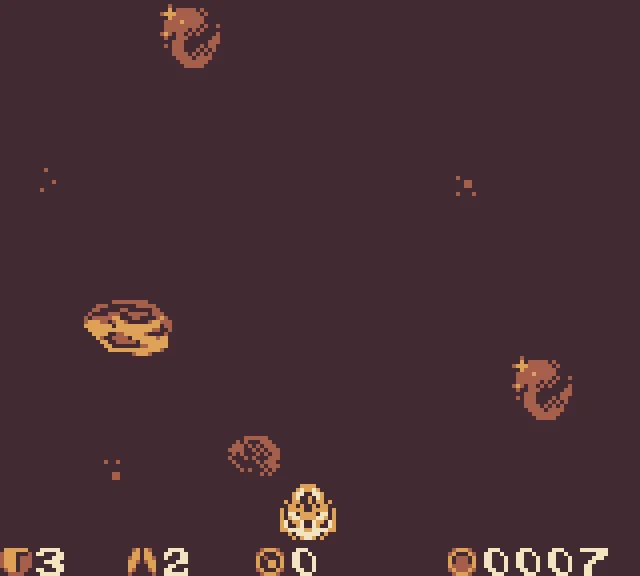
The Genesis of AurumStrike and the GBJAM Tradition
The release of AurumStrike is intrinsically linked to the GBJAM series, a recurring game development competition that challenges creators to build games compatible with the original Nintendo Game Boy and Game Boy Color hardware. Since its inception, GBJAM has acted as a primary incubator for the homebrew ecosystem, providing a structured environment for developers to experiment with the hardware’s 160×144 resolution and its limited color palette.
SteelSoldier, the developer behind AurumStrike, utilized GB Studio to construct the title. GB Studio is a drag-and-drop game creator that has revolutionized the accessibility of Game Boy development. By abstracting the complex assembly language traditionally required to write software for the Sharp LR35902 processor, tools like GB Studio have allowed developers to focus on level design, mechanics, and narrative. AurumStrike represents a refined iteration of this process, showcasing how contemporary software workflows can produce high-quality, authentic experiences on hardware that has been officially discontinued for over two decades.
Narrative Framework and Core Mechanics
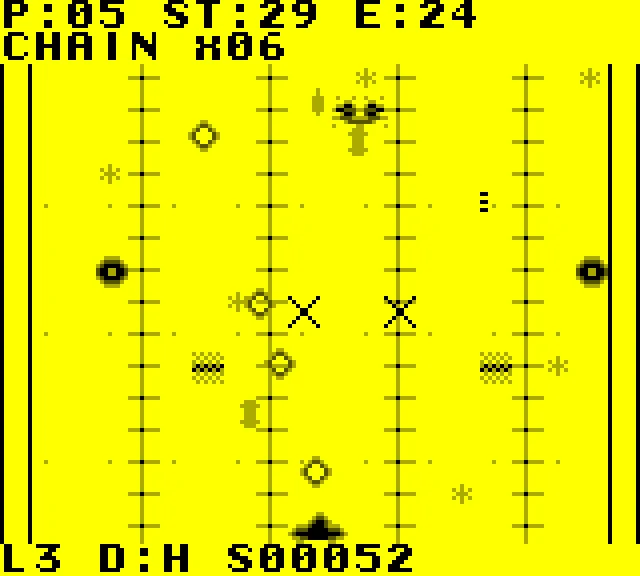
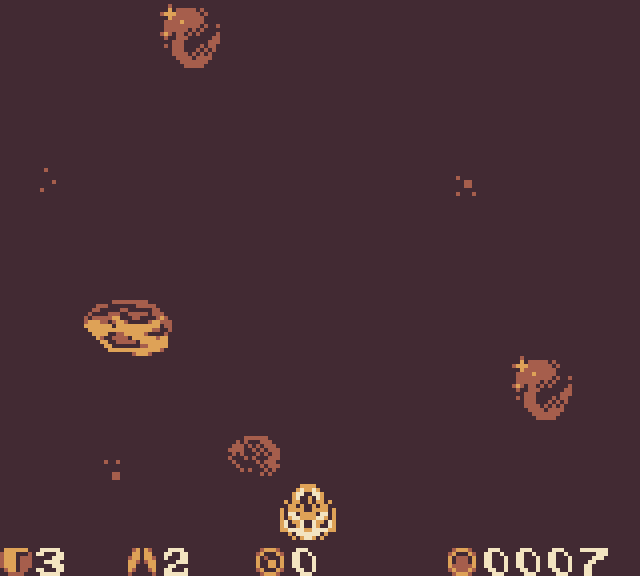
AurumStrike places the player in control of the "Golden Naga," an ancient vessel tasked with traversing hostile space to reach a lost homeworld. The narrative is propelled by the discovery of a salvaged Starmap, a trope common in the science fiction genre that effectively serves as the player’s roadmap through the game’s various sectors.
From a mechanical standpoint, AurumStrike adheres to the classic conventions of the shoot ’em up genre, popularized by titles such as Gradius and TwinBee. The game requires players to navigate through vertically scrolling environments while contending with waves of enemy ships, stationary turrets, and environmental hazards. The limitations of the Game Boy Color’s hardware—specifically the number of sprites that can be displayed on a single scanline—require developers to implement clever object-pooling and flickering techniques to maintain a consistent frame rate. Preliminary analysis of the gameplay suggests that SteelSoldier has prioritized fluid movement and reactive input, two factors that are critical for the viability of a shmup on the Game Boy platform.
Chronology of Modern Retro Development
The emergence of games like AurumStrike is part of a broader timeline of the retro-gaming renaissance. While the official lifespan of the Game Boy Color concluded in 2003 with the rise of the Game Boy Advance, the community-driven lifespan has expanded indefinitely.
- 2013: The inaugural GBJAM is held, signaling the start of a new wave of interest in Game Boy hardware development.
- 2019: The release of GB Studio 1.0 democratizes development, leading to an exponential increase in the volume of homebrew releases.
- 2023–2025: The "golden age" of modern homebrew, characterized by physical cartridge manufacturing, professional-grade box art, and the rise of digital distribution platforms like itch.io and pdroms.de.
- September 2026: AurumStrike is released following GBJAM14, reflecting the current state-of-the-art in homebrew optimization and visual fidelity.
This trajectory indicates that the homebrew market is no longer a fringe hobbyist endeavor but a sustainable micro-industry. Developers are increasingly focused on creating "retail-quality" experiences, complete with custom PCB (Printed Circuit Board) designs and professional packaging, which suggests a shift in focus from mere technical demonstrations to commercial-grade creative products.
Technical Constraints and Hardware Optimization
Designing for the Game Boy Color in 2026 presents unique technical challenges. The handheld features an 8-bit CPU clocked at approximately 4.19 MHz or 8.38 MHz (in double-speed mode). Its VRAM is limited to 16KB, and the color palette is restricted to a subset of 32,768 colors, with only a handful of colors visible on screen simultaneously.
AurumStrike utilizes these limitations to its advantage. By focusing on high-contrast art styles and efficient sprite usage, the developer avoids the common pitfalls of "flicker" or "slowdown" that plagued many commercially released titles of the 1990s. The game’s development within the GBJAM14 framework implies that it was created under strict time constraints, further highlighting the developer’s ability to leverage the modular nature of modern development kits.
Industry Implications and Community Impact
The release of AurumStrike serves as a case study for the implications of retro-hardware development on modern software preservation. By creating new, original software for legacy hardware, the homebrew community is effectively keeping the "language" of the hardware alive.
"The continued development of software for the Game Boy Color is not merely an act of nostalgia," notes an independent industry analyst. "It is a vital exercise in hardware architecture education. Every new game developed for the platform requires a deep understanding of memory banking, interrupt handling, and register management, which are foundational concepts in computer science."
Furthermore, the integration of these games into digital archives ensures that the hardware ecosystem remains documented. Unlike proprietary software, which is often lost to bit rot or licensing disputes, the homebrew community operates on an open-exchange model. This ensures that AurumStrike will likely remain accessible to future researchers and enthusiasts long after the original hardware has ceased to function.
The Role of Digital Distribution
Platforms such as pdroms.de and itch.io have been instrumental in the dissemination of titles like AurumStrike. By bridging the gap between the developer and the end user, these platforms allow for the immediate distribution of ROM files, which can be played via emulators or flashed onto "flash carts" for use on authentic hardware.
The shift toward digital-first distribution for homebrew titles has lowered the barrier to entry for developers. In the 1990s, the cost of manufacturing cartridges and securing distribution channels was a significant hurdle. Today, a developer can reach a global audience with zero overhead costs. This democratization has allowed for a diverse range of genres and themes to flourish, moving beyond the standard platformers that once dominated the homebrew scene.
Future Outlook
As the industry looks toward the latter half of the 2020s, the interest in Game Boy hardware shows no signs of waning. Future developments will likely focus on hardware-enhanced titles—games that use modern flash-cart capabilities to bypass original memory limitations, such as higher audio fidelity via custom sound chips or larger ROM sizes.
AurumStrike serves as a baseline for this evolution. It demonstrates that even within the strict confines of a 2026 game jam, there is still significant creative territory to explore. As more developers adopt these workflows, the standard for what constitutes a "homebrew" game will continue to rise, likely leading to more ambitious projects that push the Game Boy Color’s hardware to its absolute theoretical limits.
The impact of AurumStrike extends beyond the gameplay itself. It represents a synthesis of historical appreciation and modern technical capability. By maintaining the cultural and technical legacy of the Game Boy Color, developers like SteelSoldier ensure that the platform remains a relevant and vital medium for interactive entertainment. The success of this release will likely encourage further entries in the series and continue to foster a vibrant, collaborative environment for developers worldwide, cementing the Game Boy Color’s position not just as a relic of the past, but as a living platform for modern innovation.