Farhan hamdan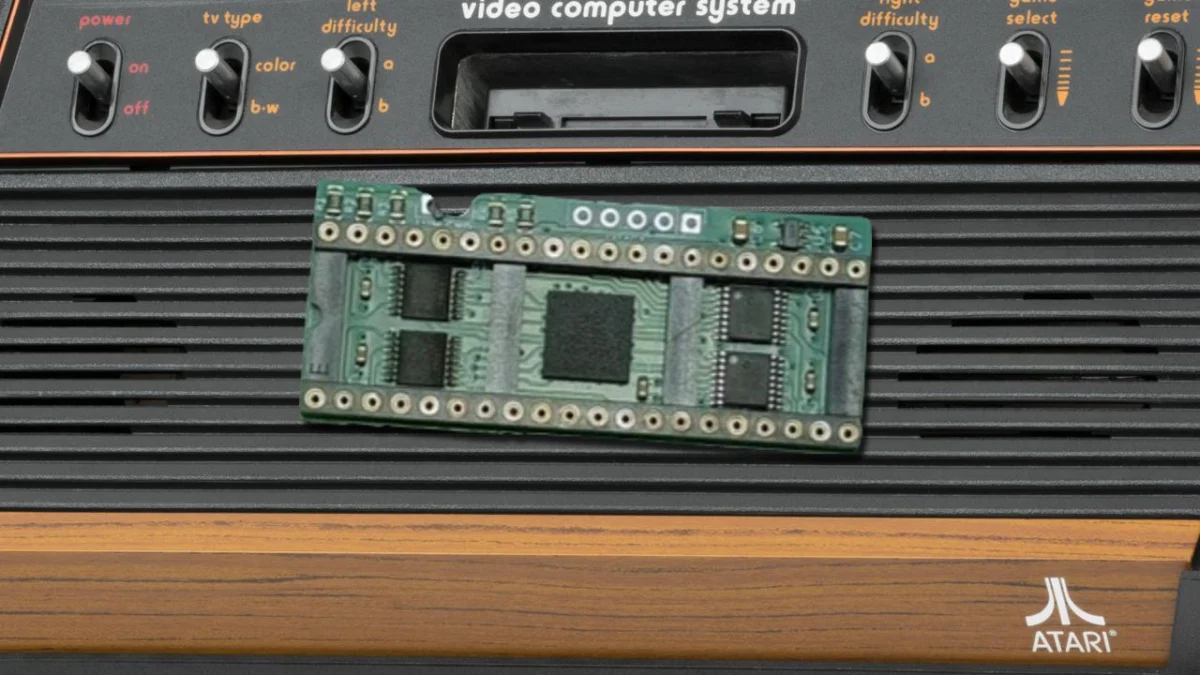
The retro gaming modification market has taken another significant step forward with the announcement that US-based distributor Koala Koa has officially added creator c0pperdragon’s TIA Digitizer Lumacode mod for the iconic Atari 2600 to its inventory. Alongside the Atari 2600 solution, the supplier is also stocking Lumacode hardware designed for the Nintendo Entertainment System (NES) and the Sega Master System. This development marks a major milestone for enthusiasts seeking high-definition video output from vintage hardware without the drawbacks typically associated with traditional internal modifications, such as permanent shell cutting or complex desoldering procedures.
Understanding the Lumacode Innovation and Installation Process
For decades, achieving modern, high-definition digital video output from retro consoles required invasive hardware modifications. Traditional HDMI mods often demanded the removal of original surface-mount components, delicate trace cutting, and irreversible alterations to the console’s original plastic housing to accommodate new ports. Lumacode fundamentally changes this paradigm by utilizing a streamlined signal-digitizing approach.
When paired with advanced upscalers and line doublers such as the Open Source Scan Converter (OSSC) or the RetroTINK 4K, Lumacode functions essentially as an external HDMI modification. However, the installation process is dramatically simplified. The TIA Digitizer designed for the Atari 2600 is largely plug-and-play, earning it a reputation in the community as a true non-destructive, or "#nocutmod." Because no electronic components need to be desoldered and no permanent modifications are made to the console’s physical structure, the hardware remains entirely in its original, pristine condition—a crucial factor for retro gaming preservationists and collectors who value hardware authenticity.
Despite the plug-and-play nature of the video pipeline, builders must still account for audio routing. While the TIA Digitizer expertly handles the complex generation of high-fidelity video signals, users utilizing the Atari 2600 version must separately tap into the console’s audio circuitry to achieve complete multimedia output. Industry observers and hardware developers are actively investigating the creation of open-source, low-impact audio companion boards that would complement the Lumacode installation, ensuring that future iterations require minimal soldering across the entire board.
Economic Advantages for North American Consumers
The distribution of these specialized modification boards through Koala Koa provides substantial financial relief for retro gaming enthusiasts residing in North America. Previously, acquiring niche hardware components directly from international creators or overseas distributors often subjected buyers to steep international shipping tariffs, high courier brokerage fees, and unexpected customs import duties.
With Koala Koa offering the Atari 2600 TIA Digitizer board at a baseline price of approximately $55 USD domestically, North American consumers benefit from drastically reduced shipping overhead and streamlined delivery times. While international buyers can still purchase the hardware directly through c0pperdragon’s primary storefront, the establishment of a trusted domestic supply chain removes significant financial barriers to entry for US-based modifiers and hobbyists.
Compatibility and Configuration with Modern Upscalers

Successfully integrating the Lumacode output into a modern display setup relies heavily on the capabilities of high-end external video processors. Extensive testing conducted across multiple hardware configurations indicates seamless compatibility with industry-standard devices, including the RetroTINK 6X, the flagship RetroTINK 4K, and the classic OSSC.
Hardware experts and configuration specialists—notably Ivory Tower Collections, a recognized authority in Lumacode installations—have contributed significantly to the community by developing standardized configuration profiles. These profiles help users bypass the steep learning curve traditionally associated with calibrating high-end video processors. However, hardware technicians advise that minor calibration adjustments may still be required depending on individual console board revisions. Variables such as phase tuning and Sync-on-Green (SoG) values often need manual fine-tuning to achieve optimal pixel sharpness and color accuracy.
Current technical evaluations have also highlighted minor hurdles with newer hardware iterations. Initial tests involving the OSSC Pro and the Atari 2600 Lumacode mod revealed isolated color reproduction anomalies. While these visual discrepancies are currently being investigated by hardware architect Markus and other leading developers to determine whether they stem from user configuration errors or firmware limitations, preliminary workarounds are documented within the evolving OSSC community guides. Official profile updates and firmware patches are expected to follow as engineers gather more empirical data from a wider array of console revisions.
Broader Implications for the Retro Gaming Preservation Movement
The expansion of the Lumacode ecosystem reflects a broader philosophical shift within the retro gaming hardware community. As original cathode-ray tube (CRT) televisions become increasingly scarce, expensive to maintain, and impractical for modern living spaces, the demand for pristine digital display options on contemporary flat-panel monitors and 4K televisions has surged.
Historically, purists resisted modifications that compromised the structural integrity of vintage hardware. By prioritizing reversible, non-destructive installation methods, developers like c0pperdragon have bridged the gap between modern display compatibility and historical preservation. Users who prefer traditional setups can easily revert their consoles to stock condition without leaving physical scars on the original hardware.
Furthermore, behind-the-scenes developments suggest that the Lumacode ecosystem is poised for continued expansion. Industry insiders have hinted at upcoming firmware updates, expanded device support, additional digital output alternatives, and potentially even native analog RGB and YPbPr component video options. As these technologies mature, the standardization of intermediate digitizer boards is expected to simplify the modification landscape, making high-end video output accessible to a wider demographic of hobbyists who lack advanced micro-soldering equipment.
Resources and Installation Documentation
For enthusiasts interested in pursuing the modification, comprehensive documentation, community wikis, and configuration assets are publicly available. Detailed step-by-step instructions for the Atari 2600 TIA Digitizer can be accessed via c0pperdragon’s official GitHub repository, while specific OSSC integration guides and RetroTINK profile archives are hosted across leading retro-tech enthusiast platforms. As hardware developers continue to refine audio-taping solutions and resolve minor upscaler compatibility quirks, the Lumacode standard stands out as one of the most promising advancements in retro hardware engineering of the decade.