Ganda Hendra Perkasa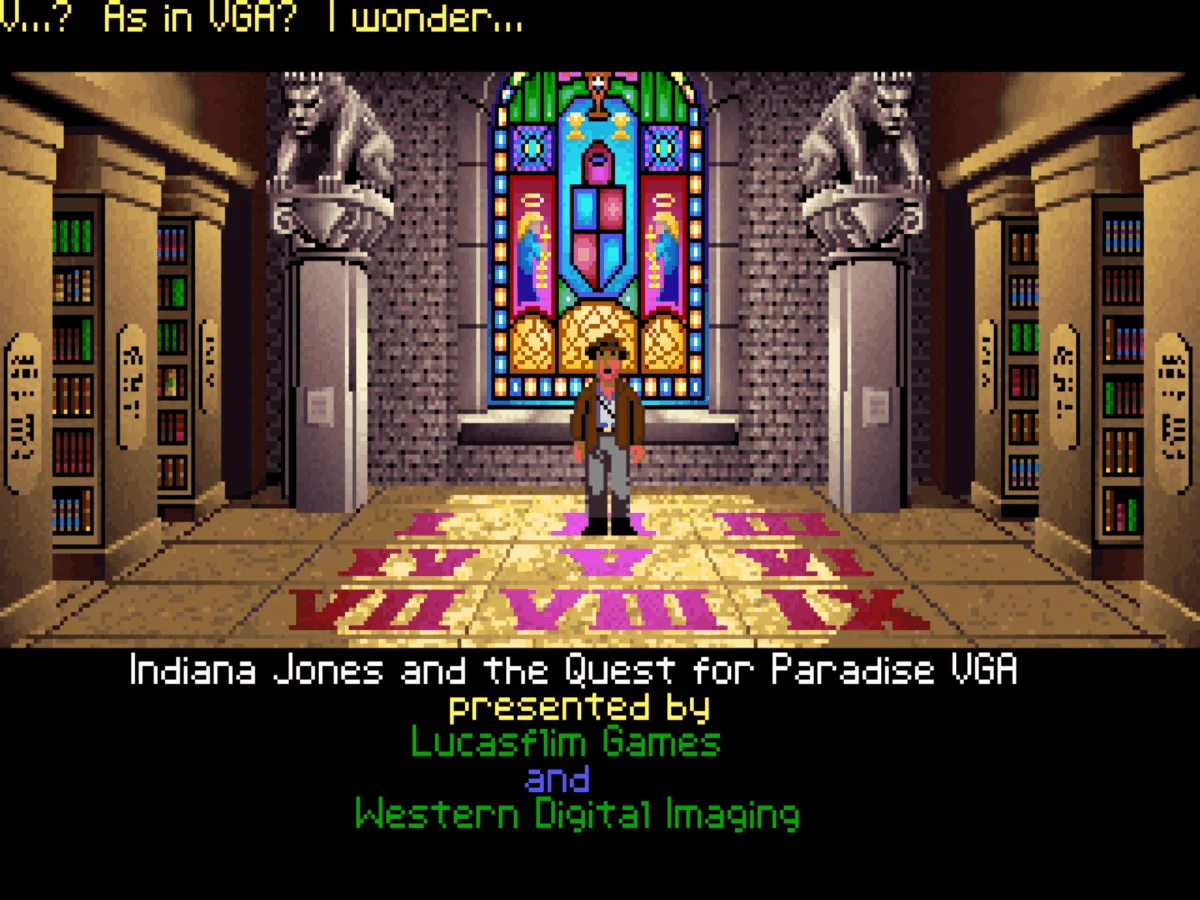
A remarkable discovery has emerged from the digital archives of gaming history, unearthing a previously unknown interactive cinematic demo for an Indiana Jones adventure. Titled Indiana Jones and the Quest for Paradise VGA, this artifact hails from the burgeoning era of Lucasfilm Games, a period synonymous with innovation in adventure gaming. While not a complete, playable game, the demo offers a unique glimpse into the development processes and marketing strategies of the early 1990s, leveraging the renowned SCUMM engine and assets originally created for Indiana Jones and the Last Crusade. The find was made during the meticulous organization of personal archives belonging to Aric Wilmunder, a pivotal figure in the maintenance and development of the SCUMM engine at Lucasfilm.
Unveiling a Lost Piece of Gaming History
The unearthed demo is a non-interactive movie that showcases the capabilities of Lucasfilm’s groundbreaking SCUMM (Script Creation Utility for Maniac Mansion) adventure game engine. Specifically, it utilizes graphical assets developed for the VGA (Video Graphics Array) version of Indiana Jones and the Last Crusade. This particular version of the game represented a significant technological leap, transitioning from the limited 16-color palette to a richer 256-color display. In 1990, when this demo was likely created, VGA graphics cards were a premium component, largely out of reach for the average IBM PC user. Western Digital, the company behind the Paradise VGA card, entered into a strategic marketing agreement with Lucasfilm. This partnership involved bundling a VGA-enhanced version of Indiana Jones and the Last Crusade with their graphics cards, aiming to incentivize consumers to invest in the more advanced display technology.
The demo itself appears to be a promotional piece, designed to highlight the visual fidelity and potential of the VGA upgrade. The screenshot accompanying the discovery depicts Indiana Jones in what appears to be an Italian library, contemplating a tile marked with the Roman numeral "V." A caption on the screen reads, "V…? As in VGA? I wonder…" followed by the title, "Indiana Jones and the Quest for Paradise VGA presented by Lucasflim (sic) Games and Western Digital Imaging." The misspelling of "Lucasfilm" as "Lucasflim" is a curious detail that has led to speculation about the demo’s developmental stage and whether it was ever formally presented or considered complete.
The Strategic Landscape of Early PC Gaming and Graphics
The early 1990s marked a pivotal transition in personal computing, with graphics capabilities rapidly evolving. The widespread adoption of VGA technology was a significant driver of this change. Prior to VGA, many IBM PC compatibles relied on graphics adapters like CGA (Color Graphics Adapter) and EGA (Enhanced Graphics Adapter), which offered significantly more limited color palettes and resolutions. The jump to 256 colors provided game developers with a much broader canvas for visual expression, allowing for more detailed environments, richer character sprites, and a more immersive user experience.
Lucasfilm Games, already a pioneer in the adventure game genre with titles like Maniac Mansion and The Secret of Monkey Island, was at the forefront of this graphical revolution. The company had previously collaborated with Fujitsu to develop 256-color versions of its games for the Japanese FM Towns computer system. This existing work in high-color assets provided a valuable foundation for creating VGA-compatible versions of their popular titles for the Western market. The partnership with Western Digital was therefore a synergistic opportunity, allowing Lucasfilm to leverage its existing technological investments and further refine its SCUMM engine for the burgeoning VGA standard, while Western Digital gained a high-profile software bundle to boost sales of its graphics cards.

Chronology of Development and Marketing
- Late 1980s: Lucasfilm Games establishes the SCUMM engine, revolutionizing point-and-click adventure games. Development of Indiana Jones and the Last Crusade: The Graphic Adventure begins.
- 1989: Indiana Jones and the Last Crusade: The Graphic Adventure is released, initially supporting EGA graphics.
- Circa 1990: The widespread adoption of VGA graphics cards begins. Western Digital seeks to promote its Paradise VGA cards. Lucasfilm has already developed 256-color assets for the FM Towns platform.
- 1990: Lucasfilm Games and Western Digital forge a marketing alliance. Lucasfilm begins development of VGA-enhanced versions of its games, including Indiana Jones and the Last Crusade. A promotional demo, Indiana Jones and the Quest for Paradise VGA, is created using these assets.
- Early 1990s: The Indiana Jones and the Last Crusade VGA version is bundled with Western Digital Paradise VGA cards. The precise nature and extent of the Quest for Paradise VGA demo’s distribution remain unclear.
- Present Day: The Indiana Jones and the Quest for Paradise VGA demo is discovered within the personal archives of Aric Wilmunder, a key SCUMM developer. The demo is uploaded to the Internet Archive for public access.
The Business Rationale Behind the Tie-In
From a business perspective, the agreement between Lucasfilm Games and Western Digital was a shrewd move for both parties. For Lucasfilm, it represented an opportunity to recoup development costs and secure additional revenue streams for its existing intellectual property. The company was essentially "paid twice" to upgrade its technology: first by Fujitsu for the FM Towns versions and then by Western Digital for the VGA bundle. This allowed them to maintain their technological edge and stay competitive in a rapidly evolving market without significant out-of-pocket expenses for the graphical enhancements.
For Western Digital, the partnership provided a powerful incentive for consumers to purchase their graphics cards. Bundling a critically acclaimed and popular game like Indiana Jones and the Last Crusade, especially in its enhanced VGA version, offered significant added value. In a market where hardware differentiation could be subtle, a compelling software bundle could be a decisive factor for consumers making purchasing decisions. This strategy was common in the early days of PC gaming, where software and hardware manufacturers collaborated to drive adoption of new technologies.
Unanswered Questions and Speculation
Despite the exciting discovery, several aspects of Indiana Jones and the Quest for Paradise VGA remain shrouded in mystery. The exact purpose and intended audience for this demo are not definitively known. Hypotheses suggest it may have been intended for display at trade shows, such as COMDEX, or distributed to computer retailers to showcase the capabilities of the Western Digital Paradise VGA card. However, the absence of any accompanying physical media, such as a floppy disk, or any documentation has fueled speculation that the demo might have never been publicly shown.
Furthermore, the fact that no former Lucasfilm Games employees contacted have any recollection of working on this specific project adds another layer of intrigue. The on-screen misspelling of "Lucasfilm Games" as "Lucasflim Games" is a significant clue, suggesting that the demo may have been an early or incomplete build, perhaps never intended for public consumption in that state. It’s plausible that this was an internal proof-of-concept or a preliminary version that was never polished or officially released. The discovery thus represents not just a lost piece of gaming history, but also a puzzle with missing pieces regarding its intended role and completion status.
Implications for Gaming History and Preservation
The discovery and subsequent release of Indiana Jones and the Quest for Paradise VGA underscore the critical importance of game preservation efforts. Archiving personal collections of developers, alongside digital repositories like the Internet Archive, is essential for safeguarding the history of interactive entertainment. Such finds not only provide valuable insights into the creative and technical processes of past game development but also illuminate the business strategies and marketing trends of different eras.
The existence of this demo demonstrates the iterative nature of game development, where projects could evolve, be repurposed, or even be abandoned. It also highlights the significant role that hardware manufacturers played in shaping the gaming landscape through strategic partnerships. For fans and historians of Lucasfilm Games and the adventure genre, this discovery offers a rare opportunity to examine the foundational work that led to some of the most beloved titles in gaming history. The ability to view this lost piece of interactive cinema, even in its non-playable format, allows for a deeper appreciation of the technological advancements and creative ambition that characterized the golden age of PC gaming. The decision to upload it to the Internet Archive ensures that this unique artifact will be accessible to a global audience, contributing to a more comprehensive understanding of gaming’s rich and complex past. The researchers behind this find have even suggested that viewers can "absolutely" watch the embedded video at double speed, a testament to the often-long pacing of early interactive cinematics and a nod to the practicalities of modern media consumption.