Jia Lissa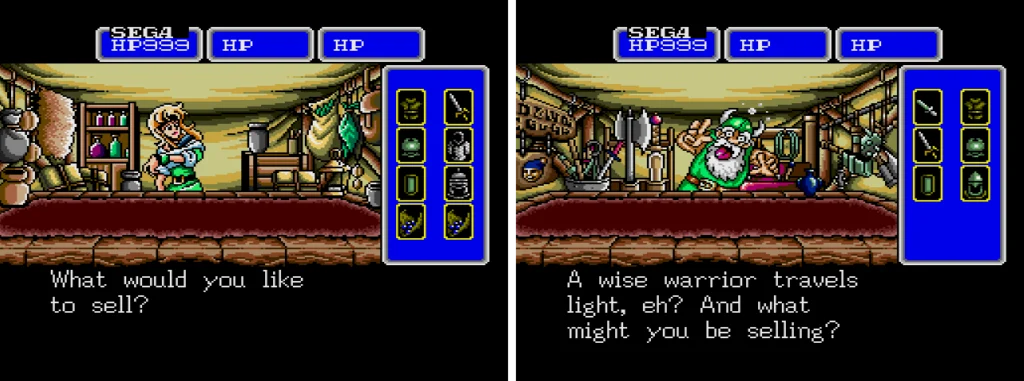
When Sega fans discuss the definitive role-playing game (RPG) legacies of the 16-bit era, the Shining series inevitably stands alongside Phantasy Star as a cornerstone of the platform’s identity. Launched in 1991 for the Mega Drive—known as the Genesis in North America—Shining in the Darkness was more than a mere dungeon crawler; it represented a pivotal shift in development philosophy, moving away from the established Nintendo-Enix ecosystem toward a new, experimental partnership with Sega. Developed by the newly formed Climax Entertainment, the title set a standard for visual presentation and user interface design that would influence the genre for decades.
The Genesis of Climax Entertainment and the Departure from Chunsoft
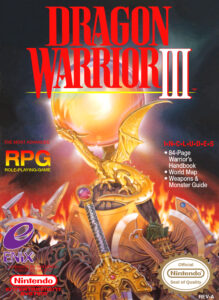
The origins of Shining in the Darkness are rooted in the high-stakes world of Japanese RPG development during the late 1980s. The project was the brainchild of Hiroyuki Takahashi and Kan Naitō, two industry veterans who had honed their craft at Chunsoft, the developer responsible for the legendary Dragon Quest series. Despite their success with Dragon Quest III and IV, Takahashi and Naitō felt restricted by the rigid structures of major publishing houses and the lack of individual recognition for developers.
Takahashi’s motivation for independence was partly fueled by a desire to innovate beyond the "copycat" culture he perceived in the Japanese market. During a focus-testing trip to Seattle for the North American launch of Dragon Quest III, Takahashi observed that Western gamers often viewed Japanese software as derivative of Western PC titles like Wizardry and Ultima. This experience instilled in him a determination to create a product that would earn international respect through original design and high-level production values.

In April 1990, Takahashi and Naitō officially formed Climax Entertainment. They were joined by several colleagues, including Shinya Nishigaki, while other veterans like Manabu Yamana chose to remain behind to continue the Dragon Quest legacy. This schism marked the beginning of a new era for Sega, which was desperately seeking high-quality third-party RPG content to compete with Nintendo’s dominant Super Famicom.
Technical Strategy: Choosing the Mega Drive Over 8-Bit Hardware
While Climax possessed deep expertise in Famicom development, the team made the strategic decision to bypass Nintendo’s 8-bit hardware for their debut project. By 1990, the Famicom was technologically stagnant, unable to provide the spatial depth and visual fidelity required for the first-person 3D experience Takahashi envisioned. Although the Super Famicom had recently launched, Climax found the Mega Drive’s Motorola 68000 CPU architecture more accessible and better documented.
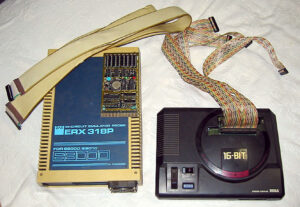
Sega, under the leadership of President Hayao Nakayama, actively courted the Climax team. The partnership was aggressive; Sega provided high-performance Hewlett-Packard workstations and 24-hour technical support to ensure the team could maximize the 16-bit hardware. However, Climax found Sega’s internal development tools insufficient for their ambitious goals. In a move that demonstrated their technical prowess, Climax developed their own proprietary graphics tools and in-circuit emulation workflows to achieve the smooth scrolling and large-scale sprite work that would define the game.
Design Philosophy: The Disney Influence and Universal Appeal
A primary goal for Shining in the Darkness was to move away from the traditional "manga" art style that dominated Japanese RPGs, which Takahashi believed limited the genre’s appeal in Western markets. Instead, Climax looked toward the golden age of Western animation. The team drew inspiration from Disney classics such as Sleeping Beauty and Alice in Wonderland, aiming for a "timeless" aesthetic that blended high fantasy with expressive, caricature-like character designs.
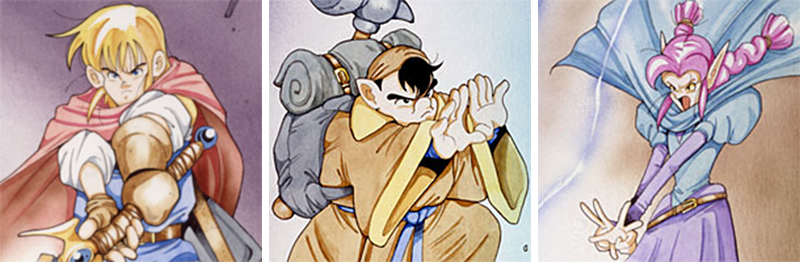
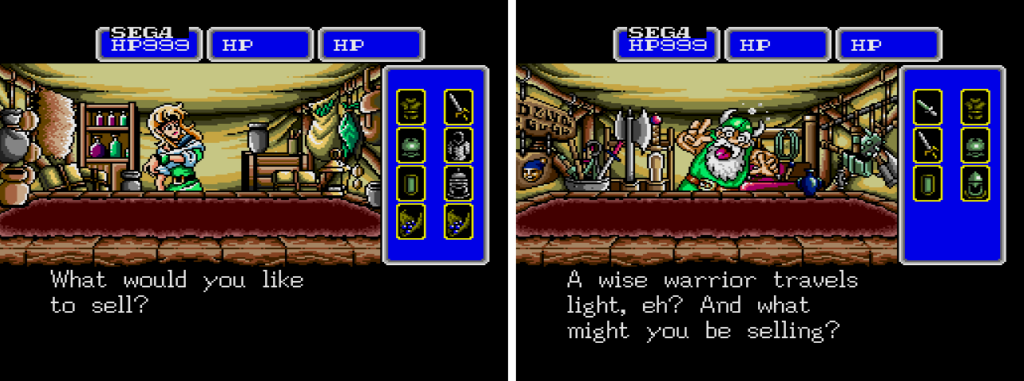
This visual direction was executed by Yoshitaka Tamaki, a freelance artist who had caught Takahashi’s eye during an Enix-sponsored design contest. Tamaki’s character designs for the protagonist Max, the priest Milo, and the mage Pyra were crafted to feel like actors on a stage. This "Panorama 3D" approach ensured that every interaction—from buying a sword to battling a boss—felt immersive and visually dynamic.
Innovations in Gameplay: The Icon Menu and Panorama 3D
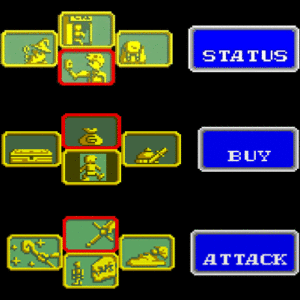
One of the most enduring legacies of Shining in the Darkness is its streamlined user interface. At a time when RPGs were notorious for cumbersome, text-heavy menus, Climax introduced an intuitive, icon-based command system. By mapping actions to directional inputs (e.g., up for magic, down for items), the team minimized the "burden on the player," allowing for a faster, more responsive gameplay loop.
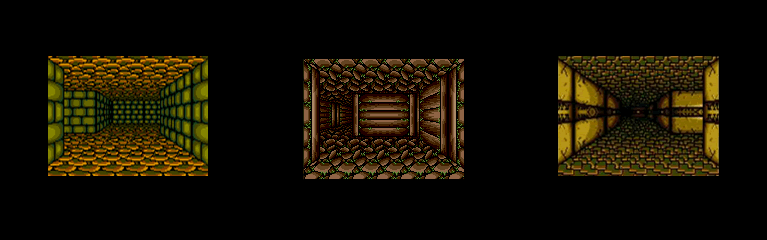
Technically, the game pushed the Mega Drive to its limits. Because the console lacked hardware-accelerated scaling or rotation—features found in the Super Famicom’s "Mode 7"—Climax programmer Yasuhiro Taguchi had to simulate 3D movement through software-based tile manipulation. By carefully managing VRAM and using per-scanline scroll adjustments, the team achieved a fluid, first-person perspective that felt significantly more advanced than contemporary dungeon crawlers like Sword of Vermilion.
The Labyrinth and the Controversy of Auto-Mapping
Central to the gameplay was the multi-floor labyrinth of Thornwood. Unlike many modern RPGs, Shining in the Darkness deliberately omitted an auto-mapping feature. This was a calculated design choice by Naitō, who believed that players should "learn" the environment through trial, error, and landmark recognition.
Naitō argued that auto-maps made dungeon exploration mechanical and unrewarding. By forcing players to rely on visual cues—such as torches, puddles, and specific wall textures—Climax sought to create a genuine sense of navigation. While the game provided "Wisdom Seeds" and the "View" spell for temporary orientation, the core experience demanded that players mentally or physically map the corridors, a throwback to the genre’s tabletop roots that resonated deeply with hardcore RPG enthusiasts.
Audio Engineering: The Soundtrack of Masahiko Yoshimura
The atmospheric depth of the game was further enhanced by the score of Masahiko Yoshimura. Yoshimura, who had worked as an audio mixer for the pop group Dreams Come True (whose bassist, Masato Nakamura, composed the music for Sonic the Hedgehog), brought a cinematic sensibility to the project.
Yoshimura focused on tonal contrast: the regal, orchestral themes of the castle stood in sharp relief against the mysterious, often oppressive music of the dungeon. Despite his public frustration with the limitations of the Mega Drive’s YM2612 sound chip, Yoshimura’s work established the "Shining sound"—a blend of classical progression and adventurous melodies that would be carried forward by future composers in the series, such as Motoi Sakuraba.
Market Reception and Commercial Impact
Shining in the Darkness was released in Japan on March 29, 1991, and became an immediate commercial success. It sold approximately 300,000 copies, representing a 16% attach rate for the Mega Drive’s installed base at the time. The game’s success was a vital "proof of concept" for Sega, demonstrating that the Mega Drive could host deep, high-production RPGs that rivaled Nintendo’s offerings.
In North America, the game arrived in August 1991. Despite a higher price point due to its 8-megabit cartridge and battery backup, and a lack of significant television marketing from Sega of America, the title became a cult hit. It earned particular praise from the "Wizardry crowd"—Western PC gamers who were surprised to find a console RPG with such mechanical depth and visual polish.
Chronology and the Shining Series Timeline
While Shining in the Darkness was the first game released in the franchise, the series’ internal chronology is complex. According to developer notes and fan analysis, the game actually takes place late in the established timeline:

- Shining Force: The earliest historical entry.
- Shining Force Gaiden / CD: Follow-up events on the continent of Enroth.
- Shining Force II: Set centuries later.
- Shining Wisdom: Directly follows the events of Shining Force II.
- Shining in the Darkness: Occurs after the previous legends have faded into history.
This interconnected universe allowed Climax to build a "Disney-like" world where different games explored the same lore from varying gameplay perspectives, including strategy RPGs (Shining Force) and action-adventures (Landstalker, though not an official entry, shares the DNA).
Broader Implications and the Legacy of Climax
The development of Shining in the Darkness ultimately changed the trajectory of Sega’s software strategy. It proved that independent "second-party" studios could deliver system-selling content. However, the relationship between Climax and Sega eventually soured. Takahashi later noted that as Sega grew into a global powerhouse, its management became increasingly profit-driven and less supportive of the "unruly" creative freedom that Climax demanded. This tension would eventually lead to the team’s transition to other platforms and the eventual fracturing of the original staff.
Despite these corporate shifts, Shining in the Darkness remains a landmark achievement. It successfully bridged the gap between Western dungeon-crawling mechanics and Japanese production values. By prioritizing user interface, visual storytelling, and technical optimization, Climax Entertainment created a blueprint that would define the Shining series for over thirty years, ensuring its place in the pantheon of 16-bit greats.