Jia Lissa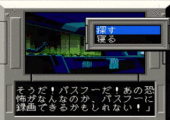
Narrative Foundation and Adaptation Scope
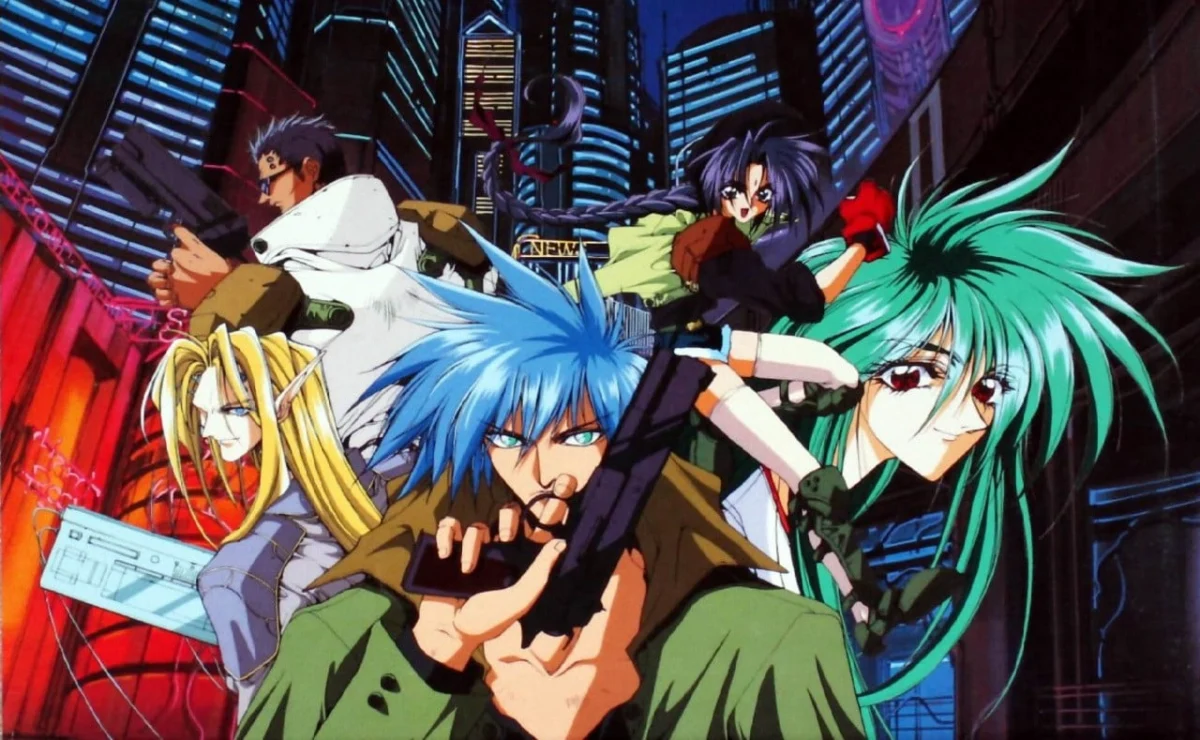
The plot of Detonator Orgun is set in the 23rd century, primarily within the futuristic urban sprawl of City No. 5. The story follows Tomoru Shindo, an ordinary university student who begins experiencing recurring dreams of a mechanized warrior. These visions materialize into reality when Orgun, a "Solid Armor" knight of the extraterrestrial Evoluder race, deserts his warmongering kin and flees to Earth. Seeking a compatible pilot to help defend the planet against the impending Evoluder invasion, Orgun establishes a telepathic link with Tomoru.
The game’s narrative structure is meticulously modeled after the first two episodes of the OVA—"Birth" and "Pursuit." It chronicles the initial contact between Tomoru and the Earth Defense Force (EDF), the arrival of the Evoluder scouts, and the internal conflict Tomoru faces as he is thrust into a planetary-scale war. While the game provides a comprehensive retelling of these chapters, it concludes with a preview of the third and final OVA episode, "Resurrection," rather than a full adaptation of the series’ climax. This decision by the developers suggests a production timeline that ran parallel to the anime’s release, or a strategic choice to focus on the character-building and world-setting elements of the early episodes.
Gameplay Mechanics and Interface Design
Departing from the traditional action-oriented expectations associated with the mecha genre, Detonator Orgun is categorized as a graphic adventure or visual novel. It employs a "command-select" interface, a staple of Japanese adventure games popularized by titles like The Portopia Serial Murder Case and later refined in Hideo Kojima’s Snatcher.
The player interacts with the environment and advances the plot through a set of standard menu options:
- Look: Allows the player to examine specific objects or characters in the current frame to gather information.
- Think: Provides insight into Tomoru’s internal monologue, often serving as a hint system for the next required action.
- Talk: Initiates dialogue with NPCs, which is essential for triggering plot flags.
- Move: Facilitates travel between different locations, such as the university, the EDF headquarters, and various battle sites.
This gameplay loop prioritizes narrative immersion over mechanical skill. There are no real-time combat sequences or pilot simulations; instead, the "battles" are presented as scripted events where the player must make the correct logical choice or exhaust specific dialogue options to trigger the next cinematic sequence. While this approach allowed for a faithful recreation of the anime’s story, it created a barrier for international players due to the game’s heavy reliance on Japanese text and voice acting.
Technical Execution and Hardware Constraints
The Sega Mega CD was marketed on its ability to play "Full Motion Video" (FMV) and high-fidelity audio, and Detonator Orgun utilizes these features extensively, albeit with the technical limitations of 1992. The game incorporates significant portions of animation directly from the OVA. However, the Mega CD’s hardware—specifically its limited sub-processor speed and 64-color on-screen palette—necessitated heavy compression.
The resulting FMV sequences, while impressive for the time, suffer from noticeable pixelation and a "dithered" appearance. To maintain a functional frame rate, the video is often windowed or displayed with a reduced color depth. Despite these visual compromises, the game successfully captures the cyberpunk atmosphere of the source material. The static backgrounds used during the adventure segments are detailed and reflect the high-production values of AIC’s original art direction, maintaining a consistent aesthetic link between the interactive and cinematic portions of the game.
Audio Production and Discrepancies
One of the more complex aspects of Detonator Orgun’s production is its audio design. The game features a score by Kouji Hayama, a celebrated composer known for his work on the Cho Aniki series and Mega Turrican. Hayama’s soundtrack is characterized by dramatic, synth-heavy compositions that complement the high-stakes sci-fi setting.
However, industry analysts have noted a peculiar inconsistency in the game’s audio implementation. While the opening sequences and key cutscenes utilize Red Book CD audio (high-quality digital sound), large portions of the mid-game transition to the Mega Drive’s internal YM2612 FM synthesis chip. This results in a noticeable drop in audio complexity and fidelity during standard gameplay. Similarly, while the game is fully voiced by the original anime cast—including Hiroshi Takayama as Tomoru and Casshan veteran Tatsuyuki Jinnai—the frequency and clarity of the voice samples diminish as the game progresses. This "front-loading" of high-quality assets is often cited as a symptom of the rushed development cycles common for licensed tie-in games of that era.
Chronology of Development and Release
To understand the context of Detonator Orgun’s release, one must look at the timeline of the Mega CD’s lifecycle in Japan:
- December 1991: The final episode of the Detonator Orgun OVA is released in Japan.
- Early 1992: Hot-B announces the development of an interactive adaptation to bolster the Mega CD’s library of "Multimedia" titles.
- July 31, 1992: The game is released at a retail price of 7,800 Yen.
- 1993: The Mega CD (as the Sega CD) begins to gain traction in North America, but text-heavy titles like Detonator Orgun are passed over for localization in favor of more action-oriented FMV games like Sewer Shark and Night Trap.
The game arrived at a time when Sega was desperate to prove the value of the Mega CD add-on. By securing a popular anime license, Hot-B aimed to attract the "otaku" demographic, which was a significant driver of high-end electronics sales in early 90s Japan.
Market Context and Broader Implications
The release of Detonator Orgun highlights a specific trend in the Japanese gaming industry where the "Interactive Movie" was viewed as the future of home entertainment. Platforms like the PC Engine CD-ROM² and the Mega CD were marketed not just as consoles, but as multimedia hubs.
The decision to remain a Japan-exclusive title was largely driven by the economics of localization. Translating a visual novel required extensive script editing and potential re-dubbing, a costly endeavor for a niche license that lacked a broadcast presence in the United States at the time. Consequently, Detonator Orgun remained a "grey market" import for Western fans of the OVA, often played with the assistance of printed translation guides in gaming magazines.
Furthermore, the game’s reliance on the "point-and-click" adventure format serves as a historical marker. Before the industry standardized 3D action for licensed properties, the adventure genre was the primary vehicle for storytelling. The success of similar titles like Urusei Yatsura: My Dear Friends on the same platform suggests that there was a robust market for these interactive adaptations, even if they lacked traditional "gameplay" depth.
Legacy and Final Assessment
In the decades since its release, Detonator Orgun has become a footnote in the history of the Sega Mega CD, often overshadowed by more technically ambitious titles like Lunar: The Silver Star or Silpheed. However, it remains a valuable artifact for historians of the 16-bit era. It represents the first wave of anime-to-digital transitions, illustrating both the potential and the pitfalls of the CD-ROM format.
While critics at the time gave the game middling reviews—often citing the 6 out of 10 range due to its lack of action and inconsistent audio—its value as a faithful adaptation remains undisputed. For fans of Masami Ōbari’s work and the 90s OVA era, the game offers a unique, albeit flawed, way to experience the narrative of Tomoru Shindo and the knight Orgun. It stands as a testament to a transitional period in gaming history where the lines between cinema and software were first beginning to blur, paving the way for the sophisticated narrative-driven experiences of the modern era.